Furniture Warranty Guide: Don't Get Fooled
Warranties are easy to skim until a solid wood sofa develops a split joint, an outdoor sofa frame starts to rust, or a lift doorway cannot accept the replacement panel. In Singapore, where a HDB flat in Tampines or Bedok may have a 90 cm lift door, a Punggol condo corridor may narrow to 110 cm, and a 210 cm ceiling changes what can be delivered, the fine print deserves more attention than the product photograph.

I learned this during a delivery check last month at a 12-storey HDB block in Bedok. A 198 cm solid wood dining table had been selected for a dining room with only 178 cm of clear space between the wall and the opposite cabinet run. The product itself was sound, but the written instructions did not identify the corridor turning radius or the maximum lift-car height. The supplier had to rewrite the route plan in centimetres. That experience shaped the checklist below: a warranty protects the construction, while access rules decide whether the repair can physically happen.
This guide applies to an outdoor sofa and other large furniture, including a bed frame, dining table, wardrobe, nightstand, and marble table. The aim is not to discourage ownership. It is to identify exactly who repairs what, how a claim is made, and what evidence the seller needs.

What does a furniture warranty actually cover?
A warranty is a time-limited promise about specified defects. It is not a promise that every mark, change, or inconvenience will be compensated. Read the opening paragraph for the product types covered, the private or commercial setting, and the start date. It should state the warranty period in years, usually beginning on the delivery date rather than the order date.
For an outdoor sofa, look for separate treatment of the timber frame, joints, hardware, surface finish, cushions, fabric, and components supplied by another manufacturer. A frame failure may be covered for 10 years, while a zipper may have a 2-year limit. Outdoor use can also reduce the applicable period if the warranty excludes exposure to rain, salt, direct ultraviolet light, or an improperly sheltered balcony.
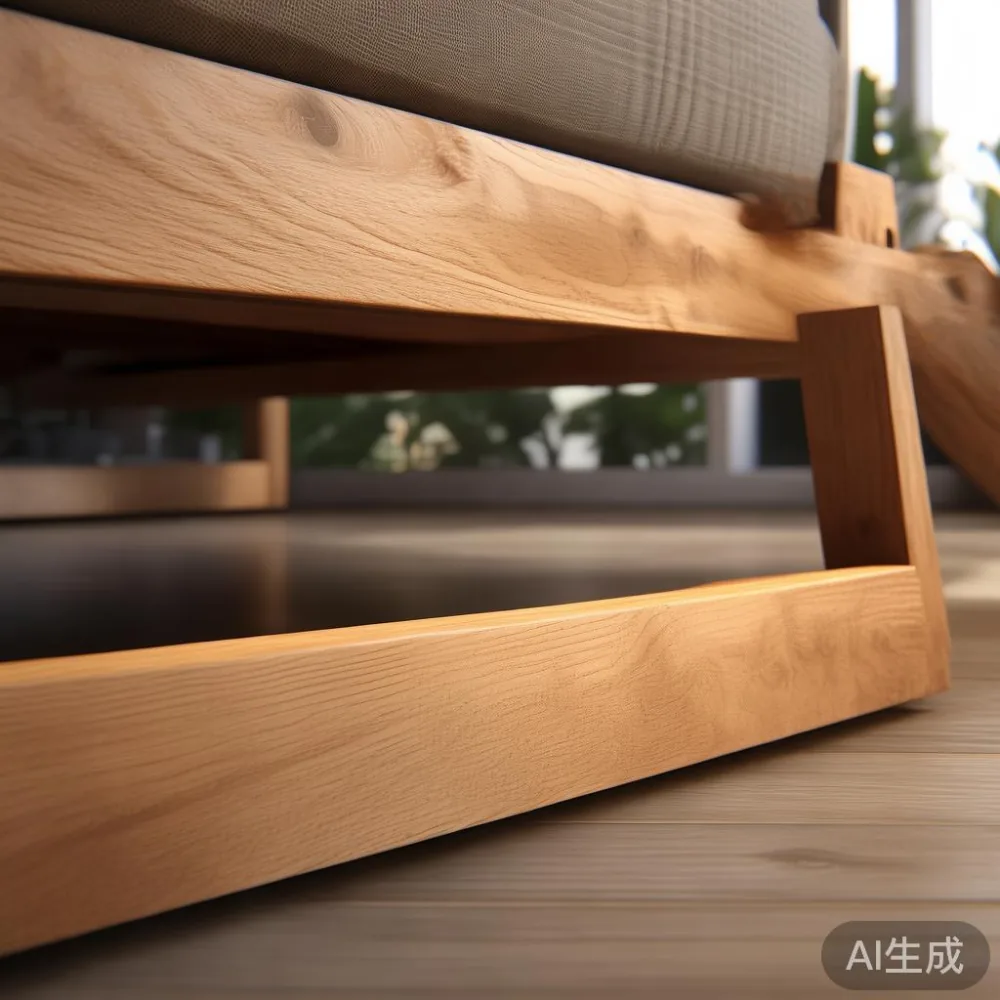
Ask whether “solid wood” describes the visible frame, the load-bearing members, or every part. Some products mix solid wood with plywood, engineered board, metal supports, or foam. A 10-year structural warranty may apply only to the frame, not the deck, backrest, finish, seat mechanism, or cushion. This distinction matters for an outdoor sofa placed on a HDB balcony with limited shelter.
MIDHILL describes a 10-year structural warranty and lifetime refinishing for qualifying furniture. Ask for the document associated with the exact SKU, including finish and material selections. A lifetime service promise is different from a lifetime warranty: one may cover refinishing under stated conditions, while the other promises replacement of every defect. Get that language in writing.
Also identify exclusions. Common ones include accidental damage, insect activity, water exposure, unauthorised assembly, commercial overuse, electrical or chemical damage, and natural changes in timber colour. Wood can move as humidity changes. A 12 mm gap, a knot, or a slight variation in grain may not be a defect. Clarify the tolerance because “minor variation” without a measurement is difficult to enforce.
How long is the coverage, and what happens after it ends?
Record three dates: order date, delivery date, and claim date. The delivery date normally starts structural coverage, but consumable parts may follow a different schedule. A warranty stated as 10 years should be converted into a precise end date. If delivery is on 18 August 2026, a 10-year period ends on 17 August 2036, subject to the issuer’s interpretation of the final day.
Check whether coverage is shared between the manufacturer and seller. Ask which company receives the claim, whether it repairs, replaces, refunds, or offers store credit, and how long a decision should take. A 15-business-day assessment period is reasonable; a 90-day replacement process for a defective item is harder to accept. Ask whether the replacement is new, refurbished, or made with a different finish. For a matching solid wood sofa, specify the frame, timber species, finish, cushion density, fabric, and colour.
Check the after-sales period too. Repair labour may be free for 12 months while a replacement part carries a 90-day service period. A discount for the depreciated value of furniture after 3 years is possible. A 4-year-old claim for a SGD 2,600 dining table might be resolved through repair, a replacement at the current model’s price, or an amount reflecting use. These are materially different outcomes, so the formula should appear in the warranty.
Do not confuse a warranty with a general returns policy. A 14-day return window is useful for a size or appearance decision, but it should not override a 10-year structural promise. Ask whether the statutory rights of the seller remain available after a commercial warranty is offered and whether the customer must permit the seller to attempt a repair before rejecting an item.
What proof and process do you need before delivery?
Request the warranty PDF, invoice, product specification, and care guide before paying. The invoice should show the seller’s legal entity, the exact product code, finish, dimensions, material composition, quantity, and SGD price. Photograph each item and its packaging on arrival. Include close-ups of joints, corners, underframes, and any existing finish marks, plus a wider image showing the piece in the room.
Record delivery measurements, not only catalogue dimensions. For example, a 210 cm wardrobe may be packed into a 224 cm carton, a 206 cm solid wood bed frame may weigh 72 kg, and a marble table may need 2 people and 4 furniture lifters. Confirm the lift-car internal dimensions, door width, corridor turns, staircase width, and maximum carrying weight. In many Singapore blocks, a 90 cm lift door and 110 cm corridor leave little tolerance for a 95 cm package.
Assembly instructions matter. Keep all screws, dowels, brackets, and hardware in a labelled bag. Note the required tools, including a 4 mm hex key and a 13 mm spanner. Warranty claims can be refused if a product was assembled incorrectly, so photograph the completed joints. A torque setting matters too; a joint tightened to the correct specification should not be blamed for later movement.
Use the care instructions as evidence of reasonable maintenance. Outdoor sofa cushions should be protected from persistent wetness. Timber should be kept away from direct rain and wiped dry. A marble table needs coasters, a stable temperature range, and careful handling near edges. A wardrobe or nightstand should not be overloaded beyond its stated shelf capacity.
Who pays when delivery, access, or installation is the problem?
This is the question many buyers miss. A warranty begins after a product is accepted, but access damage can occur before that point. The delivery contract should assign responsibility for measuring, carrying, unpacking, assembly, removal of packaging, and placement in the room. It should state the maximum doorway or lift-car dimensions and the consequence if the product does not fit.
For lift access, obtain the site’s usable dimensions rather than relying on a broker’s estimate. Measure the lift door at its narrowest point, the cabin depth and height, the landing, and each corridor turn. Add at least 10 cm of clearance around a rigid package where the route allows. A 205 cm carton can fit through a 210 cm lift doorway but still fail to turn past a 115 cm corridor corner.
Ask about delivery timing. A supplier offering delivery in 7 to 14 days should specify whether the range is for stock or production, and whether a failed first attempt due to access creates a new charge. A redelivery fee of SGD 35, SGD 60, or more can become significant. In HDB flats, some buildings require a booking slot, elevator padding, or a mover’s permit. Condos may also impose service-hour rules, loading-bay charges, and route restrictions.
For installation, distinguish two services. Basic positioning might be included with delivery for 1 outdoor sofa, while placing a 2-piece modular outdoor sofa on a balcony may require a separate SGD 80 to SGD 150 service. Confirm whether stair carry, extra-person handling, and balcony placement are included. A product that arrives safely but is installed without the specified brackets may create a claim dispute.
GST should be shown transparently. If the displayed product price is SGD 1,880, the 9% GST is SGD 169.20, making the payable amount SGD 2,049.20. Confirm whether freight, installation, protection products, and warranty registration are taxable. A free-shipping threshold over US$350 may be quoted in another currency, so request the Singapore equivalent, delivery charge, and GST in SGD.
What should the exclusion clause say in clear language?
Exclusions should name conditions and thresholds, not rely on vague terms. A timber crack needs a measurement, such as a split wider than 3 mm, while a loose joint should be described by visible movement under a stated test. If a seasonal movement of up to 2 mm is accepted, that figure should appear beside the repair criteria.
Finish coverage needs particular attention. Lifetime refinishing may include sanding, stain correction, and one refinishing service, or it may include unlimited refinishing at the current service charge. Ask whether the offer covers solid wood dining tables and bed frames but excludes marble, painted lacquer, or electroplated surfaces. Obtain the current fee, though the warranty may freeze it for 10 years.
Fabric and cushion claims require a baseline. Record foam density, fire-label information, and upholstery composition. A 28 kg/m³ foam cushion can feel supportive, but a 22 kg/m³ cushion placed on an outdoor sofa may collapse sooner in humid conditions. A warranty might cover a manufacturing separation after 3 years while excluding compression, fading beyond 20%, or damage from a pet’s claws.
Be cautious with a supplier that promises a 10-year warranty but gives no inspection method. Ask how a claim is assessed, whether photographs or an on-site inspection are needed, and who pays transport after the first year. A claim process that works for the first 12 months but becomes expensive and difficult in year 8 may be of limited practical value.
Can I check the fit before the warranty starts?
Yes. Measure the room and route, then compare the assembled dimensions with the product specification. A 200 cm solid wood sofa may need 224 cm for a 90-degree turn even if it fits in a 215 cm room. For a bed frame, check the mattress size, headboard thickness, door clearance, and lifting path. For a dining table, allow at least 90 cm from the edge to a wall, 120 cm between table and furniture for primary seats, and 150 cm for busy circulation.
Style terms can distract from dimensions. A search for Mid-century modern with storage may lead to a bed frame with a 42 cm-deep side cabinet, while a customer comparing an American bed vs French provincial bed twice may need to measure a slatted base, a 112 cm headboard, and the curve of a 205 cm frame. Neither style label resolves access. Likewise, Coastal for dining room points may suit a 180 cm dining table, but the 220 cm packed length still has to clear the lift.
Some shoppers use broad design labels while researching a coastal bed for 2026 or Post-modern for small living room. Those references should remain linked to the same furniture decision. For a small living room, a 168 cm sofa with 86 cm arms may leave a 40 cm passage in a 3.4 m room, while a 200 cm model with 104 cm arms would leave only 8 cm. Accurate measurements make the design meaningful.
How do I make a claim without weakening my case?
Notify the seller promptly through the stated channel. A reasonable internal target is 2 business days for acknowledgement and 10 business days for a preliminary decision. Include the order number, delivery date, photographs, a short description, and the requested remedy. Do not dismantle a defective solid wood sofa immediately unless safety requires it or the seller approves.
Keep the original packaging if space permits because it can show that the item was transported correctly. A 6 mm hex key and the assembly guide may help the technician diagnose the issue. For a marble table, explain whether the crack is structural, at a corner, or near a fixing point. For a wardrobe, state whether the door has dropped, the hinge has pulled away, or the carcass has separated.
If the first repair fails, check whether the warranty allows a second visit and who bears the labour. A supplier offering a 10-year structural warranty should explain what happens after repeated unsuccessful repairs. Keep records of technician visits, parts replaced, and the condition at each stage.
When comparing a product, use a service-level document rather than promotional wording. Confirm the years of structural coverage, lifetime refinishing scope, response time, access conditions, return window, and delivery terms. If a product is described as light luxury, the finish may be 4 to 6 times more demanding than a painted surface, so the repair standard should be equally specific. French light luxury, American light luxury, and post-modern light luxury can guide appearance, but the warranty must govern the construction.
What questions should I ask before paying?
Ask: “Does the 10-year structural warranty apply to every component of this outdoor sofa, or only to the main timber frame?” Ask: “Can you identify the claim owner, response period, repair method, and transport charges in the document?” Ask: “Are scratches, moisture exposure, and movement below 3 mm excluded, and what measurement supports that?” Ask: “Will the delivery team measure my lift and corridor, and what happens if the packaged item does not fit?”
Also ask how the guarantee handles a product that cannot be accessed. Suppose the replacement panel for a bed frame is 94 cm wide, while the lift door is 90 cm. Does the supplier ship a smaller part, arrange a technician with local access equipment, or charge the customer for a failed delivery? This is more important than a large number printed on a brochure.
A useful buying habit is to save the specification, warranty, invoice, and care instructions in 1 folder and take 15 minutes to read them. A product may have a 10-year structural promise, but the useful duration also depends on a defensible claim process, correct assembly, reasonable care, and a delivery route that has been measured in centimetres. That combination turns a warranty from a slogan into a workable agreement.