What to Check Before Buying a Sofa You Cannot Sit On Indoors: A Singapore Outdoor Sofa Buying Guide
I learned this lesson the way most Singaporeans do — by hauling the wrong piece up four flights of stairs. Last month, a colleague in Tampines ordered a lovely-looking rattan-style outdoor sofa from a local marketplace. The listing said "weatherproof" and "3-seater." When it arrived, the box was 2.1 metres long. It did not fit in his HDB service lift. It did not fit in his corridor. It did, eventually, fit diagonally across his living room, where it sat for three weeks until he paid a disposal fee. The sofa itself was fine. The buying process was the problem.
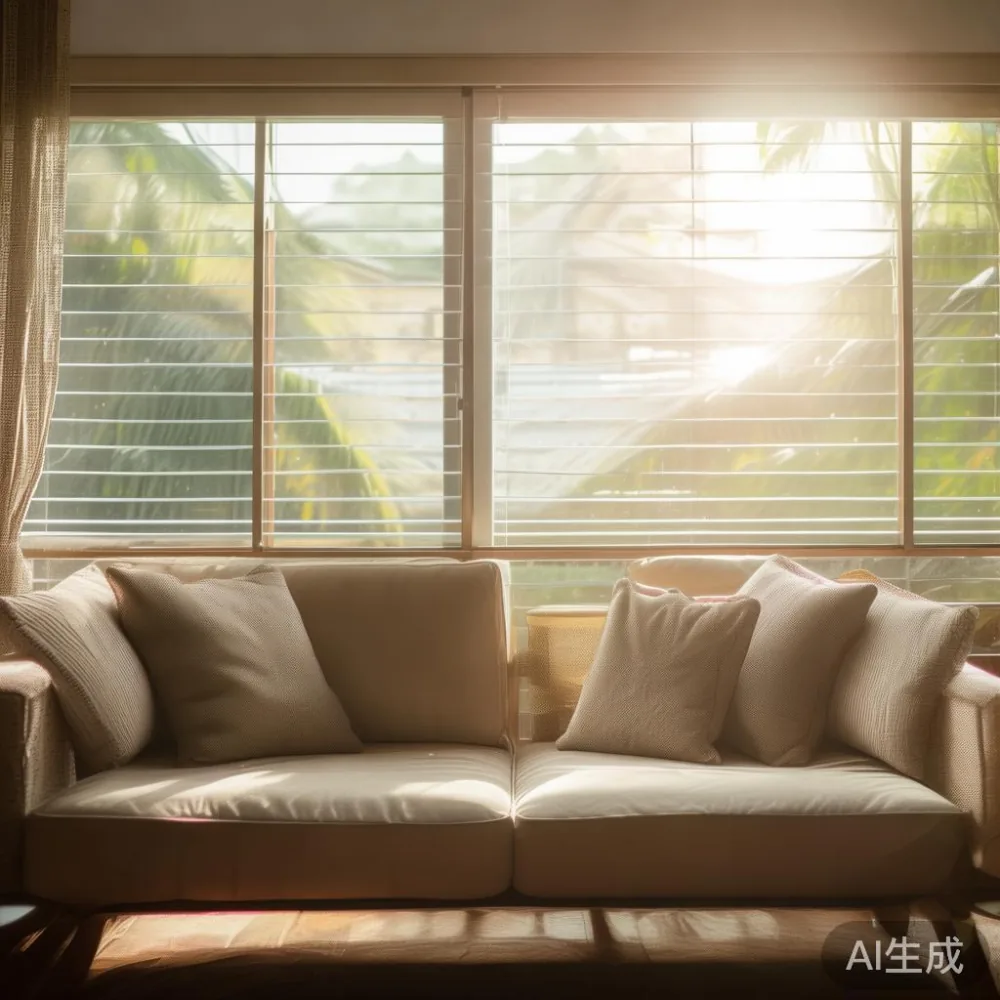
An outdoor sofa is one of the few pieces of furniture you cannot physically test in the showroom the way you test a bed frame or a dining chair. You cannot sink into it, bounce on the cushions, or feel how the weave breathes against your forearm. Yet people in Punggol, Bedok, and Tanjong Pagar are spending SGD 1,200 to SGD 4,800 on these pieces, often sight unseen, often delivered by a single lorry with no crane. This guide walks through what to verify before you click pay — frame material, foam density, fabric spec, dimensions, warranty, and the Singapore-specific delivery traps that no product page ever mentions.
Why an Outdoor Sofa Is a Different Animal from a Solid Wood Sofa or Indoor Set
An indoor solid wood sofa is built for one job: to hold human weight in a climate-controlled room. Outdoor sofas live on balconies, patios, and pool decks. They take UV radiation at 11am, monsoon rain in December, and salt air if you live near Changi. The construction differs in three specific ways.
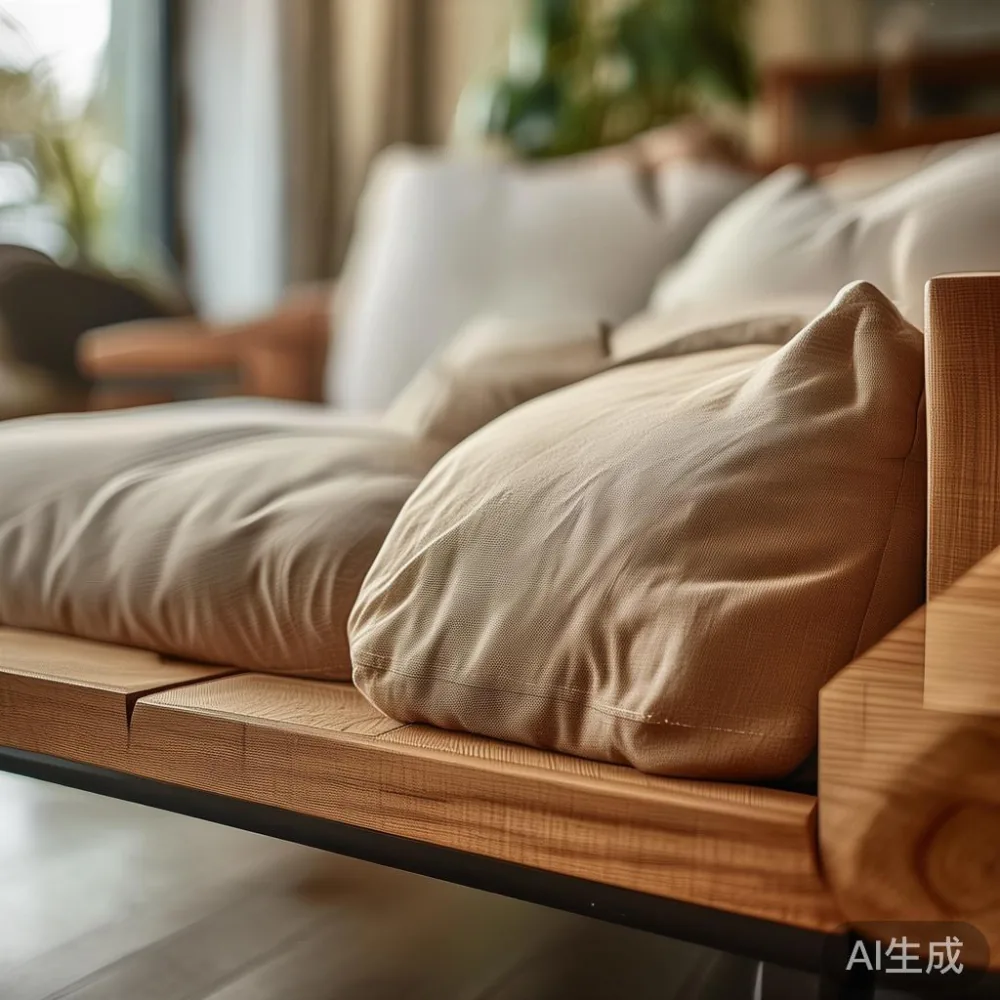
First, the frame. A proper outdoor sofa uses either kiln-dried teak (SG$2,400 and up for a 3-seater), powder-coated aluminium (SG$1,100–SG$2,200), or polyethylene-wrapped rattan over an aluminium skeleton (SG$900–SG$1,800). What you do not want is untreated MDF, plywood, or hollow steel tubing — all three will fail in 8–14 months in Singapore humidity. If the listing does not name the frame material, walk away.
Second, the cushion foam. Indoor cushions typically use 28–32 density polyurethane. Outdoor cushions need quick-dry foam, often 32–38 density with an open-cell structure, paired with a mesh-lined cover so water passes through instead of pooling. Standard foam will hold water for 3–5 days after a thunderstorm and develop mildew within a month.
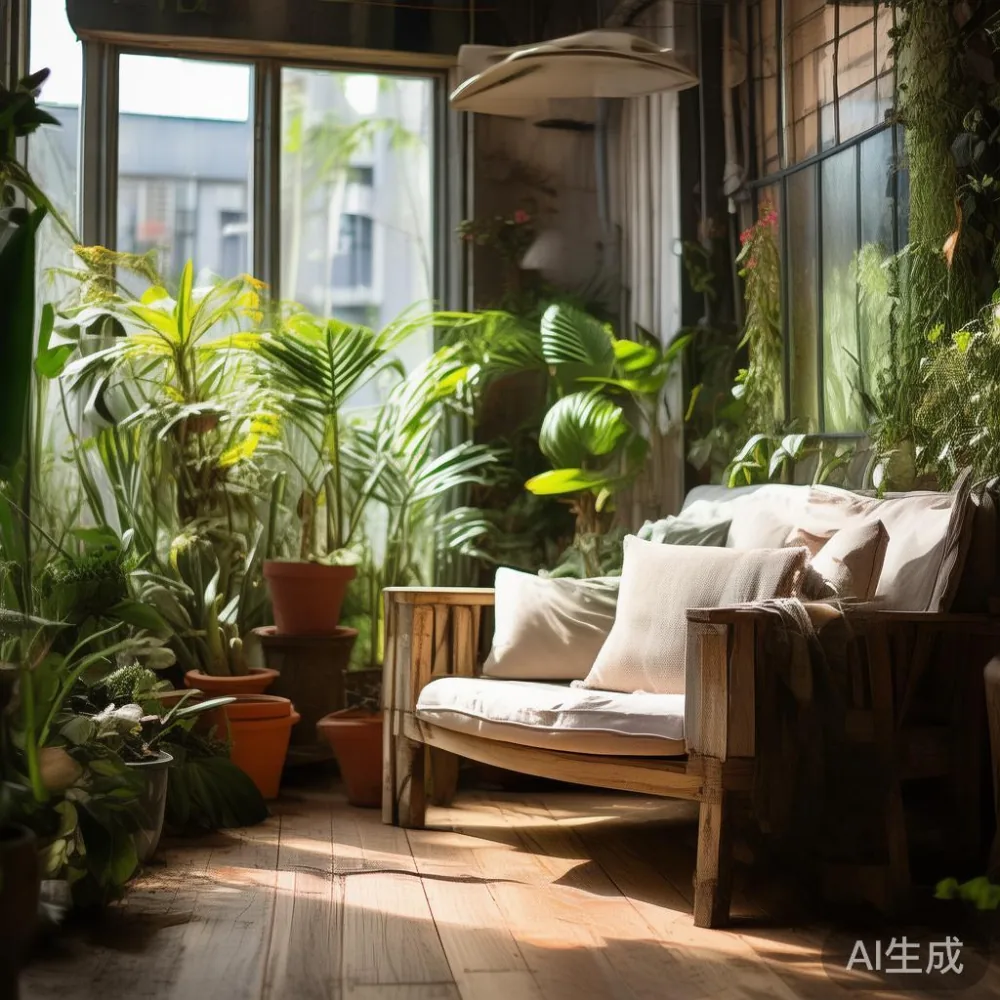
Third, the fabric. Solution-dyed acrylic (brands like Sunbrella or Agora) carries a 5-year fade warranty and resists mould. Polyester blends look identical in the showroom and bleach out within six months on a west-facing balcony. The tag will tell you which is which.
What is the difference between French bed frame and modern furniture?
A French neoclassical sofa dubai buyer is selecting for carved silhouettes, gilded touches, and a specific visual weight that belongs in a formal living room; a modern outdoor sofa is engineered for weather exposure, lightweight aluminium frames, and quick-dry foam, and the two categories share almost nothing beyond the word "sofa." When you see a listing described as "French style" or "neoclassical," that is a design vocabulary, not a material specification, and it tells you nothing about whether the piece will survive a Singapore afternoon storm.
The Singapore Delivery Checklist: Lift, Corridor, and Staircase Measurements You Must Take First
This is the part nobody wants to do, and the part that decides whether your outdoor sofa actually arrives in your home. Before you measure the sofa, measure your home.
HDB service lift (most blocks built before 2015): door opening approximately 0.9 m wide × 2.1 m tall, internal cabin roughly 1.2 m × 1.5 m. Any outdoor sofa box longer than 1.8 m will not fit standing upright. Some will fit tilted, but only if the corridor on your floor allows the tilt angle. Measure your floor's lift lobby ceiling too — sometimes the lift opens directly under a soffit that blocks tall boxes.
Private condo lifts (typical 2018–2024 developments in Punggol, Sengkang, the Greater Southern Waterfront): cargo lifts are usually 1.5 m × 2.0 m internally with 2.3 m door height. Most 3-seater outdoor sofas in flat-pack form arrive in boxes 1.6–2.0 m long and 0.9 m wide. You have about 10 cm of margin. A sofa listed as "2.2 m length" will arrive in two boxes, which is fine, but the boxes still need to clear your lift.
Corridor width: HDB corridors run 1.2–1.5 m. Condo corridors are narrower, sometimes 1.0 m, especially in compact layouts. Sofa boxes are 0.85–1.0 m wide. If you meet a neighbour carrying groceries at the same time, you cannot pass. Tell your delivery crew in advance.
Staircase turns: Walk-of units and maisonettes still exist in estates like Bedok Reservoir and Marine Parade. A common turn is 1.1 m wide × 2.4 m tall. A 2.0 m sofa box will not work through a tight switchback. There is no elegant workaround for this. The piece will not reach your door.
Take five measurements, write them on a piece of paper, photograph the lift lobby, and send them to the seller before you pay. A reputable seller will reply within 24 hours with a fit confirmation. If they cannot, the SG$200 you save on a cheaper listing is the SG$200 you will spend on a disposal fee.
How long does an outdoor sofa actually last in Singapore weather?
Honest numbers from Singapore buyers and from suppliers I have spoken to over the past year:
- Teak frame, solution-dyed acrylic cushions, covered balcony: 10–15 years.
- Aluminium frame, quick-dry foam, full sun: 7–10 years for the frame, 3–5 years for the cushion fabric before visible fade.
- PE rattan over aluminium, full sun and rain: 5–7 years for the weave, 10+ for the aluminium skeleton underneath.
- Steel frame (even powder-coated), full weather: 3–5 years before rust spots appear at the welds.
- Any frame with MDF, plywood, or particleboard: 8–14 months before swelling and delamination.
Those numbers assume basic care — a cover during heavy rain weeks, a rinse every fortnight, and storage of cushion in a storeroom when you go on a two-week holiday. No outdoor sofa is zero-maintenance. If a listing tells you otherwise, it is lying.
For context, a similar indoor solid wood sofa from a maker like MIDHILL — which has shipped solid wood furniture from Foshan since 2008 to 15-plus countries with a 10-year structural warranty and lifetime refinishing — will outlast any outdoor piece by decades. But indoor and outdoor furniture solve different problems, and conflating the two is how you end up with swollen particleboard on your balcony.
What Warranty Terms Actually Mean on an Outdoor Sofa
Read the warranty document before you read the price tag. Three clauses matter.
1. Frame warranty vs. finish warranty. A 10-year frame warranty is meaningless if the finish warranty is 12 months and the frame "fails" because rust has eaten through powder-coated steel that the warranty excludes as "cosmetic corrosion." Make sure the frame warranty covers structural integrity through corrosion, not just weld defects.
2. Fabric fade versus fabric failure. Solution-dyed acrylic brands like Sunbrella offer 5-year fade warranties, but only when registered with the fabric maker directly. Your sofa seller is unlikely to handle that registration for you. Ask whose name appears on the fabric warranty — yours or theirs.
3. Foam compression. After 18–24 months, all foam softens. Quick-dry foam recovers better than standard foam, but it still loses roughly 10–15 percent of its firmness in year two. A "lifetime cushion warranty" is marketing language unless the seller commits to replacing cushions that lose more than 20 percent of their original density in writing.
MIDHILL, for example, publishes its 10-year structural warranty and lifetime refinishing terms clearly enough that buyers in Singapore and Dubai can read the exact exclusions before they order. Most outdoor sofa sellers do not. If you cannot find the exclusions on the product page, email the seller and ask. Their reply speed tells you more about the warranty than the warranty text itself.
Price Breakdown: What You Actually Get Between SG$900 and SG$4,800
Outdoor sofas sold in Singapore fall into three rough bands, and each band has a typical construction you can verify before buying.
SG$900–SG$1,500 (entry level): PE rattan over aluminium, polyester cushions, 1-year frame warranty. Brands in this band include most marketplace sellers and several furniture chain private labels. Acceptable for a covered balcony with occasional use. Expect 4–6 years of service, not 10.
SG$1,500–SG$3,000 (mid range): Aluminium or kiln-dried eucalyptus frame, solution-dyed acrylic cushions, 3–5 year warranty. This is the band where most Singapore buyers land, and where the quality differences between sellers are largest. Two sofas at SG$2,200 can differ by SG$800 worth of actual materials. Inspect the warranty, the fabric grade, and the foam density — not just the photos.
SG$3,000–SG$4,800 (premium): Teak or high-grade aluminium, full quick-dry foam with reticulated drainage, 5–10 year warranty. Pieces from this band often ship with covers included and offer replacement cushion programmes. If your balcony is the centre of your entertaining, this band is where the math works out.
Compare against indoor equivalents. A solid wood sofa from a Foshan maker runs SG$2,200–SG$5,500 and lasts 15–25 years. A dining table in solid oak or walnut runs SG$1,800–SG$4,200. A wardrobe or nightstand in solid wood carries similar numbers. Outdoor furniture is more expensive per year of service because its service life is shorter — that is the trade-off, not a defect.
Free Shipping, GST, and the 14-Day Return Trap
Singapore charges 9 percent GST on imported furniture, and this is calculated on the landed cost including shipping and insurance. A SG$2,200 outdoor sofa with SG$180 shipping becomes SG$2,599.40 after GST. Some sellers advertise "free shipping over SG$350" — that is genuine, but it does not absorb the GST. Budget for it.
The 14-day return window is another figure worth scrutinising. In Singapore, the Consumer Protection (Fair Trading) Act gives you remedies for defective goods, but "I changed my mind" is not a defect. A seller who offers 14-day no-questions returns on a SG$3,000 outdoor sofa is either confident in the product or absorbing the return cost into the price. Ask which.
Returns on assembled outdoor sofas are particularly painful because the seller must collect a 2-metre box from your unit, and most will only do so if you can repack it in the original carton. Photograph the unboxing. Keep the foam inserts. If the sofa arrives damaged, you have a stronger claim with the packaging intact.
Care Routine That Doubles the Service Life
Three habits, ten minutes a week, will roughly double the life of any outdoor sofa.
Rinse weekly. A hose-down removes salt, pollen, and air pollutants that degrade fabric and corrode aluminium. Singapore's humidity means these accumulate faster than in a temperate climate.
Cover during sustained rain. A SGD 80–SGD 150 cover is cheaper than replacing cushions every two years. December monsoons in particular drive moisture into seams.
Rotate cushions. The cushion closest to the railing fades fastest. Swap front-to-back monthly so the wear distributes evenly. This alone extends fabric life by 30–40 percent based on what suppliers have told me.
For the frame, an annual wipe-down with teak oil (for wood) or a mild soap solution (for aluminium) prevents the slow surface degradation that turns a five-year sofa into a three-year sofa. None of this is complicated. All of it is skipped.
Final Notes Before You Click Pay
An outdoor sofa is a strange purchase because the showroom photo is the product, and the actual piece arrives in a box you have never opened. The temptation is to optimise for the photo — the curved arm, the thick cushions, the neutral palette that matches your balcony tiles. Optimise instead for the warranty document, the fabric specification, and the foam density. Those three pieces of information predict whether you will still be using the sofa in 2031 or replacing it in 2027.
Measure your lift before you measure the sofa. Confirm the frame material. Read the exclusions. Budget for GST. Take ten minutes a week to rinse and cover. Do those five things and you will spend your SG$1,500–SG$4,800 well, and your balcony in Tampines, Bedok, or Punggol will look the part for a decade.