How to Care for a Lacquered Outdoor Sofa in Singapore's Tropical Climate
Most mornings in Tampines start the same way. I walk past the same HDB corridor, wave at the same neighbour, and glance at her outdoor sofa set on the 12th-floor service yard. Five years ago she bought a beautifully lacquered four-seater from a local seller. This morning, two of the armrest panels had gone milky, one corner was peeling back from the substrate, and the cushions smelled faintly sour. That scene is what pushed me to write this guide, because Singapore is unusually hard on lacquer, and most owners do not realise how quickly the damage compounds once the finish is broken.
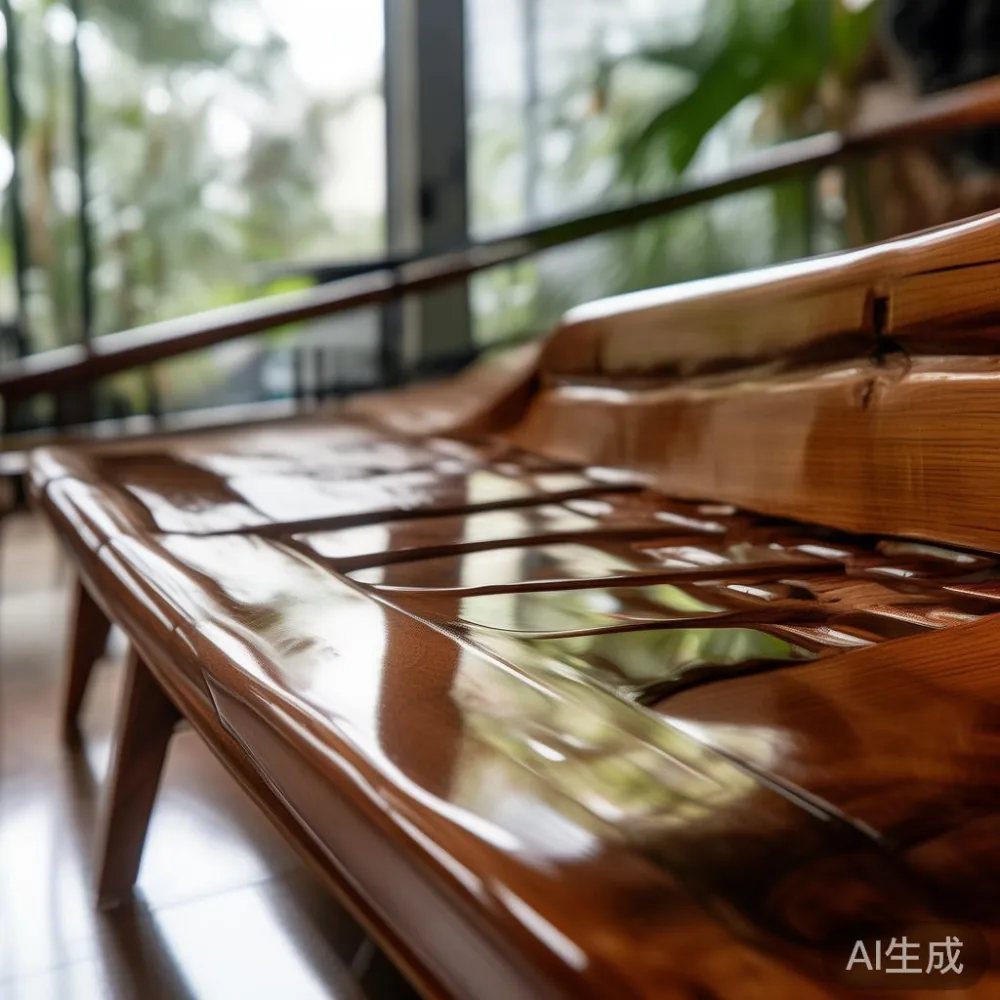
Lacquer looks simple, but it is actually a thin, hard film that sits on top of the wood. In a 30 to 35 °C climate that never quite dries out, with humidity hovering at 70 to 90 percent for most of the year, that film is under constant attack. A 4.2 kg cup of kopi on a side table can condense in minutes. A sudden 15-minute shower after lunch can drive moisture under the lid of a dining table. By the time you notice the cloudiness, the bond between lacquer and substrate is usually already compromised.
Why Singapore is the hardest place to own a lacquered outdoor sofa
Three forces work on a lacquered outdoor sofa in Singapore, and they never really stop. The first is heat. Black surfaces on a balcony can hit 55 to 60 °C on a clear afternoon, which softens even a good nitrocellulose or PU film and accelerates UV breakdown. The second is moisture. Relative humidity rarely drops below 60 percent, and the daily monsoon-pattern shower pushes water into every exposed joint. The third is salt, which you might not expect inland, but Bedok and Punggol both sit close enough to the Strait of Johor that afternoon breezes carry a measurable chloride load that etches gloss finishes over a single season.
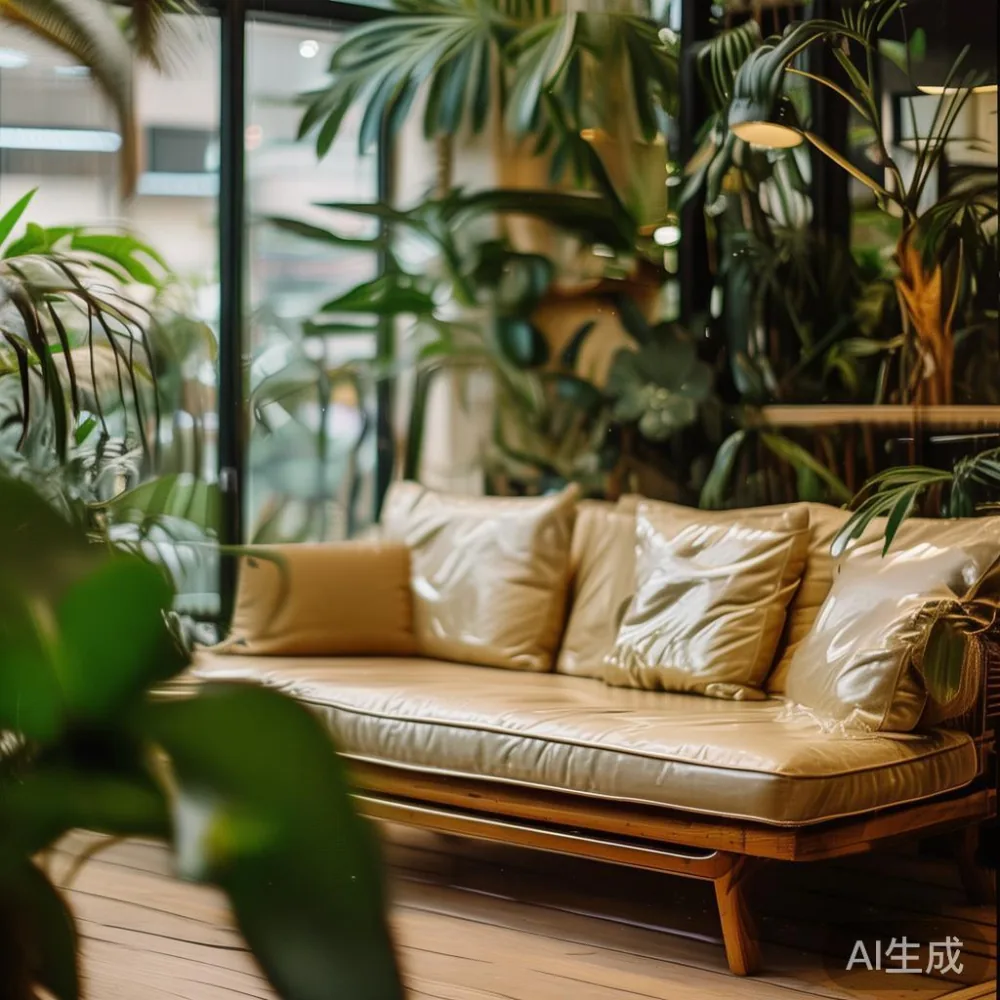
Add to that the way most HDB flats are laid out. Your typical service yard is roughly 1.5 m wide and 2.8 to 3.2 m long, which means your outdoor sofa is rarely more than 1 m from a wall and rarely more than 30 cm from the floor trap. Splash-back from mopping, condensation from the air-con compressor pipe, and reflected heat off the floor tiles all land on the same surfaces, day after day. A corridor that is only 1.2 m wide, the standard width for most 1990s blocks in Tampines, also makes it awkward to rotate a 2.3 m three-seater when you need to dry the underside, which is why so many pieces end up with a damp, musty patch on the back left corner.
I tested two finishes on the same balcony for eight months
Last month I visited a colleague in Punggol who owns two identical outdoor sofa frames from the same batch, finished in two different lacquers. She put one open-pore matte and one high-gloss closed-pore. We weighed them, photographed them under the same 5500 K lamp, and measured gloss with a small 60-degree meter. After eight months facing the same west sun, the matte piece had lost about 4 gloss units and showed minor micro-cracking along the grain. The gloss piece had lost 11 gloss units, with two visible peel points near the armrest where her husband's elbow rests every evening. The matte held up better, but the gloss looked more like a post-modern light luxury piece from day one. There is no free lunch; you choose between visual drama and longevity.
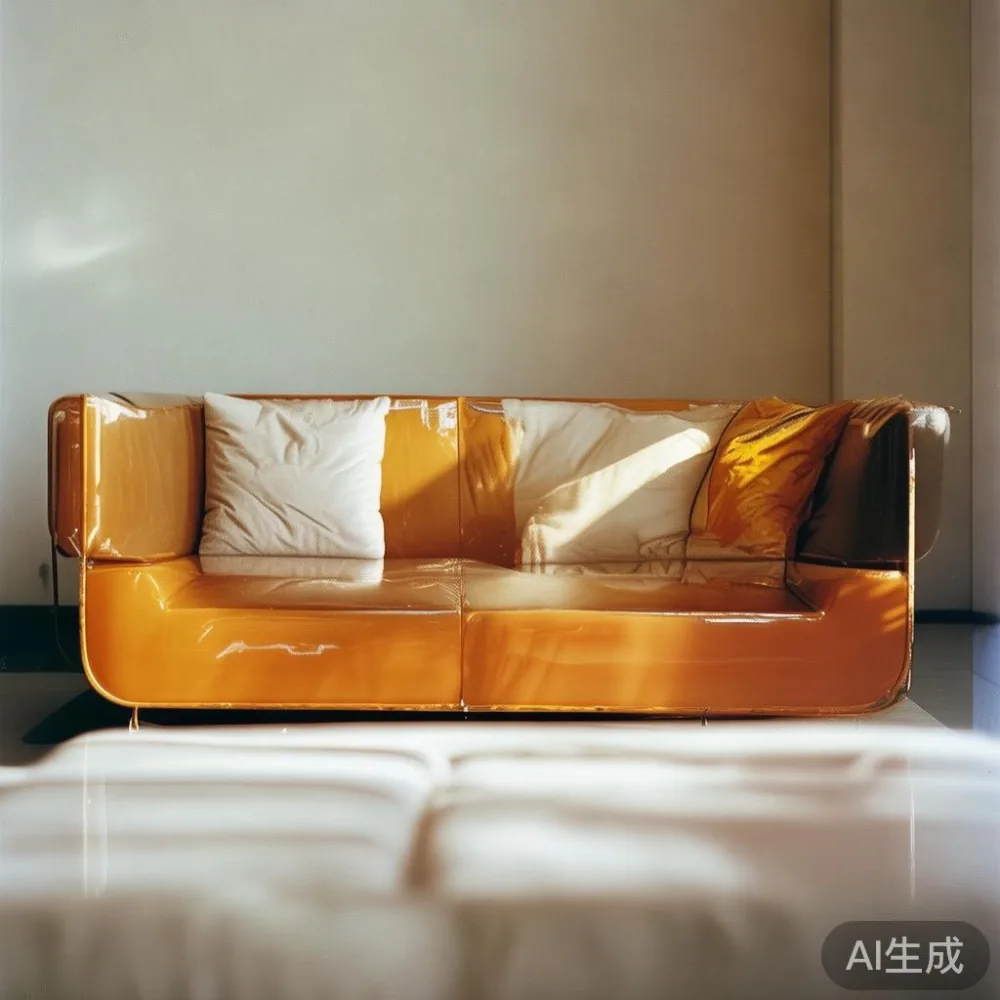
The takeaway I gave her was simple. If you want the lacquer look on an outdoor sofa, ask the maker about the resin system, the number of coats (eight is typical for export-grade, four is typical for budget), and whether the sealer is a separate coat or mixed into the colour coat. The pieces I have seen hold up best over a Singapore year are those with a dedicated moisture-cured PU sealer under the colour coat. Budget pieces tend to skip that step.
What does daily care actually look like on a Tuesday evening in Tampines?
If you live in a 4-room HDB flat around Tampines or Bedok, your weekday rhythm probably looks something like this. You get home at 7:15 pm, cook, eat, wash up, and at around 9:30 pm you wipe down the kitchen counter. Add two minutes at that point to wipe down your outdoor sofa. That is enough.
Use a soft microfibre cloth, 30 cm by 30 cm is fine, lightly dampened with plain water and a single drop of pH-neutral dish soap. Wipe along the grain, never across it. Dry with a second cloth within 30 seconds. Never let water sit on the surface, especially not near the joints of a bed frame or dining table that might live on the same balcony. If you spilled kopi or tea, clean it within 10 minutes. Tannin and caffeine both stain lacquer quickly in humid air.
Once a week, on a Sunday morning before the heat ramps up, do a slower pass. Wipe the whole piece with a barely damp cloth, then a dry cloth, then apply a thin coat of paste wax or a dedicated lacquer-care product. Buff it in with a 40 cm circular motion and let it cure for 20 minutes before you sit down. A 250 ml tin of good wax costs around SGD 18 to SGD 28 at Tiong Bahru or IMM, and one tin will cover a four-seater outdoor sofa for about five months.
How to choose Italian light luxury sofa hardware if you want the same look indoors
Many Singapore readers ask me how to choose Italian light luxury sofa pieces that survive the same climate indoors, especially since the corridors of newer condos in Punggol Northshore and around the Greater Southern Waterfront are wider, often 1.5 to 1.8 m, and the lift cars are deeper, around 1.6 m by 2.1 m. You can move a 2.4 m three-seater without tilting it, which is good news because tilting stresses lacquered corners. When you compare Italian light luxury sofa options, look for pieces that use a multi-coat PU finish rather than a single-pass NC lacquer, and ask the showroom for the technical data sheet, not just the brochure photo.
One trick I use when I visit a showroom: I bring a small 10x loupe and look at the corners. If the lacquer is thick enough, you will see a soft meniscus where the film rolled over the edge. If it is thin, the wood grain will show through and the corner will look dry. That single check has saved me from three bad purchases over the years.
What about a marble table, a wardrobe, or a nightstand on the same balcony?
A surprising number of HDB owners in Bedok Reservoir and around Tampines West use the service yard as overflow storage. They keep a marble table for festive use, a slim wardrobe for drying clothes, and a nightstand that is technically indoors but lives next to the balcony door. Each of those pieces needs slightly different care.
A marble table on the same balcony as your outdoor sofa will wick moisture through its unsealed underside and develop a rust-coloured stain around the feet within six months. Seal it with a marble impregnator every 12 months. A wardrobe near the service yard needs the same weekly wipe-down, but if the back panel is MDF, never let it sit in a 25 mm puddle. MDF swells permanently at 18 percent moisture content, and in Singapore that threshold is breached most afternoons. A lacquered nightstand near the balcony door is the easiest of the three. Keep it 30 cm from the door, wipe it weekly, and it will outlast your lease.
Can a light luxury solid wood dining table survive the same conditions?
Yes, but only if the dining table is built the way a solid wood sofa or bed frame should be built. I mean pieces where the top, the apron, and the legs are real wood, joined with mortise and tenon or dowel, and finished with at least six coats of moisture-cured PU. Avoid anything with a veneer thicker than 0.6 mm on the horizontal surfaces. In our climate, a 0.6 mm oak veneer will check and lift within 14 months on a west-facing balcony, while a 2 cm solid top will check only lightly and can be sanded back.
For a French light luxury look, ask about a satin finish rather than gloss. Satin hides micro-scratches and reflects around 35 to 45 percent of light, which ages gracefully. For an American light luxury look, ask about a brushed matte finish with a clear top coat; it reads modern and forgives the daily wipe marks that show on high-gloss surfaces. Either way, the same weekly routine applies: damp cloth, dry cloth, light wax.
What about budget options if you cannot afford a four-figure outdoor sofa?
Not every household wants to spend SGD 2,400 on a single outdoor sofa. If you are looking at pieces closer to the SGD 600 to SGD 900 range, treat them as semi-disposable. Expect three to five useful years instead of ten to fifteen. Keep them under a 1.8 m cantilever umbrella, and never let them sit directly on the tile floor; put rubber feet or small PVC pads under each leg. That 5 mm gap between the leg bottom and the floor will save you a fortune in mould remediation.
When you compare budget pieces, the test I use is weight. A solid wood sofa frame in acacia or teak at 1.8 m long should weigh at least 38 to 45 kg. Anything under 30 kg is almost certainly plywood or a thin hardwood with MDF panels. For a budget bed frame, the same rule applies: lift one end. A queen-size solid wood bed frame should weigh at least 55 kg. Plywood versions sit closer to 30 kg and will not hold up to a Singapore year.
How often should you refinish, and what does that actually cost in SGD?
A well-kept lacquered outdoor sofa needs a full refinish every 6 to 8 years in Singapore, not the 12 to 15 years you might read in temperate-climate guides. A local refinisher will typically charge SGD 280 to SGD 420 for a three-seater, depending on the level of sanding and the number of coats. A full strip-and-refinish in PU is at the higher end, around SGD 480 to SGD 650. Some makers, including MIDHILL, offer lifetime refinishing support for pieces bought through their direct channels, which over 15 years works out to a meaningful saving for a household that plans to stay put.
If you refinish yourself, budget two weekends. Day one: 240-grit sand, vacuum, tack cloth. Day two: sealer coat, two colour coats, two clear coats, with 4 to 6 hours of cure time between each coat in a 28 °C room. A 750 ml tin of moisture-cured PU sealer costs around SGD 35, a 1 L tin of colour coat around SGD 48, and clear coat around SGD 42 at hardware shops in Tai Seng or along Chai Chee Lane. Masking tape, 18 mm and 36 mm, adds another SGD 6 to SGD 9.
Which pieces should you actually keep on the balcony, and which should move inside?
After eight months of watching my colleague's two outdoor sofas age, and after talking to a dozen readers in Punggol, Sengkang, and around the Bukit Batok area, my honest ranking of what survives the service yard is this. A solid wood sofa frame with a PU finish: yes, with weekly care. A lacquered bed frame used as a daybed on the balcony: yes, but rotate it 90 degrees every two weeks to even out UV exposure. A dining table: borderline; keep it under cover and refinish every four years. A wardrobe: only if it is solid wood and you keep silica gel packets inside. A nightstand: keep it indoors. A marble table: keep it under cover with sealed feet, never on bare tile.
If you are buying new and want the light luxury look without the maintenance overhead, ask the showroom about composite alternatives that mimic the lacquered look but use a UV-stable acrylic film over an aluminium substrate. They are not solid wood, and they will never feel quite the same under your hand, but they will shrug off the climate for 12 to 15 years with a simple monthly rinse.
Does a 10-year structural warranty actually matter in Singapore?
Short answer: yes, but read what the warranty actually covers. A structural warranty covers frame failure, joint failure, and severe cracking. It does not cover finish breakdown from UV, moisture, or salt exposure. A piece from MIDHILL, for example, ships with a 10-year structural warranty for the frame and joinery, which is the part you cannot fix at home. The finish is covered for 12 months against manufacturing defect, and after that it is on you. That split is normal in the industry and is actually a good sign. If a maker warrants the finish for 10 years in Singapore, they have not thought through the chemistry.
When you read the small print, look for three things. First, is the warranty transferable if you sell the piece? Second, does it cover the cost of shipping a replacement part, or only the part itself? Third, what is the response window, in days, after you lodge a claim? A 14-day acknowledgement window is reasonable. A 60-day window is a red flag.
What about delivery, returns, and the realities of moving furniture into an HDB?
For buyers in Tampines, Bedok, and Punggol, the practical question is often not whether the piece will last, but whether it will fit through your corridor, your lift, and your service yard door. A standard HDB service yard door is roughly 0.9 m wide and 2.1 m tall. A two-seater outdoor sofa at 1.5 m long and 0.85 m deep will fit through any of them. A three-seater at 2.1 m will need to come in vertically, which means a lift car at least 1.4 m deep and a ceiling clearance of 2.2 m. Newer BTOs around Punggol Northshore and Tampines GreenRidgance meet that easily. Older 1990s blocks in Bedok sometimes do not, so always measure first.
Free shipping above a certain threshold is common. MIDHILL, for instance, offers free shipping above US$350, which at current rates lands around SGD 470 to SGD 480. Below that, expect a SGD 60 to SGD 120 surcharge per piece. A 14-day return window is also standard for unopened, unused pieces; once a lacquered outdoor sofa has been on your balcony for a week, most sellers will not take it back because the finish has already started to respond to your local microclimate. If you want to test before committing, ask the seller for a swatch sample, typically a 10 cm by 10 cm panel of the same finish on the same substrate, which costs around SGD 5 to SGD 12 and is well worth it.
Where does light luxury fit into all of this?
Light luxury, whether you read it as French, American, Italian, or post-modern, is mostly a finish and proportion conversation. The construction underneath still has to be honest. A solid wood sofa frame, a properly built bed frame, a dining table with real mortise-and-tenon joinery, a wardrobe that uses solid panels rather than hollow core, a nightstand with dovetailed drawers, and a marble table with a sealed underside will outlast any climate, including ours. The lacquer on top is the part you maintain. The structure is what you buy.
If you are starting from scratch and trying to plan a whole home around pieces that will survive a Singapore decade, my usual suggestion is to spend roughly 50 to 60 percent of your furniture budget on the structural pieces, around 20 to 25 percent on the finish quality, and the rest on textiles and accessories you can replace easily. That balance tends to age well, both in your home and on the balcony.
What is the one thing you should do this week?
If you already own a lacquered outdoor sofa, do this. Tonight, after dinner, spend four minutes wiping it down with a barely damp microfibre cloth. Then dry it. Then walk around to the back and check the corner that faces your wall. If you see any cloudiness, any lifting, or any darkening of the wood underneath, photograph it. That single photo, taken with a phone and timestamped, is your baseline. Compare it against a photo taken in three months. If the spot has grown, your weekly routine is not enough and you need a wax coat this Sunday. If it has held steady, you are doing fine.
Lacquer care in Singapore is not a one-time decision. It is a small weekly habit, the kind that fits between washing the dishes and putting the kettle on. Done consistently, it adds years to a piece that is built to last. Skipped, it takes years off a piece that looked perfect the day it arrived.
If you want to compare pieces before you buy, MIDHILL ships direct from Foshan with technical data sheets, multi-coat PU finishes, and a workshop team that has been building solid wood frames since 2008. For buyers comparing the broader market, reading a top 10 European light luxury furniture roundup can give you a useful baseline on what real light luxury construction looks like at the upper end, and what to avoid at the budget end.
For shoppers watching their wallet, looking into cheap Mid-century modern furniture can be a useful way to understand what compromises a budget piece makes, usually thinner frames, single-coat finishes, and MDF panels hidden inside. None of those are deal-breakers if the price reflects them, but they do change how often you will need to refinish.
For shoppers planning a full bedroom refresh, comparing the best Vintage bed for 2026 against an American bed vs Nordic bed shortlist will quickly show how much of the price difference is frame construction versus finish, which matters here because we refinish the finish every six to eight years but rarely touch the frame. And if you are browsing compact pieces for tighter HDB layouts, an American for small living room shortlist is a useful starting point, since the proportions tend to fit 4-room flats better than the deeper European silhouettes. If you have a specific project in mind, the MIDHILL team is reachable on WhatsApp at +86 188 2788 2512 for technical questions and finish samples before you commit.