How Singapore Humidity Affects Solid Wood Outdoor Sofas and Indoor Furniture
I still remember the Tuesday morning I walked into a client’s balcony in Tampines and felt the air hit me like a warm, wet towel. The reading on my little hygrometer was 86%. The teak outdoor sofa she’d inherited from her previous HDB was already showing a fine grey fuzz along the bottom rail, and the cushion had gone spongy in a way that no amount of sunshine would fix. She looked at me and asked, quite reasonably, why a piece of furniture that costs a small fortune could fail in a country with no winter, no frost, and almost no real dust. Three hours later, after we had measured her corridor width (about 1.2 m) and checked the lift door (roughly 900 mm), the answer had come down to one word: humidity.
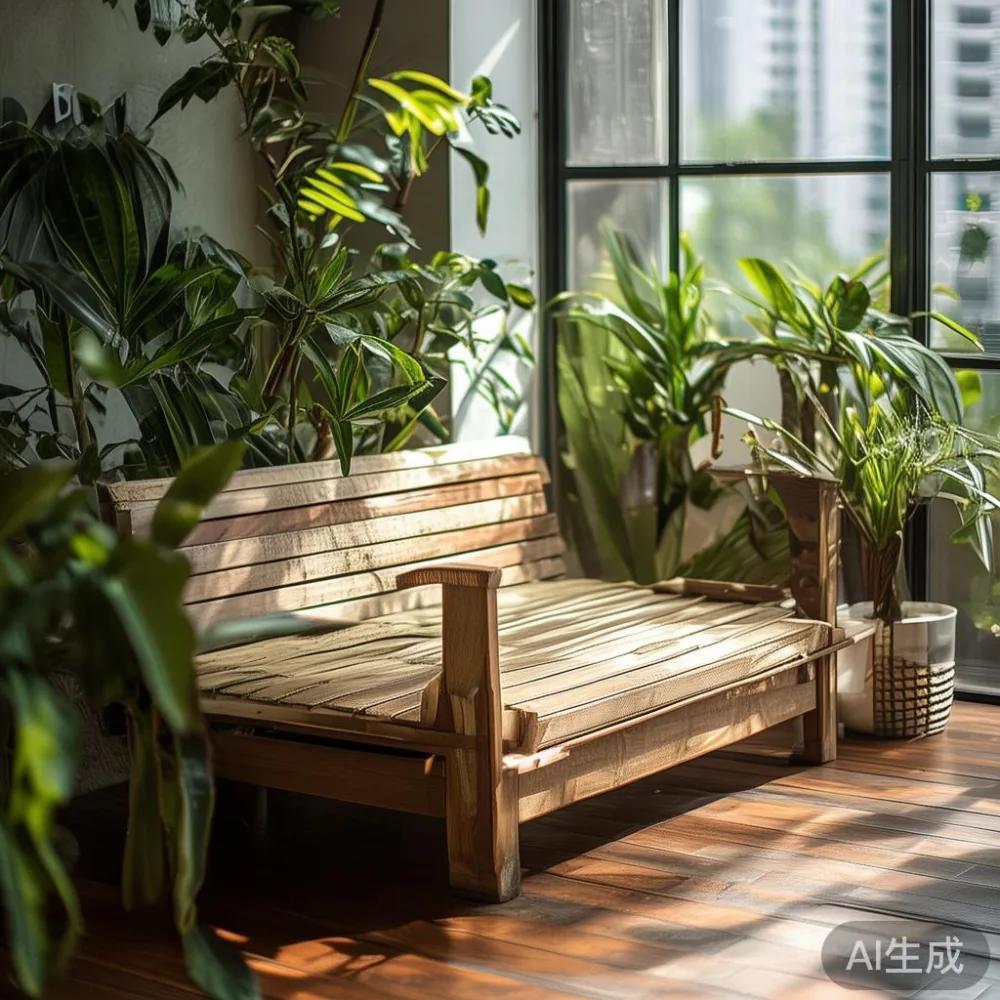
Why is humidity such a problem for solid wood furniture in Singapore?
Singapore sits almost on the equator. Average relative humidity runs between 70% and 85% for most of the year, and during the monsoon months from November to January it can climb above 90% in a non-air-conditioned space, such as a balcony, a service yard, or an unventilated storeroom. Solid wood is hygroscopic: it absorbs and releases moisture from the surrounding air. When the wood fibres swell in damp weather and then dry out under afternoon sun, they move, and movement is the enemy of a flat panel, a tight tenon, and a clean finish. An outdoor sofa made from kiln-dried teak, for instance, is engineered to handle this, but a piece of rubberwood or particleboard covered in a paper veneer is engineered to fail within a season or two.
What actually happens to a wood outdoor sofa on a Singapore balcony?
Let me walk you through a typical failure I see about once a month. A couple in Punggol buys a solid wood sofa with what looks like a generous 12-month warranty and brings it up the service lift to their 16th-floor unit. The balcony is covered but open on three sides. In May, the relative humidity on that balcony averages 79%. By September, after the southwest monsoon, the same balcony can read 88% at 8 a.m. The cushions go soft, the slats cup upward at the edges, the small brass brackets start weeping a green tear of copper carbonate, and within nine months the client is calling to ask if anyone services the brand. The cause is rarely the wood itself; it is the joinery, the finish, and the metal fittings that were never specified for 86% humidity and year-round UV.
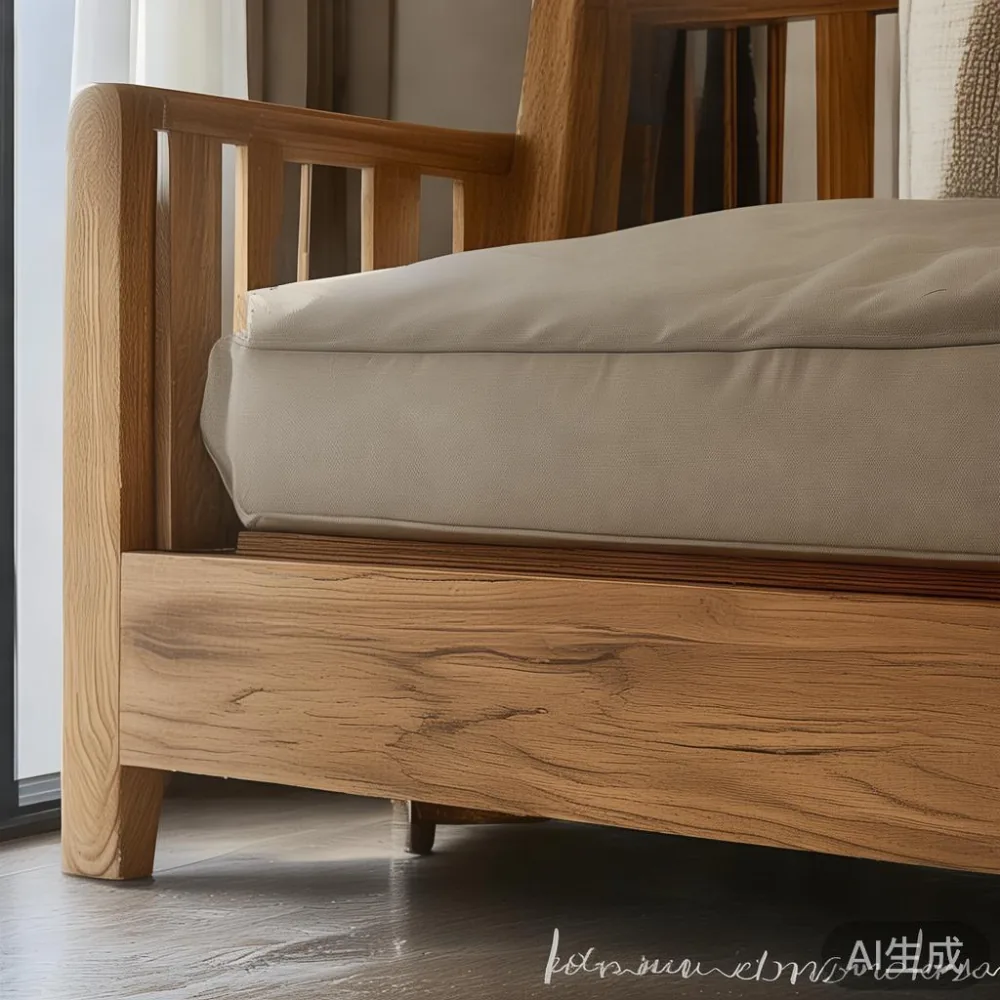
The same dynamic affects indoor pieces. A solid wood bed frame in a Bedok HDB that faces the afternoon sun will gain moisture overnight and lose it during the day, cycling through maybe 4 to 6 percentage points of internal moisture content each 24 hours. Over twelve months that is 1,500 cycles. Even a small movement of 0.3 mm per cycle will open a 4 mm gap at a mortise-and-tenon joint by the end of the second year. This is why an experienced maker like MIDHILL specifies kiln-drying to between 8% and 12% moisture content, then seals every face with a multi-coat finish designed for tropical, light-luxury interiors.
Is American sofa furniture worth it?
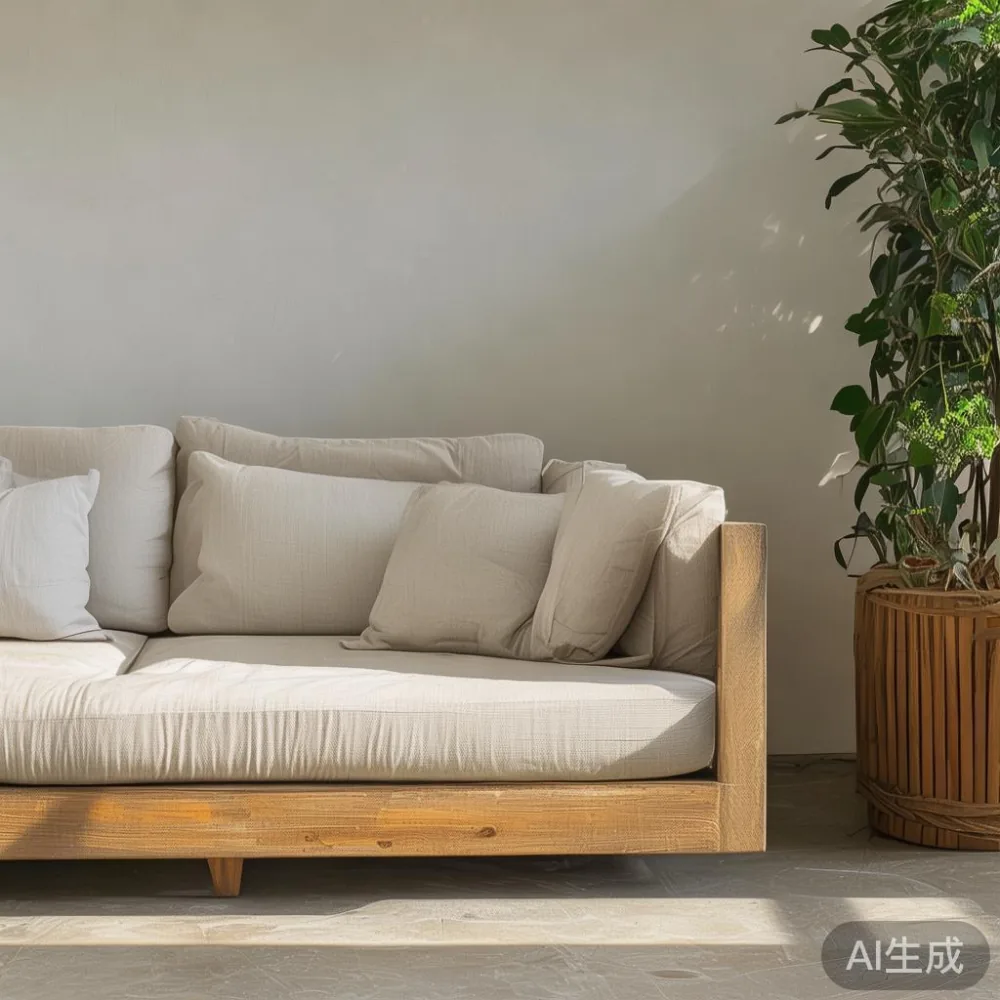
Yes, American sofa furniture built with kiln-dried solid hardwood frames, eight-way hand-tied bases, and sinuous-spring or pocket-spring seating is genuinely worth the SGD 2,400 to SGD 6,800 price band you see at the better Singapore retailers, because the frame geometry and the suspension are engineered for daily use over ten to twenty years rather than for a short showroom glow. The catch is that “American sofa” is a category, not a guarantee. A solid oak frame with a properly webbed base will outlast three flat-pack alternatives, but a pine frame with a stapled cardboard web will fail in our climate within five years. Ask the retailer for the species, the moisture content of the wood, and whether the suspension is genuine eight-way hand-tied. If they cannot answer in one sentence, walk out.
How do I choose a solid wood outdoor sofa that survives Tampines rain?
Five checks, in this order. One: the species must be either teak, eucalyptus, or shorea, with teak being the most weather-tolerant and the most expensive, typically SGD 3,200 to SGD 7,500 for a three-seater. Two: ask for the kiln-drying record. Proper kiln-dried teak should sit between 8% and 12% moisture content. Three: the joinery must be mortise-and-tenon or dowelled, never just screwed. Four: the metal fittings should be 304 or 316 marine-grade stainless steel, not zinc-plated steel, because zinc will corrode within a year in 85% humidity. Five: the finish should be a penetrating oil such as tung or danish oil, re-applied every 9 to 12 months. A polyurethane film will peel under UV within the first monsoon. A five-piece outdoor sofa set in the right specification is heavy, usually 85 to 140 kg, so confirm your HDB lift rating (typically 250 kg for the cabin, 750 kg for the door) and your corridor turning radius before you place the order.
How does humidity affect a Japandi solid wood wardrobe sg inside a HDB bedroom?
A Japandi solid wood wardrobe sg specification tends to mean a low-profile oak or ash wardrobe with flush fronts, paper-rice panelling, and a quiet matte finish, the kind of piece you see in the bedrooms of new BTOs in Punggol and Sengkang. The honest answer is that this style works beautifully in a Singapore bedroom, but only if two conditions are met. First, the wardrobe must be at least 5 cm away from the back wall so air can move behind it; otherwise mould will colonise the unseen panel within six months of the first wet spell. Second, the wardrobe must be built from solid, kiln-dried oak or ash, not from MDF with an oak veneer. A 1.8 m tall wardrobe in MDF will bow forward by 4 to 6 mm at the doors after a year of air-con cycling, which is why the very specific phrase Japandi solid wood wardrobe sg exists in the first place: buyers are looking for the real-wood variant that resists that bow. At MIDHILL, the wardrobe frames ship with a moisture content between 8% and 12%, which is the same target I would insist on for any piece destined for a Singapore bedroom.
What about dining tables, nightstands, and marble tables in a high-rise condo?
The same rules apply, with a small twist for stone. A solid wood dining table in a 1.8 m to 2.2 m length, made of kiln-dried oak or walnut and finished with hard wax oil, will move about 1 mm across its width through the year. That is acceptable. A 220 kg marble table in the same room will not move at all, but it will sweat. Cold stone in a 24-degree air-conditioned room condenses moisture out of the air onto its surface, and that moisture rings into any timber base if the joinery is not isolated with felt or closed-cell foam. A nightstand, being smaller, is more forgiving; a 50 cm wide oak or ash nightstand with sealed joinery will last twenty years. A particleboard nightstand at the same price will delaminate inside three. The recurring lesson is that humidity does not forgive shortcuts, and a 1 to 2 percent difference in moisture content at the factory becomes a 5 to 8 mm gap at the customer’s home within twelve months.
What practical steps should I take the week my furniture arrives?
Seven steps, all of them cheap. First, let the furniture acclimatise in the room for 72 hours before you unwrap it; this lets the wood moisture content equalise with your air-conditioned interior, which usually sits between 50% and 60% RH. Second, run a dehumidifier in the storage or balcony area at 55% RH during the monsoon months; a 12-litre compressor model costs around SGD 280 and pays for itself in one wet season. Third, keep all solid wood pieces at least 5 cm from external walls. Fourth, rotate cushions on the outdoor sofa weekly so the foam dries evenly. Fifth, wipe metal fittings with a dry microfibre cloth every fortnight. Sixth, re-oil the outdoor sofa with tung or danish oil every 9 to 12 months, budget about SGD 35 for a tin. Seventh, photograph the piece on arrival; if a warranty claim arises within the structural warranty period, the photos will protect you. With these habits, a well-made solid wood sofa, bed frame, dining table, or wardrobe from a maker that stands behind its joinery will look better at year ten than it did at year one.
Frequently asked questions about humidity and wood furniture
Can I leave an outdoor sofa on an open balcony year-round? Only if the species is teak, eucalyptus, or shorea, the fittings are 304 or 316 stainless steel, and you commit to a nine-to-twelve-month oiling cycle. Anything else, store the cushions indoors during heavy rain. Will my solid wood bed frame warp in an air-conditioned bedroom? No, because the air-conditioner stabilises the room at 22 to 24 degrees and 50 to 60 percent RH, which is ideal for kiln-dried hardwood. Do I need to worry about termites? Only on the ground floor of a landed property, and only if the wood is untreated sapwood. Termites do not eat properly kiln-dried heartwood. Is GST included in the price I see? In Singapore, GST is currently 9 percent and is shown separately on your invoice; any reputable exporter, including MIDHILL, will line-item it. How long does delivery take from a Foshan factory to a Singapore HDB? Typically 18 to 28 days by sea, plus 2 to 4 days for last-mile delivery to a unit in Tampines, Bedok, or Punggol, with free shipping above US$350. What about the 14-day return policy? The piece must be unused, in its original packaging, and the return shipping is on the buyer, so measure twice and order once.