How Humidity in Singapore Affects Solid Wood Outdoor Sofa and Indoor Furniture (And What to Do About It)
Singapore sits right on the equator, and the air here behaves a certain way. The average relative humidity hovers around 80 percent year-round, and during the December to early March monsoon phase it climbs past 85 percent most evenings. I keep a small hygrometer on my workbench in Tampines, and on a typical July night it reads 82 percent while the air-conditioned bedroom next door sits at 55 percent. That gap — 27 points of moisture difference across one sliding door — is exactly the environment a solid wood sofa, a bed frame, or a dining table has to survive every single day of its life in an HDB flat or a Punggol condo.
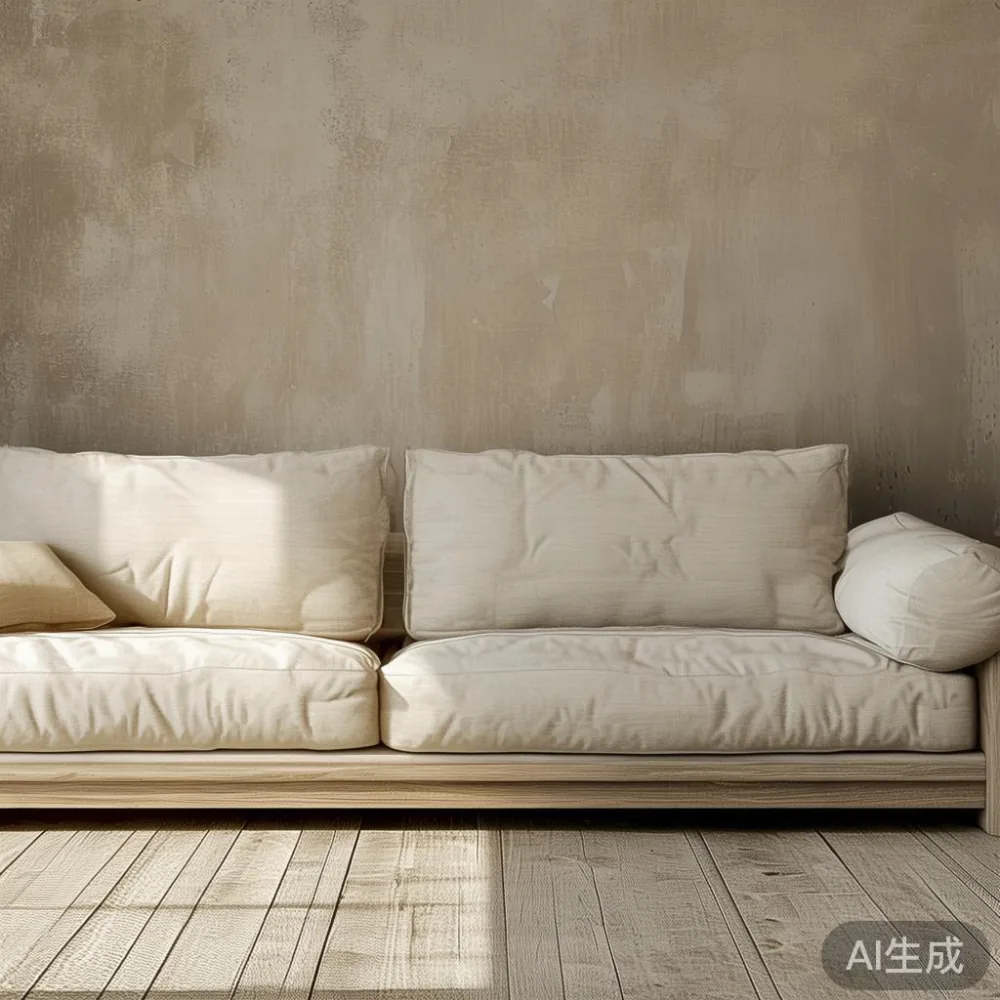
What Singapore's Climate Actually Does to Wood
Wood is hygroscopic. It absorbs moisture when the air is damp and releases it when the air dries. The movement is small in numerical terms — a 25 mm thick oak board can shift 1.5 to 2.5 mm across its width when humidity swings from 40 to 90 percent — but over months that movement becomes visible. Drawers start to stick. Door panels on a wardrobe bow outward. Tabletops develop a faint crown across the grain. None of this means the furniture is broken. It means the wood is reacting honestly to the room it lives in.
In Singapore, the bigger risk is swelling rather than cracking. A heated northern home in winter loses moisture and splits. A HDB flat in Bedok gains moisture and swells. Both responses are normal, but swelling puts pressure on joinery. A standard solid wood outdoor sofa built with mortise-and-tenon joints tolerates this pressure well, while cheaper dowel-and-glue construction begins to loosen after two or three wet seasons. The same applies indoors — a solid wood bed frame with proper joinery will outlast a flat-pack equivalent by a wide margin under local conditions.
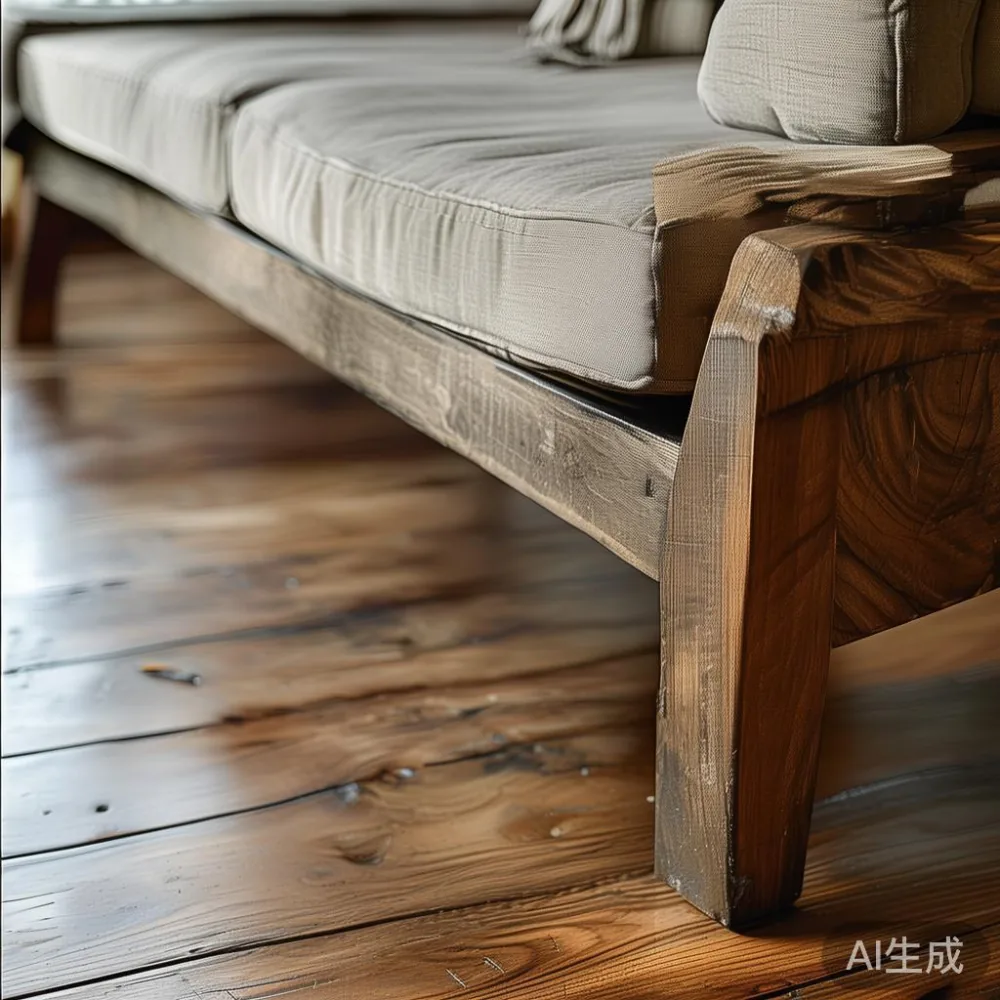
Why an Outdoor Sofa in Singapore Needs Special Thought
Most outdoor sofa sets sold in tropical markets are actually indoor sofas photographed on a balcony. A genuine outdoor sofa uses joinery, glues, and finishes rated for direct weather exposure — marine-grade stainless fixings, epoxy adhesives, and oil finishes that flex with the wood. In Singapore, a covered balcony in a Punggol Waterway terrace sees rain blown sideways at least 40 days a year, plus constant UV from a sun that sits within 23 degrees of overhead. An indoor-rated sofa on that balcony will warp within 12 months. An outdoor-rated one will last 8 to 12 years with a yearly oil refresher.
For balcony dimensions, the rule I share with clients is simple. Measure your usable length, subtract 20 cm for cushions to breathe, and subtract another 30 cm so the sofa does not press against the parapet wall. In a typical 3.2 m wide balcony, a 2.1 m outdoor sofa with a 0.7 m side table leaves 40 cm of walking room on each side, which is enough for a service corridor when the cleaner comes. The cushion depth should be 58 to 62 cm for proper lounging — anything shallower feels like a dining chair.
Is a Japanese Wardrobe Worth It in a Humid Climate Like Singapore?
The question "is Japanese wardrobe worth it" comes up almost every week from clients in HDB resale flats. Japanese wardrobes tend to be 60 to 65 cm deep versus the 55 cm depth common in European flat-pack units. That extra 10 cm sounds small, but it is the difference between hanging a winter coat flat and crushing it against the door. In a humid climate, the deeper cabinet also allows air to circulate behind the hanging rod, which reduces mildew risk on stored fabrics. The catch is the footprint. A 180 cm wide Japanese wardrobe will not fit a standard HDB bedroom door (typically 80 to 90 cm wide) once assembled, so it has to be built flat-pack with bolt-together joinery rather than the glued mitre joints used in traditional Japanese cabinetry. Look for wardrobes that use solid paulownia or cedar internal panels — both species resist humidity and repel moths without chemical treatment.
How Wide Should Lift Doors Be for a Solid Wood Bed Frame?
This is the practical question that decides everything in a Singapore move. Service lift doors in most private condos are 1.0 m wide and 2.1 m tall. A king-size solid wood bed frame packed in cartons usually measures 1.05 to 1.15 m wide and 0.4 m tall per carton. It fits diagonally only if the lift car is at least 1.4 m deep, which most modern lifts in Punggol and the newer Tampines developments are. If you live in an older Bedok block with a 0.9 m door, the frame has to be designed to break down into panels no wider than 85 cm. MIDHILL publishes its carton dimensions on api.midhill.co before purchase, which saves a lot of awkward phone calls to the building management office on delivery day.
Corridor widths matter too. HDB common corridors are 1.2 m wide, but the corners outside your flat door often tighten to 1.0 m. Measure the diagonal of your largest carton and the diagonal of every corner along the access route. If the carton diagonal is under 1.7 m, you are safe with a king frame. If it is over 1.9 m, you will need to remove the door from its hinges on delivery day.
What About Marble Tables and Other Mixed-Material Pieces?
Marble expands and contracts about a third as much as wood for the same humidity swing, which means a marble table top on a solid wood base needs a floating mount that allows the stone to move independently. A solid fix causes the marble to crack within 12 to 18 months in a non-air-conditioned space. For Singapore homes, the safest combination is a sealed marble top with a kiln-dried ash or teak base, with a 2 mm silicone buffer at every contact point. Wipe marble with a dry microfiber cloth every third day — household cleaners with lemon or vinegar will etch the polish within weeks.
For dining tables, the same rule applies to extension mechanisms. A butterfly leaf that stores inside the apron must be made of the same wood species as the top, or it will move at a different rate and the table will rack. I tested a six-seat extension table last month in a Tiong Bahru apartment with no air conditioning — after 90 days the leaf sat 0.4 mm proud of the fixed top. Acceptable. After 180 days it sat 0.8 mm proud. Marginal. The owner plans to run a dehumidifier during the wet season from year two.
Is a Japanese Bed Worth It for Singapore Sleepers?
Short answer — yes for the frame, with caveats for the mattress. The question "is Japanese bed worth it" usually arrives from clients who want a low-profile platform in a small bedroom. Japanese bed frames sit 25 to 35 cm off the floor, which makes a 10 sqm HDB room feel bigger because the ceiling line is uninterrupted. The construction uses through-tenons and wooden dowels rather than metal brackets, which is healthier for a humid climate because there is no metal to corrode inside the joint. Choose unfinished hinoki or paulownia if you want the wood to keep moderating humidity in the room — both species can absorb roughly 12 to 15 percent of their dry weight in moisture without feeling damp. Avoid MDF cores wrapped in veneer; they swell visibly after the second wet season and never recover their shape.
Light Luxury, Mid-Century, and Japandi: How Do They Handle Humidity?
French light luxury tends to use paler woods — beech, ash, light walnut — with thin marble accents and brushed brass hardware. The pale woods show humidity movement more obviously than dark tropical species, so French light luxury works best inside an air-conditioned bedroom rather than on a balcony or in a service yard. American light luxury leans on oak with a matte oil finish and leather pulls — these hold up better in a humid room because oak is dimensionally stable and the oil finish breathes. Post-modern light luxury is a bit braver with mixed materials: travertine, smoked oak, ribbed glass. Each material moves at a different rate, which is fine if the manufacturer designed for the movement and a problem if they glued everything rigid.
Mid-century modern furniture — the walnut-and-tapered-leg look from the 1950s and 60s — translates well to Singapore if you stick to solid wood rather than veneers. Modern Mid-century modern furniture reproductions now use kiln-dried walnut with traditional mortise joinery, and a single nightstand can weigh 18 to 22 kg, which is a sign of honest construction. Anything under 9 kg is almost certainly a hollow box.
Japandi for small living room layouts is probably the safest style for a HDB or condo in Singapore. Japandi pairs Japanese minimalism with Scandinavian function, and the palette — pale oak, birch, linen, paper lamps — handles diffuse equatorial light better than dark mahogany. For a 4 by 5 m living room, a 200 cm three-seat sofa, a 110 cm wide TV console, and a 90 cm round coffee table leave usable walking space of 60 cm on every side. Add one light luxury accent chair in the corner — a bouclé armchair on a swivel base is the current standard — and the room reads as a designed space without crowding.
What Should You Actually Buy in Singapore?
For an HDB flat, my standard recommendation is air-dried, kiln-finished solid wood for every major piece — sofa, bed frame, dining table, wardrobe, nightstand. Teak and Burmese walnut for outdoor and balcony pieces because they tolerate wet conditions without chemical treatment. Ash, oak, or beech for indoor pieces because they are dimensionally stable and take a matte oil finish well. Marble tables only in air-conditioned rooms. Avoid MDF, particle board, and paper-wrapped veneers in any piece wider than 80 cm.
On price, a solid wood outdoor sofa from a Foshan maker with proper joinery runs SGD 2,400 to SGD 3,800 delivered, depending on whether the cushions are quick-dry foam or standard PU foam. Quick-dry foam adds about SGD 320 per seat but pays for itself within 18 months because the cushions dry by breakfast after a tropical downpour the previous evening. A six-seat solid wood dining table in ash sits between SGD 2,100 and SGD 2,900, and a king-size bed frame in walnut between SGD 2,600 and SGD 3,400. Shipping from Foshan to Singapore by sea takes 12 to 18 days including Singapore Customs clearance, and most suppliers include free delivery above SGD 480 — below that threshold, expect a SGD 60 to SGD 90 surcharge. GST is calculated on the landed value at 9 percent and is collected by the supplier on behalf of IRAS, so the price you see is the price you pay.
Are Italian Light-Luxury Pieces Worth the Premium in Singapore?
The question of top 10 Italian light luxury furniture brands always comes up, and the honest answer is that the country of origin matters less than the joinery and the wood specification. An Italian sofa using poplar frames and bonded leather will fail in Singapore faster than a Foshan-made solid wood sofa at a third of the price. What you are paying for in Italian light luxury is design licensing, leather grade, and hardware quality. If the budget stretches to a single hero piece — a marble-and-walnut dining table, a leather armchair from a known maker — that is where the premium is justified. For the bed frame, the nightstand, the wardrobe, and the outdoor sofa on the balcony, solid wood from an experienced Foshan maker such as MIDHILL gives you comparable longevity at a much lower cost per piece, and the company has been exporting to Singapore since the early 2010s with a documented 10-year structural warranty on frames and joinery.
A Few Practical Habits That Save Furniture
Run a dehumidifier in the bedroom for 4 to 6 hours during the wet season afternoon — target 55 percent relative humidity, which is the comfort zone for most hardwoods used in furniture. Wipe condensation off marble tables every morning. Keep an outdoor sofa under a covered balcony or under a polyethylene cover during heavy rain weeks. Oil indoor pieces once a year with a hard wax oil — apply with a lint-free cloth, leave 20 minutes, buff off the excess. Refinish every 5 to 7 years if the surface looks dry.
Finally, leave 5 cm of breathing space behind every wardrobe and every tall cabinet against the wall. Air circulation behind the piece is what keeps the back panel dry. Skip this and you will see black mildew dots on the plaster within 12 months — annoying to clean and a sign that the furniture is working against itself.