How Southeast Asian Humidity Changes the Way Solid Wood Furniture Behaves
Singapore’s climate can change in a single afternoon. A bright equatorial sun may push an HDB living room in Tampines above 32°C, followed by a sudden shower that lifts the relative humidity to 88%. In Bedok and Punggol condos, an outdoor sofa near a balcony door can encounter warm, damp air, condensation and repeated temperature shifts while the rest of the flat remains comfortably air-conditioned.
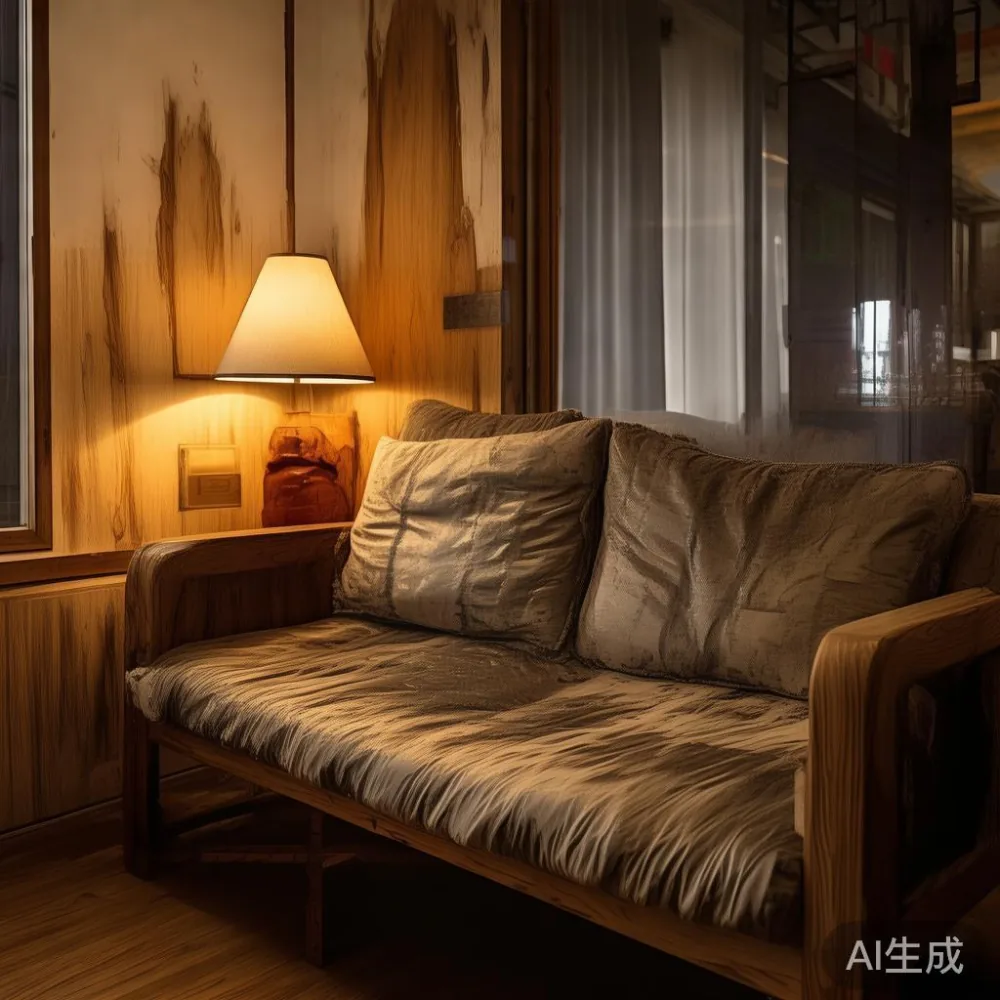
Those changes affect wood in ways that are easy to overlook. A solid wood sofa may develop a faint cool dampness on its underside, drawers can swell slightly, and a long dining table may show subtle movement along its joints. The objective is not to pretend that timber never changes. It is to select furniture, finish and placement methods that allow controlled movement while keeping the appearance refined and the structure serviceable.
MIDHILL designs solid wood furniture for practical homes, including outdoor sofa collections and pieces intended for tropical interiors. Its light-luxury direction draws on French provincial forms, restrained American proportions and post-modern detailing, but the manufacturing decisions still need to respond to local humidity, limited lift access and the realities of Singapore living.
What does high humidity do to solid wood furniture in Singapore?
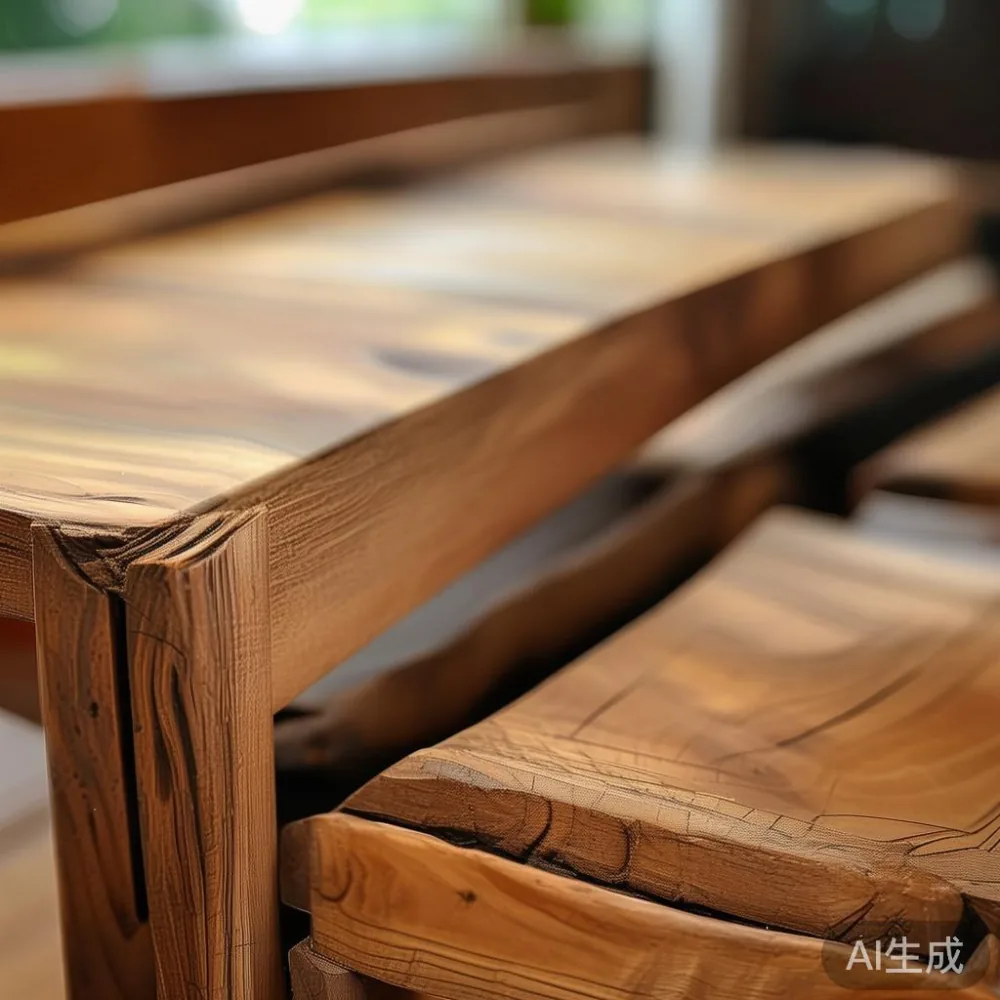
Wood is hygroscopic: it exchanges moisture with the surrounding air. In high humidity, microscopic fibres absorb water and the board expands. Across the grain, expansion is greater than along it. When relative humidity falls and the wood loses moisture, it contracts. Repeated cycles can open minute gaps, raise a veneer slightly or make a tight drawer feel difficult to close.
Singapore’s monthly humidity commonly ranges around 70–90%, while indoor conditions are usually maintained between 50–65% relative humidity in well-controlled living spaces. An outdoor sofa that remains fully exposed is subject to ultraviolet light, rain, dew and wind. Even a solid wood sofa placed beside an open balcony door sees different conditions from a bed frame 4 metres inside the flat.
The severity depends on timber species, board dimensions, joinery, finish and care. Solid panels can move more visibly than well-seasoned components, while engineered construction is not automatically moisture-proof. A 180 cm long table top needs more dimensional allowance than a 45 cm wide nightstand. A 200 cm wardrobe must be installed with space behind it for airflow and seasonal movement.
Surface finishes also matter. A permeable oil finish allows the timber to remain comparatively responsive, so the owner can maintain it through regular cleaning and waxing. A heavy film-forming coating slows moisture exchange but can eventually show fine surface marks. Neither approach can eliminate humidity; maintenance is still needed.
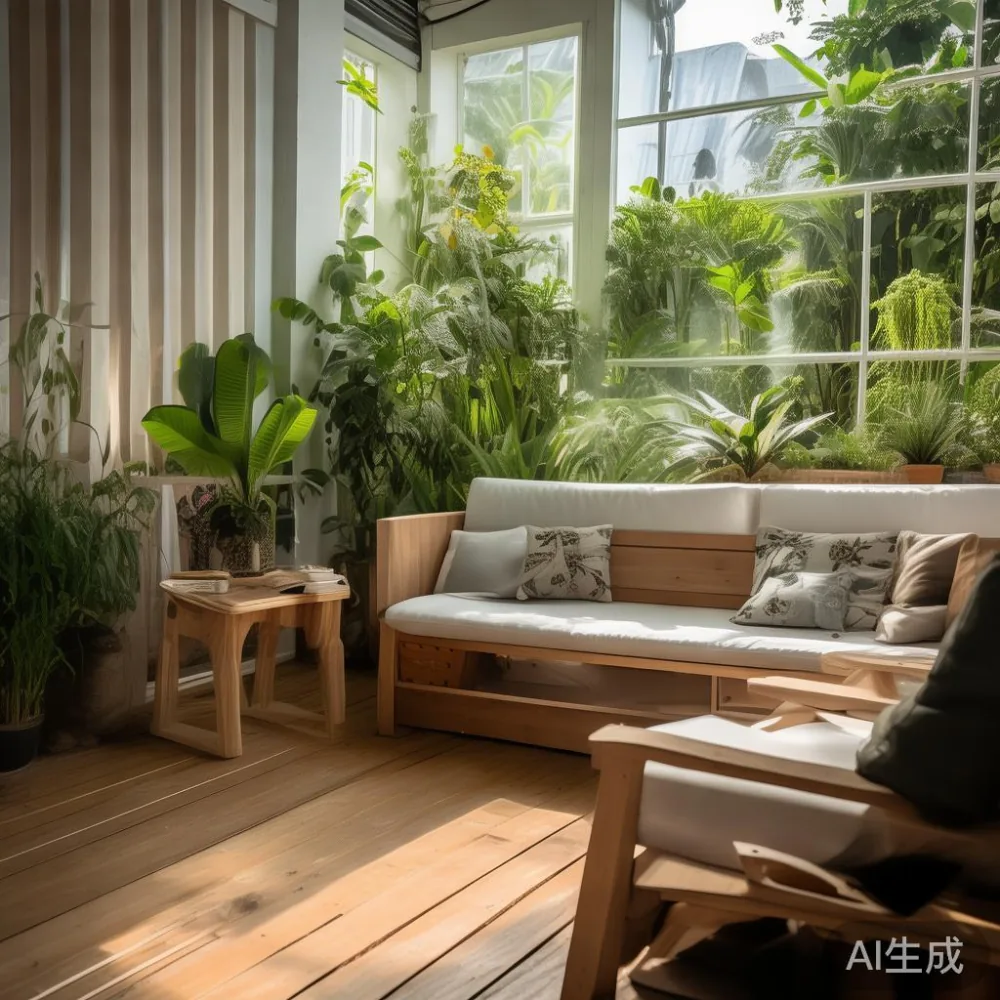
For the balcony or verandah, the word “outdoor” needs precise interpretation. A quality outdoor sofa may include weather-resistant cushions, stainless steel fixings and a treated solid wood frame, yet natural timber still requires shelter and drainage. The frame should never sit directly on a wet tiled floor. Feet should lift it by at least 5 cm, with ventilation beneath and at least 60 cm of clearance from a boundary wall where practical.
How much space do you need for delivery and installation?
Humidity is only one part of furniture ownership in a Singapore home. Access planning can prevent damage before a piece reaches its final position. Many HDB flats have a lift lobby around 140–180 cm deep, while common passenger lifts measure roughly 110–140 cm wide and 210–240 cm high in older blocks. Newer projects vary, so measurements should be confirmed with the building office or lift contractor.
A large outdoor sofa may arrive as separate modules rather than one unwieldy frame. A 240 cm three-seat configuration could be divided into 2 modules of about 120 cm, each weighing 35–55 kg depending on timber and cushion construction. That format can suit a corridor of 120 cm, but turning space still matters. A sofa module needs room to rotate; at a 90° angle, a 120 cm length needs approximately 170 cm of available diagonal clearance.
For a solid wood dining table, table tops should be carried on edge when possible, reducing the effective width presented to a doorway. A 200 cm table may weigh 55–90 kg, so a 2-person carry is sensible for many pieces, while a 3-person carry gives better control. Avoid dragging a frame across thresholds because repeated impact can loosen joints and damage feet.
The installation route should be measured in centimetres, not estimated visually. Record the entry door, corridor pinch points, lift door, lift depth, staircase turns and balcony threshold. Add 10 cm of working tolerance where a frame turns. For a bed frame, the assembled width might be 160–200 cm, but a king bed often needs to enter in 2 sections. A wardrobe may require vertical assembly in the bedroom because a 220 cm high carcass can exceed a 210 cm lift opening when tilted.
Singapore’s 9% GST is already reflected in displayed retail prices, so there is no separate tax line to add at checkout. Delivery timing also depends on access. A standard in-stock delivery may take 7–14 days after dispatch, while made-to-order pieces can require 6–10 weeks. Larger lifts, two-person handling or balcony stairs may add 1–3 days.
Which furniture pieces are most exposed to moisture changes?
An outdoor sofa occupies the most demanding position. Its frame may be near a sliding glass door, exposed to reflected sun and occasional rain. Cushions should be removable, and their covers should be washable according to the material specification. Under-seat panels need ventilation. A solid wood frame should be sealed on all faces, including the underside, with attention to end grain and joint lines.
A bed frame experiences less direct weather exposure but is sensitive to humidity because it encloses panels and sometimes a mattress. Allow ventilation beneath and behind the headboard. Avoid sealing a damp mattress tightly into an unventilated frame for months, and leave room for the frame to expand without forcing it against a wall.
A dining table near a kitchen or balcony opening can respond more visibly because of long surfaces and wide tabletop panels. Keep it at least 30 cm from an open window when rain can be driven in, and use coasters rather than wet rings. A French provincial dining table with carved details needs a stable interior location, because intricate profiles make any uneven movement more noticeable.
A wardrobe is usually the least reactive during daily use, but its height and enclosed volume deserve planning. Maintain at least 5 cm behind the back and 3–5 cm at the sides where installation allows. A nightstand is compact and easier to maintain, yet its small drawers can bind when humidity rises. Its top should not be placed beside a bathroom door where steam can repeatedly reach it.
Other large surfaces need the same discipline. A marble table does not expand like timber, but its marble top can be affected by moisture at adhesives, joints and stone interfaces. A coffee table should not be treated as a permanent drinks table near the balcony. A wardrobe interior should contain dry clothes and include moisture-absorbing products if the room regularly exceeds 65% relative humidity.
What is the best humidity level for a Singapore living room?
A relative humidity reading between 50–65% is a practical target for timber furniture, especially during periods of high outdoor humidity. Dehumidifiers are more useful than chemical absorbers in larger spaces. A unit rated for 20–30 m² can help maintain an HDB living room within a controlled range, provided it is placed on a level surface with unobstructed airflow and emptied before the tank becomes full.
Portable hygrometers should be placed near the actual furniture, not on an exterior wall where the reading may exaggerate conditions. Take readings at morning and night for 7 days. A reading of 82% beside a balcony door tells you more than a sensor in an air-conditioned bedroom showing 55%.
Air-conditioning helps by controlling both temperature and moisture when it runs long enough. Short cycling can create less consistent results. Doors and balcony openings should remain closed when the outdoor humidity peaks, particularly between 8 p.m. and midnight. In a compact Tampines flat, keeping the outdoor sofa well inside the sliding-door line can preserve the timber for years.
Do not attempt to correct seasonal movement with excessive tightening of screws. A dining table may need 4–8 mm of seasonal variation across a broad top, and forcing it flat can stress joints. On a bed frame, check that fasteners are snug rather than overtightened. Any gap wider than 2 mm, sticking hinge or persistent drawer bind should be reviewed before applying more force.
How should you care for an outdoor sofa and other solid wood pieces?
Start with placement. Keep an outdoor sofa under a roofed balcony, canopy or covered porch whenever possible. If rain reaches it, ensure the floor slopes away and the feet stand 5 cm above the surface. Use a breathable waterproof cover during prolonged rain. A tight vinyl cover can trap moisture, so it should be removed after the weather clears.
For a normal wooden surface, dust with a soft cloth slightly dampened with water, then dry immediately. Avoid household glass cleaner, ammonia and silicone-based polish. These products can leave residues or alter the finish. A pH-neutral wood cleaner and a manufacturer-approved maintenance wax are suitable for coated timber, but the exact product depends on the finish used.
Refresh the protective finish when water no longer beads on a test area. Apply it in shaded conditions with thin coats, following the product directions. During humid months, inspect visible surfaces every 2–3 months. Indoors, 2 applications per year are often enough for a dining table or bed frame; exposed outdoor frames may need attention every 6–12 weeks.
Leaking cushions are a common source of concealed damage. Remove them after rain, separate the cover and foam where the design permits, and dry both fully before reassembly. Keep at least 5 cm between the cushion and the timber wall where possible. Fasteners should be checked every 6 months, especially after the first 3 months of use.
For severe scratches, sanding and refinishing may restore the surface, but major joint movement should be assessed separately. A 10-year structural warranty covers qualifying structural defects, while a lifetime refinishing service can address serviceable surface wear. Warranty terms should be read for exclusions relating to outdoor exposure, standing water, improper storage and unauthorised modifications.
Can Singapore homeowners really buy a solid wood sofa online?
Yes, provided dimensions, delivery route and care requirements are confirmed before ordering. Online purchasing makes it easier to compare grain patterns, finishes and construction details, but photographs cannot show how a frame will fit through a narrow corridor. Request a dimensioned drawing, ask about module weight and verify the lift dimensions.
Confirm the delivery scope in writing. A threshold or balcony service may cost more than standard doorstep delivery, while simple hoisting can be quoted separately. For orders above US$350, MIDHILL provides free shipping, although international destinations follow their own freight arrangements. In Singapore, a standard order can still have access-related charges.
Returns are accepted within 14 days under applicable conditions, but a made-to-order solid wood sofa or wardrobe may have different production rules. Furniture that has been installed, altered or exposed to moisture should be documented with dated photographs if damage occurs. This protects both the homeowner and the maker.
Style also has to suit the architecture. French provincial dining table detailing can feel formal in a compact HDB flat, so a 140–160 cm round model may preserve circulation better than a 200 cm rectangular one. American light luxury favours generous cushions and clean lines, useful for a condo with generous windows. Post-modern light luxury can introduce slimmer profiles and mixed materials, but the timber frame should remain the visual foundation.
How do I compare French, American and post-modern light luxury furniture?
Compare proportion, construction and maintenance rather than labels alone. French provincial furniture typically uses curved edges, shaped aprons and a more decorative rhythm. American light luxury tends to emphasise generous comfort and broad planes. Post-modern light luxury often combines simpler silhouettes with contrasting details or mixed materials.
For a Modern light luxury dining table, the same questions apply: is the top solid timber, how is it joined, and can it move with humidity? Look for clear joining details rather than relying on a product label. For the best European light luxury bed for 2026, examine slat spacing, centre support and clearance around the frame, not only the headboard design.
Buyers often ask whether an American sofa is worth it, and the answer depends on the frame, cushion density, dimensions and service terms. An outdoor sofa may use broader weather-resistant cushions than an indoor model, while an indoor solid wood sofa can use softer upholstery that should stay away from wet balconies.
Material choices should be practical. A marble table can add a cool surface to a humid room, yet it requires careful edge and joint care. Solid timber in a bed frame, dining table, wardrobe or nightstand should be selected for stable indoor conditions. A MIDHILL coffee table with a durable finish may suit a busy living room better than one with a highly porous natural stone top.
What should you measure before ordering furniture for an HDB flat or condo?
Measure the room, then measure the route. Record the narrowest point at 3 different heights, since handles, sockets and ceiling fittings can reduce clearance. Check the lift’s rated capacity as well as its internal dimensions. A 70 kg module may fit physically but exceed a low-capacity lift’s safe load.
For each piece, note length, width, height and weight. Allow 5 cm around freestanding furniture where airflow matters and 10 cm of working clearance during delivery. Check whether the piece disassembles without damaging its finish. Solid wood dining tables often separate more readily into legs and top; a complex wardrobe may require more involved assembly.
Lighting and wall positions should also be considered. An outdoor sofa beside a west-facing Tampines balcony can receive intense afternoon sun. UV exposure can fade upholstery and lighten timber faster than humidity alone. A blind or canopy can reduce exposure, while curtains should not press against a solid wood frame where moisture may remain.
Last month I visited a colleague’s 3-room HDB flat in Bedok with a balcony used almost every evening. Its outdoor sofa had a treated solid wood frame, removable cushions and 6 cm raised feet. We placed a hygrometer beside the sofa and another beside the air-conditioned dining area. The balcony reading moved from 68% to 84% after a shower, while the dining area remained near 57%. The useful decision was not to replace the sofa, but to move it 40 cm inside the sliding-door line, add a covered storage mat for cushions and check the frame every month. After 6 weeks, no mould was present and the sliding drawer of the adjacent nightstand moved normally.
That example reflects a sensible Singapore approach: measure the microclimate, control the largest moisture source and maintain the finish. Solid wood furniture can remain structurally sound and visually warm for many years when the owner understands that humidity causes small, reversible movements rather than catastrophic failure. The right combination of clear dimensions, responsible placement and regular care is more useful than any guarantee that timber will never respond to the climate.