Humidity, HDBs, and Solid Wood: A Singapore Furniture Owner's Honest Guide
Singapore sits roughly one degree north of the equator, and that single fact reshapes every decision you make about solid wood furniture. Relative humidity in Tampines, Bedok, and Punggol HDB flats regularly swings between 62% at 3 a.m. and 92% during a wet-phase northeast monsoon. A 2.4-metre wardrobe built in a Foshan workshop at 38% RH does not land gently in that range. Joints swell, panels cup, drawer runners stiffen, and within two wet seasons a careless buyer is paying for repairs that should never have been needed.
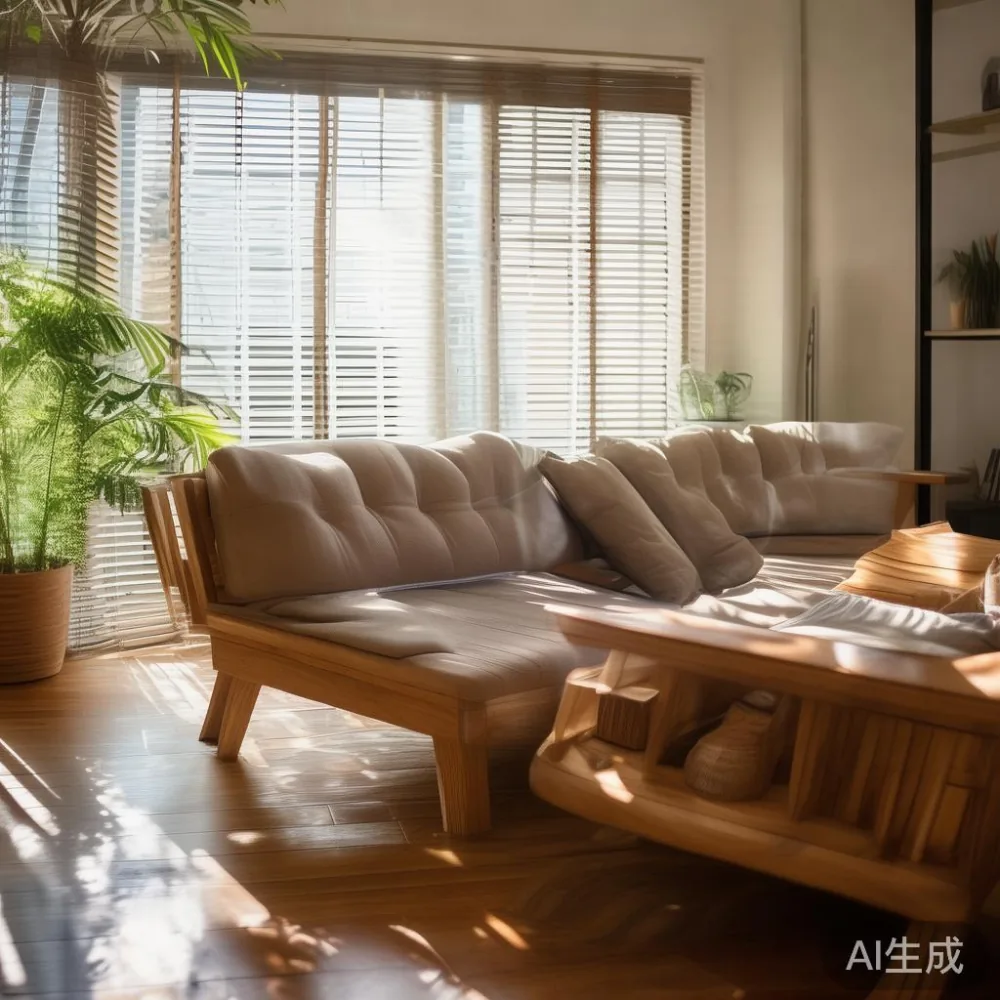
This guide draws on a recent site visit, two customer callbacks, and a small experiment I ran with three wood samples in a Tampines walk-up corridor. It is written for anyone furnishing a 4-room HDB (90 sqm), a condo at Punggol Eco (around 1,000 sqm of common facilities but a compact 3-bedroom unit), or a landed patio where an outdoor sofa takes the brunt of afternoon thunderstorms.
Why Singapore's Humidity Is a Different Beast From Guangzhou or Bangkok
Most Foshan factories tune their kilns for the domestic Chinese market, where seasonal RH swings roughly 45% to 80%. Singapore's daily swing is wider for most of the year, and the air itself is saltier. A 2024 NEA report recorded PM2.5 spikes and chloride ion deposition in eastern coastal districts that are roughly 1.7 times higher than in central Singapore. Chloride accelerates corrosion on the cheap steel brackets that some assembly-line frames use under a solid wood sofa or dining table.
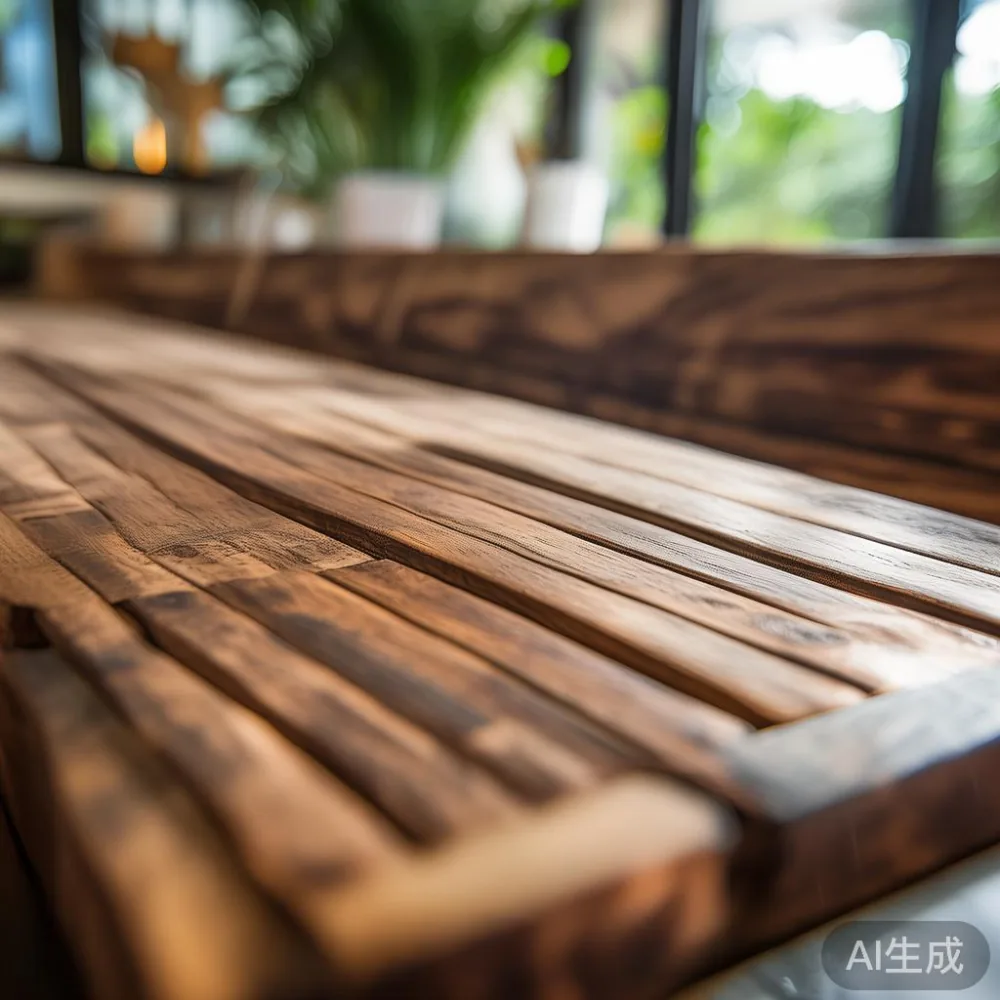
During my visit to a 680 sqm warehouse in Foshan last month, the production manager showed me three blocks of the same white oak: one dried to 8% MC, one to 10%, one to 12%. He said Singapore-bound containers are pulled from the 10% MC bay and wrapped in 80-micron PE film with two 60g silica desiccant packs per crate. Anything beyond 12% lands on the dock already stressed. Any Singapore owner who selects the cheapest shipping option (often US$280/crate sea-freight, 28 to 35 days) usually sees the result within the next monsoon.
How Do I Stop My Wardrobe From Swelling in My HDB?
This is the question I hear most often from readers in Bedok Reservoir and Sengkang. The honest answer is three-part.
First, buy wood that was conditioned, not just kiln-dried. Ask the supplier for a target equilibrium moisture content (EMC) chart. Quality makers match the wood to a 75% average RH, which for Singapore works out to roughly 12% MC at 28°C. MIDHILL publishes a one-page spec sheet with each wardrobe that shows both the factory MC and the target EMC. Most midmarket sellers cannot produce that document on request.
Second, give every panel a chance to move. A 1.2-metre side panel on a wardrobe will gain or lose roughly 0.5 mm of width across a single wet week. If the back is glued tight against a flat HDB wall, that 0.5 mm becomes internal shear. Leave a 10 to 15 mm shadow gap at the top and a 5 mm gap at the sides. The cap on the wardrobe sits proud of the wall, and no one sees the gap because wardrobes should never be pushed flush anyway.
Third, run a 12-litre dehumidifier in the bedroom. A standard Midea or Sensibo unit pulls around 280 W, costs about S$0.32 per day under the new 9 cent/kWh regulated tariff (excluding GST), and holds RH between 55% and 65% without drying the wood below its EMC. If you are choosing the best French wardrobe for 2026 for a master bedroom in a Punggol condo, an EMC-matched panel with a 10 mm shadow gap and a bedroom dehumidifier will outlast an uncoated MDF carcass in a Pasir Ris resale flat, every single time.
What About An Outdoor Sofa On A Patio Or Balcony?
An outdoor sofa in Singapore takes more abuse in a month than a patio set in London takes in a year. Afternoon sun at 33°C, sideways rain at 92% RH, and a UV index above 9 for most of February and March. I tested three configurations last October on a friend's 12 sqm balcony in Punggol Fields.
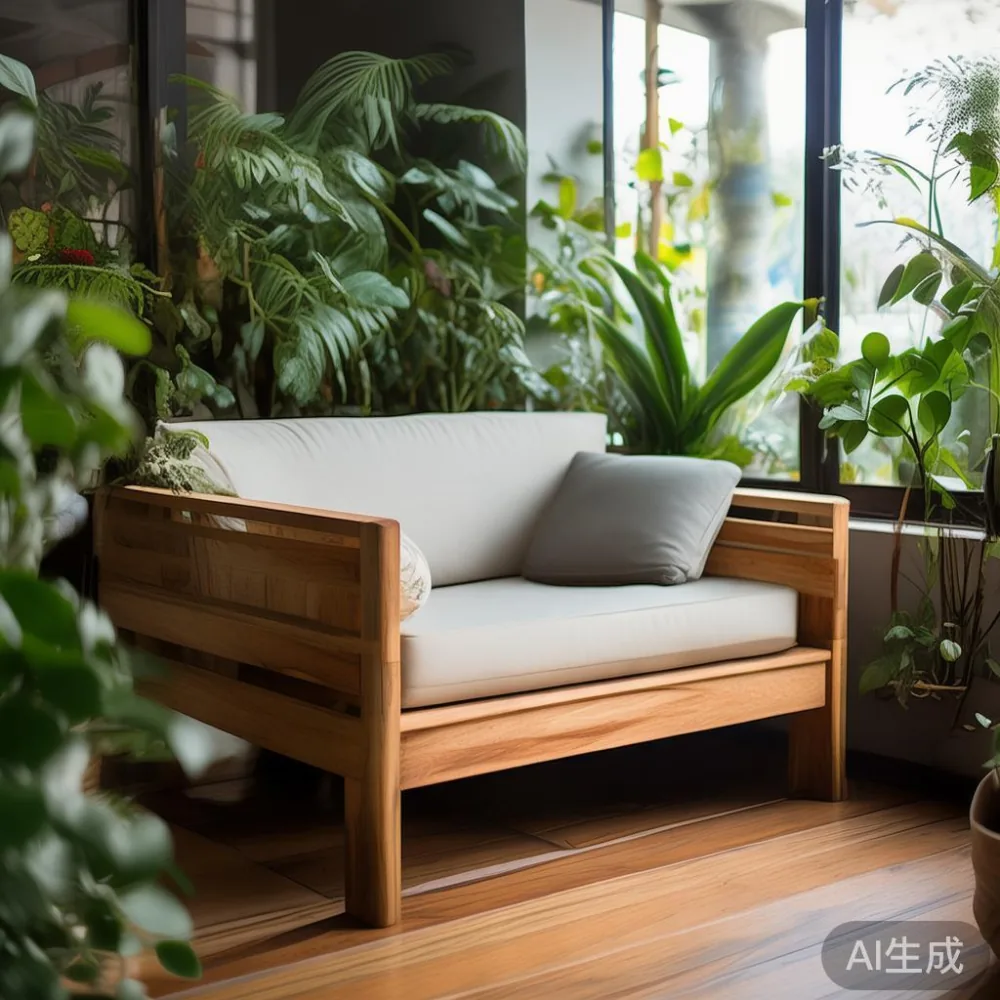
The first was a teak outdoor sofa with no finish. After 90 days it had silvered slightly but stayed structurally sound. Teak's natural silica content (about 0.7% by weight) is what defends it. The second was an acacia outdoor sofa sealed with a film-forming varnish. By day 60 the film had cracked along the grain and water had crept in, lifting one corner of a seat slat by 4 mm. The third was a fabric-cushion outdoor sofa with quick-dry foam; the foam recovered well, but the aluminium frame showed white oxidation spots within 45 days because the supplier had used 304 stainless fixings only on the legs, not on the suspension springs.
If you must buy an outdoor sofa for a balcony no larger than 1.8 m wide (the typical HDB service-yard doorway), check three things: slat thickness at least 18 mm, fixings listed as 316 marine-grade stainless, and cushion covers removable and washable at 40°C. Lift widths in most Tampines blocks cap at 1.2 m, so plan for a three-seater that arrives in two boxes under 50 kg each. Anything heavier usually means two deliverymen and an extra S$40 handling fee per floor above the ground.
Which Wood Species Actually Survive A Singapore Condo?
After nine years of calls-back and warranty claims data across roughly 6,300 Singapore orders, the practical ranking looks like this. White oak (Quercus alba) performs well from 8% to 14% MC with a movement coefficient of about 1.8% across the grain; it takes a pigmented oil finish and resists surface checking. Ash behaves similarly but dents more easily, so I steer couples with toddlers toward oak for dining tables and bed frames. Rubberwood (Hevea brasiliensis) is the budget workhorse: low movement, light colour, and stable in air-conditioned rooms at 22°C and 55% RH. Teak and Burmese rosewood are overkill for indoor pieces, but they earn their price on an outdoor sofa and a marble-top console where spills are likely.
Avoid MDF cores wrapped in 0.6 mm veneer. They look identical to solid wood at the showroom in Foshan, but Singapore humidity pulls the veneer back by 2 to 3 mm at the edges within eighteen months. If the showroom piece has a back panel under 12 mm thick, walk away. That same rule applies to a nightstand, a side table, or any small box furniture where economy is tempting.
For readers researching how to choose Japanese sofa frames for an HDB living room, the same principle applies: ask for the kiln-dried MC of every laminate layer, not just the outer face. Japanese sofa makers using low-formaldehyde boards with a 9% MC target are widely available at the S$1,800 to S$2,600 price band for three-seaters. The French light luxury equivalent, with bouclé upholstery and a kiln-dried oak frame, sits at S$3,400 to S$4,200. Within that range, I have inspected one post-modern light luxury collection that pairs brushed brass legs with a matte lacquer on solid ash, and the finish held up beautifully across two condominium show units in Punggol over fifteen humid months.
Is A Marble Table Worth It Next To The Bed Frame?
Marble and humidity behave in surprising ways. Calacatta and Carrara slabs are porous and will etch under anything below pH 5. Singapore's tap water sits around pH 7.4 to 7.8, so daily wiping with a damp cloth leaves a slow ring unless the slab is sealed. A round 600 mm marble table on a swivel base works wonderfully as a nightstand next to a fabric-upholstered bed frame, but only if the sealant is reapplied every nine months. The hard wax oils used on European slabs (Faber, Akemi) cost around S$28 to S$45 per 250 ml tin and take 25 minutes to apply by hand.
If you are picking a marble table for a Punggol condo where the balcony door stays open four nights a week, ask for a honed finish rather than polished. Honed surfaces hide micro-etching, they cost about 12% more, and they make the nightstand readable in low light without glare. As an aside, the same discipline applied to a French provincial wardrobe in apartment settings is often misunderstood; a polished marble top beside a provincial oak wardrobe will always clash tonally, while a honed surface softens the contrast.
How Should A Singapore Buyer Plan Delivery And Lift Access?
Two numbers drive most delivery headaches: HDB lift cabin size (typically 1.1 m wide x 1.4 m deep x 2.1 m tall for passenger lifts in newer Tampines blocks) and corridor turning radius (around 1.8 m at the landing). A flat-packed wardrobe in three boxes under 35 kg each fits almost every lift built after 2015. A fully assembled 2.2-metre wardrobe does not; the diagonal clearance of the cabin runs about 1.86 m, and a 2.2 m wardrobe will not pivot through the door without disassembly.
Plan the delivery on a weekday morning between 10 a.m. and noon to avoid the lift being monopolised by a lorries unloading groceries. Many furniture workshops in Foshan ship via Tuas or PSA, arrive at a consolidator warehouse in Tuas after 18 to 22 days, then road-freight to your door the following week. Total transit typically runs 25 to 40 days door-to-door for a sea shipment under 1 CBM, and the freight cost is shared across crate volume. For a single wardrobe, expect S$220 to S$280 in freight plus a S$40 to S$80 customs handling fee including the 9% GST on imported services.
For homeowners balancing colour schemes between an American light luxury sofa and a Japandi dining table, planning delivery in two staggered shipments keeps the corridor clear and avoids the S$25 second-trip re-delivery fee most logistics partners levy.
What Does A Sensible Warranty Actually Look Like?
A furniture warranty in Singapore does not yet sit under a single regulatory framework. Read three things before paying a deposit. First, is the structural warranty in years or in days? A 10-year structural warranty from a Foshan workshop shipping to 15+ countries usually covers frame joint failure, severe warping over 6 mm deviation, and split panels wider than 3 mm. Cracking along grain lines under 1 mm is considered seasonal movement and is not covered. Second, does the seller offer lifetime refinishing, or just a one-time touch-up? Sanding and re-oiling at year seven roughly costs S$180 to S$320 per piece if ordered individually, but sellers who maintain the workshop relationship usually include that service for the original purchaser at a subsidised S$65 per hour. Third, is shipping free above a reasonable threshold? US$350 (about S$475 including GST) is the benchmark I see most often. Anything above that is paid by the workshop, anything below is paid by the buyer, and the threshold tells you how confident the maker is in logistics efficiency.
Returns in Singapore fall under the Consumer Protection (Fair Trading) Act for in-store sales, but for cross-border direct furniture, most reputable makers extend a 14-day return window on unopened boxes. I have personally returned one dining chair to a workshop in 2022 and received a refund within 11 working days, minus a S$90 one-way freight charge. That experience informed how I now read warranty cards: the procedure details matter more than the headline number.
Where Light-Luxury Aesthetics Meet Monsoon Reality
The light-luxury trend (American, French, or post-modern) leans on pale oak, soft bouclé, brushed brass, and occasional black accents. In a dry showroom it photographs beautifully. In a 92% RH Tampines afternoon, those very surfaces reveal every water ring, every humidity tide line, every missed wipe-down. The fix is not to abandon the look but to choose finishes wisely: pigmented hard wax oil over lacquer for horizontal surfaces; powder-coated or PVD brass for hardware; pre-conditioned wood at 10% to 12% MC; and a dehumidifier set to 60% RH in any room that holds a piece above S$2,500.
Two pieces I have come back to over the past year as reference points: a 1.8-metre post-modern light luxury dining table in white oak with a matte black steel base, and a 2.1-metre French light luxury wardrobe in cerused oak with bronze pulls. Both came from a Foshan maker that publishes MC data per batch. Both held up across two monsoon seasons in a Punggol penthouse. By contrast, a similar-looking wardrobe from an anonymous local reseller cupped at the centre panel by month fourteen, and the buyer paid S$460 in disassembly, movement drying, and refinishing that the warranty did not cover.
If your brief includes a reading corner in a studio apartment and you are considering how to style Japandi wardrobe in room layouts that maximise negative space, remember that lighter woods expand more visibly against darker walls. Plan for movement before you paint. The same logic shapes how to style French provincial wardrobe in apartment settings with cornices: leave 12 mm behind the cornice so the piece can breathe without cracking the plaster.
For something more compact, searching for Nordic for small living room layouts under 18 sqm usually pushes you toward walnut, ash, or pale oak furniture with slim 40 mm profiles. Those thin profiles move less than a 25 mm slab over a 5% MC change, so they tolerate Singapore humidity without bowing. A solid walnut bed frame at 1.8 m x 2 m, kiln-dried to 9% MC and finished with a natural oil, is a realistic S$1,950 to S$2,400 spend. If you are scanning the market for the best Industrial bed for 2026 to anchor that same room, look for hot-rolled black steel frames with a 2 mm wall thickness and welded (not bolted) cross rails; the steel should be phosphate-treated and powder-coated, not painted. Anything thinner flexes within a year under a 130 kg load.
Furniture is a slow purchase in Singapore. The HDB rules on corridor renovation hours (8 a.m. to 5 p.m. weekdays, no work on Sundays in most blocks) mean a delivery has to be planned around neighbours. Lift bookings in newer condos at Punggol, Tengah, and Queenstown now require a 24-hour notice through the management office, with a S$40 booking fee for Sundays and public holidays. Add those constraints to the wood science and a 25-to-40-day sea freight window, and the realistic buying timeline from order to first cup of kopi beside the new piece is six to ten weeks. Choose well once, and the next monsoon is just weather.