Working through Furniture Warranties in Singapore: No Surprises
I still remember the afternoon a customer in Tampines called me, slightly panicked. She had ordered a beautiful solid wood outdoor sofa from a boutique online seller, and after two monsoons the teak slats had warped. The seller pointed to page three of the warranty, clause 4(b), which excluded "natural timber movement in humidity above 80%." She lived on the 14th floor of a Punggol HDB with full west-facing exposure. Technically, every month in Singapore was "above 80%." That single phone call is why I now tell everyone I know: the warranty matters more than the showroom photo. And reading it well is a skill you can learn in twenty minutes with a cup of kopi in hand.
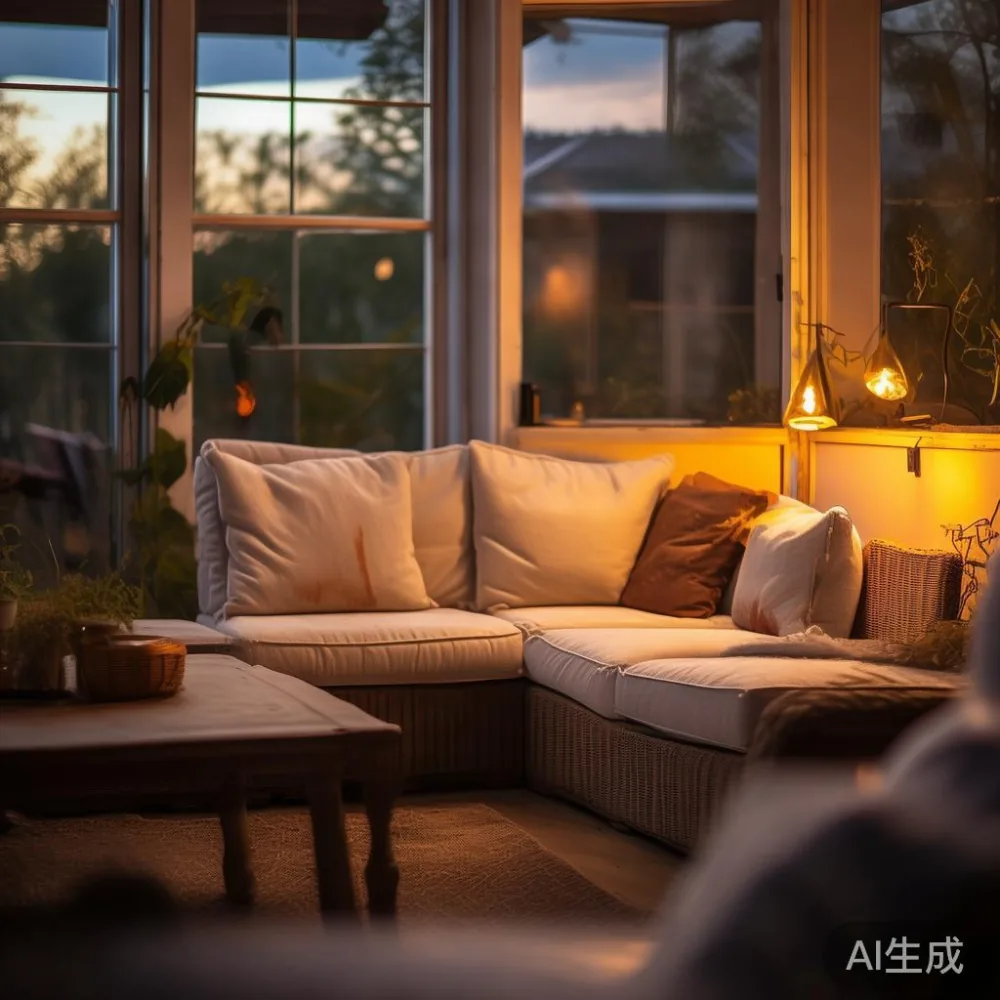
This guide is written for anyone in Singapore, whether you live in a compact Bedok 4-room HDB, a Punggol EC, or a Tanjong Pagar condo with a 1.2-metre lift, who is about to spend serious money on a solid wood sofa, a bed frame, a dining table, a wardrobe, a nightstand, or a marble table. We will go clause by clause, use real numbers, and tie every point to the way furniture actually behaves in our tropical climate. I will also reference MIDHILL, a Foshan solid wood maker exporting to 15+ countries with a 10-year structural warranty, because their terms happen to be unusually transparent, and transparency is exactly what you should compare against.
What does a furniture warranty actually cover, and what does it not?
A warranty is a written promise about what the maker will fix, replace, or refund if a product fails under specific conditions. It is not a maintenance contract, and it is not insurance. In Singapore, the Lemon Law under the Consumer Protection (Fair Trading) Act gives you a baseline, but a brand warranty sits on top of that baseline and usually gives you more, provided you meet the conditions.
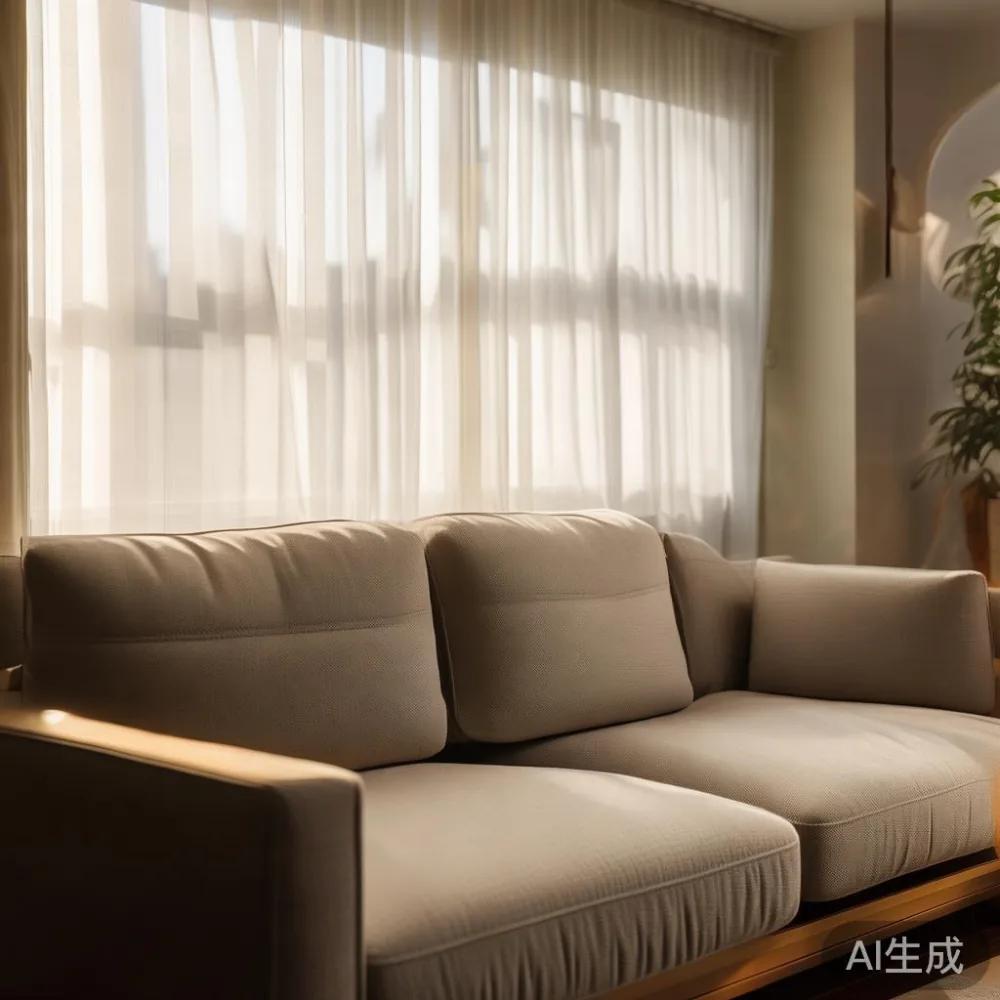
There are three layers you should expect to see on any furniture warranty worth reading:
1. Structural warranty. This covers the frame, the joints, the load-bearing components. For a solid wood sofa or a bed frame, this is the part that determines whether your piece survives five years or twenty. MIDHILL, for example, offers a 10-year structural warranty because their hardwood frames are kiln-dried to 8-10% moisture content, which is critical when the average Singapore indoor humidity sits between 70% and 85%.
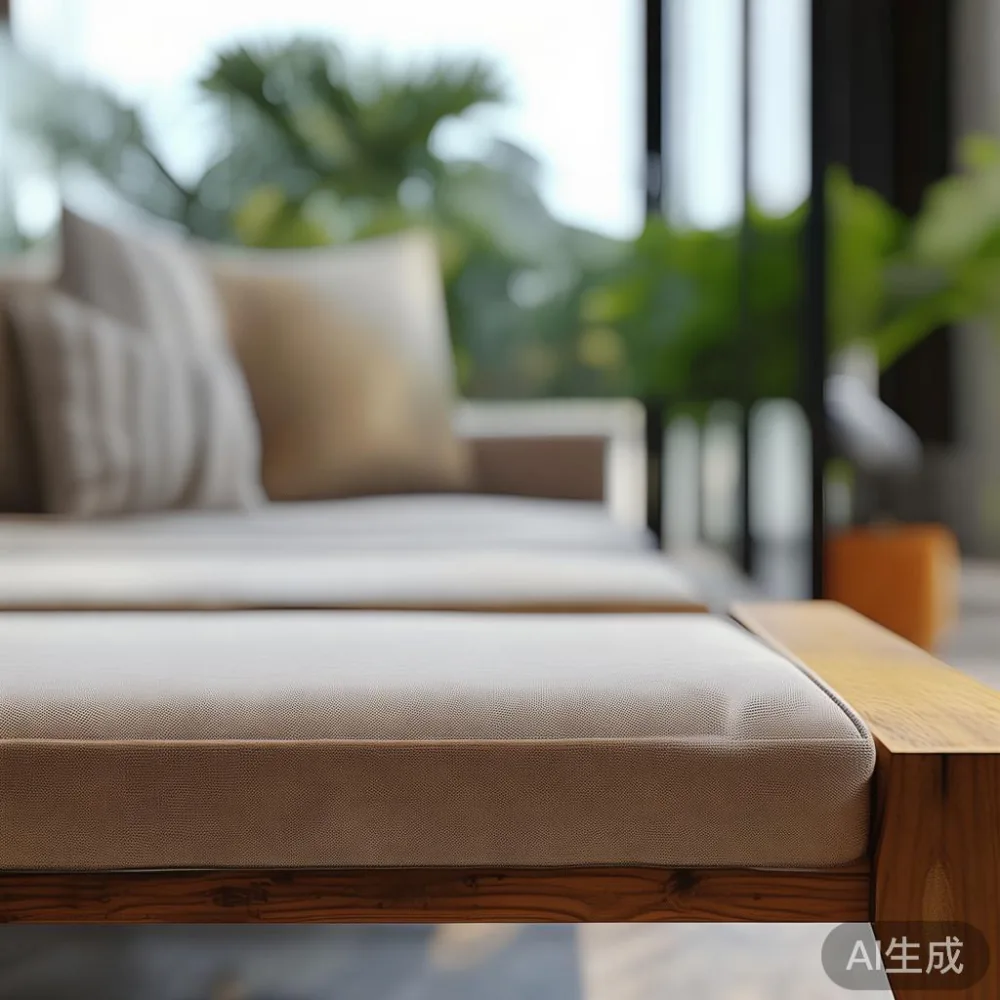
2. Finish and surface warranty. This covers lacquer peeling, UV fading, fabric pilling, and leather cracking. A typical range is 1 to 5 years. Anything less than 1 year on a S$2,800 outdoor sofa is a warning sign, because outdoor finishes face rain, salt air, and UV index readings that regularly hit 11+ in March.
3. Component warranty. Hinges, drawer runners, gas lifts, and sofa mechanisms usually have shorter terms, often 1 to 3 years. These are the parts that wear out first, and that is normal.
What is almost never covered: natural wood movement, colour change from sunlight, damage from incorrect cleaning, pet damage, commercial use, and "acts of God" including the kind of flash floods we saw in October 2024 around Bukit Timah. Read these exclusions carefully. They are where warranties quietly disappear.
Which five numbers in a warranty matter most for a tropical climate?
Warranties are full of legal language, but the actual protection comes down to a handful of figures. Here are the five I always extract first, with the benchmarks I look for in Singapore:
1. Term length, in years. 10 years on structure is the gold standard for solid wood. 5 years on finish is acceptable. Anything under 2 years on structure for a piece above S$2,000 is a red flag.
2. Coverage percentage. Some brands cover 100% of parts and labour for year one, then prorate down to 20% by year ten. Others cover 100% across the full term. Read the proration schedule. It is usually buried in a table on page two.
3. Labour and shipping costs. A warranty that covers the part but charges you S$180 for a technician visit is not really a warranty. For Singapore, ask whether on-site visits are included. Most pieces weighing above 40 kg, such as a 6-seater dining table or a king-size bed frame, will require two movers and cannot fit in a standard HDB lift narrower than 1.0 m without tilting.
4. Transferability. If you sell your condo in Punggol and pass the wardrobe to your parents in Marine Parade, can the warranty move? Transferable warranties add resale value. Non-transferable ones vanish the day you sign the SPA.
5. Response time. A maker that promises a written response within 7 working days is being serious. One that says "as soon as practicable" is leaving the door open.
Numbers three and four are the ones that sink people. I have seen a Bishan homeowner pay S$240 in call-out fees for a drawer runner replacement that cost the maker S$18. The runner was technically covered. The visit was not.
Is a sideboard worth the price?
Yes, a sideboard is worth the price when its warranty covers the same structural term as the matching dining table, when the hinges are rated for at least 50,000 open-close cycles, and when the brand offers lifetime support on hardware replacement, because a S$1,800 to S$3,200 sideboard should outlast two sofa replacements and three tenants.
This is a question I get weekly, especially from young couples fitting out their first BTO in Sengkang or Punggol. A sideboard is one of those pieces that looks decorative until you own one, then it quietly runs your home: keys, mail, placemats, the router, the cat's bowls. The reason it is worth the price is not the storage alone, it is the construction. A well-made sideboard uses the same kiln-dried solid wood frame as a dining table, the same dovetail joinery, and the same soft-close runners as a premium wardrobe. When you compare warranty terms across categories, you will notice that the brands confident in their cabinetry, including MIDHILL on their wardrobe and sideboard lines, will write the same 10-year structural coverage across all pieces. That parity is a signal of confidence. Brands that drop to 2 years on case goods and 10 years on tables are telling you where their quality slips.
For a typical 1.6 m sideboard in light luxury styling, expect to pay between S$1,500 and S$3,500 locally, before the 9% GST. The pieces at the bottom of that range usually have a 1-year warranty and particleboard back panels. The pieces at the top come with hardwood backs, full-extension drawers, and a finish warranty that covers fading for 5 years, which matters because most HDB living rooms get direct afternoon sun through sliding glass doors.
How do warranty terms change when the furniture is meant for outdoors?
Outdoor warranties are shorter, more specific, and full of exclusions you should read twice. An outdoor sofa lives under UV index 9 to 13 year-round, monsoon rain, salt air from the southern coast, and bird droppings that are mildly acidic. Any warranty that promises 10 years on an outdoor piece without clear maintenance conditions is probably marketing language, not contractual language.
Here is the realistic benchmark I use for Singapore outdoor settings, whether that is a 12 sqm balcony in Punggol Waterway or a 40 sqm terrace in a Sentosa Cove project:
Frame: 5 to 10 years on powder-coated aluminium or grade-A teak. Solid teak frames from MIDHILL come with a 10-year structural warranty because the wood is dense enough (around 660 kg/m³) to resist the kind of swelling that wrecks cheaper acacia frames after one wet season.
Cushions and fabric: 1 to 3 years on quick-dry foam and solution-dyed acrylic. Expect fading after 18 to 24 months if the piece sits in full sun. That is not a defect. It is a textile fact.
Hardware: 2 years on stainless steel 316 fittings. Anything below marine grade will rust within a year on a Jurong-facing balcony.
What voids an outdoor warranty almost instantly: placing the piece in a fully unsheltered position when the maker specifies "undercover use," pressure-washing the wood, leaving standing water on cushions, and using bleach-based cleaners. Two of those four happen to Singaporean furniture every single week, which is why I always ask the showroom to email me the maintenance PDF before I pay the 9% GST deposit.
Also ask: does the warranty require annual inspection or proof of maintenance? The more rigorous brands will offer to extend your finish warranty to 5 years if you send a photo of the piece every 12 months. That is the kind of brand worth buying from.
What questions should you ask the showroom before paying the deposit?
Before you commit to a solid wood sofa, a bed frame, a dining table, a wardrobe, a nightstand, or a marble table, run through this checklist with the salesperson. In Singapore, you have a 14-day cooling-off period for online purchases above S$100, but for in-store custom orders, your protection is mostly the warranty, so push hard.
1. "What is the structural warranty term, and is it prorated?" Get the number in writing.
2. "What is not covered, and can you email me that list?" If they cannot email it, walk away.
3. "Who pays for the technician visit, and how is that calculated?" Look for a flat S$80 to S$120 figure or, better, a fully covered visit.
4. "Is the warranty transferable if I sell the piece or move?" Transferable = resale value.
5. "What is the lead time, and what happens if delivery is late?" A typical Foshan-to-Singapore sea shipment is 18 to 28 days plus 7 days for last-mile. If a brand promises 7 days total, ask where the warehouse is. Singapore-based stockists usually charge 15 to 20% more but deliver in 3 to 5 working days.
6. "What is the return condition, and who pays return shipping?" A 14-day return policy with free pickup is industry standard for orders over US$350, which is roughly S$470. If you are paying S$4,000 for an outdoor sofa set, that free-pickup clause saves you around S$120 in logistics.
7. "Can I see the care guide in English, before I buy?" Reputable makers will have this printed or downloadable. If the only care guide is a sticker on the box, the warranty is probably light too.
How does light-luxury design language affect warranty claims?
Light luxury, whether it is the French tradition (Parisian curves, fluted details, brass-tipped legs), American light luxury (cleaner lines, oversized forms, performance fabrics), or post-modern light luxury (mixed metals, asymmetric marble tables, sculptural silhouettes), tends to use mixed materials: solid wood frames with marble tops, metal accents with upholstered seating, glass shelving on hardwood cabinets. Each material has its own failure mode, and a good warranty acknowledges that.
Marble tables are the classic example. A S$3,800 Italian Carrara marble table on a solid wood base should carry two separate warranties: 10 years on the wood structure and 1 to 2 years on the marble against cracking and severe staining. If the warranty lumps them together as "5 years on the whole product," ask why. The honest answer is usually that the maker is hedging against marble's natural veining and resin filling.
For American storage bench japan inspired silhouettes, often a fluted oak bench with deep under-seat storage, the warranty should specifically mention the lift mechanism cycle rating (typically 25,000 to 50,000 cycles) and the gas-piston warranty, which is usually 2 years. Anything less and the bench will sag within 18 months of regular use, especially in a household with three children and a corgi, which is exactly what I observed last month when I visited a colleague's new place in Bedok Reservoir.
Light-luxury pieces also tend to use brushed brass or matte black hardware. These finishes are coatings over base metal, and coatings fail faster in coastal Singapore. Look for a hardware warranty of at least 3 years, and ask whether replacement hardware is included. MIDHILL includes lifetime hardware replacement on their French light luxury sideboard and nightstand ranges, which is one of the reasons I am comfortable recommending their case goods to friends renovating in District 15.
What does a realistic warranty claim look like in Singapore?
Here is the timeline you should plan around, based on actual cases I have seen:
Day 0: You notice the defect, for example a cracked slat on a bed frame or a peeling finish on an outdoor sofa.
Day 1 to 3: Photograph the issue under daylight, include a ruler for scale, capture the batch number on the underside of the piece, and email the brand's warranty team with your order number.
Day 4 to 10: Expect a written acknowledgment. Good brands respond in 3 working days. Average brands take 7.
Day 11 to 21: Assessment. Some brands send a technician, others ask for a video call inspection. For outdoor pieces, photos plus a short video usually suffice.
Day 22 to 45: Resolution. Repair on-site, replacement part shipped from Foshan (allow 25 to 35 days by sea), or a partial refund. A full piece replacement after year one is rare and usually means the brand is buying back goodwill.
If you are at day 30 with no response, escalate. Email the founder, the showroom manager, and copy the consumer protection arm of CASE (Consumers Association of Singapore). CASE mediation is free for the first six months and has a 70% resolution rate, which I have seen work even on cross-border purchases from China-based makers.
How do you keep your warranty valid for the full term?
Warranties are conditional. Break the condition, lose the cover. Five habits will keep yours intact across a decade of Singapore living:
1. Keep the original receipt, the warranty card, and the delivery note in one folder. Photograph them at 300 dpi and store in cloud storage. Paper fades in humidity; the cloud does not.
2. Use coasters, felt pads, and trivets. A single water ring on an unprotected oak surface can void a finish warranty on a S$4,500 dining table.
3. Maintain indoor humidity between 55% and 65% with a dehumidifier. Singapore's ambient average is 80%, and that alone shortens wood furniture life by 30 to 40% if unmanaged.
4. Clean with the maker's recommended products. A S$12 bottle of specialty wood soap is cheaper than a S$600 refinishing job.
5. Register the product on the brand's website within 30 days of delivery. Most brands, including MIDHILL with their lifetime refinishing service, extend your finish warranty by 12 months simply for online registration. That is free money.
Reading a warranty well is not about finding loopholes. It is about knowing what you are buying, what you are responsible for, and what the maker truly stands behind. In a market where a single S$3,500 outdoor sofa can define your balcony for the next ten years, twenty minutes spent reading page three clause 4(b) might be the most valuable kopi you ever take.