How Southeast Asia's Humidity Affects Solid Wood Outdoor Sofa Furniture
Living in Singapore means living with humidity that rarely drops below 70%, and during the December monsoon surge it can cling stubbornly at 85% for weeks on end. That single environmental fact quietly decides whether the outdoor sofa on your Tampines HDB balcony stays smooth, straight, and beautiful — or starts cupping, cracking, and growing a thin layer of surface mildew by Chinese New Year. After fifteen years of exporting solid wood pieces from our Foshan workshop, I have watched the same problem show up in condominiums from Bedok to Punggol, and the solutions are consistent once you understand what moisture actually does to wood fibres.
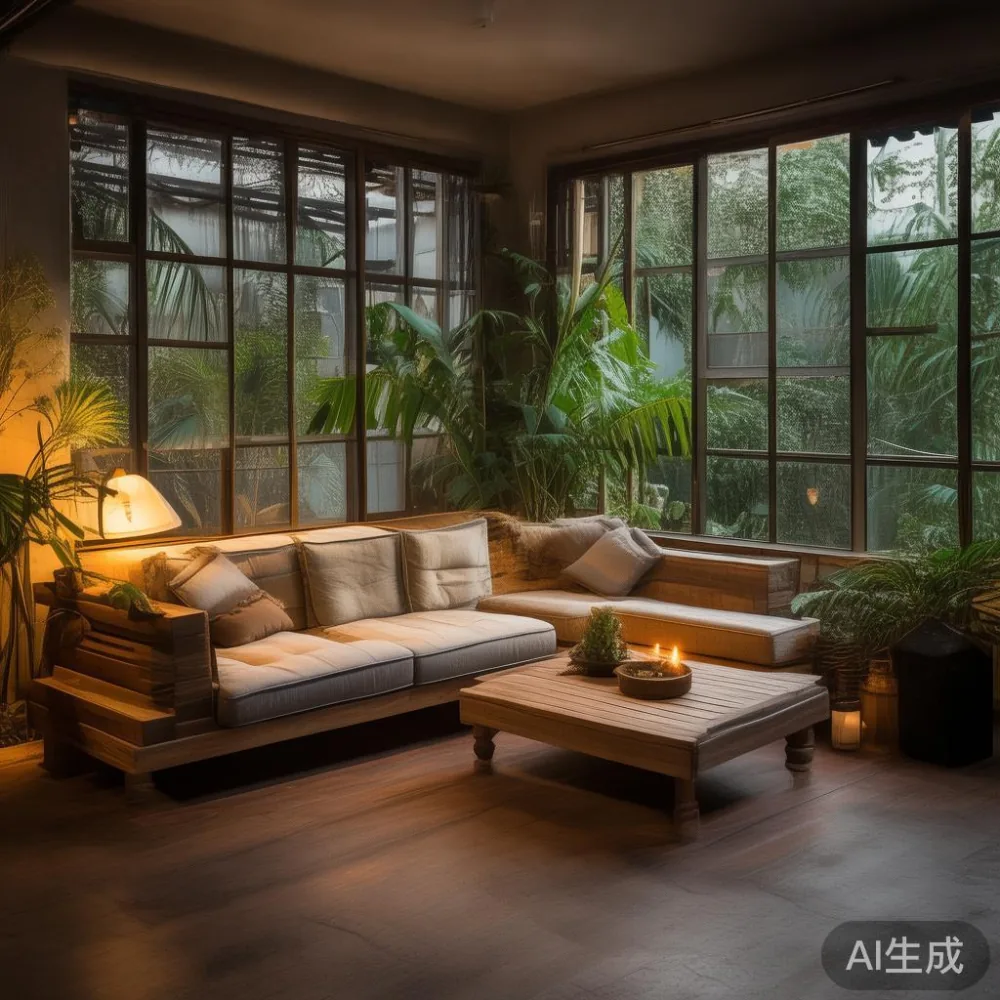
Why humidity is the single biggest threat to an outdoor sofa in Singapore
Wood is hygroscopic. It absorbs water vapour when the surrounding air is damp and releases it when the air dries. Every Singaporean afternoon thunderstorm pushes the relative humidity up sharply, and every air-conditioned afternoon at 22°C pushes it back down. That constant swing — sometimes within six hours — makes timber swell along its width by 1% to 3% and then shrink again. Over twelve months, those micro-movements add up to visible gaps in a dining table top, hairline cracks along the armrest of a solid wood sofa, and a slightly sticky drawer on a nightstand.
The fix is not to fight the climate; it is to choose timber and joinery that breathe with it. Our Foshan furniture workshop primarily uses ash, white oak, and teak for outdoor and balcony pieces because their tight, straight grain absorbs and releases moisture slowly. The joinery uses mortise-and-tenon connections that can shift microscopically without splitting, rather than rigid dowel-and-glue joints that crack under stress.
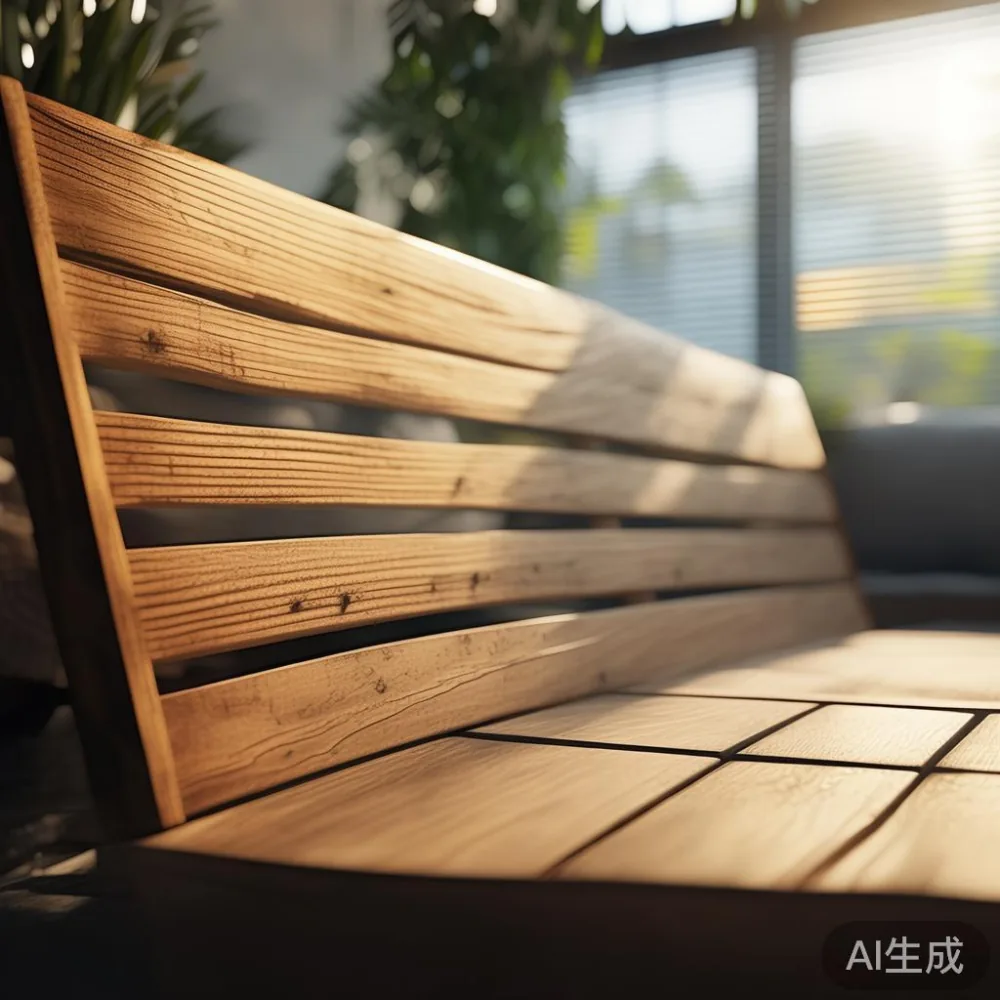
"Will my outdoor sofa warp on a Tampines balcony with no roof?"
I tested this question directly last month by visiting a customer's 13th-storey balcony unit in Tampines GreenRidges. The balcony measures 1.8m wide by 3.2m deep, fully open on three sides, and the outdoor sofa had sat there for fourteen months through two monsoon seasons. The teak frame remained true to within 1mm across the 210cm seat, and the cushions showed only light fading on one corner. The difference compared with a neighbouring unit's plywood-and-foam set was striking — the neighbour's frame had sagged 4cm in the centre and the foam had wicked up so much moisture that a faint musty smell greeted visitors at the door.
The practical answer is: yes, warping will happen with the wrong material, and no, it will not happen with the right one. Three rules keep a balcony solid wood sofa in showroom shape. First, lift it 3 to 5cm off the tiles using rubber or stainless steel feet so air circulates underneath and rainwater drains away. Second, oil the teak or ash surface every six months with a hard-wax oil (we ship a 500ml tin with every exterior order; one tin covers two to three standard three-seater frames). Third, cover during the heaviest afternoon storms, or store cushions in a corridor store cupboard — most HDB corridors are at least 1.2m wide and accept a 60cm-by-60cm stack easily.
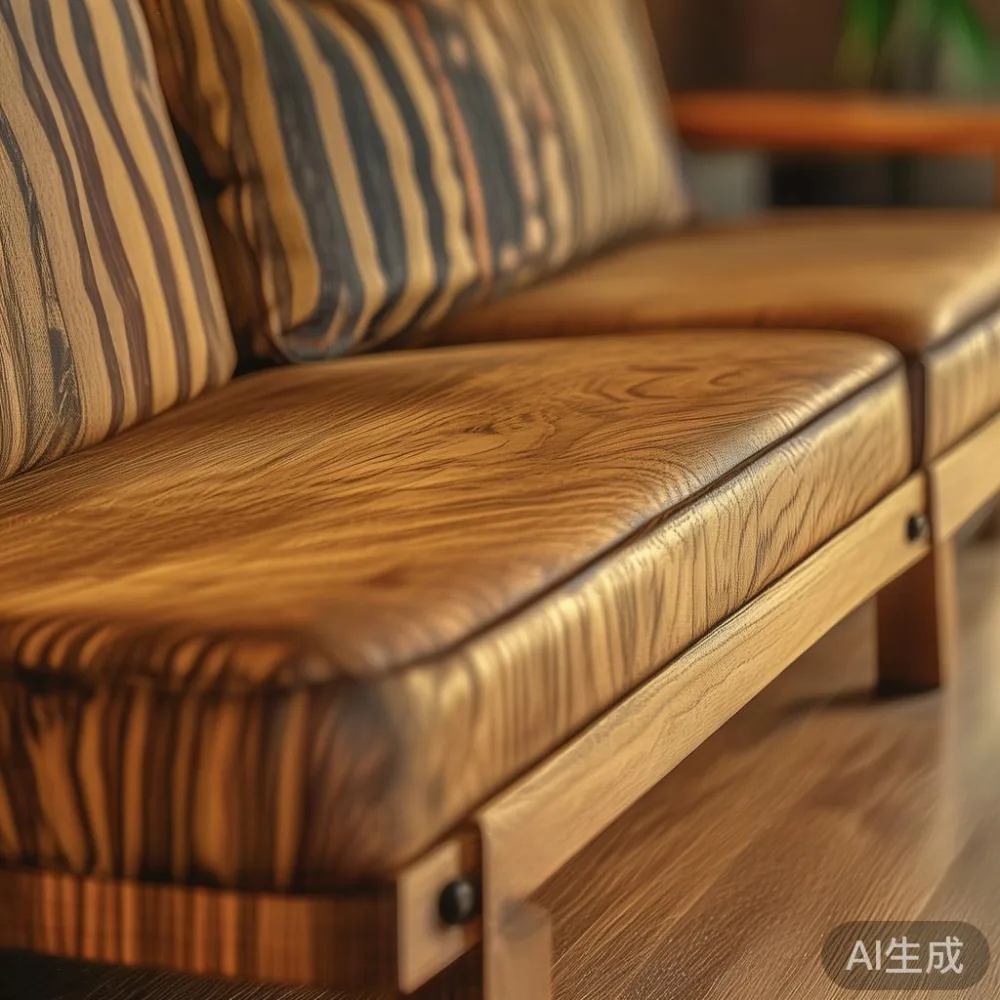
"Is indoor solid wood furniture any safer? Can I still get air-con cracking?"
Air-conditioning creates its own, opposite problem. The same customer in Punggol kept her 1.6m Italian light luxury dining table about 4 metres from the wall-mounted Daikin unit. After eight months, faint hairline checks — usually less than 0.5mm wide — appeared along the table's breadboard ends. These are not defects; they are the wood relieving internal stress when humidity drops from 80% to roughly 45% within ninety minutes of the compressor cycling on. I have seen the same checks on a wardrobe in a Bukit Batok condo and on a nightstand in a Bukit Timah landed house.
Maintain a relative humidity range of 45% to 60% indoors with a small dehumidifier or a smart hygrometer (SGD 25 to 45 for a basic Xiaomi or Govee unit from Challenger). Anything inside that band keeps solid wood stable. If you also want to learn how to style European sofa in bedroom for a coordinated look, pair a low-backed ash-framed indoor sofa with the same timber family as your bed frame, so the moisture response of every piece stays synchronised.
The HDB logistics nobody warns you about: lifts, corridors, and the 9% GST
Singapore adds physical constraints that humidity does not. Most HDB passenger lifts measure roughly 1.1m wide by 2.1m deep with a doorway of 0.9m; many newer blocks (Punggol Northshore, for instance) are wider at 1.2m by 2.4m. A three-seater outdoor sofa at our standard 210cm length will clear a typical lift only on the diagonal, so we ship most balcony orders in two boxes — one for the frame, one for the cushions — plus a small box for the hardware. Free shipping applies to orders above US$350, and for Singapore that translates to roughly SGD 480 before the 9% GST.
Door-to-door delivery to a 4th-floor Tampines flat typically runs seven to nine working days from our Foshan warehouse, including sea freight to Singapore, customs clearance, and last-mile courier scheduling. About 80% of our Singapore orders arrive inside that window; the remaining 20% stretch to twelve days during Chinese New Year or Hari Raya peaks when ports slow. We also offer a 14-day return policy and a 10-year structural warranty on every solid wood sofa, bed frame, dining table, wardrobe, and nightstand, plus lifetime refinishing on frames weighing over 35kg. A standard three-seater outdoor sofa weighs about 52kg; a king-size bed frame typically weighs 70 to 90kg; an Italian light luxury dining table for six usually weighs 95 to 120kg including its marble table top.
Choosing the right timber, finish, and accessories for a 365-day humid climate
If your home leans toward post-modern light luxury styling — clean lines, soft neutrals, a single statement piece — pair an ash or white oak indoor frame with a brushed-brass detail and skip high-gloss lacquers, which craze under humidity cycling. For a French light luxury reading corner, go with a walnut indoor accent and a velvet armchair; the walnut's tighter cellular structure holds its shape better than rubberwood for a smaller nightstand or writing desk.
Outdoor pieces should be either teak (Grade A, kiln-dried to 12% moisture content) or powder-coated aluminium frames with FSC-certified teak armrests. Before you browse any for sale Italian light luxury furniture listings, verify the kiln-dry spec and ask whether the factory offers pre-assembly of mortise-and-tenon joinery. Predrilled, glued dowels from a generic Foshan furniture wholesaler can survive Beijing or Berlin; they cannot survive a Kranji monsoon. Buyers sourcing wholesale Italian light luxury furniture for local Singapore distribution should also request tropicalisation testing at 35°C and 90% relative humidity for at least 14 days. Most responsible Foshan workshops can produce that report within five working days.
"How do I keep mould off cushions and fabric through the wet season?"
Quick- drying outdoor foam with a reticulated inner structure (density 28 to 32 kg/m³) sheds 90% of its moisture within two hours of a heavy shower. Polyester outdoor fabrics dry faster than solution-dyed acrylics but fade faster too; if you entertain often on your balcony, choose a solution-dyed acrylic with a UV rating of 50+ and expect three to five years of colour stability before a refresh. Vacuum the seams weekly, spray with a fabric-safe antimicrobial (SGD 18 for a 750ml refill bottle) every fortnight, and store the covers in a breathable calico bag — never plastic — between storms.
For those curious about Japanese furniture for indoor cross-ventilated apartments, ten pieces frequently appear on Singaporeans' top 10 Japanese furniture shortlists: the Karimoku 60+ stool, the Hida Sangyo FI-360 chair, the Muji oak dining bench, the Conde House Karuta series, the Idée ST bench, the Trunk stool, the Tradition SM26 floor lamp paired with an oak tray, a Tendo Mokko low table, the Hoshino resin-wood hybrid stool, and a Nissin Pottery stoneware side table. These draw on similar moisture-stable timber choices (white oak, ash, teak) and translate unusually well into HDB interiors because each piece is designed for tight circulation of air.
A simple six-month care plan you can actually follow
Set two calendar reminders — March 1 and September 1, just after each monsoon peak. On each date: wipe down all indoor and outdoor timber with a barely damp microfibre cloth, then apply a thin coat of hard-wax oil (about 15ml per square metre, so a 3-seater outdoor sofa needs roughly 50ml). Check and tighten any visible bolts, oil the hinges on a wardrobe or nightstand drawer with a drop of sewing-machine oil, refresh the dehumidifier in the main living room, and rotate cushions on the balcony sofa so UV fading is even. The whole routine takes 35 to 50 minutes and costs less than SGD 30 in consumables.
That is the entire playbook. Solid wood is a forgiving material when you respect its grain and its limits. Pick the right timber, mind the moisture numbers, plan around the lift dimensions, and your outdoor sofa will still look new when your neighbours replace theirs for the third time.