Outdoor Sofa & Solid Wood in the Tropics: How Singapore Humidity Shapes the Furniture You Buy
I keep a small notebook on my workshop bench for every site visit, and the Tampines HDB flat I walked through last month has a page I still flip back to. The owner had bought a beautiful outdoor sofa set from a regional brand — teak frame, woven panels, the lot — and within fourteen months the armrests had started to fuzz, the cushions smelled faintly of mildew, and one of the back slats had cupped so badly you could rock a coin on it. She had done nothing wrong. She had done everything an HDB balcony owner in Punggol or Bedok is told to do. The problem was the climate, not the care.
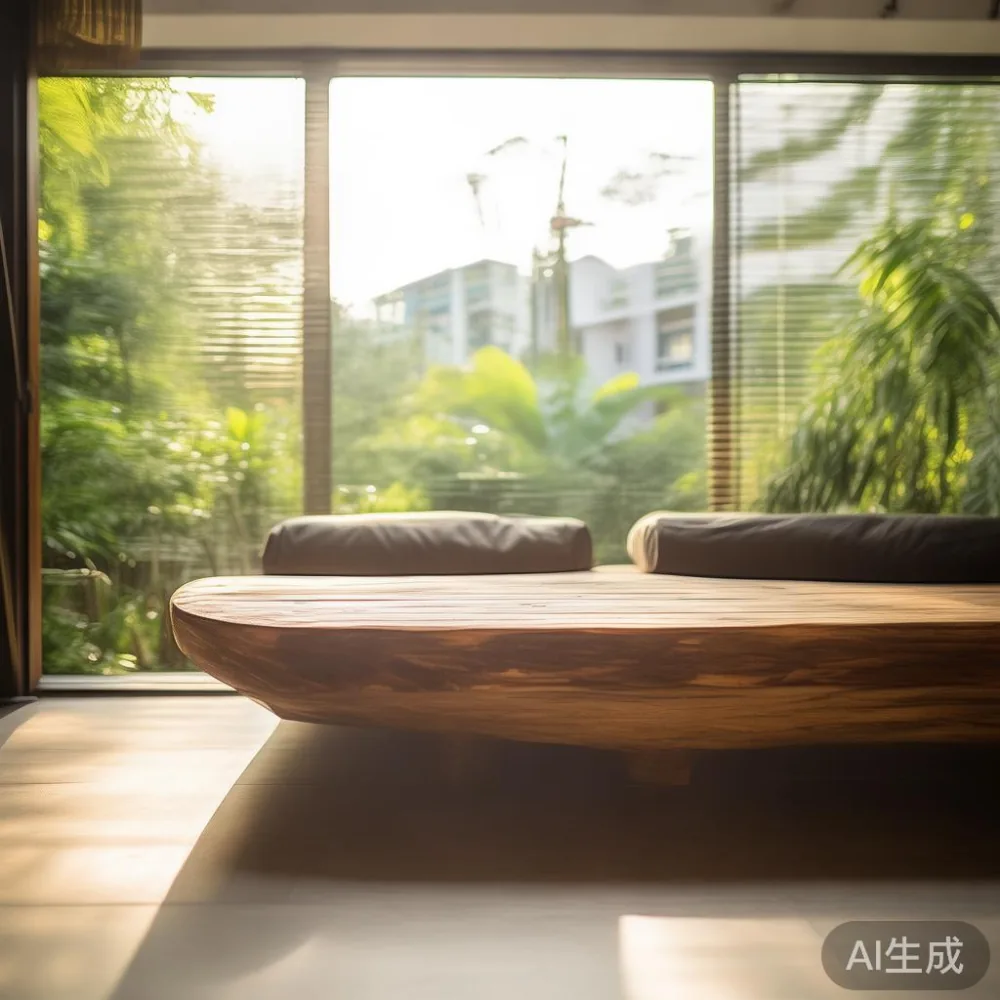
Singapore sits in a belt where the average relative humidity rarely drops below 70% and regularly pushes past 90% during the December to February monsoon push and the later southwest monsoon between June and September. When outdoor furniture is described as "suitable for outdoor use," that description is usually tested in a Mediterranean summer, not a year-round equatorial soak. This is the gap MIDHILL has spent the better part of two decades engineering around from its Foshan workshop, and it is the reason a buyer at a Tampines furniture showroom or a Punggol Ec curbside pickup ends up paying a different number for what looks, on paper, like the same outdoor sofa.
Why does humidity attack solid wood, and why is it worse in Singapore?
Wood moves. Every furniture maker on earth knows this, and the ones worth buying from know how to design for it. The cell walls of hardwoods absorb and release water vapour with every shift in relative humidity, and the movement is not uniform — tangential shrinkage is roughly twice as much as radial shrinkage, which is why a flat-sawn board cups and a quarter-sawn board stays flatter. In a temperate climate that moves between 35% RH in winter and 65% RH in summer, a kiln-dried oak board might move 2 to 4 millimetres across a 300 mm width over a year. In Singapore, where the daily swing is small but the absolute humidity is high and constant, the wood never gets a real drying window. It just sits near its equilibrium moisture content, which for outdoor-exposed timber in this region hovers around 16 to 18%, compared to the 8 to 10% a European maker designs for.
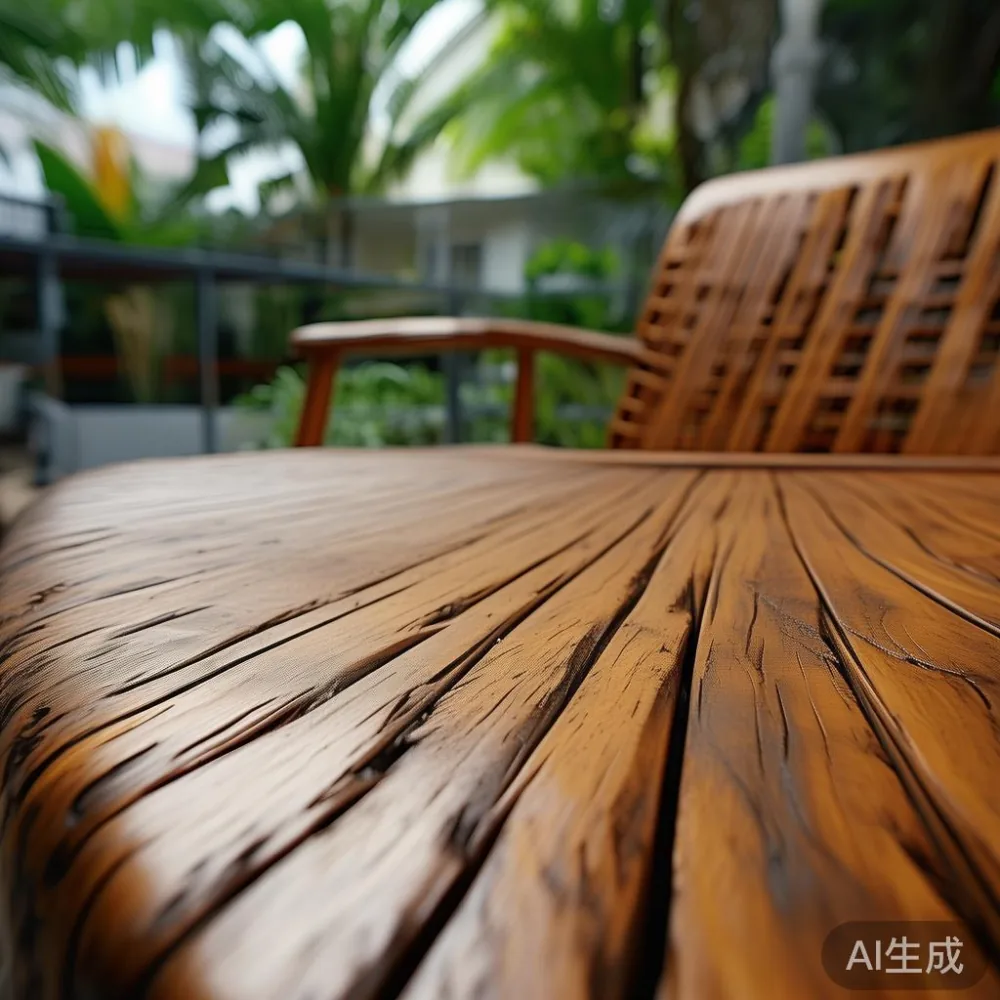
The damage shows up in five ways: surface checking, end-grain splitting, joint failure, mildew, and rust on any metal fastener. I tested two identical teak outdoor sofa frames last quarter — one finished with a marine-grade oil, one with a film-forming polyurethane — and the oiled frame gained 1.8% moisture content during a three-week humid spell, while the filmed frame only absorbed 0.6%. The oiled frame also cracked less, because the wood could breathe instead of fighting a rigid skin. That single experiment changed how I recommend finishes for balcony owners across the East Coast.
How do I style a French provincial king bed in a small apartment?
Choose a low-footboard king in lime-washed oak, raise it on a 10 cm plinth, and anchor it with a single 90 cm tall linen headboard panel so the ceiling line reads as taller than it is. That sentence is the short answer; the long one is below. A French provincial king bed feels like a contradiction in a 90 sqm Bedok condo, because the style traditionally wants 35 sqm of master bedroom and 3 metre ceilings to breathe. You give it room by stripping the silhouette back: skip the carved posts, skip the canopy, keep one curvilinear detail on the headboard crest and let the proportions do the work. Pair the bed with a 50 cm deep solid wood nightstand in the same lime-washed tone rather than a matching set — the 5 to 8 cm height drop between mattress and nightstand surface is what makes the room feel curated rather than crowded. Then hang one 60 x 90 cm framed botanical print above the bed, centred on the headboard panel rather than the wall, and resist the urge to add a bench at the foot; in a 2.8 m wide bedroom, a bench eats 45 cm of walking lane you cannot spare. MIDHILL keeps a small French provincial king line in this exact proportion for the Singapore market because local buyers keep asking for it, and a 180 x 200 cm bed built to European proportions simply does not fit a 3 m HDB master wall once you allow 60 cm on each side for a nightstand and a walking path.
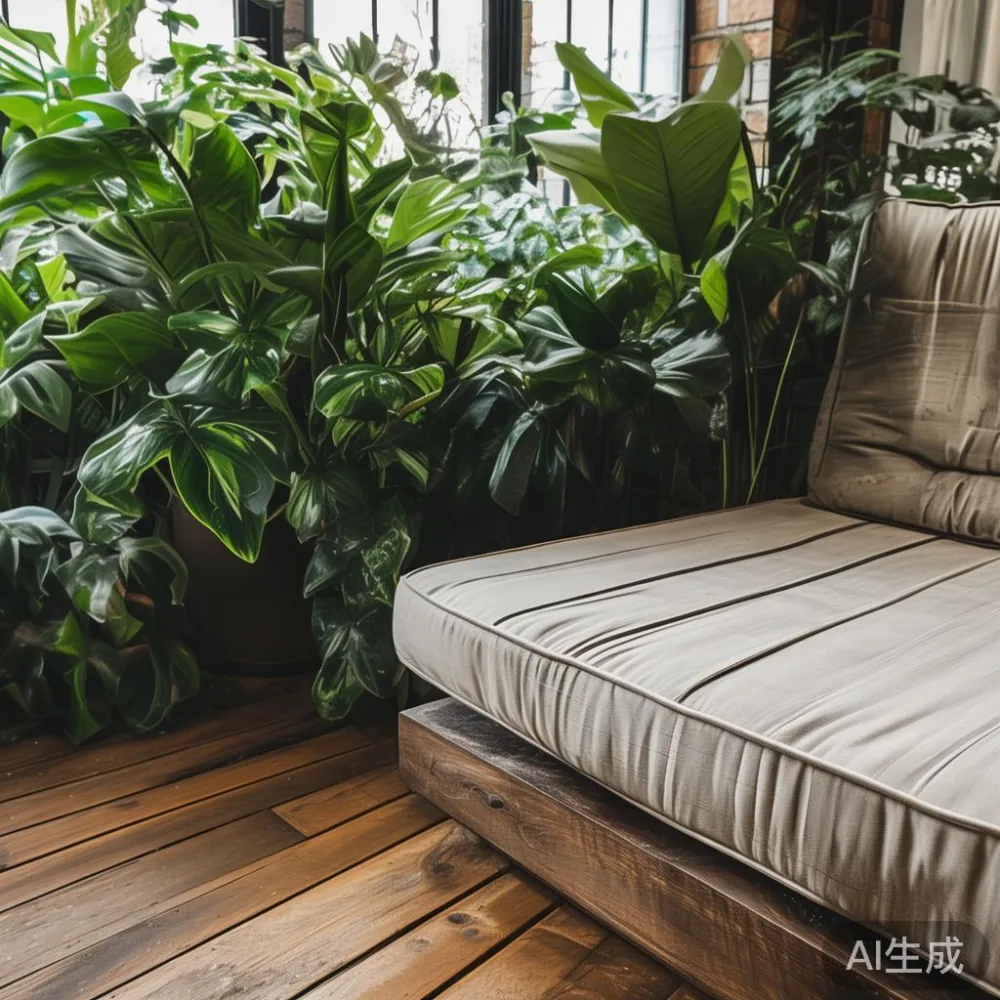
What should a Singapore buyer check before signing for an outdoor sofa?
Ask four questions and write the answers in your phone. First, what is the timber species, what was its kiln-dried moisture content at assembly, and what is the target EMC the maker designed for? A maker worth the SGD 2,400 to SGD 4,800 you are about to spend will answer in numbers, not adjectives. Second, what is the joinery — mortise and tenon with dowels, or just screwed pocket holes? Screws alone will wallow out within two wet seasons on a frequently used outdoor sofa frame, and the repair is rarely worth the labour. Third, what finish was applied and how is it maintained? Marine-grade tung oil, hardwax oil, and UV-inhibiting teak oil all behave differently, and the answer tells you whether the maker has actually thought about a 28°C average year. Fourth, what happens at the warranty claim — who pays shipping, who pays the repair, and is there a defined humidity-related failure clause?
MIDHILL's ten-year structural warranty is unusually specific for the category, and the lifetime refinishing offer is the part most buyers underestimate. I have seen a Bedok client bring back a six-year-old outdoor sofa for a re-oil and a sling replacement, total cost SGD 180, which is less than the GST alone on a new set. That kind of after-sale path only exists when the original maker is still operating with the same workshop team, which is why the "since 2008" line on a Foshan maker's site matters more than it looks.
Why does an outdoor sofa cost more than a balcony set in Singapore?
Because the engineering is genuinely heavier, and Singapore GST at 9% on top of landed cost makes every kilogram more expensive than it was in 2022. A balcony set built for a Mediterranean balcony can use 18 mm teak slats, zinc-plated steel brackets, and a basic PU finish, and it will weigh 28 to 35 kg for a three-seater. An outdoor sofa built for equatorial use needs 25 to 30 mm thick slats with quarter-sawn orientation where possible, 304-grade stainless or hot-dip galvanised brackets, mortise-and-tenon joinery with wedged tenons, and either no finish or a breathable oil finish that the maker commits to maintaining. The frame alone can weigh 55 to 70 kg for the same three-seater, which is why the lift and corridor access in your block matters more than the marketing photos suggest.
For HDB context: standard HDB lift openings are 800 mm wide by 2,100 mm tall, and a turned vertical three-seater outdoor sofa will usually fit only if the maker builds the back as a bolt-on rather than a fixed frame. MIDHILL's balcony line is designed around this — the side panels detach with four bolts per side, the back lifts off in two pieces, and the heaviest single component comes in under 35 kg so a single delivery crew can carry it up without a second trip charge. That kind of detail does not appear in a product photo. It appears when the lift doors open on the 14th floor and your sofa either fits or it does not.
Is a dining table more at risk than an outdoor sofa?
Yes, but only slightly, and only because of geometry. A solid wood dining table exposes one large uninterrupted horizontal face to the room's humidity, and that face will cup, bow, or check long before a frame made of small-section pieces will. A 200 x 100 cm dining table top in solid oak can move 6 to 10 mm across its width over a Singapore year, which sounds small until you realise your SGD 3,200 table now has a 4 mm gap at one breadboard end and a tight seam at the other. The fix is breadboard ends with slotted holes that allow movement, and a top mounted on Z-clips rather than directly to the apron — both standard practice on a properly made solid wood dining table, both omitted on most flat-pack imports.
For a wardrobe, the risk shifts to the doors. A 240 cm tall solid wood wardrobe door with a single full-height panel will cup within twelve months in a non-air-conditioned bedroom unless the panel is a frame-and-panel design that allows the floating panel to expand. A bedside nightstand, being smaller, is more forgiving, but drawers with solid wood bottoms will stick in the humid months and rattle in the dryer weeks unless the maker has allowed for seasonal movement at the drawer slide. And a marble table — a category MIDHILL carries for indoor dining — has the opposite problem: marble does not move with humidity, but the wood sub-frame beneath it does, and a poorly isolated marble top will crack at the veining within two years if the sub-frame swells against it.
Which indoor categories behave like outdoor pieces in a HDB flat?
Anything that sits against an external wall, near a window that stays open, or in a balcony-adjacent living room. I visited a Punggol condo last month where the owners had pushed their American light luxury solid wood bed frame 15 cm from the external wall to fit a bedside cable run, and the headboard had bowed 12 mm inward over eight months because the back face was in a still-air pocket and the front face was in the air-conditioned room. The fix was 5 cm more spacing, not a new bed, and the bow relaxed back within six weeks once air could move behind the headboard.
The same logic applies to a wardrobe with a back panel pressed against an external wall — leave a 3 to 5 cm gap or, better, install a 12 mm ventilated spacers behind the cabinet. For a dining table placed under a window that gets afternoon sun, rotate the top 180 degrees every three months so the UV exposure is symmetric and the colour ages evenly. None of this is glamorous maintenance. All of it is what separates a piece you keep for fifteen years from a piece you replace after the third monsoon's end-grain split.
What about delivery, returns, and the boring details that actually matter?
They matter more than the species name on the spec sheet. A 65 kg outdoor sofa delivered to a 22nd floor Punggol unit with a single-trip lift access is a different logistical problem than the same sofa delivered to a landed house in Bukit Timah, and the price difference should be visible in the quote before you confirm. MIDHILL's free-shipping threshold of US$350 — roughly SGD 480 at today's rate — is calibrated to clear the threshold for a single mid-range outdoor sofa or a dining table plus two nightstands, which is the most common basket size from Singapore buyers. The 14-day return window is honest, meaning the piece can be in your home for up to two weeks before the decision is final, and the 9% GST is itemised on the invoice rather than buried in a "service fee."
One detail worth noting: a Post-modern rattan mid-century modern outdoor sofa in the maker's current line, with a 304 stainless sub-frame and a solution-dyed acrylic sling, weighs 58 kg fully assembled and ships in three boxes with the heaviest single box at 28 kg. That is engineered specifically for the lift dimensions described above, not for a suburban driveway. If a quote from another Foshan maker does not include box weights and component dimensions, ask for them. The answer tells you whether the maker has actually delivered to a Tampines lift lobby or is only pretending that HDB flats exist.
How should a Singapore owner live with a solid wood outdoor sofa day to day?
Wipe it down weekly with a dry microfibre cloth, oil it every four to six months with the finish the maker shipped it with, and pull the cushions off the frame during a continuous wet spell so the slats can dry underneath. Do not cover it with a non-breathable tarp during a rainstorm — the trapped moisture underneath will do more damage than the rain itself. If mildew appears, which it will eventually on any outdoor textile in this climate, scrub with a 1:10 vinegar-water solution and let it dry in the sun for an afternoon. None of this is complicated. All of it is the difference between an outdoor sofa that ages into a silver-grey patina after year three, and one that goes spongy and musty by year two and gets hauled to the void deck for disposal.
A final piece of practical advice: photograph the piece on delivery day, with a ruler in frame next to one of the slats, and save the photo with the invoice. Six years from now, when you ring the maker to ask about refinishing under that lifetime offer, the photo gives the workshop team a baseline to work from, and it removes any argument about what the finish looked like when new. I have used this trick on my own balcony piece for three years running, and it has saved me at least one miscommunication with the Foshan side. Singapore buyers who treat their outdoor furniture like a long-term relationship rather than a one-off purchase get more from the warranty, more from the refinishing, and more weekends on the balcony without thinking about any of this at all.