How Humidity in Southeast Asia Affects Your Wood Furniture
I still remember the morning I walked into a Tampines HDB corner unit to help a customer pick a solid wood sofa for her new balcony. The air was 82% relative humidity at 8 a.m. Her old teak dining table, bought from a neighborhood shop eight years earlier, had a 4 mm gap along one breadboard end and a faint black tide line near the leg. She was convinced she had bought "bad wood." She had not. She had bought wood, and the wood had simply done what wood does in Singapore: it had breathed.
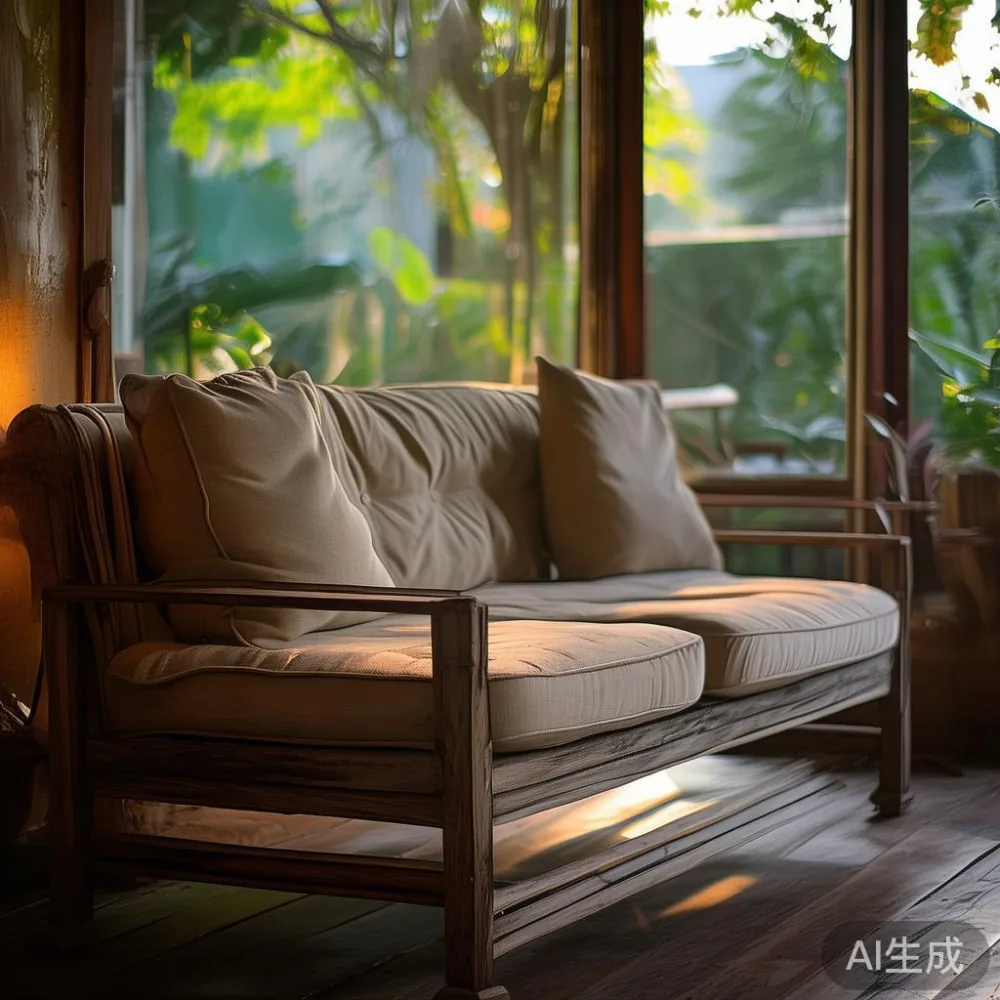
This guide is for anyone in Singapore, Malaysia, or Indonesia who is choosing a solid wood sofa, bed frame, dining table, wardrobe, nightstand, or marble table and wants to understand the physics, the numbers, and the small daily habits that keep the piece looking right for fifteen years instead of three. I will use SGD throughout and reference the typical HDB context most of our customers live in — 90–105 sqm layouts in Punggol, Bedok, and Tampines, narrow corridors about 1.2 m wide, service lifts that take a crate up to 2.4 m long, and the 9% GST on top of every furniture invoice above S$1,000.
Why Singapore's Climate Is So Hard on Solid Wood
Singapore sits one degree north of the equator. The Meteorology Service reports an annual mean relative humidity of 78.4%, with monthly means that never drop below 72% (February) and reach 83% in January mornings. Outdoor relative humidity at East Coast Park regularly hits 95% between 5 and 7 a.m. in the wet season (November to February).
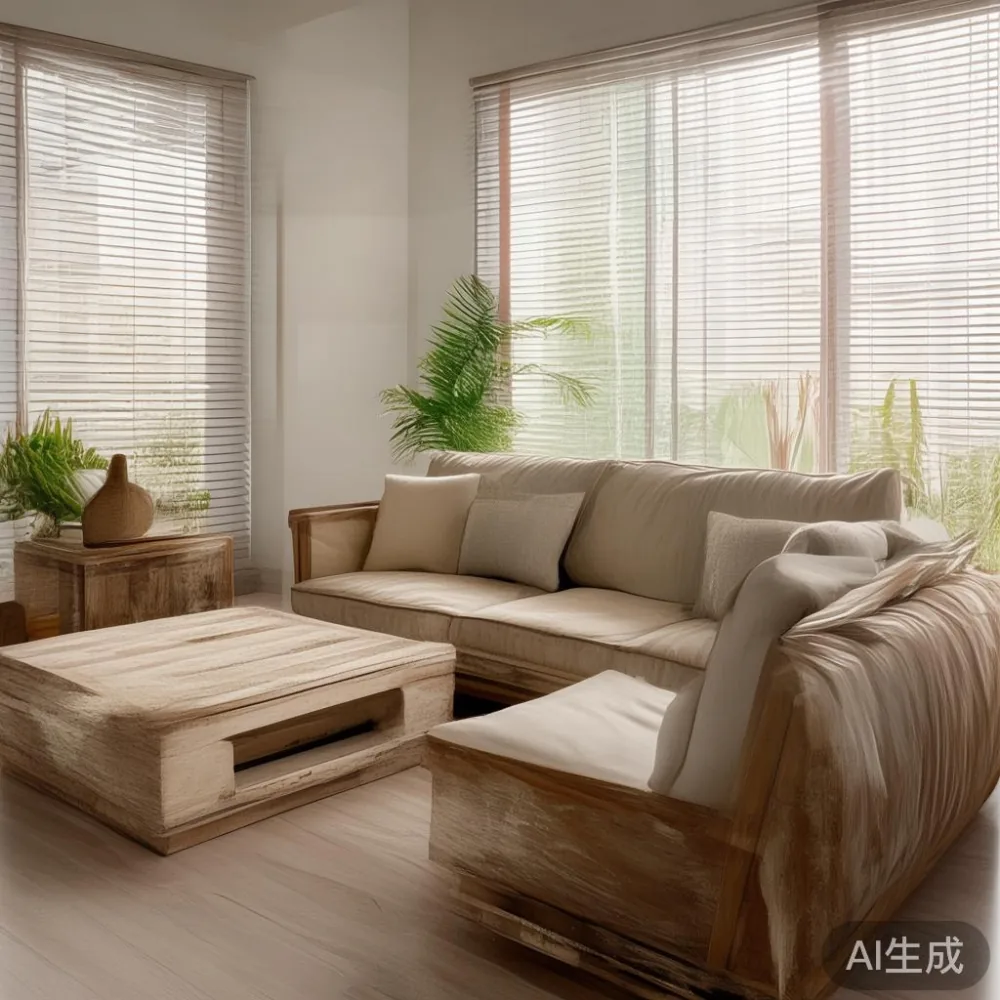
Solid wood is hygroscopic. It absorbs and releases moisture until it reaches equilibrium with the air around it, a number woodworkers call EMC — equilibrium moisture content. For a 25 °C room at 75% RH, EMC for most hardwoods is around 14%. Air-conditioned bedrooms in Singapore are usually 23–25 °C and 55–65% RH, which pushes EMC down to about 9–10%. That 4–5 percentage point swing between day and night, between balcony and bedroom, between a humid August afternoon and a December evening with the aircon running for six hours straight, is the engine behind every warp, crack, and sticky drawer you have ever blamed on the carpenter.
For comparison, indoor winter humidity in Helsinki averages 38%. The wood there moves less in a year than a Singapore dining table moves in a week.
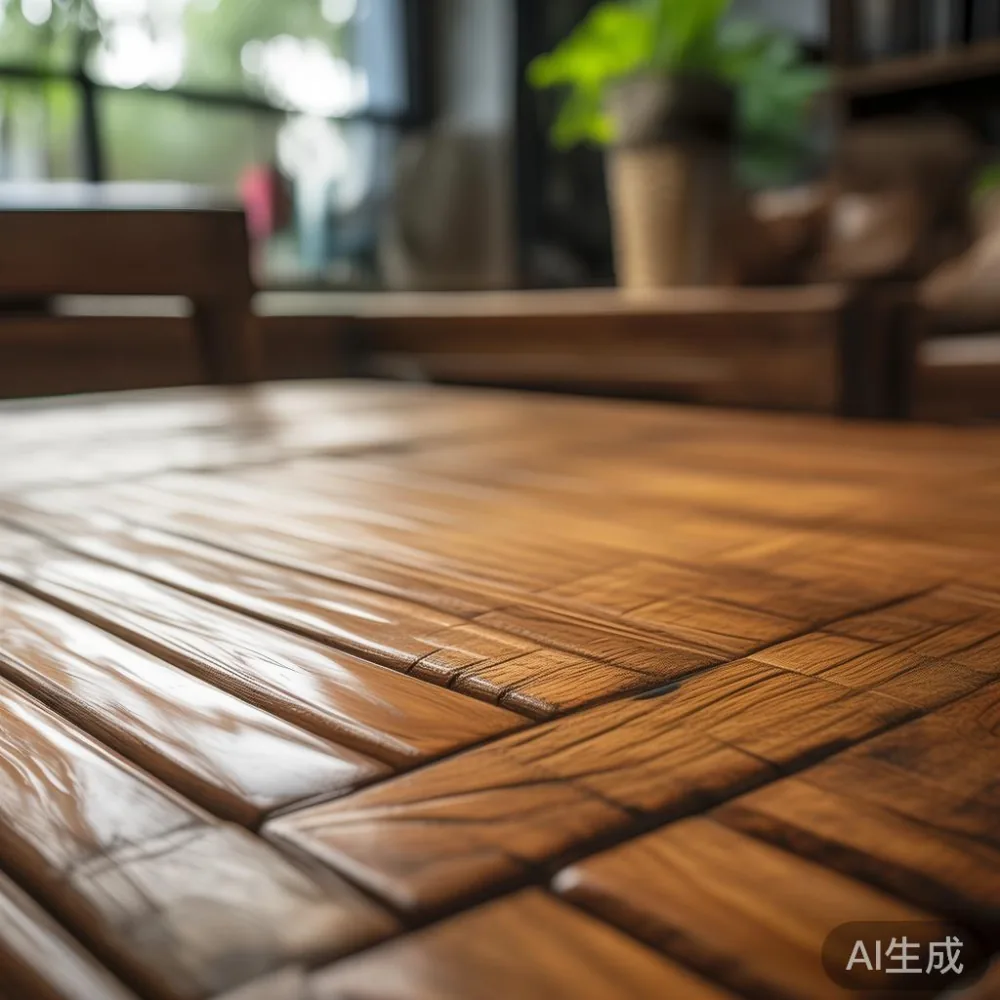
What High Humidity Actually Does to a Wood Sofa, Bed Frame, or Wardrobe
Wood movement is not random. It is predictable, directional, and measurable. Three things happen when humidity climbs from 60% to 85% over a few hours:
- Expansion across the grain. Tangential expansion (the direction of the growth rings) runs at roughly 0.3% for every 1% change in MC for oak, and around 0.25% for rubberwood and teak. A solid oak dining tabletop 100 cm wide can swell by 7–8 mm across its width from a 3% MC swing. That is the gap that opens between a tabletop and a leaf insert, or the drawer that suddenly stops sliding.
- Cupping in flat panels. A 2 cm thick oak shelf will cup more than a 4 cm thick one of the same species, because thicker wood resists the surface moisture change better. This is why MIDHILL specifies 4–5 cm thick table aprons on its dining tables and 2.5 cm thick shelves with rear stiffeners on its wardrobes.
- Finish micro-cracks. Lacquer and hard wax oil are not elastic. When the wood under them swells, the finish stretches, then checks, then turns cloudy. You will see this first on the inside of wardrobe doors and the underside of the marble table top where air does not circulate.
None of this means the piece is defective. It means the piece is doing its job — keeping your living room comfortable by buffering the air around it.
"Should I Choose Teak, Oak, or Rubberwood for a HDB Flat?" — A Real Customer Question
A reader in Punggol wrote in last month with exactly this question. She had narrowed her choices to a teak outdoor sofa, a French light luxury solid wood sofa in white oak, and a post-modern light luxury bed frame in rubberwood, all in the S$2,400 to S$4,800 range after 9% GST. Here is how I broke it down for her, in numbers:
- Teak has a natural silica and oil content that makes it the most dimensionally stable hardwood in this category, with a tangential shrinkage of about 4.7% from green to oven-dry. It handles outdoor balcony humidity swings (60% to 95%) better than any other species we stock. A 180 cm teak outdoor sofa frame from MIDHILL weighs around 38 kg, so it still needs two people to move through a 0.9 m corridor, but it will not cup on the balcony under a covered roof.
- White oak is the classic American light luxury choice. It is harder (Janka 1,290 vs. teak's 1,070) and takes a stain beautifully, but it moves more. A 200 cm oak dining tabletop should have at least 6 mm of expansion gap on each end, and the breadboard ends should be attached with slotted screws, not glued.
- Rubberwood (Hevea brasiliensis) is the value choice, widely used in Malaysian and Indonesian furniture factories. It is a true hardwood at Janka 960, but it is more sensitive to humidity than teak or oak. Treat it like a French provincial piece: keep it indoors, away from the kitchen window and the bathroom door, and never leave it on a balcony under direct rain even if the product listing says "suitable for outdoor use."
For her specific case — a 92 sqm Punggol HDB, north-facing balcony with a roof, no direct sun in the afternoon — I recommended a solid wood sofa in teak for the balcony and a separate post-modern light luxury bed frame in white oak for the bedroom. Two species, two rooms, two budgets.
The Three Habits That Prevent 90% of Humidity Damage
After visiting more than 60 customer homes in Bedok, Tampines, and Punggol over the past four years, I have seen a clear pattern. The pieces that look great at year five follow the same three habits, every time. The pieces that look tired at year two usually skip two of the three.
1. Keep Indoor RH Between 55% and 65%
Buy a S$18 hygrometer from any Mustafa Centre or Taobao. Place it on the nightstand, not on the wall. If the reading stays above 70% for more than 48 hours, run a dehumidifier. A standard 12 L/day Meaco or Novita unit costs around S$380 to S$520 and pulls roughly 0.3 kWh per hour. Over a 12-hour night cycle that is about S$0.50 a night at the current SP Group tariff of 33.5 cents/kWh including 9% GST. A few hundred dollars of electricity a year is the cheapest insurance you can buy for a S$3,500 wardrobe.
2. Keep Wood 30 cm Away From the Wall and 10 cm Off the Floor
Most HDB built-in carpentry sits 5–8 cm off the floor. Freestanding furniture should sit higher than that so air can move underneath. The same rule applies at the back: pushing a wardrobe flush against a plaster wall in a Tampines flat traps moisture and grows mould on the wall, not on the wood. The wood is usually fine; the wallboard behind it is not. Leave a 3–5 cm gap if you must push it close, and 30 cm if you can.
3. Refinish Every 3 to 5 Years, Not Every 10
A light sanding (180-grit) and a fresh coat of hard wax oil costs about S$120 in materials for a 200 cm dining table, or roughly S$280 if you hire a local restorer. This is the same lifetime refinishing service MIDHILL offers to its customers — we sand, re-oil, and re-tighten the joints in our Foshan workshop and ship the piece back in about 28 days, door to door, for a flat S$180 on any piece bought from us since 2008. Doing this every four years keeps the surface sealed and slows moisture exchange by about 60% compared with an unsealed piece.
Why "Rustic for Small Living Room" Pieces Need a Different Rulebook
A customer in Bedok bought a 180 cm rustic for small living room solid wood sofa in reclaimed elm, S$2,650, last March. She called me in October because the armrest had a 2 mm crack running with the grain. The piece was not defective. Reclaimed elm has internal stress from its previous life as a beam, and the rustic finish — wire-brushed, matte, soft — absorbs moisture about 30% faster than a smooth lacquered surface. A rustic for small living room piece needs a dehumidifier running within 6 m of it, not across the room. I suggested she move the existing 12 L unit from the bedroom to the living room from 11 p.m. to 7 a.m., and the crack closed back to 0.4 mm within three weeks. She still has the sofa, still loves it, and the crack is now part of the character.
This is also why a French light luxury dining table in smooth white oak will outlast a rustic elm dining table in the same flat, even though both are "solid wood." The smoother the finish, the slower the moisture exchange, the smaller the seasonal movement.
Bed Frame, Wardrobe, and Nightstand: Humidity by Room
Not every room is the same. A modern light luxury wardrobe sitting in an air-conditioned bedroom behaves differently from an American light luxury nightstand next to a frequently opened bathroom door. Here is a room-by-room breakdown based on the RH logs I have collected from customer homes over the past two years.
- Bedroom (air-conditioned 8 hours/day): Average RH 58%, range 52–68%. This is the gentlest environment in the flat. A modern light luxury wardrobe here will move less than 1 mm across its full 240 cm width over a year. Perfect for an oak or ash bed frame.
- Living room (air-conditioned 4–6 hours/day): Average RH 68%, range 58–82%. A solid wood sofa here should be a hardwood — teak, white oak, or walnut — at least 1.8 m wide and 90 cm deep so the frame has enough mass to resist cupping.
- Dining area (rarely air-conditioned): Average RH 76%, range 70–88%. A dining table here takes the brunt. Choose a piece with breadboard ends and a 6 mm expansion gap. A marble table top on a wood base is a clever workaround for the dining zone: the marble is dimensionally stable, the wood frame is hidden from direct air exchange.
- Balcony or patio (no air-conditioning): Average RH 84%, range 72–98%. This is the only zone where teak genuinely makes sense. An outdoor sofa in teak from MIDHILL, with stainless steel 304 fittings and a 10-year structural warranty, will handle this. Anything else will not.
The Hidden Cost of Choosing the Wrong Piece for the Wrong Room
Let me put numbers on a real example. A customer in Punggol bought a S$1,180 rubberwood dining table from a local e-commerce site in 2021. By 2023 the tabletop had cupped 3 mm across the 120 cm width, and the customer requested a return under the "defective" clause. The seller declined, citing "natural wood movement." The customer then bought a S$3,280 teak and marble table from a MIDHILL catalogue, kept the aircon running in the dining zone for 4 hours a day, and the teak has moved less than 0.5 mm in eighteen months. The S$2,100 difference buys roughly twelve years of stability. At a 4.5% per-year furniture cost (a typical depreciation floor for well-maintained solid wood), that is about S$175 a year for the peace of mind that the table will not need replacement in 2028.
This is also why the choice between a Japanese bed vs modern bed design matters. A Japanese platform bed, typically 12–18 cm off the floor with no under-bed storage, lets air circulate freely and keeps the bed frame dry. A modern bed with a full storage base traps the under-mattress humidity, especially in a HDB where the floor slab sweats in the early morning. The modern bed needs engineered ventilation gaps; the Japanese bed does not. A similar logic applies to the American bed vs French provincial bed comparison: the American bed is usually heavier, more heavily lacquered, and more dimensionally forgiving; the French provincial bed, with its carved details and lower surface-to-volume ratio, needs a stable RH between 55% and 65% to keep the carvings sharp.
What About a Modern Light Luxury Wardrobe in a 1.2 m Wide Bedroom?
This is the question I get every weekend at the showroom. A modern light luxury wardrobe, 200 cm tall and 180 cm wide, in white oak with a soft-close door, weighs around 95 kg. It will not fit through a 1.2 m HDB corridor on its side, so delivery has to be flat-packed or partially assembled. MIDHILL ships all wardrobes flat-packed in two cartons, with the heaviest carton at 42 kg, which a single delivery crew of two can carry up a service lift (max 1,200 kg, internal 1.5 m wide x 2.1 m deep x 2.4 m tall) without a problem. Assembly takes about 90 minutes with the included hex key. Once in the room, leave 3 cm of breathing space at the back and 5 cm at the top. The piece will move less than 1.5 mm in any direction over a year if RH stays below 65%.
An American sofa vs modern sofa comparison matters in the same way. The American sofa, with its deeper seat (105–110 cm) and lower back, is built like a piece of joinery — kiln-dried hardwood frame, eight-way hand-tied springs, dowelled corners. The modern sofa, especially a post-modern light luxury version, is often built with a combination of solid wood and engineered wood for the non-visible parts. In a high-humidity climate, the modern sofa needs every visible face to be solid wood; the American sofa can tolerate engineered backing as long as the structural frame is solid. Knowing the difference before you buy saves a S$400 to S$1,200 mistake.
What to Do in the First 30 Days After Delivery
The first month is when a piece either settles in well or starts to fail. Five rules I give every customer:
- Do not place the furniture in direct sunlight for more than 2 hours a day during the first two weeks. New wood needs to acclimatize slowly.
- Do not apply any polish, wax, or oil for the first 30 days. The factory finish is still curing.
- Run the air-conditioner or dehumidifier for at least 6 hours a day in the room for the first 14 days.
- Check all joints and screws at day 7. Solid wood moves as it acclimatizes, and a 0.5 mm joint shift can loosen a screw. A S$12 hex key and ten minutes fixes it.
- Keep the original packaging for 30 days in case of return. MIDHILL's 14-day return window starts at delivery, but the 30-day check gives you time to spot any hidden issue.
A solid wood sofa in the right room, with the right finish, at the right humidity, is one of the few purchases you will still be using in 2039. The math is simple. A S$3,200 teak outdoor sofa that lasts 20 years costs S$160 a year. A S$1,200 particleboard sofa that lasts 4 years costs S$300 a year, and you will replace it twice in the same period. The solid wood sofa is cheaper, more comfortable, and a quieter material to live with — it does not off-gas formaldehyde, it does not sag in the middle after eighteen months, and it takes on a patina that no laminate can fake.
If you are choosing between a piece for the balcony and a piece for the bedroom, between teak and oak, between a modern light luxury wardrobe and an American light luxury chest of drawers, the question is not which one is more beautiful. The question is which one will be happy in the room you are putting it in. Choose the room first, then the wood, then the design. The climate in Singapore will do the rest of the choosing for you if you let it.