Reading a Furniture Warranty in Singapore: A Practical Guide for HDB and Condo Buyers
I spent last month going through warranty PDFs from seven different Singapore furniture sellers, including one I picked up at a Tampines mall showroom and another from a Punggol warehouse outlet. Two were two pages of plain English. Five were seven to fourteen pages of legal-looking text, and every one of them hid something important in clause 4, clause 7 or in a footnote about "normal wear and tear." If you are furnishing an HDB flat in Bedok or a new condo in Punggol, the warranty is the most skipped document in the purchase, and the one most likely to cost you real money later. This guide walks through how to read one without getting caught out, and why the warranty terms on an outdoor sofa, a solid wood sofa or a dining table matter just as much as the piece itself.

What does a furniture warranty actually cover in Singapore?
A furniture warranty in Singapore is a contractual promise from the seller or maker to repair, replace or refund specific defects within a defined window. It is not the same as the lemon law protections under the Consumer Protection (Fair Trading) Act, which covers goods that fail basic standards of quality. The warranty is voluntary, written by the seller, and usually broken into two parts: the frame or structural part, and everything else.
For solid wood pieces (a solid wood sofa frame, a bed frame made from ash or oak, a dining table with a 4cm-thick top, a wardrobe with dovetail joints, a nightstand with full-extension drawers) the structural portion is what most buyers should care about. Screws loosening, joints cracking under normal use, drawer rails warping after a humid season: these are structural issues, and they are what a serious maker backs up. Upholstery foam softening, fabric pilling, finish fading on a balcony where your outdoor sofa sits in afternoon UV: these are almost always excluded. Read the distinction before you fall in love with a 10-year headline.
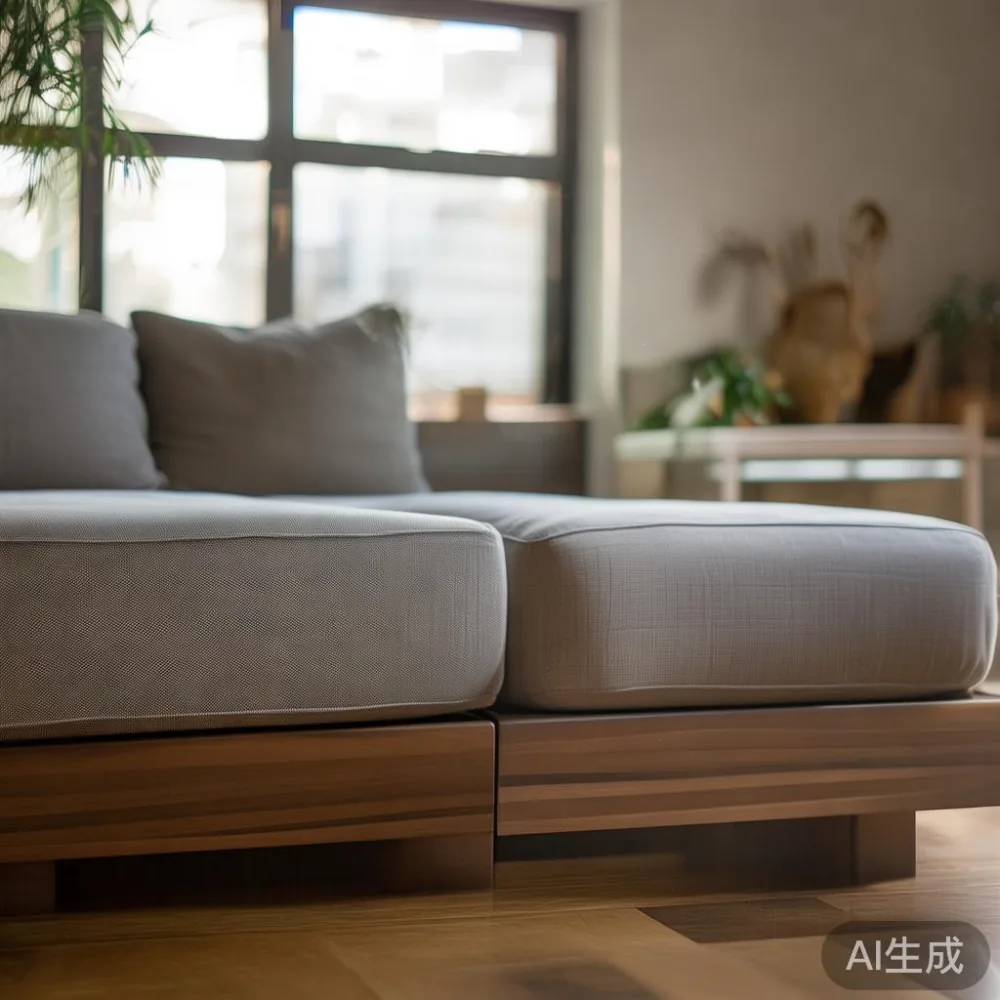
MIDHILL's own warranty splits the difference clearly: 10 years on the structural frame, plus lifetime refinishing on solid wood surfaces. That is the kind of split I want to see when I open a warranty document, because it tells me which parts of the piece the maker is willing to stand behind for a decade.
How long should a furniture warranty be for a piece you plan to keep ten years?
If you are buying a piece you plan to keep for ten years, a one-year warranty is functionally useless, and a two-year warranty is barely better. Five years is the practical minimum for any solid wood sofa, bed frame, dining table or wardrobe that costs more than about SGD 1,500. Ten years on the structural frame is the number I look for when comparing mid-to-upper-tier pieces.

There is a real reason this matters in Singapore. HDB corridors in blocks like those along Tampines Street 21 are narrow, often only 1.2m wide. Lifts in older Bedok blocks run around 1.1m deep by 1.5m wide. A 2.4m-long solid wood sofa frame has to come up the lift, around the corridor bend, and through the front door at a 90-degree turn. If the frame is built well, it survives that trip once. If it is built cheaply, it survives the trip once and then starts loosening within months. A 10-year structural warranty is the maker telling you the joinery was engineered for that trip, not just for the showroom floor.
For a French provincial wardrobe, a post-modern light luxury dining table, or any piece with marble components, I want to see at least 5 years on the frame and a separate, explicit statement about marble cracking. Marble is beautiful, but it is not forgiving. A hairline crack from a delivery bump in your Punggol corridor lift is rarely covered, and you should know that before the delivery team arrives.
What is the difference between a warranty and a guarantee in Singapore?
Guarantees and warranties are used loosely in the furniture trade, but they are not identical. A guarantee is a stronger promise, usually unconditional, and harder for the seller to walk back. A warranty is conditional: it lists what is covered, what is excluded, what counts as misuse, and what voids it entirely.
Watch for the phrase "void under any furniture exposure to outdoor elements" on indoor pieces, and the inverse on an outdoor sofa, where the warranty might exclude "commercial use, coastal environments, or continuous rain exposure." A balcony in Punggol Waterway Woodcress is technically sheltered, but the salt-laden air and afternoon storms on most afternoons from November to February push it firmly into the "near-outdoor" category. If the warranty excludes that, you need to know before you place a 38-inch-deep piece under the roof eave and assume it is safe.
Also look for the small print on "transferability." Most Singapore warranties are tied to the original buyer and the original delivery address. If you sell your HDB flat in Bedok and pass your solid wood dining table to your cousin in Jurong, the warranty usually does not follow. Some makers do offer transferable warranties for a small admin fee, often SGD 50 to SGD 120. MIDHILL's terms, for example, allow registration transfer within 30 days of ownership change, which is the kind of detail worth noting.
How do I check the small print without reading 12 pages of legal text?
You read four sections, in this order:
1. The coverage table. Look for two columns, left and right showing what is covered and for how long. If the table is missing, the warranty is hiding something.
2. The exclusions list. Common items: foam softening, fabric fading, finish yellowing, marble staining, joint cracking from "excessive weight," scratches from pets, water damage from air-conditioner leaks, mould from humidity above 70 percent.
3. The claims procedure. Phone, email, photo submission, in-person inspection, time to respond, time to repair. If the maker says "we will respond within 14 business days," that is six weeks in practice. If they say "48 hours," that is more like it.
4. The voids clause. Common triggers: moving the piece yourself, refinishing the wood with non-approved products, dismantling a solid wood bed frame for relocation, placing an indoor piece outdoors. Read this carefully. A common one I saw in a Tampines store's PDF was "warranty void if the item is transported by a third-party mover not approved by the seller." That one clause alone could cost you a SGD 3,200 claim.
Is a long warranty always a good sign?
A long warranty from a maker that has been around since 2008, ships to 15-plus countries, and offers lifetime refinishing is a strong sign. A long warranty from a seller that opened last year, has no physical address you can visit, and lists a PO Box as their registered office is not. Length is meaningless without a counterparty you can reach in five years when something goes wrong.
Here is the test I now use on every warranty document: I search for the words "registered office," "Singapore business registration," or "SSM number." If the warranty is from a Singapore-registered company with a real URN and a real address I can drive to, a 10-year structural warranty means something. If the warranty is from an overseas brand with a Singapore drop-shipper, even a "lifetime" warranty may not survive the company's first round of restructuring.
This is also where delivery terms matter. Look for free shipping thresholds (MIDHILL offers free shipping over US$350, which is roughly SGD 480 at current rates), 14-day return windows, and clarity on who pays return shipping if the item arrives damaged. GST is 9 percent in 2025, and a Singapore seller should be charging it on the final invoice. If GST is not on your invoice from a local seller, ask why.
What should I do before signing the delivery note on my new outdoor sofa?
Inspect the piece on the spot, before the delivery team leaves. Open the packaging enough to check the corners, the underside of the frame, the joints, and any marble components. If you see a scratch, a chip, a misaligned drawer, or a cracked marble table top, mark it on the delivery note in writing and photograph it. A delivery note signed "received in good condition" with hidden damage photographed two hours later is a much harder claim than one marked at the door.
For an outdoor sofa headed to a balcony in Tampines GreenRidges or a patio in a Punggol Walk landed-house, check the cushion covers for size mismatches, the frame welds for unfinished spots, and the fabric for dye-lot variations. Outdoor fabrics fade; that is unavoidable. But fading is different from fading after three weeks, and the warranty distinguishes between the two.
Keep the original packaging for at least 30 days. Most Singapore sellers, including the more established ones, require the original carton or wooden crate for any return or exchange claim. If you live in an HDB flat in Bedok Reservoir with no corridor space to store it, take clear photos of the unboxing and the packaging labels before recycling.
How does the warranty interact with delivery damage in HDB corridors?
Delivery damage in HDB corridors is one of the most common warranty-related disputes I have seen in Singapore. The piece was fine in the warehouse, the piece was fine on the truck, but the team bashed a corner against the lift door at level 9 and now there is a 6cm gouge on the solid wood dining table top. Whose problem is it?
Read your warranty carefully. Some sellers cover transit damage, some push it to the third-party logistics company, and some have an awkward middle clause that says "cosmetic damage under 10cm is not covered." A 10cm gouge threshold sounds reasonable until you are staring at a fresh scar across a SGD 4,800 dining table top.
The smarter move is to ask the seller, before delivery, who their delivery team is and whether they are in-house. In-house delivery teams are usually better trained on tight corridors and lift dimensions, and the warranty tends to be more accommodating because the seller controls the whole chain. Third-party logistics are cheaper (often SGD 60 to SGD 150 less) but the warranty claim becomes a finger-pointing exercise that can take 6 to 10 weeks to resolve.
Can I extend a furniture warranty in Singapore, and is it worth it?
Some sellers offer paid warranty extensions, typically 3 to 5 additional years for 8 to 15 percent of the item price. On a SGD 6,500 solid wood sofa frame, a 5-year extension might cost SGD 520 to SGD 780. The math depends on the failure rate of the component and the cost of repair.
For a solid wood sofa frame, a bed frame, or a dining table where the joinery is the most likely failure point, an extension is usually only worth it if the original warranty is under 5 years. If the original is already 10 years on the structure, an extension is rarely necessary, and your money is better spent on proper care products: a wood conditioner twice a year (about SGD 28 a tin), felt pads under every leg (SGD 12 for a pack of 16), and a dehumidifier for the bedroom wardrobe area during the November to February monsoon.
For an outdoor sofa, the extension question is different. Outdoor frames and fabrics degrade faster than indoor pieces, especially in a Singapore climate where UV index regularly hits 11 in the afternoon. A 3-year outdoor-fabric extension for about SGD 180 is reasonable if you cannot store the cushions during heavy storms.
Does a furniture warranty cover the marble tabletop I just cracked?
Almost never, and this is the single most common warranty disappointment I hear from Singapore buyers. Marble tables, marble wardrobe tops, marble dining table inserts, and marble nightstand surfaces are usually covered only against manufacturing defects, not against impact cracks, thermal shock (a hot pot placed directly on the surface), or settling cracks from the substrate beneath.
Before you buy a marble table in Singapore, ask the seller three questions in writing. First, is the marble slab sealed, and if so, with what? Second, what is the recommended care routine and which products void the warranty? Third, what is the policy on hairline cracks that appear in the first 90 days? A serious seller answers all three in writing. A casual one deflects.
Some makers, including MIDHILL on certain marble dining table configurations, offer a 5-year anti-crack warranty that covers substrate failure but not impact. That is a fair compromise. Impact damage on marble is a usage issue, not a maker issue, and a good warranty is honest about that.
What about the warranty when I move from my HDB flat to a condo in Punggol?
Relocation is where warranties often disappear. Most Singapore furniture warranties are tied to the original delivery address and the original buyer. Moving a solid wood bed frame from a Bedok HDB to a Punggol condo, even if you are the original owner, can technically void the warranty if the maker interprets "original delivery location" strictly.
Two ways to handle this. First, notify the maker before the move and ask them to re-register the warranty at the new address. Some charge a SGD 40 to SGD 90 admin fee; some do it for free. Second, document the condition of the piece before the movers arrive. Photograph every joint, every drawer face, every corner. If a joint cracks during the move and the maker claims it was a pre-existing weakness, your photos from a year ago are your evidence.
Are online-only furniture brands safe to buy from in Singapore?
Some are. The signal I look for is whether the warranty names a real Singapore counterparty with an SSM-registered business and a physical showroom or warehouse I can visit. If the brand only lists a foreign parent and a Singapore email address, the warranty is harder to enforce. Singapore's small claims process (the Community Justice Tribunals for claims up to SGD 20,000, and the State Courts for higher amounts) is workable, but cross-border enforcement against an overseas maker is expensive and slow.
A practical rule: if the piece costs more than SGD 2,000 and you cannot drive to the seller's Singapore office within 30 minutes, think twice. For a solid wood sofa at SGD 4,500, a dining table at SGD 6,200, or a full wardrobe system at SGD 9,000, you want a counterparty you can visit, not just an email you can write to.
How should I store my warranty documents after purchase?
Photograph every page of the warranty, the invoice, the delivery note, and the original packaging label on day one. Save them in two places: a cloud folder (Google Drive, iCloud, Dropbox) and an email to yourself with the date in the subject line. The cloud copy is for everyday reference. The email is a timestamped backup that courts and customer service teams both accept.
Also keep a short note file with three lines: the piece, the purchase date, and the warranty expiry date. When you are juggling a solid wood sofa, a bed frame, a dining table, a wardrobe, a nightstand and an outdoor sofa across multiple rooms, you will not remember the exact coverage dates for each. A one-page summary you can pull up on your phone in 30 seconds is worth more than ten PDF files buried in your inbox.
What questions should I ask the showroom staff before I pay the deposit?
Five questions, in this order:
1. What is covered, and for how long, on the structural frame? Get the number, not the marketing language.
2. What is excluded? Specifically ask about humidity, UV, pets, and marble.
3. Who handles delivery damage, and is it in-house or third-party?
4. How long does a typical claim take from first contact to resolution? Aim for under 21 days.
5. Is the warranty transferable if I sell the piece or move flat?
If the showroom staff cannot answer at least three of these without flipping through a binder, the warranty is not their priority, and it should not be yours either. The piece itself, whether it is a top 10 Post-modern furniture contender you saw on a listicle, a French provincial wardrobe you have been eyeing, or a Japanese bed frame versus Nordic bed you narrowed it down to from your reading, deserves a warranty you can actually read and rely on. Pick the piece, then read the document, in that order. The piece is the easy part. The document is where the deal is really made.