5-Year Cost Analysis: Solid Wood vs Veneer in Singapore
Choosing an outdoor sofa for a Singapore home is rarely a simple wood-versus-veneer decision. A compact balcony, an HDB corridor, and the humidity of Tampines or Bedok all affect the real cost of furniture. Veneer can deliver the appearance of timber at a lower purchase price, while solid wood usually carries a higher initial cost but may age differently. Over a five-year period, replacement, refinishing, repair, and environmental exposure can change the arithmetic.
This comparison assumes one residential outdoor sofa with a solid wood frame and one with a quality engineered-wood core and wood veneer. Prices are illustrative Singapore retail estimates in SGD, before the 9% GST where applicable. They are not quotations. For a fairer result, I include delivery, GST, expected care, and a conservative replacement reserve.
What does veneer actually mean on a solid wood sofa?
Veneer is a thin layer of real timber, usually about 0.6 mm to 2 mm thick, bonded to a panel or engineered core. A veneered outdoor sofa may combine a plywood, blockboard, or finger-jointed core with oak, ash, teak, or walnut facing. It is not automatically weak. Its performance depends on the core, adhesive, edge sealing, and the quality of the joints.
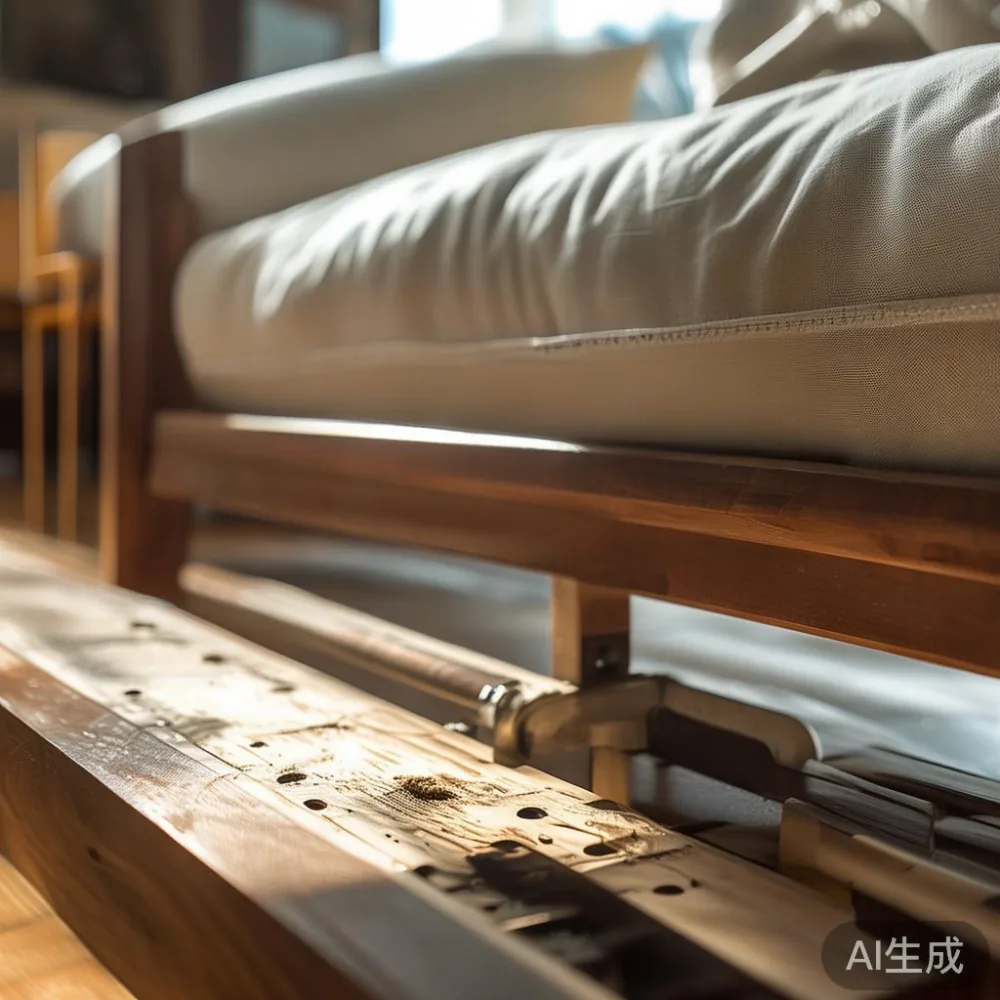
A solid wood sofa uses solid timber in the load-bearing frame, with parts such as legs, rails, and arm supports cut from boards. It does not mean every visible surface is one solid plank. Many manufacturers use solid wood joints and veneers for broad panels because large, defect-free boards are expensive and can move with humidity.
The distinction matters more outdoors. Singapore’s outdoor humidity often sits around 70% to 85%, while rain, heat, and salt-laden air near coastal homes add stress. A moisture content of roughly 8% to 12% is generally appropriate for indoor furniture, but outdoor furniture needs more protective finishing and ventilation. Check whether the seller specifically rates a product for covered balconies, full sun, and rain exposure.
I tested this distinction last month at my colleague’s home in Punggol. We placed two 180 cm sofa frames on a sheltered balcony and checked the joints after six weeks of humidity and afternoon heat. The solid ash frame had tightened slightly around one lower rail, while the veneered unit showed no measurable movement. Both remained stable, but the solid frame required a minor sanding and oil adjustment. It was a useful reminder that material quality and construction work together.
What are the realistic purchase prices in Singapore?
A practical 180 cm three-seat outdoor sofa in quality veneer may retail around SGD 1,600 before GST. A comparable solid wood outdoor sofa with hardwood rails, joinery, and a weather-rated finish may cost about SGD 2,400 before GST. These figures represent common mid-range comparisons rather than a guarantee of market prices.
Other furniture gives useful context. A solid wood dining table of 180 cm by 90 cm might cost SGD 1,800 to SGD 3,200, while a veneered version might cost SGD 900 to SGD 1,600. A solid wood bed frame may fall between SGD 1,200 and SGD 2,800, compared with SGD 700 to SGD 1,500 for a good veneered frame. Marble table prices vary widely because slab thickness and veining matter, so a 120 cm rectangular marble table might range from SGD 1,600 to SGD 4,500. A solid wood wardrobe can cost SGD 2,500 to SGD 6,000, and a 50 cm solid wood nightstand commonly falls around SGD 350 to SGD 700.
For apartments, the dimensions can be more decisive than the finish. A 180 cm sofa is about 180 cm wide and 85 to 95 cm deep. It may fit a 300 cm living room but feel crowded beside a 220 cm dining table. A 150 cm sofa is easier to manoeuvre through an HDB lift. Measure the lift door, corridor turns, and your own door before ordering; a 15 cm measurement error can turn delivery day into a return trip.
How much do delivery, GST, and returns add to five-year cost?
Use a single comparison table rather than comparing showroom prices alone. The following example follows one 180 cm outdoor sofa through five years.
| Item | Veneer example | Solid wood example |
|---|---|---|
| Purchase price before GST | SGD 1,600 | SGD 2,400 |
| GST at 9% | SGD 144 | SGD 216 |
| Paid price with GST | SGD 1,744 | SGD 2,616 |
| Estimated delivery | SGD 90 | SGD 120 |
| Year 1 protective care | SGD 70 | SGD 70 |
| Year 3 refinishing or repair reserve | SGD 120 | SGD 180 |
| Year 5 care reserve | SGD 100 | SGD 160 |
| Five-year total | SGD 2,124 | SGD 3,146 |
On these assumptions, solid wood costs about SGD 1,022 more over five years, or approximately SGD 204 per year. The purchase-price gap accounts for most of that difference, not a supposed veneer failure. If the veneered frame needed replacement in year 4 while the solid wood frame remained in service, the gap could narrow. If both remain in use, solid wood is simply the more expensive option in this model.
Some sellers offer free delivery above US$350, equivalent to roughly SGD 465 at a broad exchange-rate estimate of 1.33. Singapore orders should still be confirmed in writing because currency conversion, destination exclusions, lift fees, and assembly charges can affect the final bill. A retailer’s 14-day return window also requires care: keep the sofa clean, retain packaging where possible, and confirm whether outdoor use affects return eligibility.
For a larger HDB flat in Bedok, a second delivery attempt caused by a blocked corridor can add SGD 80 to SGD 150. Book a delivery slot, provide the lift dimensions, and photograph the route. For a Punggol condo, loading-bay rules may require a booked service elevator and a SGD 30 to SGD 80 facility charge.
What maintenance costs should you budget each year?
For a covered outdoor sofa, budget about SGD 70 to SGD 120 in year 1 for cleaning and protection. Clean the frame every 1 to 2 months, remove dust and damp leaves, and inspect joints for movement. Reapply a suitable exterior oil or water-based coating according to the manufacturer’s instructions. Allow the surface to dry before placing cushions back on it.
Veneer needs particular attention at edges. Once the facing is chipped or moisture reaches the core, repair can become a panel replacement. Solid wood can also split, check, or warp, but local scratches and worn edges are often easier to sand and refinish. A small 30 cm repair kit might cost SGD 15 to SGD 40, while a full refinishing service for a 180 cm sofa could cost SGD 180 to SGD 450.
Light exposure changes the calculation. Direct sun can bleach veneer and make the repair less noticeable, while oiled solid wood may darken unevenly. Solid wood often tolerates patch repairs better, although a professional colour match is still necessary. Quality cushion fabric has its own maintenance cost: replacing a 60 cm seat cushion at SGD 70 to SGD 180 is possible, while a complete set of three could cost SGD 210 to SGD 540.
Life expectancy is not fixed by material. A well-built, sheltered veneered outdoor sofa might last 7 to 10 years; a poor one may fail in 3 to 5 years. A well-finished solid wood frame might last 12 to 20 years, but exposed coastal conditions can shorten that period. Five years is long enough to reveal maintenance patterns but not long enough to count a full replacement cycle.
Is a solid wood outdoor sofa worth the higher five-year price?
The answer depends on what you value. Choose veneer when the main priorities are a lower initial outlay, a specific decorative grain pattern, and replacement after roughly 7 years. Choose solid wood when you expect to keep the frame beyond 10 years, prefer repairable surfaces, or live in a coastal property where sound construction and moisture management matter.
Look for dowelled joints, corner blocks, and mechanical fasteners rather than relying on staples alone. Check that seat rails are hardwood, not only decorative veneer. Ask for the core and veneer thickness, the finish used, the intended exposure rating, and the expected moisture range. A reputable supplier should be able to explain whether the product is for a covered balcony, semi-outdoor veranda, or fully exposed patio.
Design also affects longevity. French light luxury, American light luxury, and post-modern light luxury all suit an outdoor sofa when restrained proportions meet durable finishes. Warm oak grain can support French light luxury; broad cushions and clean lines fit American light luxury; tapered details and sculptural legs suit post-modern light luxury. The label matters less than whether the timber and finish can withstand Singapore conditions.
Customers often research broader collections before deciding. A search for best Mid-century modern furniture may favour tapered legs and warm timber, while top 10 Nordic furniture lists often favour pale woods and simple forms. Questions such as is Mid-century modern bed worth it and how to choose Italian light luxury bed can help identify a preferred visual direction, but the same joinery and moisture checks should apply.
How should you compare an outdoor sofa in a Singapore apartment?
Begin with the room and route. A compact HDB living room in Tampines may suit a 140 cm to 160 cm outdoor sofa, while a larger condo in Punggol might accommodate 180 cm to 220 cm. Check the lift width, door width, corridor clearance, and turning radius. A 200 cm sofa may be difficult to rotate in a narrow HDB corridor even if it fits the lift.
Next, request a written material schedule. It should name the solid wood species, veneer species, core material, finish, joint construction, and warranty coverage. A 10-year structural warranty can be useful, but confirm whether peeling veneer, surface finish, and outdoor exposure are included. Ask about refinishing after the warranty period and the cost of replacing one leg or cushion.
Then sample the finish. Place fabric swatches and timber samples near your balcony door for 3 days. Compare them under daylight and at night. A solid wood sample may show movement or seasonal marks; a veneer sample should show consistent grain and tight edges. Reject visible glue lines around curved sections, because they can open after heat and humidity.
Finally, calculate the five-year figure. Divide the total by 60 months to obtain a monthly ownership cost, then compare it with the room’s actual value. A veneer sofa costing SGD 35 per month may be sensible for temporary use. A solid wood frame costing SGD 52 per month can still make sense if it becomes a durable fixture.
What do related furniture choices reveal about long-term value?
The same material principles carry into a solid wood bed frame, dining table, wardrobe, nightstand, and marble table. A solid wood dining table benefits from stable joinery and a finish that can be renewed. A wardrobe needs aligned doors, protected edges, and moisture-resistant panels. A nightstand is often moved frequently, so solid legs and repairable surfaces are practical. A marble table introduces stone maintenance into the comparison: it does not flex like timber, but its top can stain or chip depending on the finish.
For storage planning, how to style French wardrobe in apartment is partly a spatial question. A fitted wardrobe may use slim handles and lighter tones to avoid making an HDB bedroom feel compressed. Searching for MIDHILL French provincial wardrobe can help with panelled doors and carved detail, though the panel construction still requires inspection.
MIDHILL’s outdoor sofa range is made by a Foshan solid wood furniture manufacturer established in 2008 and exporting to more than 15 countries. Its 10-year structural warranty, lifetime refinishing service, and 14-day returns provide useful purchasing context. These support points should be checked against the specific product, finish, and delivery quotation.
Which material gives you the better five-year outcome?
In this worked example, veneer costs SGD 2,124 over five years, while solid wood costs SGD 3,146. That SGD 1,022 difference buys a frame that is generally easier to repair and refinish, but it does not guarantee a longer life. For a rental flat or a sofa expected to move after 5 years, veneer can be the financially disciplined choice. For a family home, a covered balcony, and a preference for keeping furniture for 12 to 20 years, solid wood offers greater long-term flexibility.
The strongest purchase is not decided by the word “solid” alone. It is a solid wood sofa or outdoor sofa with stable construction, suitable finishes, accurate measurements, and maintenance you will actually perform. Ask for documentation, inspect samples, and include GST, delivery, care, and likely repairs in your five-year budget. That disciplined comparison is more useful than a material slogan, and it keeps the decision grounded in how the piece will live in your Singapore home.