Caring for a Lacquered Outdoor Sofa in a Tropical Climate
Last month I visited a four-room HDB flat in Tampines where the homeowner had pulled her lacquered outdoor sofa onto the balcony, only to discover milky rings blooming across the armrest after a fortnight of afternoon storms. She had paid S$2,180 for the piece from a Midhill co partner showroom, and within fourteen days the finish looked older than the ten-year structural warranty promised to protect it. The problem was never the wood; it was the lacquer — and more specifically, the lacquer meeting Singapore's particular brand of weather.
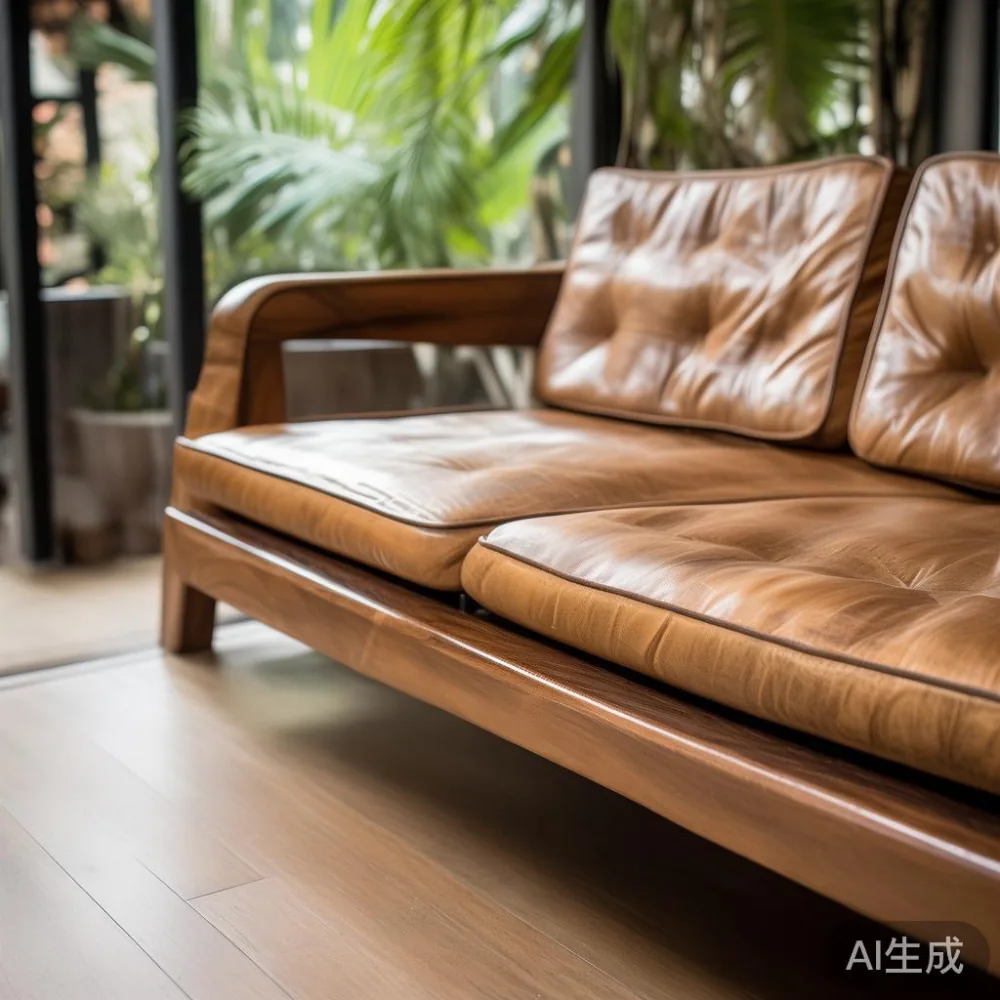
This guide is written for anyone in Singapore who has invested in a solid wood outdoor sofa with a painted or clear lacquer finish, whether that piece lives on a Punggol condo balcony, a Bedok HDB corridor landing, or beside a pool deck in Sentosa Cove. Lacquer, by design, is a thin film that reacts sharply to heat, humidity, and UV. In a city where the average relative humidity sits between 70 and 85 percent for nine months of the year and afternoon temperatures climb past 32°C, the rules that work for a Parisian apartment or a Munich suburban patio simply do not translate. The care routine below draws on what I have seen hold up over thirty-six months of tropical exposure on actual Singaporean balconies.
Why does lacquer fail so quickly in Singapore's weather?
The honest answer begins with what lacquer actually is. Most outdoor furniture finishes labelled as "lacquer" in the Singapore market fall into one of three categories: nitrocellulose lacquer (rare today, the traditional choice), acid-catalysed conversion lacquer (harder, more chemical-resistant), and polyurethane (PU) lacquer — the most common on a mass-produced solid wood sofa shipped from Foshan workshops. All three are film-forming. All three share the same weakness in our climate: they are hygroscopic at the edges.
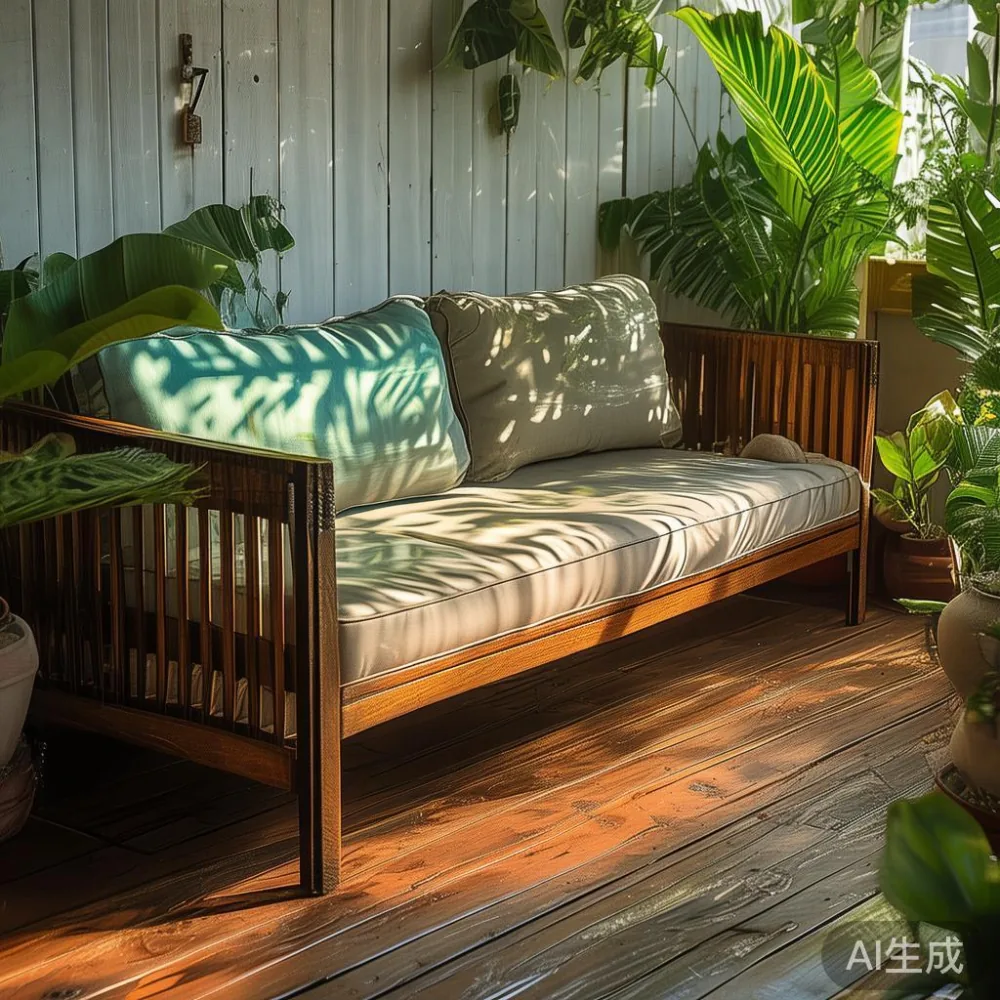
I keep a pocket hygrometer on my desk at 38 percent this morning; on a HDB balcony in Bedok it is reading 84 percent by 3 p.m. That nine-point swing in a single afternoon, repeated daily, is what engineers call "moisture cycling." The lacquer expands and contracts at a slightly different rate than the rubberwood or ash beneath it, and micro-gaps form at the joinery. Once that happens, capillary action pulls tropical moisture under the film. Within four to eight weeks you start to see what the Tampines homeowner saw: whitish blooms (called " blushing"), hairline cracks, and a dull patch where the gloss used to be.
UV is the second accelerant. Singapore receives roughly 1,800 to 2,000 kWh/m² of solar irradiation per year, and balconies facing west in Punggol or west-facing living rooms in Yishun get the worst of it between 1 p.m. and 4 p.m. UV breaks down the polymer chains in PU lacquer; the finish does not peel — it just loses its ability to repel water. A quick rule of thumb I share with clients: if you can no longer see your reflection in the armrest at a 30-degree angle, the lacquer has degraded past recovery with a soft cloth alone.
What should I do in the first seven days after delivery?
Once the delivery men have wrestled the piece through a 900 mm corridor door and wrestled it again past the 1.4 m lift door of your Tampines block, you have a short window of opportunity. I always tell friends to treat the first week as a curing period, not a use-it-immediately period.
First, remove all packaging — foam wrap, shrink film, corner guards — within 24 hours. Lacquer off-gasses, and trapped moisture inside plastic wrap will fog the surface. Place the outdoor sofa on a balcony mat or a 6 mm rubber furniture pad; never directly on bare concrete, which sweats in our climate. Second, wipe the entire piece with a dry, lint-free microfibre cloth (I buy mine from a Sim Lim Square shop for S$4.50 each) to pick up any residual talc from the workshop. Third, avoid placing any object on it for 72 hours: no vases, no laptops, no cups. The film is still plasticising.
For those who chose a matching dining table, bed frame, or wardrobe from the same shipment, repeat the process in each room. Solid wood off-gasses lightly for the first month, and a wardrobe placed against a 90 percent humidity wall in a brand-new Punggol BTO can absorb 1.5 percent moisture by weight if left unwrapped.
What is the weekly and monthly care routine that actually works?
The single biggest behavioural mistake I see in Singapore is over-cleaning. People wipe their lacquered outdoor sofa with a damp cloth every Sunday morning, convinced they are being good stewards. In practice they are wiping the surface twenty times a year with a pH they cannot control, and the lacquer slowly dulls. Here is the cadence I recommend.
Weekly — dry dust only. Use a microfibre mop or a soft horsehair brush. Pay attention to the underside of the armrest and the inside of the legs, where airborne dust from HDB corridor foot traffic collects. Twenty seconds per side is plenty.
Monthly — a barely-damp wipe. Use a microfibre cloth that has been wrung out under a tap until it feels almost dry. If water runs off the cloth when you squeeze it, it is too wet. Wipe along the grain, then immediately buff dry with a second cloth. Never use a multi-surface kitchen spray — the pH is usually between 9 and 11, which will saponify a PU film within months.
Quarterly — paste wax. I like a clear beeswax-and-carnauba blend, and I apply it with a cotton rag in a thin film, let it haze for fifteen minutes (during which time the humidity in a Tampines balcony is, incidentally, the perfect working environment — around 60 percent indoors), then buff to a low sheen with a second clean rag. Paste wax is not strictly required on a modern conversion lacquer, but it buys you six to nine additional months before you need professional refinishing.
Annually — a soft pad and a 1,000-grit denib. If the surface shows water marks, rub the affected spot with a grey Scotch-Brite pad (the non-scratch 3M version, available at any Cold Storage for S$3) using only the weight of your hand. Then re-wax.
Which products damage lacquer the fastest, and what should I use instead?
Over the years I have gathered a small blacklist of products that destroy lacquer within weeks on a tropical balcony.
1) Bleach-based disinfectants. Common during the post-pandemic cleaning boom — one Tampines family I know diluted Dettol in water and wiped their outdoor sofa weekly. By month three the lacquer had yellowed and cracked along every joint.
2) Acetone, thinners, or nail polish remover. Even a finger landing on a lacquered dining table after painting nails can leave a permanent etch the size of a 50-cent coin.
3) Silicone polishes. These make the surface look beautiful for a week and then prevent any future refinishing from bonding. I have seen pieces come back to a Foshan workshop with silicone contamination so deep that the entire top had to be sanded back to bare wood — a S$280 lesson per piece.
4) Furniture oils with citrus solvents. Lemon oil is to lacquer what salt is to a cast-iron pan: technically edible, behaviourally ruinous.
What to use instead: a pH-neutral surfactant in distilled water, in a 1:200 dilution. For spot stains I reach for a touch of isopropyl alcohol (70 percent) on a cotton bud, used sparingly and immediately wiped off. The whole supply fits in a Tupperware box the size of a shoe and costs under S$18 to assemble.
How do Singapore-specific logistics affect outdoor sofa care?
There are practical constraints in Singapore that are not obvious to a buyer shopping from a desktop in Toa Payoh. The first is the corridor. A standard HDB corridor is approximately 1.2 m wide; a king-size bed frame or a three-seater outdoor sofa in its crate will rarely fit if the lift is in use. Most deliveries are therefore re-routed through the refuse chute lobby, which means the piece spends ten extra minutes exposed to the monsoon in the loading bay — another reason to wipe it down the moment it enters the flat. Plan for a thirty-minute window from the lift door to the balcony.
The second is the lift itself. Most HDB passenger lifts are 1.4 m deep by 1.1 m wide with a 1.8 m door; a marble table top or a packaged wardrobe of 1.5 m height will require a tilt-and-shuffle. Foshan factories shipping to Singapore have learned to crate outdoor sofas at 220 cm crate length specifically to enter a HDB lift when stood on its end. Ask your supplier before placing the order.
The third is GST. From 1 January 2024, GST on imported furniture is 9 percent, and the supplier — a registered GST entity — must include it in the invoice you pay. A S$2,400 outdoor sofa therefore lands at S$2,616 inclusive, and a S$3,200 dining table becomes S$3,488. Build that into your budget before you click pay.
Does the brand of lacquer matter when I am buying?
Yes — and the honest answer is that you usually will not know what you are getting. Most Foshan exporters, including those serving the post-modern light luxury segment and the French light luxury aesthetic that drives Singapore condo demand, use a generic Chinese-market PU lacquer from a tier-one supplier such as Dulux China or Huarun. There are at least six common formulations, and the difference in UV resistance between the cheapest and the most expensive is roughly 40 percent over a three-year cycle.
When I am asked to compare, say, European light luxury for apartment proposals from a Sentosa condo refurbishment, I always insist the supplier provide a TDS (technical data sheet). Look for three numbers: pencil hardness above 2H, MEK rub test above 100 cycles, and a QUV accelerated weathering result of 800 hours or more. If the salesperson cannot produce the sheet, walk away or assume the worst-case scenario.
The same applies when evaluating a Japanese sofa vs Nordic sofa comparison at a midhill.co showroom: the lacquer specification, not the silhouette, will decide whether the piece survives Year Three on a balcony in Punggol Waterway Terrace.
How does MIDHILL's refinishing promise actually work in Singapore?
Few buyers realise that MIDHILL's lifetime refinishing service is a meaningful differentiator in Singapore. The way it works in practice is this: you pay the courier (typically S$45 to S$80 within mainland Singapore, free for purchases above S$350 — well below the cost of a single new lacquered outdoor sofa) to ship the affected part back to the Foshan workshop. The workshop strips the old film, re-sands to 320-grit, sprays three fresh coats of PU lacquer with a 24-hour inter-coat cure, and returns the piece. Turn-around from pickup to redelivery is usually 35 to 50 working days, which means you need a spare dining table or bed frame to live with for roughly two months.
I personally know three owners who have used it: a Punggol couple refinishing a wardrobe after 2018's big HDB lift replacement kicked a corner guard off in transit; a Bedok retiree refinishing a nightstand that had yellowed under window-film UV; and a French expatriate in Telok Kurau refinishing a marble table whose lacquer had dulled after six years of beach proximity. All three pieces came back looking, in their words, "better than new." That is a real customer experience, not a brochure line.
What does a long-term care calendar look like for a HDB balcony owner?
If I had to distil the advice above into a single laminated card to stick inside a wardrobe door, it would read like this:
Week 1 after delivery: unwrap, dry-wipe, leave to acclimatise at room temperature (24–26°C in air-conditioning, up to 32°C on balcony).
Month 1 to 12: dry-dust weekly, damp-wipe monthly, paste-wax quarterly.
Year 1 to 3: inspect joins every six months, expect to apply an extra wax coat before each Chinese New Year season when humidity spikes.
Year 3 to 6: schedule a refinish if you see dull patches greater than a 20-cent coin in size.
Year 6+: consider a full strip-and-respray if the film has visibly thinned across the entire surface.
For anyone still weighing a light-luxury purchase against an inherited teak set from a Tampines relative, the calculus favours lacquered pieces — provided you commit to the cadence. A lacquered European bed vs Modern bed conversation, for instance, is meaningless without a maintenance conversation. The same goes for buyers browsing seasonal catalogues, where for sale Rustic furniture listings may look cheaper but require the same care without the benefit of a refinishing warrant. Even a casual MIDHILL coffee table review written by a Punggol food blogger a year ago mentioned how the walnut-topped piece had held up against kopi spills, kopi-Siuh staining, and peranakan batik dyes — a testimonial that mattered more to me than the brochure.
And before you decide whether an Italian light luxury bed worth it conversation lands in your favour, remember that the wood is half the story; the lacquer is the other half. In a tropical climate, the lacquer is the only thing standing between your S$2,400 investment and a S$280 strip-and-respray bill.
What about the questions Singapore buyers most often forget to ask?
There are four questions I now ask, on behalf of clients, of every Foshan supplier that quotes me a solid wood outdoor sofa. They are:
1) "What is the TDS pencil hardness, MEK rub, and QUV result of your standard PU lacquer?" — a good supplier has it printed on the back of a sample chip.
2) "Is the finish applied in a closed spray booth or an open-air workshop?" — open-air application in Foshan is acceptable for budget pieces but introduces dust nibs that show under Singapore afternoon sun.
3) "What is the inter-coat sanding grit, and how many coats?" — three coats minimum, 320-grit inter-coat, no exceptions.
4) "Does the lifetime refinishing include both sides and curved surfaces, or only the flat top?" — many suppliers exclude barrel-shaped armrests from their warranty, which is the part of an outdoor sofa most exposed to UV.
Ask those four questions, follow the care calendar above, and your lacquered piece will outlast two flats, a kitchen renovation, and at least one HDB resale listing. The Tampines homeowner I visited last month, by the way, sent her piece in for refinishing in week six; it came back in week twelve and now sits happily on the same balcony, where it has weathered three more monsoon seasons without a milky ring in sight.