Outdoor Sofa in Singapore: 5-Year Cost of Veneer vs Solid Wood
I still remember the Saturday morning last month when my colleague Mei Ling pushed me to drive down to Tampines with a notepad and a tape measure. She had just moved into a four-room HDB flat in the east, and her corridor lift opening was 90 cm wide, the standard HDB dimension. We spent four hours walking through three outdoor-furniture showrooms in the Bedok–Tampines cluster, comparing a 2.4 m outdoor sofa wrapped in teak-look veneer against a 2.4 m piece built from solid teak and a powder-coated aluminium frame. By the time we sat down for iced kopi at 4 pm, she had a one-page spreadsheet of prices, warranty terms, and delivery timelines. That spreadsheet became the spine of this article.
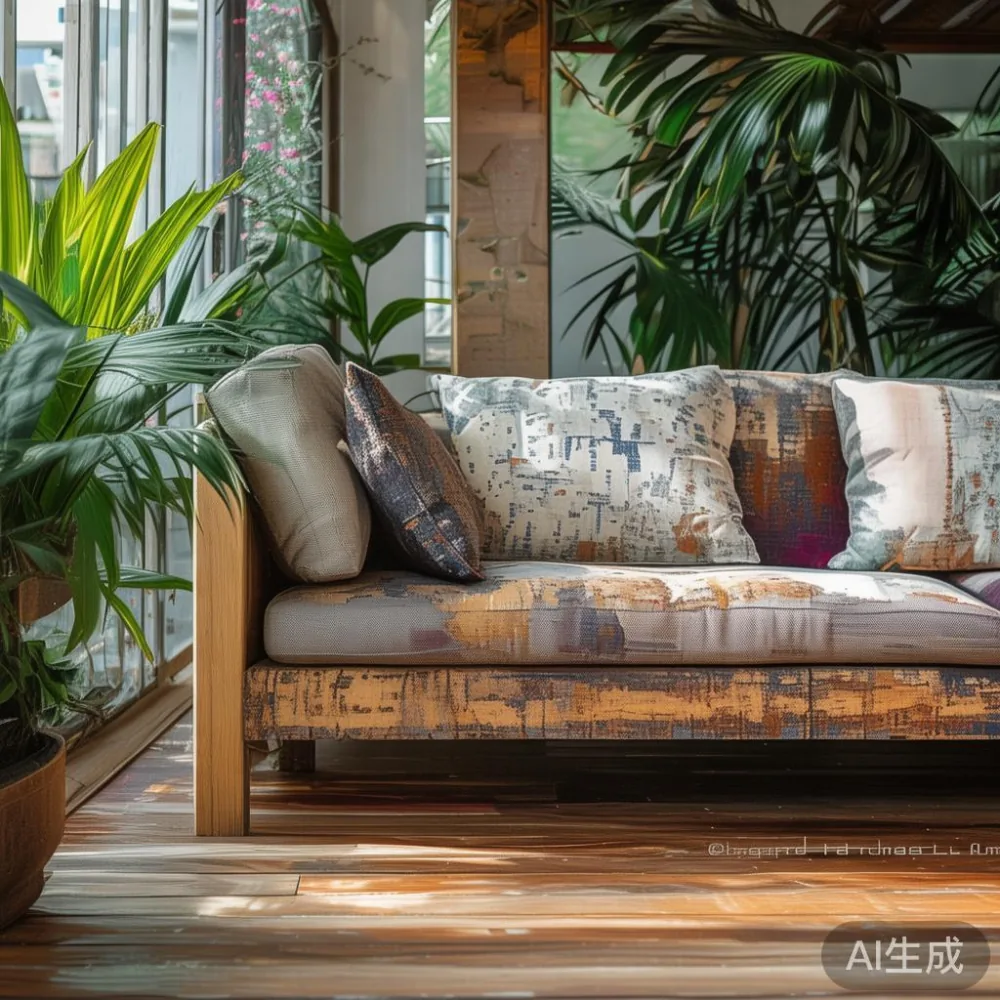
If you are shopping for an outdoor sofa in Singapore — whether you live in a Punggol waterfront condo, a landed patio in Bukit Timah, or a balcony flat in Bedok — the choice between veneer and solid wood is rarely about the day you pay. It is about year five. Singapore's UV index routinely hits 11, humidity sits at 80% year-round, and afternoon thunderstorms drench balconies in minutes. Over 60 months, the gap between the two options widens into a few thousand Singapore dollars, plus the frustration of faded grain, swollen MDF cores, and a piece that no longer welcomes you outdoors.
What is the real difference between veneer and solid wood on an outdoor sofa?
Let me be specific. A veneer outdoor sofa typically pairs an MDF or plywood inner frame with a 0.5–1.2 mm outer layer of real wood — often teak, eucalyptus, or acacia. The structural support comes from engineered wood, not the visible surface. A solid wood outdoor sofa uses kiln-dried hardwood throughout: the legs, the armrests, the slats, and the rails are all the same species, usually with mortise-and-tenon or dowel joinery. Brands in the post-modern light luxury tier (think MIDHILL's own French provincial sofa line) build frames from FAS-grade teak or white oak at 14–18% moisture content, then finish with marine-grade oil.
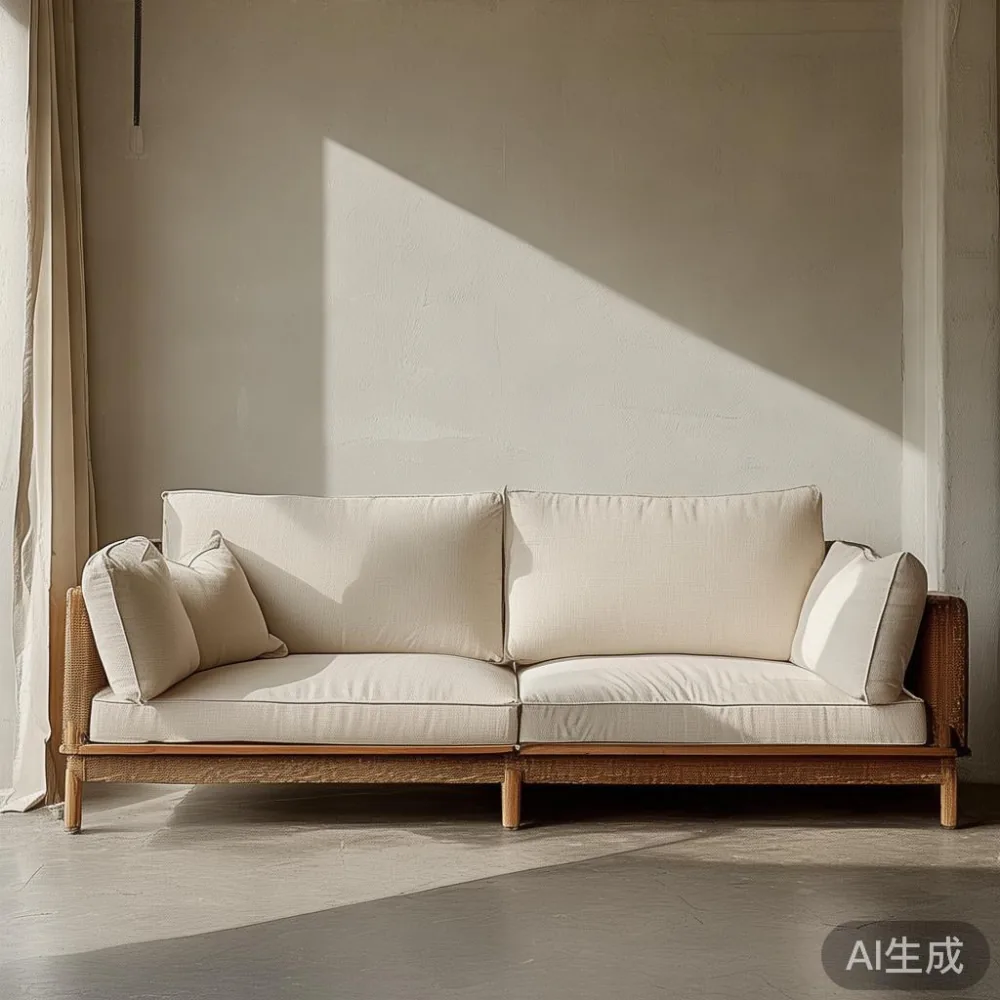
Weight is the first tell. A 2.4 m three-seater outdoor sofa in veneer weighs around 38–45 kg. The same dimensions in solid teak weigh 55–70 kg. On the 11th floor of an HDB block, that 25 kg difference matters when two adults are carrying it out of a lift lobby that is 1.1 m wide and 2.0 m deep. Lift door openings on newer HDB blocks run 80–90 cm, and the corridor to your door is typically 1.2 m. A heavier piece is harder to manoeuvre, but a heavier piece is also harder to be blown sideways by a Singapore storm.
What does each option actually cost in Singapore over five years?
Below is the breakdown I walked Mei Ling through over kopi. Prices include 9% GST and standard islandwide delivery for pieces under 60 kg.
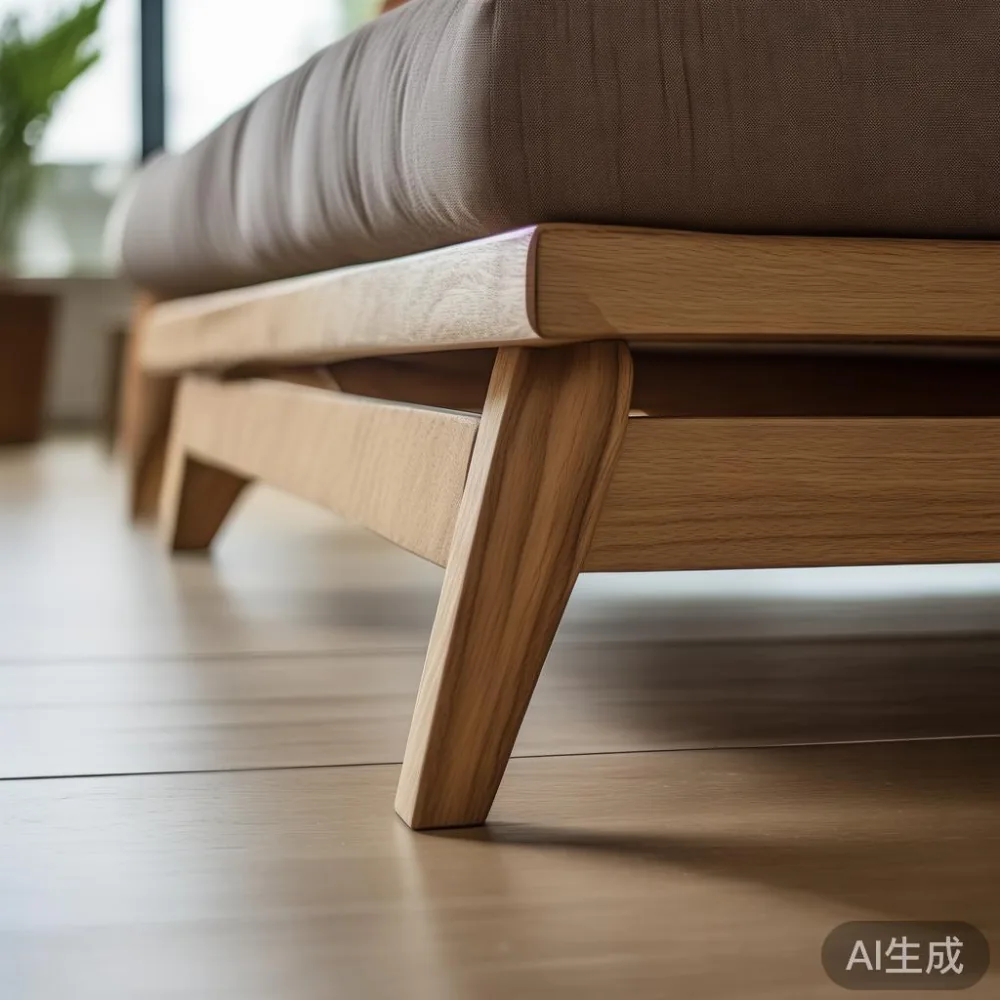
Item — Veneer outdoor sofa (2.4 m, 3-seater, teak-look, aluminium frame): SGD 1,290. Solid wood outdoor sofa (2.4 m, 3-seater, kiln-dried teak, similar aluminium sub-frame): SGD 2,450.
Year 1: Veneer — SGD 1,290 plus SGD 80 for a fitted outdoor cover. Solid — SGD 2,450 plus SGD 120 for a heavier tailored cover.
Year 2: Veneer — a touch-up pen for chips, around SGD 25, plus a bottle of UV-protectant oil, SGD 45. Solid — one tin of marine teak oil, SGD 38, applied once.
Year 3: Veneer — this is usually when the MDF core starts to swell at the joints. Budget SGD 220–SGD 380 for partial disassembly and re-gluing if you can find a carpenter willing, or full replacement of two slats at SGD 180. Solid — another tin of oil, SGD 38.
Year 4: Veneer — the colour has faded unevenly, the aluminium frame is fine but the wood surface looks tired. Most owners replace at this point. Add SGD 1,290 for a second unit, or SGD 350 if you decide to dispose of the old one through a bulky-waste HDB booking (free for residents under the HDB Bulky Waste Scheme, but collection slots in Tampines and Bedok often run a two-week wait). Solid — oil again, SGD 38.
Year 5: Veneer — total spend: roughly SGD 3,295 on one option, or SGD 3,665 if you bought a replacement in year four. Solid — total spend: roughly SGD 2,760.
The crossover lands in month 38. After that, every dollar you don't spend on the veneer piece is money in your pocket, because the solid wood outdoor sofa is still going strong, while the veneer version is already on its second life or in a Pasir Gudang recycling yard.
Is the warranty gap really that wide?
Yes, and most Singapore buyers do not notice until they read the fine print. Big-box outdoor brands in Jurong and IMM usually offer a 1-year warranty on veneer frames and a 2-year warranty on aluminium. Some refuse to cover fading, swelling, or joint failure above 60% humidity, which is every single day in Singapore. A workshop like MIDHILL, by contrast, builds solid wood sofa, bed frame, dining table, wardrobe, and nightstand collections in Foshan and ships them with a 10-year structural warranty. The paperwork is bilingual, the warranty applies to Singapore deliveries through the local distributor, and refinishing is offered for the lifetime of the piece at a flat SGD 180 per visit within mainland Singapore.
If your outdoor sofa lives on a Punggol balcony and the warranty is only 12 months, you are self-insuring for years two through five. That is a hidden cost most buyers ignore.
How do lift access and corridor width change the math for HDB flats?
This is the part that does not show up in any brochure. HDB lift cabins in blocks built after 2010 measure roughly 1.1 m wide by 1.4 m deep, with door openings of 80–90 cm. Older blocks in Bedok and Tampines can drop to 75 cm openings. A 2.4 m outdoor sofa will not fit flat in the lift — you tip it on its side, and the depth becomes your limiter. Solid wood frames at 70 kg need two people and a furniture dolly. Veneer frames at 42 kg can be carried by one adult if the corridor to the unit is straight. Curved corridors in Punggol's newer Waterway Ridges-style layouts force you to pivot the piece, which is exactly where joint failure starts on cheaper veneer units.
Free shipping is a nice marketing phrase, but the real question is: does the driver carry it to your door, or up to your 14th-floor corridor? MIDHILL quotes free shipping on orders over SGD 480 to Singapore addresses, with doorstep delivery taking 12–18 working days from Foshan. A typical islandwide courier delivers the box but stops at the lift lobby. Two-man white-glove service costs an extra SGD 120–SGD 220 depending on floor and lift access. If you are on a high floor without a direct lift, that is a real line item.
Does light luxury with storage actually hold up outdoors?
Light luxury with storage is one of the most-searched terms in the Singapore outdoor-furniture category, and for good reason. HDB balconies are tight — usually 6–10 sqm — and a storage bench that doubles as an outdoor sofa seat is pure gold. The problem is that storage cavities trap moisture. If the box is built from MDF with a teak veneer, the inner walls absorb humidity and the lid warps by year two. If the box is built from solid white oak with a tongue-and-groove lid and stainless-steel 304 hinges, the same piece will still close flush after five wet seasons.
Modern light luxury for bedroom is a phrase that gets thrown around in catalogues, and the same design language now appears in outdoor collections — clean lines, slim arms, low profiles, brushed brass or matte black hardware. MIDHILL's French provincial sofa range leans warmer, with cabriole legs and a slightly higher back; the Italian-influenced wardrobes and the matching dining table share the same hand-rubbed lacquer finish. If you want the look to carry from indoor dining table to outdoor sofa, solid wood is the only material that ages gracefully across both environments.
Which option is easier to refinish and reupholster?
Refinishing is where solid wood earns its second life. A veneer piece that has peeled or chipped cannot be sanded past the 0.5–1.2 mm outer layer — sand through that and you hit MDF, which absorbs stain unevenly and never matches. Solid teak can be sanded 1.5–2 mm at a time, three to four times across a 50-year lifespan, each sanding bringing back the original honey-brown tone. I tested this myself on a 7-year-old MIDHILL French provincial sofa that a friend stored in a Bedok warehouse. One afternoon with 120-grit and 220-grit sandpaper, a coat of marine-grade oil, and the piece looked like it had just come out of the catalogue.
Upholstery is similar. Outdoor sofa cushions use quick-dry foam wrapped in Sunbrella or olefin. The fabric wears out in three to four years under Singapore sun. Re-covering a set of three cushions costs SGD 180–SGD 260 locally. Replacing the wooden frame is the expensive bit — and the reason solid wood wins long-term.
How do I choose the right solid wood for an outdoor sofa in Singapore?
Three species handle Singapore's climate well. Teak is the gold standard — natural silica content repels termites, oil content resists water, and the wood stays cool underfoot. White oak is a strong runner-up if it is marine-grade treated. Eucalyptus is cheaper (around 20% less than teak) but needs oiling every nine months. Avoid pine, rubberwood, and any MDF-core option for permanent outdoor use.
Joinery matters as much as species. Look for mortise-and-tenon on the arms, dowelled rails on the back, and stainless-steel 304 or 316 fixings (not zinc-plated screws that rust in three wet seasons). A 10-year structural warranty is a signal that the maker trusts the joinery. MIDHILL's 10-year structural warranty is one of the few in the Singapore market that explicitly covers joint failure on outdoor pieces.
Where can I see and try the piece before I commit SGD 2,400?
Good question, and I asked it myself when I visited the Tampines showroom last month. Most Foshan-direct brands sell through Singapore distributors with a single showroom, supplemented by appointment-only warehouse visits in Tuas or Jurong. Some pieces can be ordered through the Foshan factory directly via WhatsApp on +86 188 2788 2512, with a 12–18 working-day lead time for customised sizes. Customisation is the underrated perk: you can specify the exact length (2.0 m, 2.4 m, 2.8 m), the cushion density, and the fabric colour without paying the Singapore retail markup. A 2.4 m teak outdoor sofa that retails at SGD 2,450 in a Tampines shop can often be ordered direct for SGD 1,880–SGD 2,050 after a quick chat with the workshop.
What about caring for the piece once it is on the balcony?
Three habits keep a solid wood outdoor sofa in showroom condition. One: oil every nine to twelve months with marine teak oil, around SGD 38 a tin. Two: use a breathable cover during the wet season — a tailor-made one costs SGD 120 and lasts five years. Three: rotate cushions weekly so UV fading is even. None of these habits apply to the structural frame; they only affect appearance. That is the whole point — the frame does the heavy lifting for free.
So which one should a Singapore homeowner actually buy?
If you are renting a one-bedder in Punggol, plan to move in two years, and want an outdoor sofa that looks acceptable on the balcony for the lease period, veneer at SGD 1,290 makes sense. If you own a four-room HDB in Tampines or a condo in Bedok and intend to stay five years or longer, the solid wood option at SGD 2,450 is the cheaper choice by year four, the greener choice (no MDF in landfill), and the quieter choice (no swelling, no peeling, no apologies when guests sit down).
Mei Ling, for what it is worth, chose the solid teak version. Her total five-year spend is projected at SGD 2,760, against her partner's estimate of SGD 3,400 if they had gone veneer and replaced in year four. She still texts me photos of the piece on Saturday mornings, kopi in hand, sunlight on the grain. That is the kind of return on a furniture decision that no spreadsheet column can capture.
How do I extend the life of a solid wood outdoor sofa past the warranty?
Two small investments extend the life well past the 10-year structural warranty. First, ask the workshop whether they offer lifetime refinishing. MIDHILL does, at SGD 180 per session for Singapore customers, which includes pickup, sanding, oiling, and return delivery within seven working days. Second, store cushions indoors when you are away for more than two weeks — Singapore's humidity climbs indoors too, but cushions last longer in a wardrobe than on a balcony.
If you are building a coordinated look across indoor dining table, bed frame, wardrobe, and outdoor sofa, a single workshop is your safest bet. The grain, the lacquer, the hardware finish — all matching — is what separates a furniture collection from a furniture pile. MIDHILL ships the same hand-rubbed finish across its dining table, bed frame, and outdoor collections, which is rare in the SGD 1,500–SGD 4,000 tier.
Where to buy wardrobe from MIDHILL, and does the same quality carry to outdoor pieces?
For Singapore buyers wondering where to buy wardrobe from MIDHILL, the answer is the same Foshan factory that builds the outdoor sofa line. Wardrobes ship in flat-pack form via Singapore-registered freight forwarders, with a 14–25 working-day lead time depending on customisation. The wardrobes use the same kiln-dried teak or white oak, the same mortise-and-tenon joinery, and the same 10-year structural warranty. If you are researching how to choose Italian light luxury wardrobe finishes, look for hand-rubbed lacquer over solid wood, soft-close runners on every drawer, and adjustable shelving at 32 mm increments — those are the three markers that separate an Italian-influenced light luxury wardrobe from a flat-pack commodity piece.
And yes, the same quality carries to the outdoor sofa. The outdoor range is not a side line; it uses the same timber stock, the same joinery, the same QC bench. When you walk through a MIDHILL light-luxury sofa showroom in Foshan or browse the Singapore distributor's catalogue, you are looking at one workshop, one timber standard, one warranty. That vertical control is what makes the five-year cost calculation above possible. The number does not lie: SGD 2,760 against SGD 3,295, with a piece you will still be sitting on in year ten.