5-Year Outdoor Sofa Cost Comparison: Veneer vs Solid Wood
Choosing an outdoor sofa for a Singapore home often comes down to two familiar constructions: veneer over engineered timber, or solid wood. Both can look refined in a photograph, but their costs over 5 years can follow very different paths. Humidity, UV exposure, lifting restrictions, maintenance habits and repair decisions all affect the result.
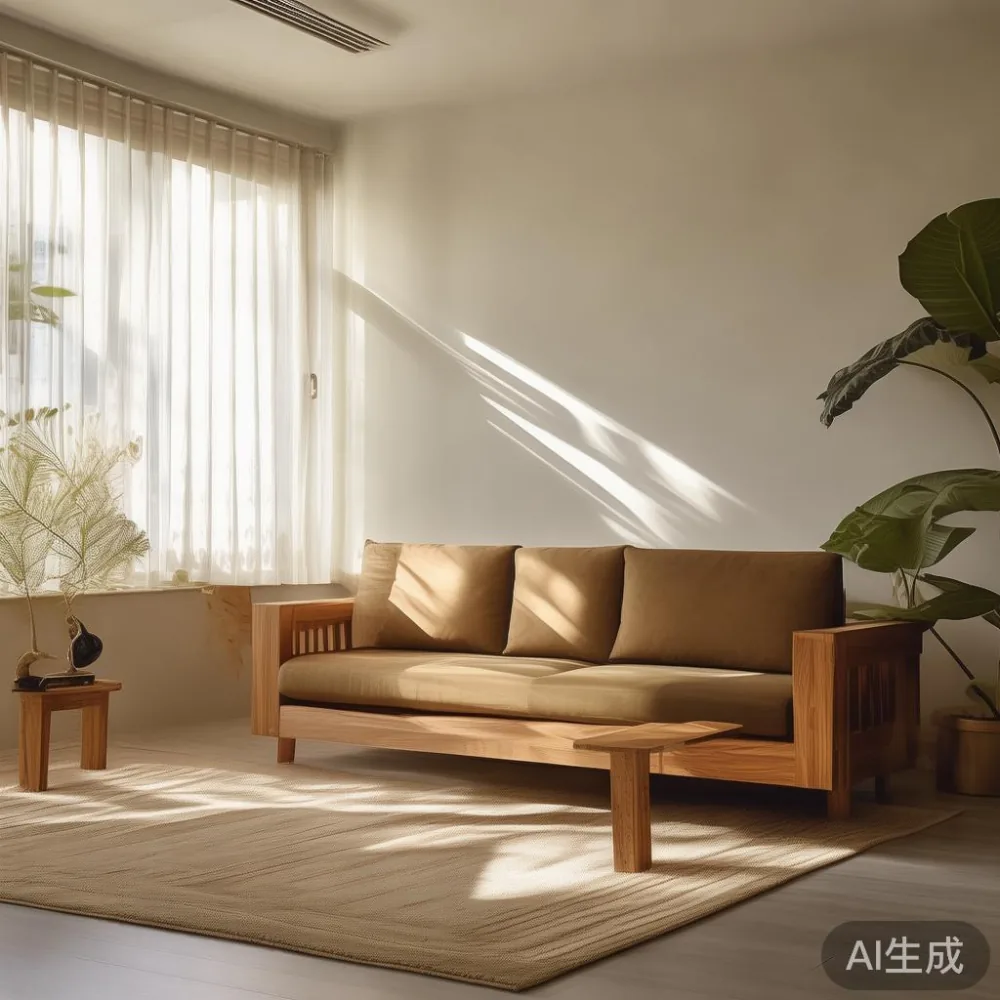
This comparison uses realistic figures for Singapore households, including HDB flats in Tampines, Bedok and Punggol, as well as newer condos. Prices are stated in SGD and include GST. A typical example is a 210 cm outdoor sofa rated for covered balconies, with a supplier-declared load capacity of 350 kg. Exact pricing varies by size, timber and cushion specification.
Light-luxury design does not require every component to be made from one material. A French light luxury balcony may pair a veneer-backed seat structure with solid-wood legs, while an American light luxury outdoor sofa may use larger solid-wood sections. Post-modern light luxury can also use mixed construction when each material has a defined purpose.
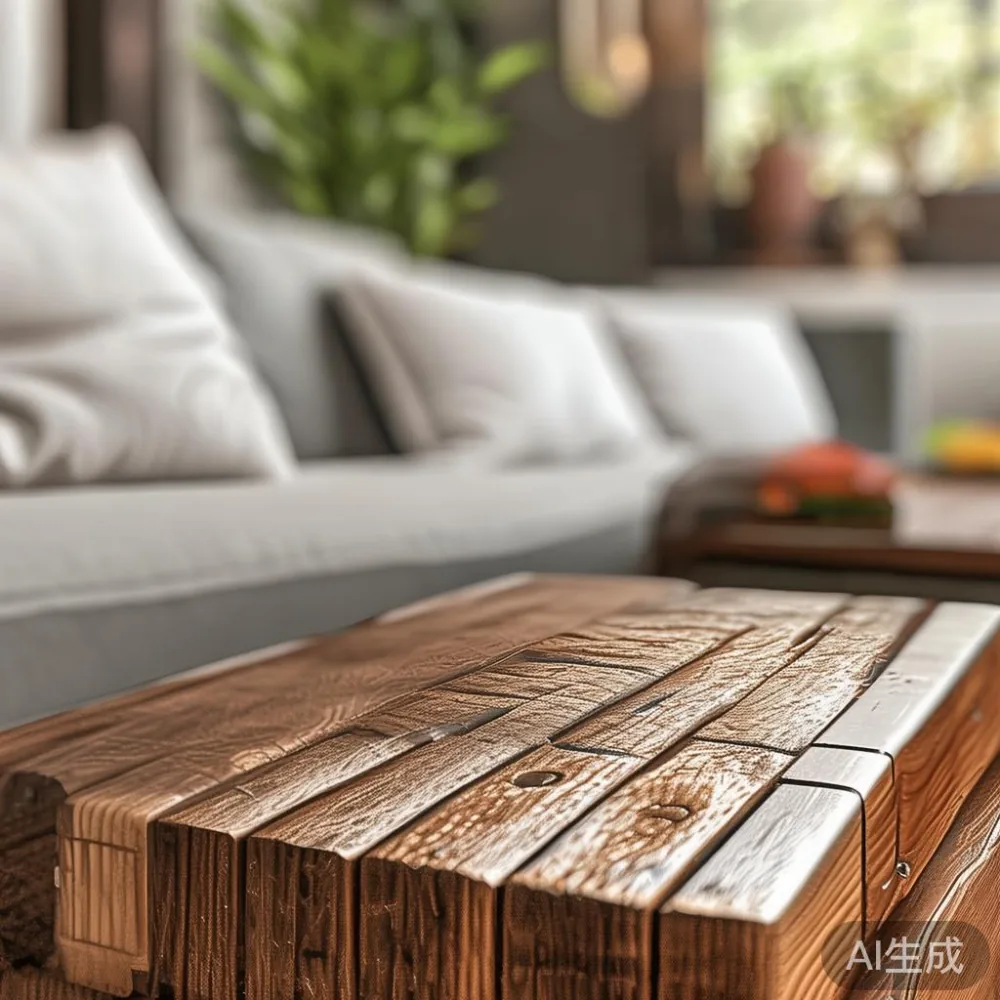
What is the realistic 5-year difference between veneer and solid wood?
For a 210 cm, 3-seat outdoor sofa, a veneer-and-engineered-wood model may cost S$1,680 before GST, or S$1,848 with 9% GST. A comparable solid-wood model may cost S$2,580 before GST, or S$2,842.20 with GST. The purchase-price gap is S$994.20 including GST.
That gap does not automatically make veneer the wiser purchase. Veneer can be appropriate indoors or under deep roof cover. Solid wood has a greater repair advantage if the frame scratches, dents or develops joint movement, provided the wood and protective finish suit Singapore’s conditions.
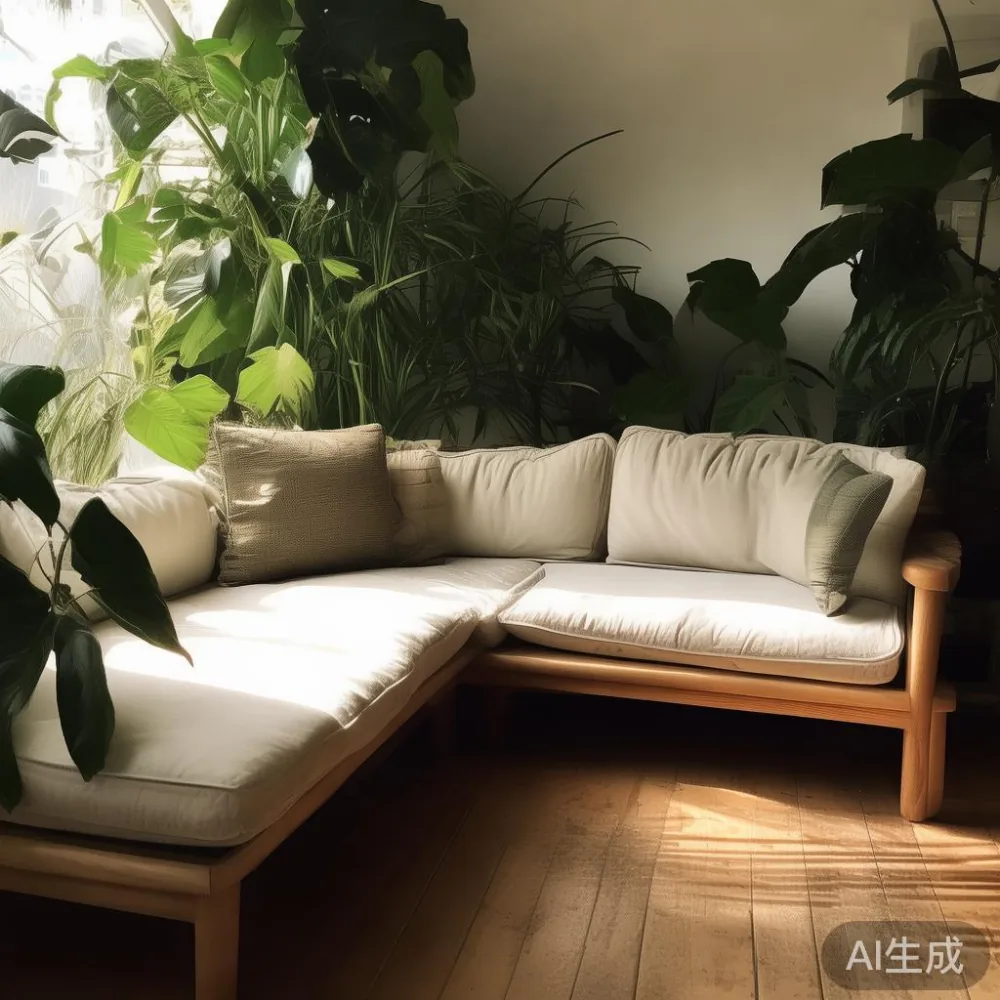
A practical 5-year model might include delivery at S$90, annual cleaning materials at S$45, and one refinishing service at S$260 for the solid-wood option. Veneer touch-ups may cost S$110 because the damaged surface sheet must be repaired carefully. Labour is estimated at S$35 per hour, with 2 hours allocated to each major service.
Over 60 months, a maintenance reserve of S$25 per month equals S$1,500. A refundable 14-day return policy can reduce purchase risk, but it does not cover UV fading, rain exposure or physical damage after use. Ask for written timber thickness, finish coverage and balcony-use limits before ordering.
For planning purposes, the assumed veneer scenario totals S$3,408: S$1,848 purchase price, S$90 delivery, S$270 for five years of cleaning materials and S$1,200 for five minor surface repairs. The solid-wood scenario totals S$4,332.20: S$2,842.20 purchase price, S$90 delivery, S$270 for cleaning materials and S$1,130 for one major refinishing service. The difference is S$924.20 over 5 years, not the full purchase-price gap.
This is an illustration, not a quotation. A solid-wood piece exposed to salt-laden air may need more intervention than a sheltered unit. Conversely, a low-quality veneer may need earlier repair. The location of the sofa matters more than a broad material label.
How does Singapore humidity change the comparison?
Singapore’s outdoor environment can move between warm humidity and sudden rain. Relative humidity often rises at night, while a west-facing balcony can exceed 35°C during the afternoon. These conditions can cause veneer to lift at an edge, soften adhesive lines or lose gloss. Solid wood expands and contracts across its width, so sealed faces, end grain and underside joints need attention.
An outdoor sofa should not be treated as furniture for an open field. Unless the manufacturer clearly permits it, keep the product under a roof, balcony recess or retractable canopy. A 210 cm sofa should have at least 35 cm of ventilation behind the back if the wall is close. Leave 60 cm in front where possible, and confirm that corridor turns and lifts can accept the packed dimensions.
In many HDB lifts, the car door may measure about 90 cm wide and 210 cm high, although building-specific dimensions vary. A packed outdoor sofa box can exceed 220 cm because of protective packaging. Measure the lift lobby, corridor width and turning radius before choosing a 240 cm model. A 180 cm two-seat unit may be easier to move than a 220 cm three-seat unit.
Last month I visited a Bedok flat to inspect a moisture-marked balcony console. The owner had assumed that “solid” meant maintenance-free. The timber was 20 mm thick, but two legs were close to the wall and remained damp after rain. Spacing them 12 cm from the wall and applying a compatible water-repellent finish reduced the issue. The inspection showed why construction details can matter as much as veneer versus solid wood.
For veneer, request details about the substrate, core thickness, veneer thickness and edge sealing. A commercial plywood or stable engineered core may perform acceptably under cover. For solid wood, ask whether all visible structural parts are solid timber or whether only the frames and legs qualify. “Solid wood” does not mean that cushions, hardware, coatings or back panels share the same material.
Which option has better repair and refinishing potential?
Solid wood usually offers more options after 5 years. Scratches can be sanded when they are shallow, joints can be tightened, and a compatible finish can be renewed. These operations may extend the appearance of a solid wood sofa, bed frame or dining table without replacing the whole item. Veneer cannot be sanded deeply without exposing the substrate, so repairs depend on the extent of damage.
Consider a solid-wood outdoor sofa with a 25 mm seat rail and 45 mm legs. If a customer knocks 2 mm into a leg, the repair may involve filling, sanding and recoating 120 cm². A similar 0.6 mm veneer chip may require a patch or a full panel replacement if the sheet cannot be matched. The labour difference can be S$70 to S$220 per repair.
The finish is also important. A water-based outdoor coating may need renewal every 24 to 36 months, while a solvent-based or factory-applied system may last longer under cover. UV resistance is not the same as waterproofness. Ask the supplier for a sheen level, coating name and expected maintenance interval in writing.
For an indoor solid wood bed frame, the same refinishing logic may support a longer ownership cycle. If searching how to style light luxury bed in apartment, compare the finish with pale oak, walnut or ash tones before selecting a mattress height. A 30 cm bed base with a 25 cm mattress can affect clearances beside a 90 cm balcony door.
MIDHILL describes a 10-year structural warranty and lifetime refinishing for eligible products. Those terms should be checked against the exact outdoor sofa model, because warranty scope and coating availability can differ. A written service record is useful when a replacement part or finish is requested after 5 years.
What do delivery, returns and GST add to the 5-year cost?
GST is easy to overlook when comparing online prices. Singapore’s standard GST is currently 9%, so the difference between a displayed S$1,680 price and a displayed S$2,580 price becomes S$994.20 after tax. Delivery may be free above US$350 on the stated MIDHILL shipping policy, but local delivery charges and cross-border terms should still be checked before payment.
For Singapore delivery, budget 7 to 14 delivery days after production, with extra time during public holidays. A lift booking may add 1 to 3 days. If the corridor is narrower than 100 cm, the courier may need a two-person carry or a window-hoist arrangement. A window lift can cost about S$180 to S$350, making access planning part of the ownership cost.
Returns can reduce the initial risk. A 14-day return window allows time to inspect the outdoor sofa, check the packaging and compare dimensions, but the item must be unused and protected. Freight damage should be photographed before unpacking further. Keep the carton for 7 days if possible; replacing packaging can cost S$45 to S$120.
Here is a compact 5-year budget for one 210 cm unit, with GST included:
Veneer option: S$1,848 purchase price, S$90 delivery, S$270 cleaning materials and S$1,200 repair reserve, for S$3,408 total.
Solid-wood option: S$2,842.20 purchase price, S$90 delivery, S$270 cleaning materials and S$1,130 refinishing reserve, for S$4,332.20 total.
The lower total is not automatically the better choice. A veneer unit that remains under cover may require no major repair, while a solid-wood unit exposed to rain may need annual checks. The comparison becomes useful only when the exposure level and finish are similar.
Can an outdoor sofa fit into a Tampines, Bedok or Punggol home?
Yes, but the route matters. A compact 160 cm two-seat outdoor sofa may be practical in a HDB balcony where seating is limited to 170 cm and the drying rack must remain usable. A 210 cm three-seat model may suit a larger 250 cm balcony recess in Tampines or a condo balcony in Punggol with a wider sliding door.
Measure the actual usable space rather than the advertised floor area. Leave 8 cm between the sofa arm and a wall when possible, 20 cm from the railing if ventilation is needed, and 70 cm for a side table. The outdoor sofa should not block a washing-machine door, utility panel or emergency route.
For small interiors, designers often refer to Nordic for small living room ideas when choosing a 170 cm sofa with a 78 cm depth. Boho for small living room styling can add woven textures and plants, although natural fibres should remain dry. Industrial for small living room schemes may use blackened metal accents, but outdoor metal still needs rust protection.
A Japandi direction can suit a quiet balcony with pale timber and restrained storage. If you are learning how to style Japandi sofa in room, keep the surrounding furniture simple: one 40 cm side table, one 15 cm planter and a 60 cm lamp with an outdoor-rated shade. Avoid placing an indoor rug beside the sofa if rain can reach it.
French light luxury may use curved arms, linen-look cushions and a marble table nearby, while American light luxury may favour deeper proportions and a dark metal frame. Post-modern light luxury can mix a solid-wood outdoor sofa with a compact, geometric side table. The material decision remains practical rather than purely visual.
What questions should I ask before paying for either construction?
Ask whether the sofa is intended for covered outdoor use or fully exposed outdoor use. Request the frame timber, panel substrate, veneer thickness, finish type, UV rating, load capacity and warranty exclusions. A supplier who answers these points in writing gives you a clearer basis for a 5-year budget.
Also ask how parts are replaced. For a solid wood sofa, bed frame or wardrobe, confirm whether replacement legs, seat rails and finish samples are available. For a dining table or marble table, ask about weight distribution and whether two people can carry it safely. A nightstand near the balcony may need a moisture-resistant interior rather than a decorative veneer face.
Do not accept “waterproof” without a test standard or defined exposure condition. A practical home test is visual: place the sofa under its intended canopy, expose it for 48 hours, then inspect the underside and joints after a rainy period. This is not a laboratory test, but it can reveal a poorly sealed edge.
For a 5-year comparison, calculate both the likely repair frequency and the cost of delayed maintenance. If a veneer unit costs S$3,408 in the example and remains sound, it may suit a sheltered home. If the solid-wood unit costs S$4,332.20 and can be refinished, it may better match a family expecting to keep the sofa for 8 to 10 years.
MIDHILL has exported solid wood furniture to more than 15 countries since 2008, and its stated lifetime refinishing service can be considered for eligible indoor pieces. For an outdoor sofa, verify that the service applies to the exact frame and finish. Local delivery, GST, access charges and weather protection should all appear in the final comparison.
The most useful answer is not always the option with the smaller first invoice. It is the outdoor sofa whose construction, exposure level and repair plan match the balcony, household routine and 5-year budget.