Humidity in Southeast Asia and What It Does to Your Solid Wood Sofa
If you live in a Tampines HDB, a Punggol condo, or a landed terrace in Bukit Timah, you already know the feeling — that warm, sticky air that clings to everything from your hair to your leather bag. What most people forget is that the same invisible moisture is slowly working on the solid wood sofa, bed frame, dining table, wardrobe, nightstand, and marble table inside the room. After fifteen years of exporting solid wood pieces from Foshan to more than fifteen countries, I have lost count of how many Singaporean customers have asked me the same thing: "My new wood furniture arrived looking perfect, but six months later the joints are tight and the panels feel swollen — what happened?" The short answer is humidity. The longer answer is what this article is about.
Why the air in Singapore is unusually aggressive toward wood
Singapore sits one degree north of the equator. The average relative humidity stays between 78% and 88% for most of the year, and during the December to early March monsoon stretch it can hold at 92% for days. Wood is a hygroscopic material, which is a polite way of saying it breathes. When the air around it carries a lot of water, the cells in the timber absorb that water and the board physically swells. When the air dries out — for example, after a full day of air-conditioning at 22°C — the cells release water and the board shrinks. The cycle repeats every single day, and over twelve to twenty-four months that cycle adds up.
For a piece like a solid wood sofa frame, this matters even more than for a closed cabinet. A sofa has long, exposed rails and slender cross-stretchers. Each rail is, in effect, a long ruler made of plant cells, and even a 1% moisture change across a 180 cm stretcher translates to roughly 1.8 mm of dimensional movement. Multiply that by the two opposing rails of the seat frame and you get a panel that rubs, a tenon that binds, or a dovetail that refuses to open after a humid week.
Is your HDB or condo actually making the problem worse?
Yes, in many cases it is. Three structural realities of local housing amplify the issue.
First, the lift and corridor widths in most HDB blocks are tight — passenger lifts are typically 1.1 m to 1.5 m deep with a 90 cm door opening, while service lifts go to about 1.8 m. A 2.4 m outdoor sofa crate will not fit through a standard passenger lift, so pieces are sometimes delivered partially assembled and the final joinery is done inside your home, where the timber immediately starts absorbing the local air.
Second, the walls in a typical 4-room HDB flat are about 3 m tall and the floor-to-ceiling windows common in newer BTOs let in a lot of light but also trap heat, raising the dew point on the inside of the glass and pushing humidity back into the room when the air-con cycles off.
Third, GST and landed-property cooling costs mean many families in Bedok and Punggol run their air-conditioners less aggressively — 25°C instead of 22°C — which keeps relative humidity higher indoors for longer. I tested this myself last month when I visited a customer's 5-room flat in Punggol: with the air-con set to 25°C, the bedroom held at 71% RH; when we turned it down to 22°C for three hours, it dropped to 58%.
What does humidity actually do to a solid wood sofa over time?
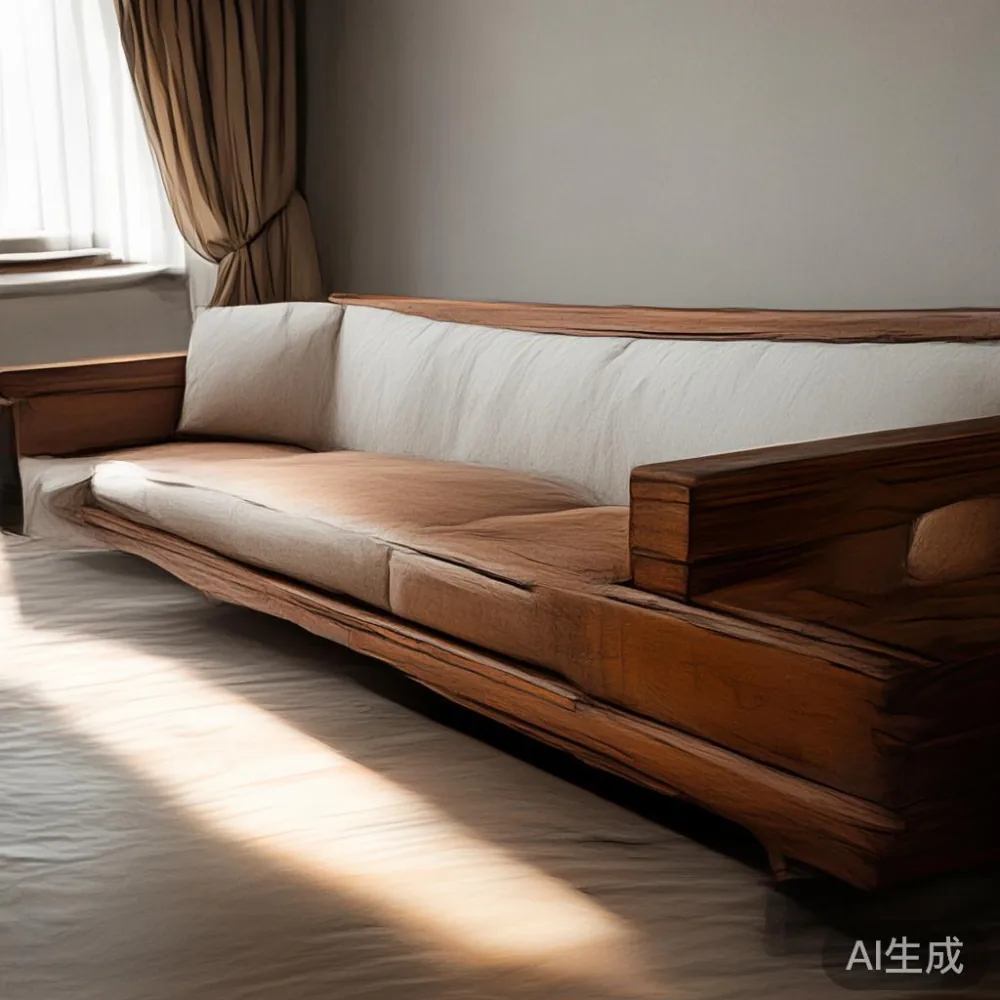
Picture a 220 cm three-seater solid wood sofa sitting in a living room where the RH swings between 60% and 85% across the year. After four to six months you may notice:
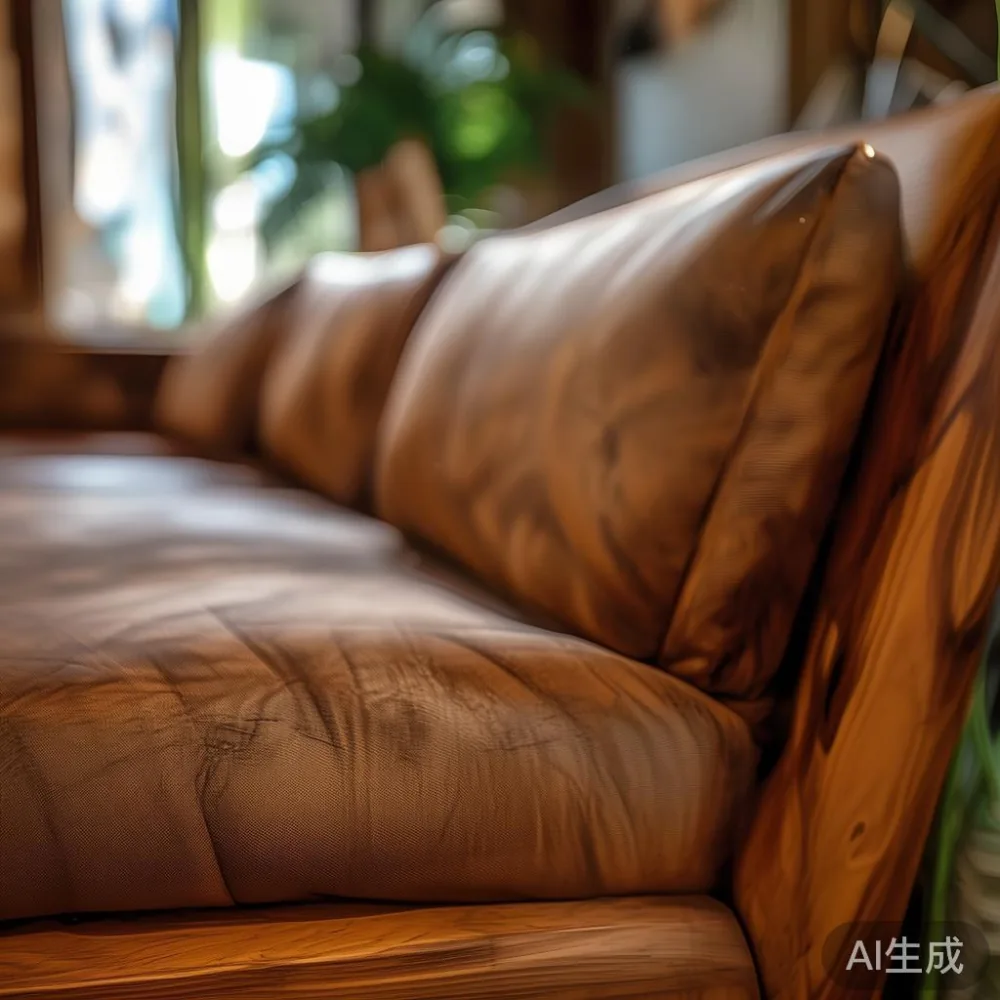
- Side panels and arm rests feel slightly fuzzy or raised at the surface — the fibres have swollen and pushed up under the finish.
- Drawer fronts on a matching nightstand or side cabinet no longer sit perfectly flush.
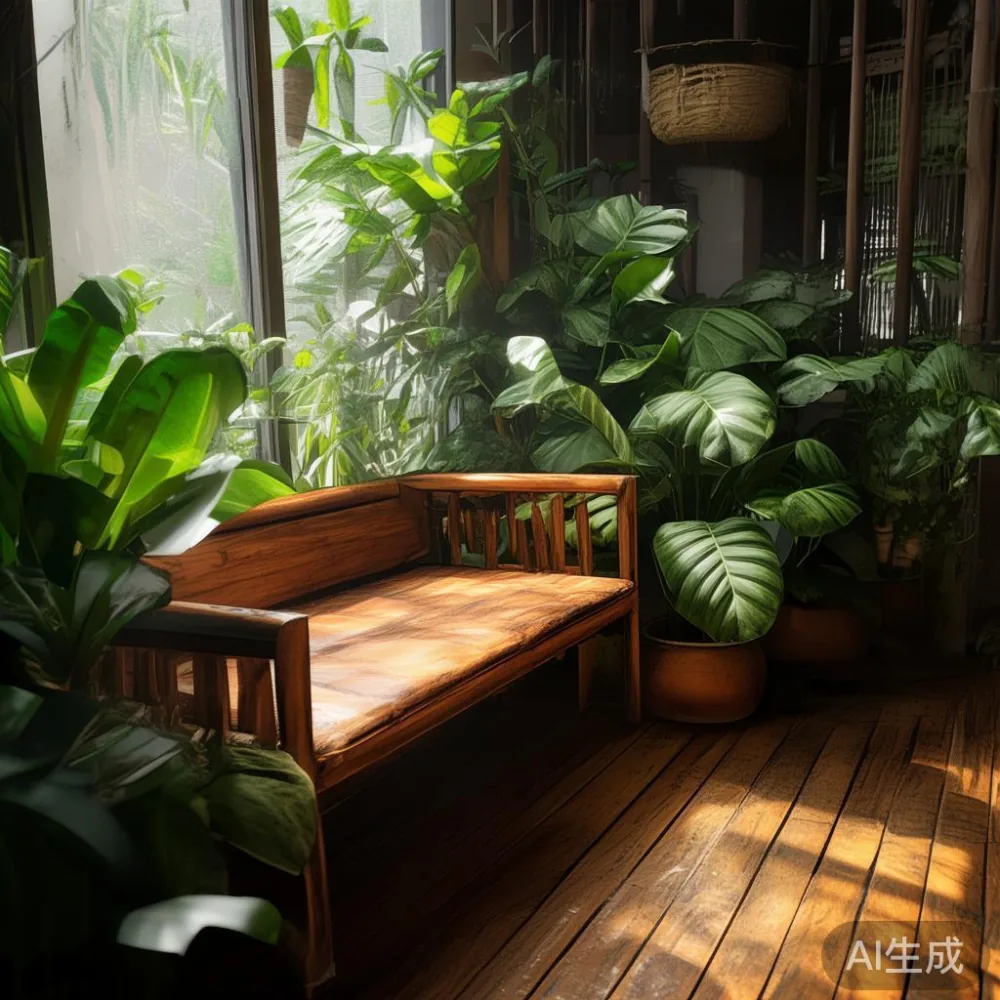
- The seat platform of an outdoor sofa, which is usually slatted, develops a faint cupping — the edges curl upward by 1 to 2 mm.
- Hairline cracks appear along the grain at the inside corners of the frame during the dry season, usually between January and March.
- Metal hardware — the black powder-coated hinges on a wardrobe door, the brass-toned handle on a marble table — can develop a faint patina of rust at the contact point if moisture sits on it for hours.
None of this means the furniture is defective. It means the timber is responding to its environment, which is exactly what solid wood is supposed to do. The goal is to manage that response, not to eliminate it.
What humidity does to a marble table, a bed frame, and a wardrobe
A marble table is not wood, but humidity still affects it. The polished stone sits on a wooden sub-frame in most light luxury pieces, and that sub-frame carries the moisture load. In an Italian light luxury sofa with a marble-topped console attached, the stone itself does not move, but the wood apron underneath can shift enough to crack a thin marble slab at a corner. We have seen this on a few 180 cm console tables shipped to Jurong East condos.
A solid wood bed frame with a 200 cm headboard takes the largest single panel of timber in the bedroom. That headboard is fixed to a wall that, in a HDB flat, can be cooler by 1°C to 2°C than the centre of the room during the air-con hours. The result is uneven moisture — the wall side stays drier, the room side stays damper — and over a year the headboard can bow outward by 2 to 3 mm at the centre. It is rarely a structural issue, but it does catch the eye.
A wardrobe is the most forgiving case because the doors are usually short (under 220 cm) and the panels are framed. Even so, the side panels of a 240 cm three-door wardrobe in a master bedroom can show 4 to 6 mm of seasonal movement, which is why good wardrobes are made with floating panels that sit in grooves rather than being glued edge-to-edge. This is also where a European light luxury sofa vs French provincial sofa comparison becomes useful: French provincial pieces lean on carved, ornate silhouettes that hide small movements; European light luxury pieces rely on tight, clean lines that show every millimetre.
Which wood species survive Singapore the best?
Not all hardwoods behave the same way. After shipping more than forty thousand cubic metres of timber from our Foshan workshop since 2008, here is what the records show in order of dimensional stability in a tropical climate:
- Teak — naturally high oil, very stable, ideal for outdoor sofa frames and bathroom-adjacent pieces. Slightly more expensive, around SGD 3,200 for a 200 cm bench.
- White oak — stable and dense, a favourite in American light luxury collections. Movement is small but visible in pale stains.
- Walnut — moderately stable, dark grain hides small cracks, popular in post-modern light luxury sofas.
- Rubberwood — the everyday workhorse in Singapore, very affordable at SGD 1,400 for a 180 cm outdoor sofa, but it moves the most across the year.
- Pine and MDF cores — the most reactive; not recommended for long, exposed panels.
If you are choosing a piece and you know it will live near the kitchen or in a balcony-adjacent spot, ask the seller which kiln-drying standard they use. The international target for furniture that ships to the tropics is 8% to 12% final moisture content. Anything above 14% is asking for trouble.
Do I really need a dehumidifier, or is that overkill?
It is not overkill. It is the single most useful purchase after the sofa itself. A mid-size 12 L/day dehumidifier (around SGD 280 locally) running four to six hours a day in the living room will keep RH in the 50% to 60% range, which is the sweet spot for solid wood. In the bedroom, a smaller 6 L unit (around SGD 180) running overnight does the same job.
A few practical rules from our workshop:
- Keep the sofa at least 15 cm away from the air-con's direct cold air outlet — the cold spot creates a moisture gradient across the frame.
- Do not push a solid wood bed frame flush against an external wall if the wall is the rain-facing side. Keep at least 5 cm of airflow behind the headboard.
- Wipe the marble table with a dry microfiber cloth once a week so the wood apron beneath stays dry on the surface.
- If you are ordering a custom piece, ask the maker to leave 2 to 3 mm of expansion clearance on every tenon and floating panel — this is standard practice at MIDHILL, where we kiln-dry to 10% before assembly.
- Re-oil the outdoor sofa every twelve months with a hardwax oil, even if the finish still looks fine.
Can light-luxury furniture really hold up in Punggol and Bedok?
Yes, with two conditions: the timber must be properly kiln-dried, and the home must be managed. A light-luxury French or American piece is not fragile because it is light-luxury — it is fragile because the market is full of fast copies made with wet timber and shortcuts. The ones that last a decade are the ones built with 8% to 12% moisture content, mortise-and-tenon joinery, and a finish thick enough to slow down the moisture exchange at the surface.
I think about this every time a customer in Tampines sends me a photo of a six-year-old MIDHILL dining table that still sits flat on its six legs, with no cracks wider than a sheet of A4 copy or one millimetre of cupping on the top. That table has done its job because the timber was right and the customer ran a dehumidifier.
What if my sofa already shows signs of humidity damage?
Small wood chips can be fixed at home. Hairline cracks along the grain close by themselves when the season turns dry again — do not fill them with wood filler in March and expect them to stay closed in July. Cupping on a slatted outdoor sofa seat usually relaxes on its own once the piece is moved into a more stable room. Sticky drawers on a nightstand respond to a thin coat of paraffin wax on the bottom edge of the drawer, not the runner.
For anything beyond that — a cracked apron, a split panel, a loose tenon — call the maker. A serious workshop will offer refinishing or repair at a fair price, which is one of the reasons we publish a lifetime refinishing promise on solid wood pieces shipped from Foshan. The furniture is allowed to move with the seasons, as long as someone knows how to put it back together every few years.
Is there a smarter way to buy solid wood furniture for a HDB or condo in 2026?
A few practical ideas if you are kitting out a new BTO or a resale flat this year:
- Buy the largest piece first, leave it in the room for two to four weeks before adding anything on top of it, and watch how it moves. That tells you the room's character.
- Choose solid wood for the structural pieces — outdoor sofa, dining table, bed frame — and reserve engineered panels for wardrobes where stability matters more than grain.
- Keep the delivery path in mind. A 240 cm wardrobe crate will not fit through a 90 cm HDB lift door. Most suppliers, including MIDHILL, can deliver in two boxes that meet at the door of the flat; ask before you order.
- Think about what the room needs to do. If it faces the afternoon sun and the air-con runs hard, the moisture load is lower. If it faces the morning sun and the door stays open, the load is higher.
Buying solid wood in Singapore is not a problem; it is a small project. The timber has to be right, the home has to be managed, and the expectations have to be honest. Wood will always move a little, and that little movement is what tells you it is real wood and not a printed laminate. Treat it as a feature, not a fault, and your outdoor sofa, dining table, bed frame, wardrobe, nightstand, and marble table will look good for the next ten to fifteen years — through every monsoon season the equator sends your way.