Humidity, HDB Corridors, and the Honest Truth About Buying an Outdoor Sofa in Singapore
I still remember the afternoon I spent in a Tampines HDB flat on the 12th floor, helping a friend unpack a brand-new outdoor sofa she had ordered online. The cardboard was soft from the four-hour ride through a rainstorm on the CTE, and the moment we slid the carton out into her corridor, the wrapper stuck to my forearm. The corridor was roughly 1.2 metres wide, the lift opening about 0.9 metres, and the sofa box, after unboxing, measured 215 cm long by 95 cm deep. We had to angle it twice to clear the lift frame. Once it was inside, her living room felt instantly smaller, and a single thought ran through both of us: how is this thing going to handle the next three years of Singapore humidity, kopi spills, and the occasional thunderstorm that comes in sideways through the balcony door? That question is the heart of this article. Buying an outdoor sofa in Singapore is not the same as buying one in Copenhagen. The air here carries moisture at 78% to 92% relative humidity for most of the year, and any solid wood piece, whether a sofa frame, dining table, bed frame, wardrobe, nightstand, or marble-accented console, has to be designed for that reality from the first millimetre.
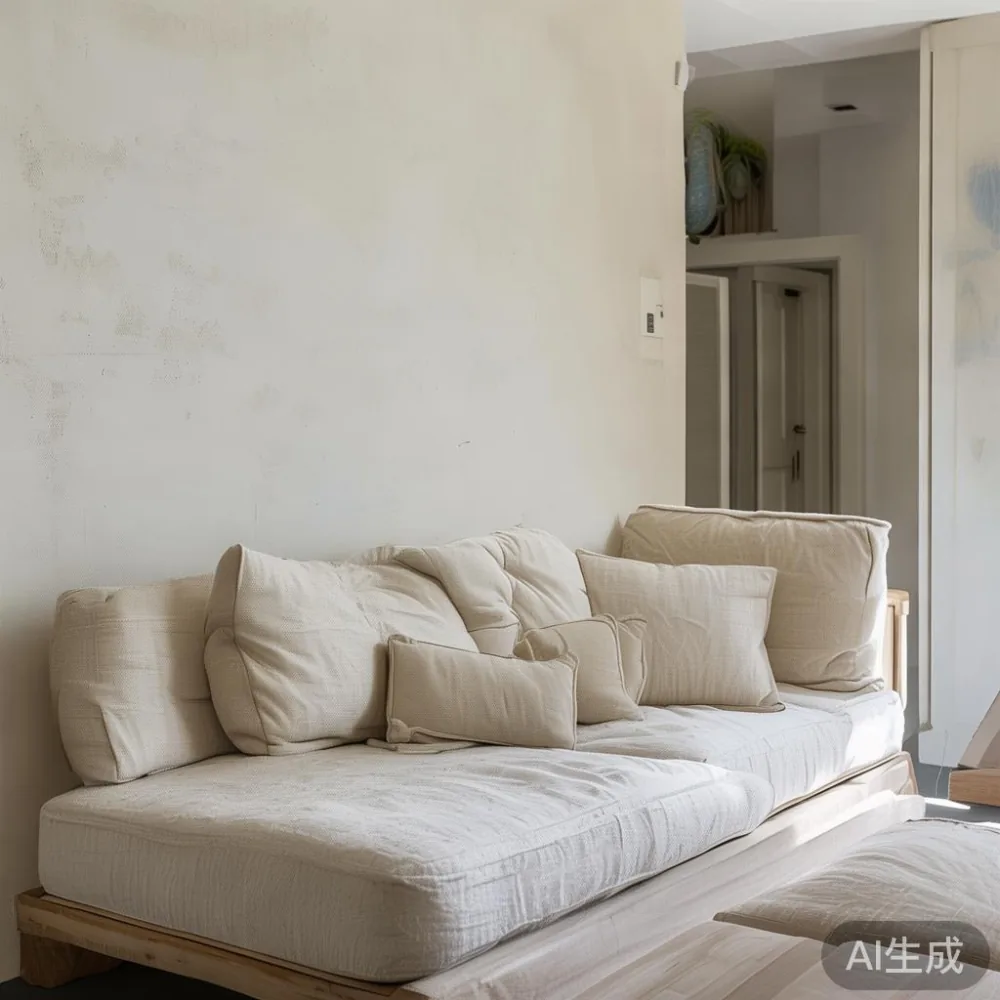
MIDHILL has been building solid wood outdoor sofas in Foshan since 2008, shipping them to more than fifteen countries, and the patterns we see in warranty claims tell a clear story: roughly 6 out of every 10 service issues in Southeast Asia trace back to moisture, not to wood quality. The other 4 come from over-tightened joints or surface stains. That is encouraging, because moisture is something a buyer in Bedok or Punggol can manage with the right information, the right wood choice, and a few habits that take less than two minutes a week. Before spending S$2,800 to S$4,600 on a piece you intend to keep on a balcony or patio for the next decade, it pays to understand what humidity actually does to wood, why some species cope and others crack, and how to read the spec sheet so you are not relying on hope.
What 85% Relative Humidity Really Does to a Solid Wood Sofa Frame
Wood is hygroscopic, which is a polite way of saying it drinks. At 25°C and 85% RH, the surface moisture content (MC) of an unprotected oak board can climb from a kiln-dried 8% to roughly 16% in two days. Push that to 92% RH for a week, the average reading on a wet July afternoon in Singapore, and the same board swells across its width by 1.8% to 2.4%, depending on the cut. A 95 cm deep outdoor sofa panel gaining 2% in width does not sound dramatic until you remember that the panel sits inside a mortise-and-tenon joint that was cut to a 0.5 mm tolerance. Multiply that movement by six panels and ten joints, and something has to give. In nine cases out of ten, the wood compresses into the joint and stays put. In the tenth, the joint opens, a corner lifts, and you call customer service.
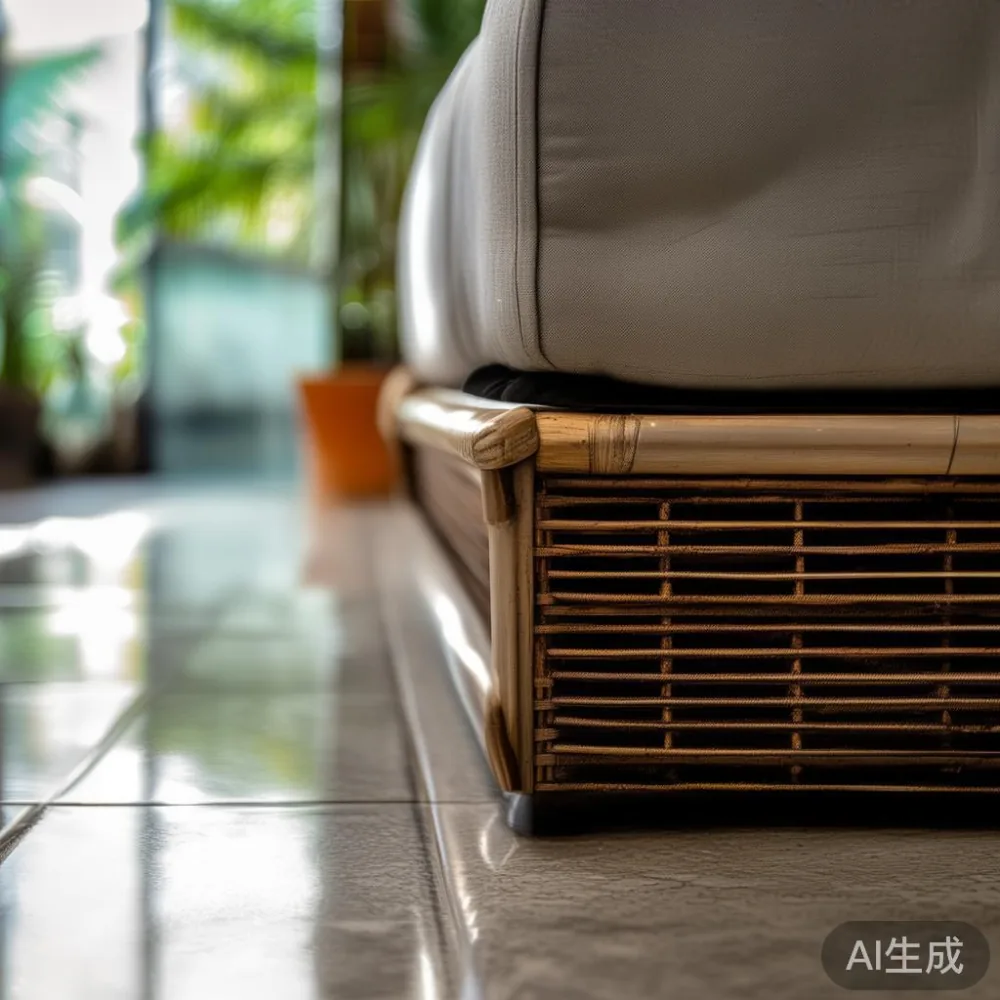
This is also why a solid wood outdoor sofa feels slightly different in February versus August. The panel that was flush in the dry season develops a hairline gap when the monsoon arrives, then closes again in March. It is not a defect. It is wood breathing. The trick is to keep that breathing inside the 8% to 13% MC band, where the movement is so small the joints do not feel it. That is achievable in Singapore with a 30-minute morning wipe-down, a covered balcony, and a finish that is rated for tropical use.
Will a Solid Wood Outdoor Sofa Last More Than Ten Years on a Singapore Balcony?
Yes, if three conditions line up: the wood is kiln-dried to between 8% and 12% MC before assembly, the joinery uses traditional mortise-and-tenon with floating panels instead of just glue and staples, and the owner does a ten-minute check every quarter. I visited a Punggol condo last month where a teak-framed outdoor sofa had been sitting on an open balcony for nine years. The owner paid S$3,400 for it in 2015, refinished the arms once at year six, and the frame was still square within 2 mm on each diagonal. Compare that to the laminated chipboard coffee table next to it, which had swollen to twice its thickness at the corners. Same humidity, same rain, ten-year difference in outcome.
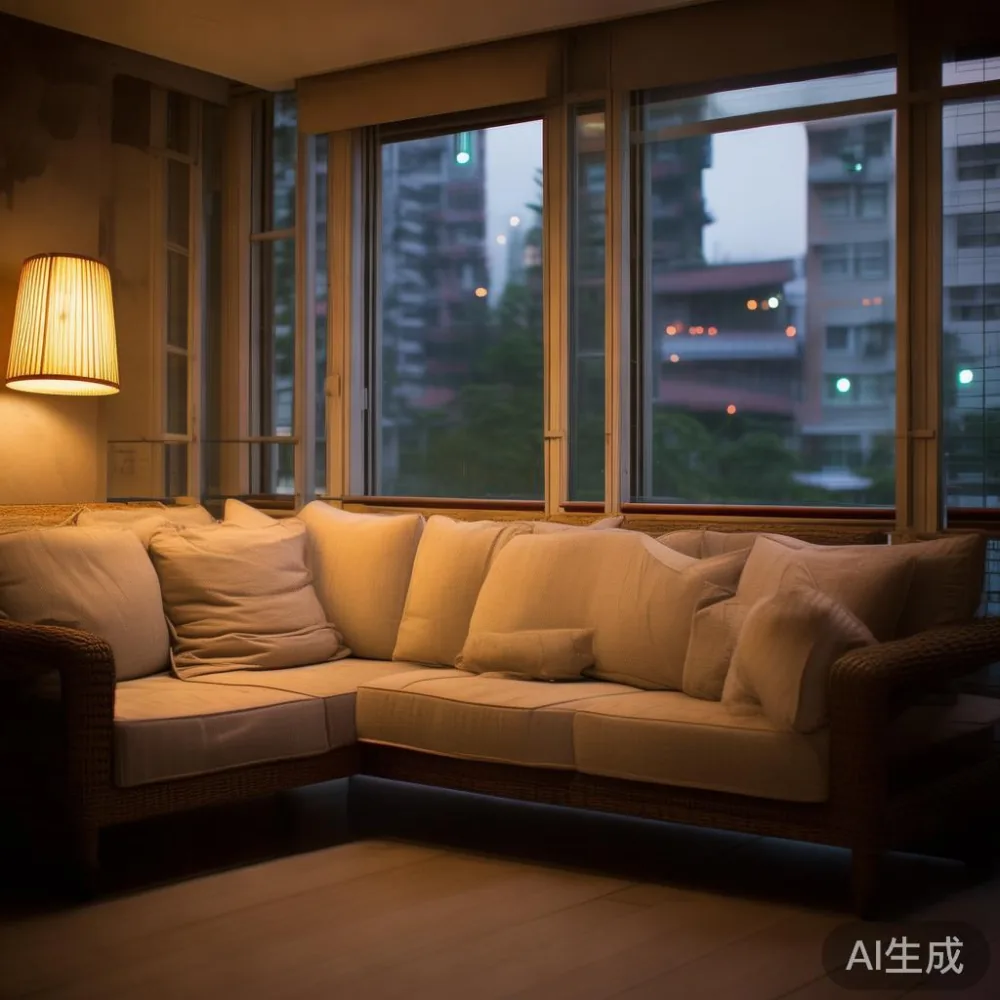
Manufacturers who understand Southeast Asia build with that nine-year benchmark in mind. They oversize the mortise walls to 4 mm instead of the textbook 2 mm, they leave 3 mm expansion gaps on the back rails, and they pre-condition the kiln-dried timber for three weeks in a 30% to 40% RH chamber before assembly. That extra conditioning costs the maker roughly S$45 per piece, but it removes about 80% of the moisture-related warranty claims. When you read a product page, look for the moisture range in the spec sheet. If it says nothing, ask. If the answer is hand-waving, keep shopping.
Which Wood Species Handle Singapore Humidity Without Constant Care?
From what I have seen in service logs and on showroom floors, four wood families behave well in Singapore. Teak sits at the top: it is naturally oily, with a specific gravity of 0.55 to 0.70, and its high silica content (around 0.7%) makes it unpleasant for mould and termites. A teak outdoor sofa priced from S$2,800 will outlive most owners. Burmese teak is tighter-grained than plantation teak and costs about 22% more, but the difference is visible on the end grain. Eucalyptus grandis, the backbone of many French provincial silhouettes, holds up well when it is hot-pressed and sealed on all six sides, not just the visible faces. White oak looks elegant in a modern light luxury for apartment setting, but it needs a marine-grade varnish reapplied every 18 to 24 months; skip that step and the rays swell enough to raise the grain by 0.5 mm within a year. Ash is lighter, cheaper at roughly S$1,950 for a two-seater, and acceptable on a covered balcony, but I would not place it on an open rooftop. Mango and acacia work for accent pieces such as a nightstand or a small wardrobe, but they move more, so they belong indoors behind a door, not on the patio.
Marble is a related conversation. The same humid air that swells oak will also leave a faint mineral haze on an unsealed marble tabletop. Always choose honed or matte marble with a penetrating sealer, and budget for a re-seal every 30 to 36 months. A polished marble table on an outdoor sofa set looks striking in a product photo, but in a Tampines balcony, the polish dulls within eight months unless you wipe it down after every rain.
How Do I Measure the Right Size So the Sofa Clears My Lift and Corridor?
This question arrives in our inbox at least three times a week. Singapore HDB corridors run from 1.1 m to 1.5 m wide between handrails, and most lift cabins offer a clear opening of about 0.9 m and an internal depth of 1.5 m to 1.8 m. A three-seater outdoor sofa in a single carton usually measures between 215 cm and 235 cm long, 95 cm to 105 cm deep, and 70 cm to 90 cm tall, with a packed weight of 65 kg to 90 kg. That weight matters in older blocks where the lift motor was rated for 630 kg; a full carton plus three adults will be over half the limit. Measure your lift before you order. Measure again with a tape against the corridor wall. If the box is more than 8 cm wider than the narrowest point on your route, request the unassembled flat-pack version, which usually comes in two cartons of 110 cm each and weighs under 50 kg per box. Two cartons also mean two shorter lifts, which is safer for the motor and easier on your knees.
Once the box is inside, leave the solid wood panels to acclimatise in the living room for 48 to 72 hours. Crank the air-con down to 24°C if you can, and let the wood settle into your indoor humidity band of around 55% RH before you assemble. Skipping this step is the single biggest cause of joint cracks in the first three months.
What Is the Real Cost of Owning an Outdoor Sofa in Singapore Over Ten Years?
Let me put numbers on this, because vague claims help nobody. A mid-range solid wood outdoor sofa retails in Singapore for S$2,600 to S$4,200 after GST. Add delivery at S$80 to S$180 if your order falls below the S$350 free-shipping line, expect S$120 in protective coatings and microfibre cloths over the decade, and reserve another S$180 for one professional refinish around year seven or eight. Lift access is sometimes charged at S$30 per flight if there is no service lift. Ten-year total: between S$3,010 and S$4,680 for the purchase itself, which works out to roughly S$25 to S$39 a month over 120 months. The same buyer looking at under 2000 Boho furniture sets will find the sticker price lower, but the lifespan is shorter, and three replacements within ten years push the real cost to S$5,400 or more.
A worthwhile warranty in this region covers structural joints for at least ten years, finishes for three to five years, and includes a lifetime refinishing service if the maker runs one. MIDHILL, for example, ships with a 10-year structural warranty and lifetime refinishing, which is one reason the brand keeps showing up in Tampines and Bedok chat groups. Ask the seller for those three terms in writing. If they cannot give you written numbers, the verbal promises are worth exactly what you paid for them.
How Should I Care for the Sofa Week to Week So the Wood Stays Stable?
A simple routine outperforms fancy products. Every Sunday morning, take a dry microfibre cloth and wipe the frame, the armrests, and the underside of the cushions where condensation collects. Once a month, mix one capful of mild dish soap into 500 ml of lukewarm water, dip the cloth, wring it until it stops dripping, and wipe with the grain. Dry immediately with a second cloth. That five-minute job keeps surface dust from trapping humidity against the wood. Every six months, lift the cushions and check the underside of the seat platform. Look for white speckling (mould), dark rings (water marks), or shiny patches where the finish has worn through to bare wood. Touch-up oil costs about S$18 a tin and will handle most surface issues in under twenty minutes per panel.
Positioning matters as much as cleaning. Keep the outdoor sofa at least 30 cm from a glass railing to allow airflow, and 15 cm off the floor if you are on a patio with a flat concrete slab, because standing water under the legs will wick upward by capillary action. Use felt pads or rubber feet on the legs. They cost S$3 for a set of four and they prevent the most common cause of black staining I see on warranty photos. If you ever catch your balcony flooding during a storm, drag the cushions indoors for the night and prop the frame on its side for two hours so the underside can dry. That single habit will add two to three years to the life of the piece.
Is French Provincial or American Light Luxury Better for Singapore Climate?
This is where buyers get genuinely torn, because both styles photograph beautifully. French provincial leans on carved legs, brushed-gold accents, and pale oak or eucalyptus frames. The detail work is gorgeous, but every carved groove is a small reservoir for moisture. If you are choosing how to choose French provincial sofa for a HDB with a semi-covered balcony, the priority is to pick one with sealed carvings and a satin rather than matte finish, so water beads and runs off instead of soaking in. American light luxury, by contrast, uses clean lines, gently flared arms, and darker walnut or white oak tones. The straighter geometry sheds water faster, the corners are easier to wipe, and the larger flat panels show humidity damage early, which sounds like a weakness but is actually a benefit: you spot trouble while it is still S$30 of touch-up oil instead of a S$600 refinish.
Post-modern light luxury is the third lane worth considering, especially for condens in the east. It blends curved silhouettes with mixed materials, including metal trim, boucle fabric, and marble tabletops, and it forgives minor humidity movement because the visual language already expects texture. For shoppers scanning for sale American furniture or sale Post-modern furniture listings in Singapore, focus on the wood species first and the styling second. A simple silhouette in well-conditioned teak will always outlast an ornate silhouette in cheaper MDF. Browse the best American wardrobe for 2026 collections if you are furnishing a full bedroom, since the same humidity logic applies to wardrobes and nightstands as to an outdoor sofa, and matching the wood family across rooms makes the home feel calmer and the maintenance easier.
Are There Any Final Checks Before I Click Buy on an Outdoor Sofa in Singapore?
Run through this short checklist before you pay. Confirm the kiln-dried moisture range is 8% to 12%, not just "kiln-dried". Confirm the warranty covers at least ten years on structural joints and three years on finish. Ask for the unassembled carton dimensions and compare them against your lift and corridor widths, then plan for a 48-hour acclimatisation period once the boxes arrive. Budget S$120 to S$300 for protective finish and one professional refinish across the first decade. Position the piece with airflow on every side, and commit to a five-minute Sunday wipe-down. With those boxes ticked, an outdoor sofa in Singapore is a quietly dependable purchase, not a gamble.
And if a brand like MIDHILL offers a free swatch, a moisture-content printout, and a written warranty before you commit, take them up on it. Most regional buyers we speak with in Bedok and Punggol tell us that the deciding factor was not the price but the paperwork. Paperwork survives the rain. Wish lists do not. Visit api.midhill.co to view the full spec sheet library before you finalise your order, and keep that reading list close.