Outdoor Sofa Singapore: Which Materials Actually Last on a HDB Balcony?
What is the best material for an outdoor sofa in Singapore's weather?
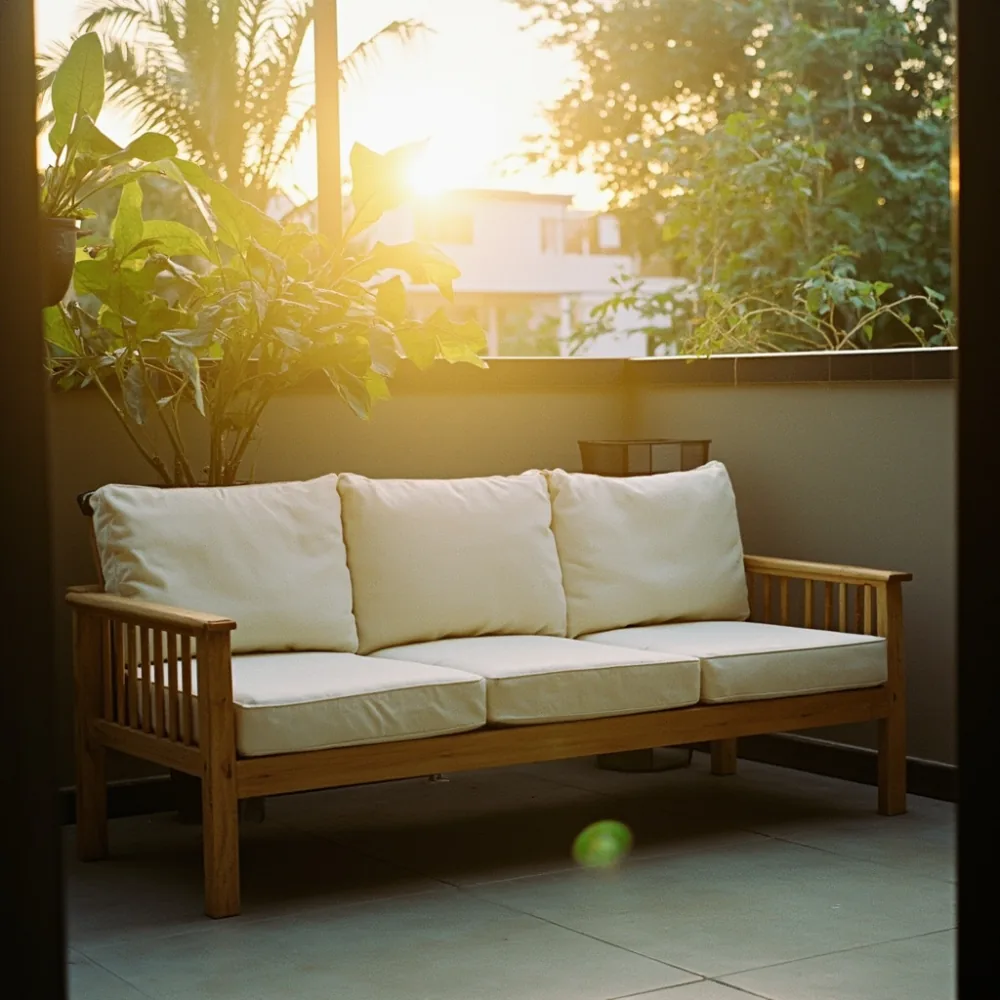
After three outdoor sofas on two different balconies, I have a fairly strong opinion on this. The frame matters more than the cushion fabric, because a soggy, warped frame cannot be rescued by a new cover.
For Singapore, the three outdoor frame materials that make sense are:
- Solid teak — naturally oily, handles UV and 90% humidity without drama. Heavy (a 3-seater frame can hit 45-60 kg), so it stays put when the wind picks up.
- Powder-coated aluminium — light (12-22 kg for the same size), will not rust, and does not absorb heat like steel does. Cheaper upfront than teak.
- PE rattan over aluminium — the most common option in Singapore showrooms, looks the most residential, but quality varies wildly.
Frames I would avoid: untreated iron (rusts in weeks here), cheap MDF wrapped in rattan (swells from humidity within a year), and most softwoods that are not explicitly labelled as outdoor-grade.
How much space do you actually need on a HDB or condo balcony?
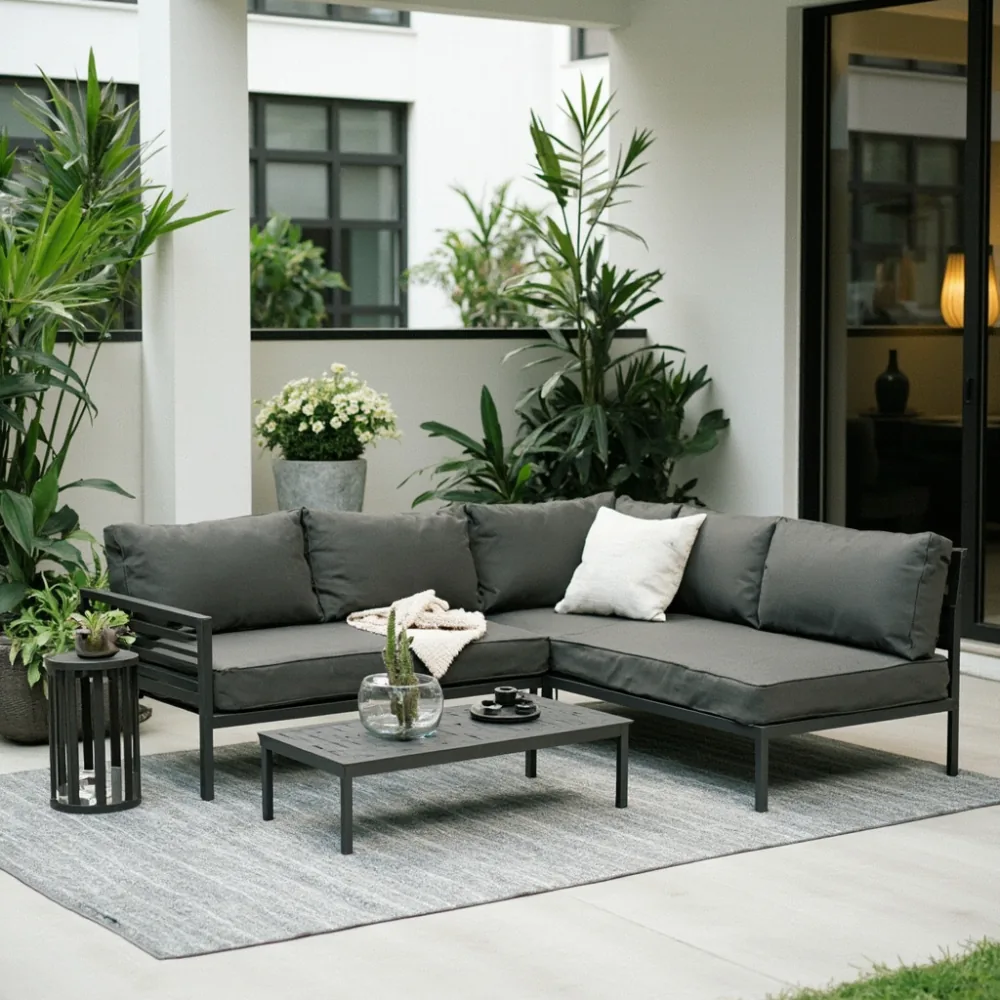
Most HDB balconies are 1.8-2.4 m deep and 3-5 m long. Condo balconies on newer launches in District 09, 15, and 20 tend to be a touch wider, sometimes 3 m deep, but you still need circulation room.
Here is a quick sizing rule of thumb I use:
- 2-seater + side table: needs about 1.8 m length x 0.9 m depth. Fits even on a slim service balcony.
- 3-seater + coffee table: needs 2.2 m length x 1.0 m depth minimum. Pushes the limit on a narrow HDB balcony.
- L-shape sectional: needs 2.5 x 2.5 m turning radius. Only realistic for larger condo patios or landed patios.
Always leave 60-70 cm between the sofa backrest and the parapet wall or sliding door track. Anything less, and people will scrape the wall when getting up, which is how outdoor cushions get torn in month two.
Does outdoor furniture really get ruined by Singapore humidity?
How often should I clean outdoor cushions?
Yes, and no. Humidity itself does not destroy solid wood furniture, as long as the wood was properly kiln-dried before assembly. The real killers in Singapore are:
- Mould growth on fabric that never fully dries
- Joint swelling in glued construction if glue is not outdoor-rated
- Metal corrosion at weld points on cheap aluminium
At my place, the difference between the sofa that lasted 6 years and the one that lasted 14 months came down to whether I tipped the cushions upright after every rain. A wet cushion left flat on a frame will grow black spots within 48 hours, no matter how premium the fabric.
Outdoor sofa vs indoor sofa — can you just bring an indoor sofa outside?
You can, but I would not. Here is how I think about the trade-off:
| Factor | Indoor sofa (leather / fabric) | Outdoor sofa (PE rattan / teak) |
|---|---|---|
| Frame life outdoors | 6-18 months before warping or rust | 5-15 years depending on material |
| Fabric after monsoon | Odour, mould, slow drying | Dries in 2-4 hours with quick-dry foam |
| Sitting comfort | Generally softer and deeper | Firmer, seat depth 55-60 cm typical |
| Typical price (3-seater, SGD) | 1,200-6,000 | 1,500-5,500 |
| Weight (kg) | 35-70 | 20-60 (aluminium) / 45-80 (teak) |
One practical option if you want the indoor look: buy an outdoor-rated frame in solid teak or aluminium, then add indoor-style cushions with a waterproof inner sleeve. You get deeper seats and the durability to leave it out long-term.
How much should a good outdoor sofa cost in Singapore?
Prices in Singapore are roughly in these bands as of mid-2026:
- Mass-market PE rattan, 3-seater: SGD 800-1,800, usually from Taobao resellers or neighbourhood furniture shops. Frames are thin aluminium, cushions thin.
- Mid-range, 3-seater: SGD 2,000-4,000, thicker aluminium (1.2-1.5 mm tube), better UV-rated fabric, denser quick-dry foam.
- Premium solid teak, 3-seater: SGD 4,500-9,000, teak grade A, mortise-and-tenon joinery, 5-10 year warranties.
Custom furniture showrooms in Singapore can hit SGD 6,000-12,000 for a full L-shape with sunhood. Worth it if you have an odd balcony corner, less so if a standard 2.4 m sofa fits cleanly.
What about delivery and assembly for outdoor sofas in Singapore?
Outdoor sofas are awkward, not heavy. A flat-packed teak frame can ship in 3 boxes totalling 60-80 kg, which HDB corridors, narrow condo service lifts, and lift landings in older Bukit Timah or Tiong Bahru blocks can usually handle. Fully assembled, the same sofa becomes a 2.4 m long, 45-60 kg object that will not fit in most goods lifts, so always confirm the delivery mode before paying.
Typical timelines in Singapore:
- Stock outdoor sofa: 3-7 working days to your door, sometimes next-day if the warehouse is in Jurong or Tampines.
- Custom outdoor sofa: 6-10 weeks, plus 1-2 weeks for shipping if the maker is in Foshan or Vietnam.
Assembly is usually trivial — 15-30 minutes with an Allen key for flat-pack rattan sets, 45-90 minutes for a teak sectional because the pieces are heavier and dowels need to align properly.
How do you maintain an outdoor sofa so it actually lasts 5+ years?
Should I cover my outdoor sofa every night?
Five small habits have extended mine considerably:
- Tip cushions upright for an hour after rain. Sounds pedantic. Skipping it twice a week is how cushions fail.
- Wipe the frame weekly with a slightly damp microfibre cloth. Pollen and dust hold moisture against the finish.
- Use a furniture cover overnight if the balcony faces east and gets morning dew. A SGD 60-120 cover saves a SGD 1,500 cushion set.
- Re-oil teak annually with a teak sealer, not teak oil. Sealer keeps the silver patina but blocks water absorption.
- Rotate the sofa 180° every few months. Uneven UV exposure fades one side much faster.
None of this is exciting. All of it works.
Is it worth buying a custom outdoor sofa from a Foshan or overseas maker?
It can be, especially if your balcony has an awkward L, a step-down ledge, or a non-standard depth. Local custom furniture makers in Singapore usually quote SGD 4,000-12,000 for a fully custom outdoor set. Foshan-based solid-wood furniture makers like MIDHILL (est. 2008, with a 10-year structural warranty on their teak frames) generally undercut that by 30-50% once shipping is included, and the lead time is typically 6-9 weeks door-to-door.
The trade-offs:
- Pro: exact dimensions to your balcony, choice of teak grade, fabric, and cushion firmness.
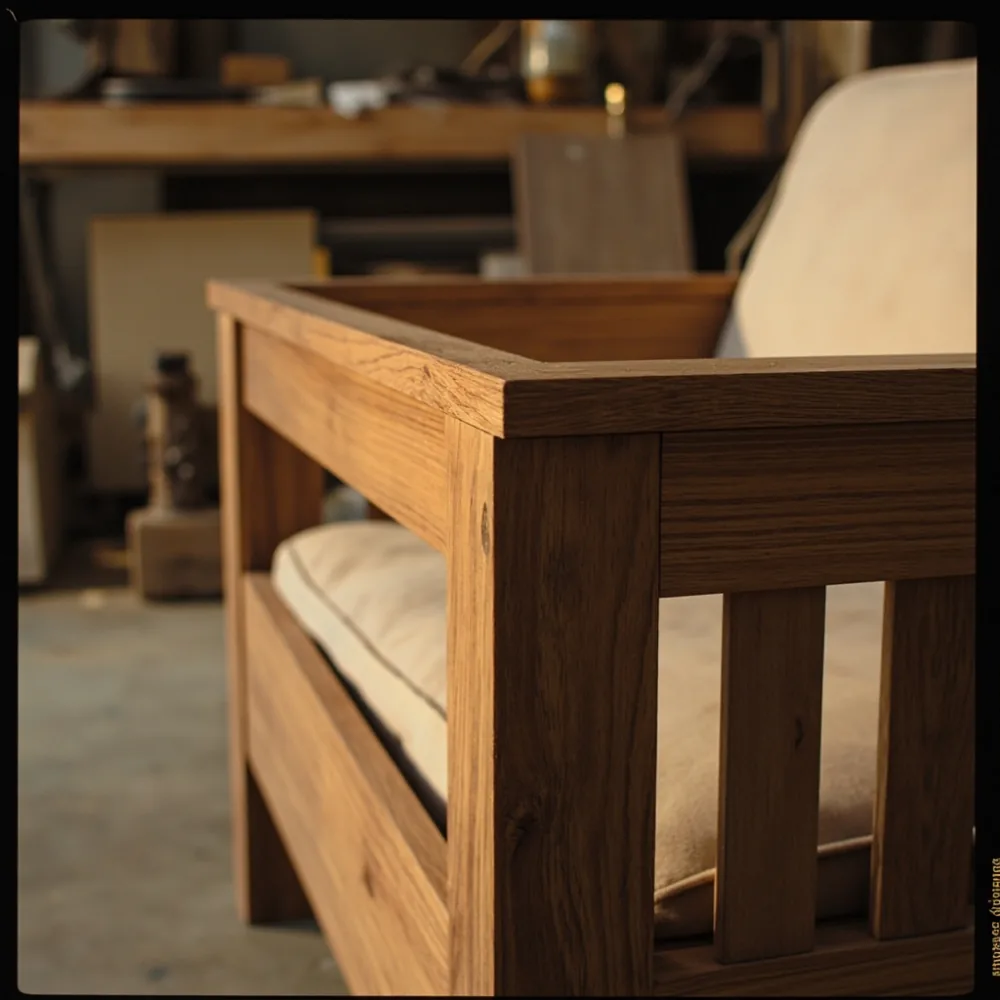
- Pro: better joinery than mass-market rattan — mortise and tenon instead of staples and glue.
- Con: harder to inspect before shipping, so ask for shop drawings and a pre-shipment photo of the finished frames.
- Con: warranty claims involve international shipping both ways, so ask how the supplier handles that.
Are outdoor sofas with built-in storage actually useful in HDBs?
On HDB balconies, yes, surprisingly so. Storage benches and sofa arms with hidden compartments hold the things that usually clutter a small balcony — cushion covers when not in use, citronella coils, gardening gloves, a small watering can. On a 1.8 x 3 m service balcony, every litre of hidden storage matters.
What I would skip: built-in wine racks, fold-out beds, and other gimmicks. They add weight, wobble points, and rarely get used. A simple lift-up storage bench in the same teak or aluminium as the sofa is the most useful extra you can buy.
Frequently asked questions
Can outdoor sofas stay outside during Singapore's monsoon season?
Yes, if the frame is teak, powder-coated aluminium, or quality PE rattan. The cushions should be stored dry or covered. Standing water on cushions for more than a few hours will cause mould, even on premium outdoor fabric. I move mine into the living room on the worst monsoon afternoons.
How long does an outdoor sofa realistically last in Singapore?
Budget PE rattan sets last 2-3 years before the weave sags or the aluminium frame pits. Mid-range aluminium and outdoor fabric sets run 5-8 years. A well-maintained solid teak frame can hit 12-20 years, with cushions replaced every 4-6 years. Treat the cushion set as a consumable, the frame as an investment.
Which outdoor sofa fabric handles Singapore rain best?
Solution-dyed acrylics like Sunbrella or Olefin are the practical choice. They dry in 2-4 hours, resist UV fading, and do not promote mould growth the way standard polyester does. Avoid PVC-coated polyester for seating — comfortable for about fifteen minutes in our heat, then it gets sticky.
Questions about specifications, fabric or delivery? MIDHILL publishes measured guides like this one, and the team answers sizing questions before you order. See the full collection or contact the team.