Outdoor Sofa Singapore: How to Pick One That Survives Sun, Rain and HDB Balconies
What exactly counts as an outdoor sofa in Singapore's climate?
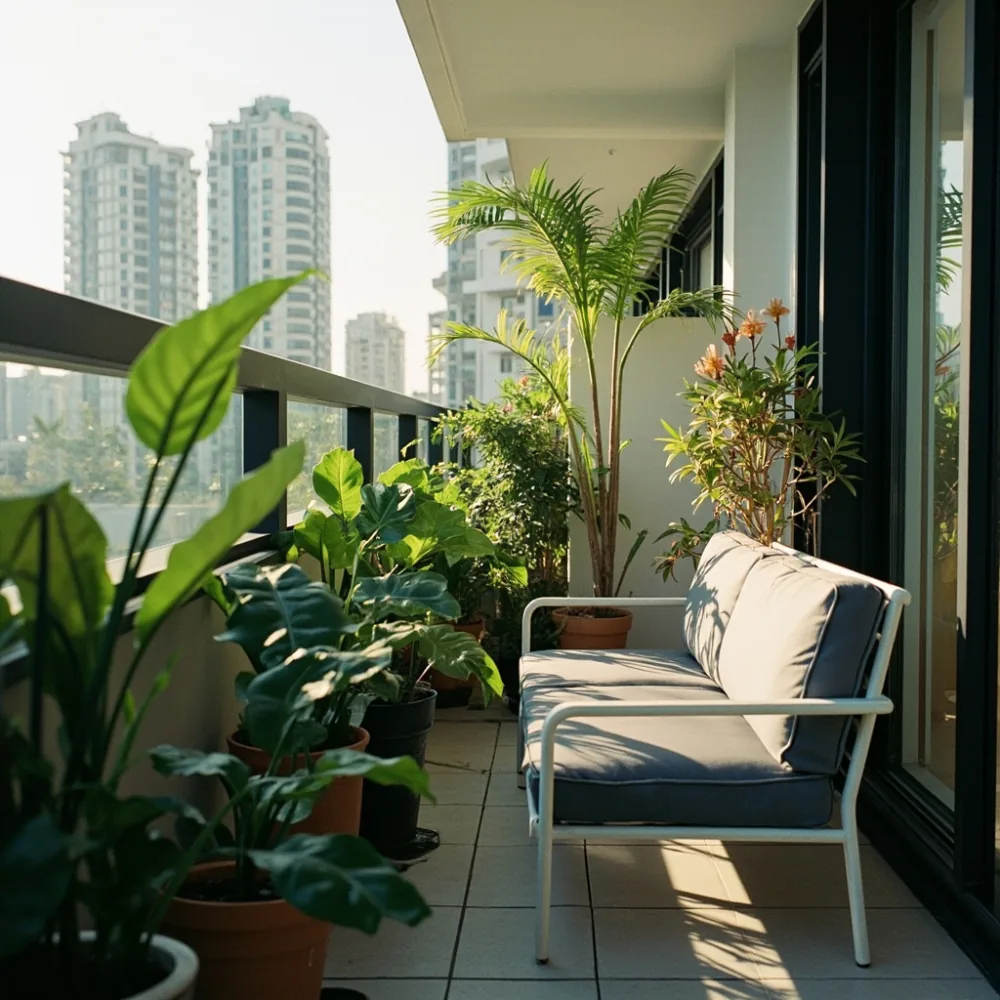
Why indoor frames fail outside
What a true outdoor sofa is built from
When I started looking for an outdoor sofa for my HDB balcony, I assumed any sofa with a "weather-resistant" tag would do. Six months later the cushions smelled of mildew and the frame had hairline cracks. The problem was not bad luck — it was using an indoor sofa outdoors.
An outdoor sofa is engineered to handle three things Singapore throws at it: UV that can hit 12+ UV index at noon, sudden tropical downpours averaging 2,400 mm a year, and humidity that sits at 80–90% for most evenings. The frame, foam, fabric and finish each have to be rated for these conditions, not just the cover.
Frames are usually aluminium with a powder coat, marine-grade stainless steel, or treated teak. A regular solid wood sofa belongs on a covered patio at best; only kiln-dried, properly oiled hardwoods survive open-air use. The cushions should use quick-dry foam wrapped in Olefin or solution-dyed acrylic, because ordinary polyurethane foam acts like a sponge in our climate.
If you have ever wondered why some patio sets at Dempsey Hill look pristine after five years while others in Tiong Bahru have already peeled — this is why.
How much space do you actually need for an outdoor sofa on an HDB balcony?
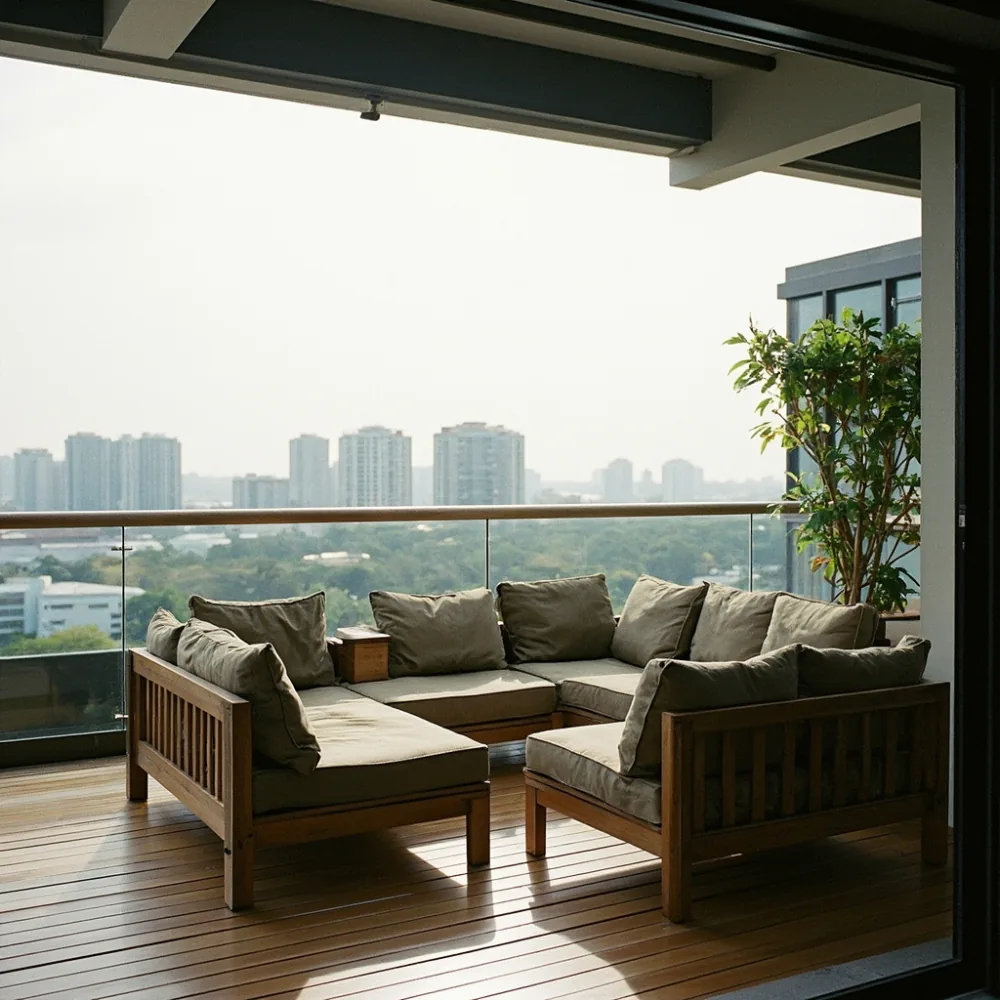
Standard balcony footprints
Three layouts for awkward corners
Most HDB balconies fall into two sizes: the older 4-room flats have about 3.0 m × 1.5 m of usable depth after the parapet, while newer BTOs often run 3.6 m × 1.8 m. A typical 3-seater outdoor sofa is 200–220 cm wide, 85 cm deep and 75 cm tall. That single number — width — is what kills most balcony plans.
I measured my own balcony before shopping and saved myself two trips. Here is the rule I use: leave at least 60 cm of walkway past the sofa so a tall person can squeeze past with a mop, and keep 25 cm between the seat and any railing for cleaning access. On a 3.0 m balcony, that leaves roughly 220 cm for the sofa itself, which is tight for three adults.
Three layouts I have tried or seen in friends' homes:
- Two-seat + side table (160 cm wide): the most flexible for HDB, leaves room for a small planter rack.
- Corner L-shape with 2 shorter sides (180 cm × 180 cm): only works on a 3.6 m balcony or a condo patio; gives you four seats.
- Single loveseat + dining-for-two: best when you also want to eat outside; sofa depth shrinks to about 75 cm.
Measure twice, buy once — the dimensions below are a quick reference.
| Layout | Total footprint (cm) | Best for | Seats |
|---|---|---|---|
| 3-seater straight | 210 × 85 | Condo patio ≥ 3.6 m wide | 3 |
| 2-seater loveseat | 160 × 85 | Standard HDB balcony | 2 |
| Corner L-shape | 180 × 180 | Landed garden, large condo terrace | 4 |
| Single armchair | 80 × 85 | Studio balcony, reading nook | 1 |
| Modular 4-piece | 220 × 220 (max) | Custom layout, big terrace | 4–5 |
Which outdoor sofa materials actually last in Singapore sun and rain?
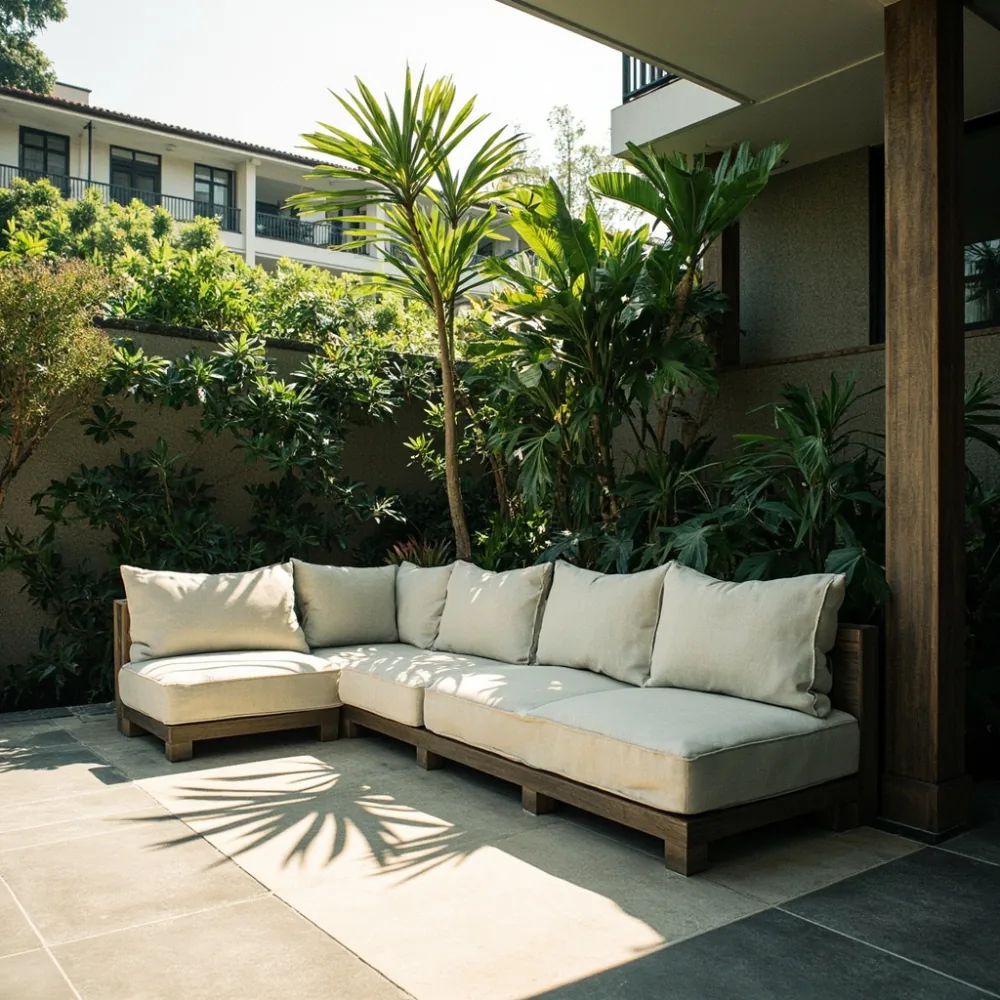
Frame materials compared
Cushion fill and fabric choices
Finish and hardware that matter
Material choice is the single biggest driver of lifespan, more than brand or design. I have ranked the options I have personally seen survive at least three years on Singapore balconies.
Aluminium with powder coat (best all-rounder): Light, won't rust if the coat is intact, and cheap enough to replace in 8–10 years. Look for a minimum 80-micron powder coat, not paint. Weight per seat section is usually 6–10 kg, which matters if you rearrange often.
Marine-grade stainless steel 316: Heavier (12–18 kg per seat) and pricier, but it shrugs off salt air if you live in Sentosa Cove or near East Coast. Avoid 304-grade steel if you are within 1 km of the coast; it will tea-stain within a year.
Teak and other tropical hardwoods: Genuine teak feels like a durable furniture investment and pairs well with solid wood furniture lovers who want a natural look. Expect some silvering if you skip the oiling — that is cosmetic, not structural. Soft woods like pine or rubberwood rot fast outdoors even when oiled.
Cushion fill: Quick-dry reticulated foam dries in 2–4 hours after rain; standard foam can hold water for days and grow mildew. The covers should zip off and be washable.
Fabric: Solution-dyed acrylic (Sunbrella-style) and Olefin both resist UV fading. Polyester looks fine in the shop but fades within a year in direct west-facing sun. If your balcony faces west, budget for a retractable awning as well.
Hardware: Stainless steel bolts and brass fittings. Anything zinc-plated will streak rust onto your tiles by month six.
Is an outdoor sofa cheaper than buying an indoor sofa plus cover?
Real price breakdown for Singapore
What you save and what you don't
People assume outdoor sets are cheaper because the frames are simpler. In Singapore, the opposite is usually true once you compare like for like. Here is what I have paid or seen friends pay in 2024–2025, in SGD.
| Category | Frame & cushion set | Typical price (SGD) | Warranty | |
|---|---|---|---|---|
| Budget aluminium 3-seater | Aluminium + polyester | 800–1,400 | 1 year | |
| Mid-range aluminium L-shape | Powder-coated + Olefin | 1,800–3,200 | 3 years | |
| Teak 3-seater (imported) | Solid teak + Sunbrella | 3,500–6,500 | 5–10 years | |
| Custom modular set | Configurable, premium fabric | 4,000–8,000 | 5–10 years | |
| Indoor sofa + custom cover | Fabric indoor sofa + PVC cover | 1,200 + 250 | 1 year (cover) |
The indoor + cover route looks cheaper on paper, but covers trap moisture, accelerate foam breakdown, and you still get mildew. I have done both. The custom furniture outdoor route wins on lifespan if you use the balcony more than four times a week.
For a once-a-week kopi corner, a budget aluminium set is plenty. If you entertain or work from the balcony daily, push to the mid-range tier.
How does humidity really affect an outdoor sofa in Singapore?
What humidity does to each component
Simple habits that double the lifespan
Humidity alone rarely kills an outdoor sofa — it is the combination of humidity, salt in the air, and trapped water that does the damage. Frames oxidise, fabrics grow black mould, and bolts seize up.
What I do, and what I wish I had done from day one:
- Stand the sofa on rubber feet or a small raised platform so the base dries after rain instead of sitting in a puddle.
- Prop up seat cushions against the wall after a heavy shower so both sides air-dry.
- Wipe frames monthly with a dry microfibre cloth; salt film is invisible until rust appears.
- Apply a fresh coat of teak oil or protective spray every 9–12 months for any wood frame.
- Rotate cushions so the same spot does not stay wet for hours.
Quick-dry foam is the single biggest humidity hack. Without it, even the best frame will smell off by month eight.
What about delivery and assembly for outdoor sofas in Singapore?
Typical lead times
Access checks that prevent failed deliveries
Lead times vary more than people expect. Off-the-shelf aluminium sets from local retailers like Castlery, HipVan and Commune ship in 5–14 days. Teak and modular sets imported from Indonesia or Vietnam take 4–8 weeks. Custom orders from Foshan makers such as MIDHILL — a solid wood furniture manufacturer established in 2008 with a 10-year structural warranty on hardwood frames — typically run 6–10 weeks including sea freight, customs and doorstep delivery.
Before you confirm any order, measure three things: the service lift depth in your condo (often only 1.2 m wide), the corridor turn radius outside your unit, and the balcony door. A 220 cm sofa will not fit through a 1.8 m corridor turn, no matter how the salesman smiles.
Assembly is usually included for sets over SGD 1,500, but check whether it covers bolting modular pieces together or full build-from-box. A flat-pack teak L-shape can take 3–4 hours for two people.
For landed homes in Districts 10, 11 and 21, curbside delivery is fine. For HDBs above the 10th floor, book the lift in advance and confirm the lift door height — many service lifts are 2.1 m, which is tight for long boxes.
Where should you actually buy an outdoor sofa in Singapore?
Local showrooms vs direct import vs custom
There is no single best channel. I tend to group buyers into three buckets.
Shop local showrooms (Eunos, Tai Seng, Balestier): Best if you want to test the cushion firmness in person and need the sofa next week. You pay a 30–60% premium over direct import for that convenience, but warranty claims are easier.
Buy direct from regional factories: Indonesian teak makers and Vietnamese aluminium fabricators offer solid mid-range value, especially for landed homes that can handle 20-cbm containers. Expect SGD 2,000–4,500 landed for a 5-piece teak set versus SGD 4,500+ retail. The trade-off is no local warranty and you handle defects yourself.
Order custom from a China factory: This is where custom furniture shines for awkward balcony shapes or non-standard heights. Foshan-based makers (including MIDHILL for the solid wood line) can match your exact cm dimensions, choose your fabric, and ship a flat-pack within 6–10 weeks. Pricing for a custom 3-seater starts around USD 1,200 ex-works for hardwood frames, landing in Singapore for roughly SGD 1,800–2,800 all-in including delivery to your door in Districts 1–28.
For most HDB buyers, a local mid-range aluminium set is the lowest-risk path. For condo owners with a non-standard terrace, custom pays off in the second year when everything actually fits.
How do you maintain an outdoor sofa so it lasts 5+ years?
Weekly, monthly and yearly routines
Storing during the monsoon peak
Five years is the realistic target for a mid-range outdoor sofa in Singapore. Ten years is achievable with teak or marine stainless steel. Maintenance is what decides which end of that range you land on.
Weekly (5 minutes): Brush off leaves and pollen, wipe dry any standing water on cushions, check that bolts are still tight.
Monthly (15 minutes): Wash cushion covers per care label, usually a gentle machine cycle. Wipe the frame with mild soapy water and dry thoroughly. Inspect for early rust spots on aluminium welds.
Yearly (1 hour): Re-oil teak frames in January before the drier February window. Touch up any powder-coat chips with matching paint to stop rust under the coat. Replace any swollen or delaminated plywood inserts — these are the hidden failure point in cheaper sets.
During the December–January monsoon peak, consider moving cushions indoors or into a deck box. The frame can stay out, but constant wet cushions shorten foam life by 30–40%. A simple 120 cm × 60 cm deck box from IKEA costs about SGD 179 and pays for itself in saved cushion replacements.
Frequently asked questions
Can I leave an outdoor sofa outside all year in Singapore?
Yes for aluminium or teak frames, no for cushions. Frames handle year-round exposure if you keep them clean and dry. Cushions should go into a deck box or indoors during heavy monsoon weeks, or they will grow mildew within 3–6 months even with quick-dry foam.
What is the best outdoor sofa fabric for Singapore sun?
Solution-dyed acrylic or Olefin. Both resist UV fading at our 12+ UV index and dry within 2–4 hours after rain. Avoid polyester and standard cotton, which fade within a year in west-facing balconies and stay damp far longer than synthetic options.
How wide should an outdoor sofa be for an HDB balcony?
Most HDB balconies fit a 2-seater loveseat around 160 cm wide, leaving 60 cm of walkway. A 3-seater at 210 cm only works on wider 3.6 m BTO balconies or condo patios. Always measure your corridor turn radius before ordering.
Is teak worth the extra cost over aluminium in Singapore?
Teak costs 2–3 times more upfront but lasts 10–15 years versus 8–10 for aluminium. It is worth it for landed gardens and premium condos, less so for HDB renters who may move within 3 years. Aluminium remains the lowest-risk choice for short stays.
Do outdoor sofas need a warranty in Singapore?
Look for at least 3 years on the frame and 1 year on cushions. Premium makers like MIDHILL offer 10 years on hardwood frame structure. Anything under 12 months is a red flag for outdoor use in our climate, because the first signs of bad welds or cheap foam show up in months eight to fourteen.
Questions about specifications, fabric or delivery? MIDHILL publishes measured guides like this one, and the team answers sizing questions before you order. See the full collection or contact the team.