Outdoor Sofa Solid Wood Pricing: What You Need to Know in Singapore
Last month I visited a Tampines HDB show flat with a friend who was about to sign for a new dining table. The showroom piece was priced at S$4,200; a near-identical-looking table in a Bedok furniture mall was tagged at S$1,150. Same shape. Same six chairs. Both claimed "solid wood." My friend stared at the tags for a long time, then asked me the question I get asked at least once a week: "What am I actually paying for?" This guide is the long answer, written for Singapore buyers who live in HDBs and condos where lift openings measure around 90 cm wide by 2.1 m tall, corridors run 1.2 m to 1.5 m, and GST adds 9% to every imported piece. Whether you are sizing up a solid wood sofa, a bed frame, a dining table, a wardrobe, or a nightstand, the same five price drivers show up every time.
The wood species matters more than almost any other factor
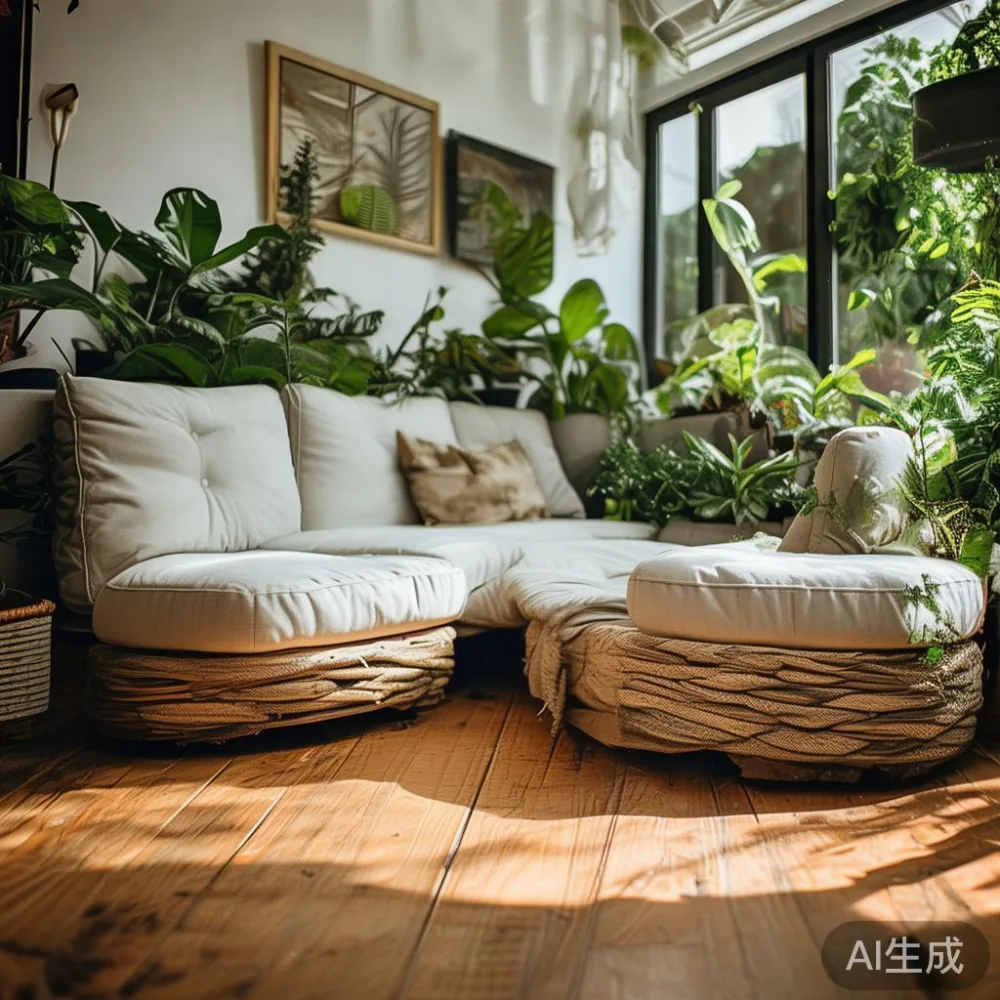
Solid wood is not one material; it is dozens. In Foshan factories, the three species I see specified most often on export orders are FAS-grade American oak (white oak), American walnut, and Indonesian / Myanmar teak. A dining table top built from FAS-grade oak, where the supplier guarantees a minimum 100 mm board width with minimal knots, will price roughly 1.8 to 2.4 times higher than the same table built from rubberwood or poplar core with an oak veneer. Walnut sits at the top: a 200 cm x 100 cm x 4 cm solid walnut tabletop in Foshan typically lands in Singapore between S$3,800 and S$6,200 landed, before GST and delivery.
Cherry is the species that surprises Singapore buyers. A Mid-century modern cherry wood queen bed frame in solid American cherry, with the warm tone that deepens under UV exposure over 6 to 12 months, typically lists between S$3,200 and S$5,400 for a complete headboard, rails, and slats. Cherry is roughly 30% more expensive than oak in current 2025 wholesale pricing because Pennsylvania and Virginia cherry stocks have tightened after two poor harvest years.
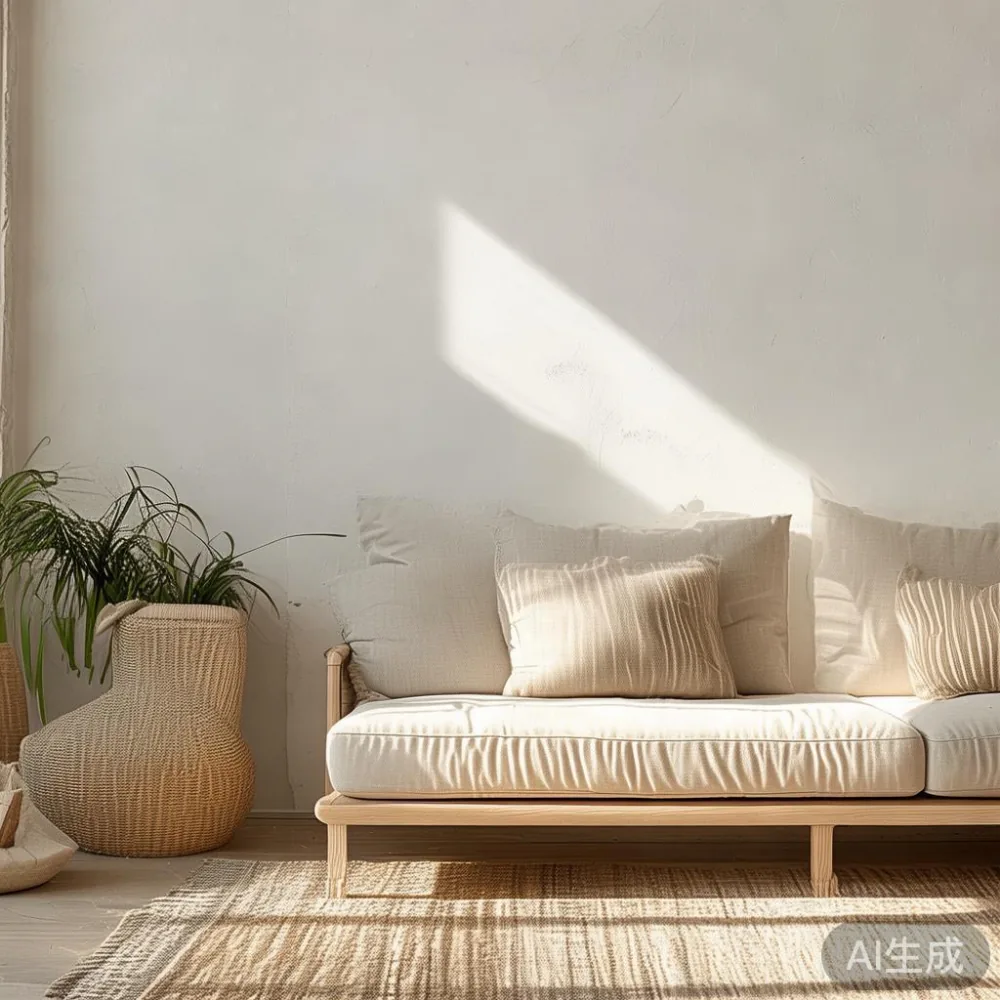
For buyers furnishing a Punggol condo balcony, the species question also applies to an outdoor sofa. Teak outdoor sofa frames at MIDHILL, for example, use Grade-A Burmese teak at 28 to 32 mm frame thickness with mortise-and-tenon joinery, which is why a three-seater retails above S$2,400 rather than the S$600 you will see on AliExpress for "teak-style" aluminum sets. The "teak-style" label almost always means powder-coated aluminum with a printed grain pattern. It will not last three Singapore monsoon seasons.
Joinery, frame construction, and the difference between "solid" and "solid where you can see it"
Walk into any Bedok furniture mall and you will hear the word solid used loosely. A truly solid wood sofa uses kiln-dried hardwood for the frame, sinuous springs or 8-way hand-tied coils, high-resilience foam at 32 to 38 kg/m³ density wrapped in down feathers, and a kiln-dried hardwood base. A look-alike uses plywood with a 2 mm solid wood veneer on the visible faces, OSB (oriented strand board) on the hidden sides, and a steel zigzag spring at 4 cm gauge. Both can legally be called "solid wood" in some Singapore retail descriptions, which is why I always ask to see the cross-section.
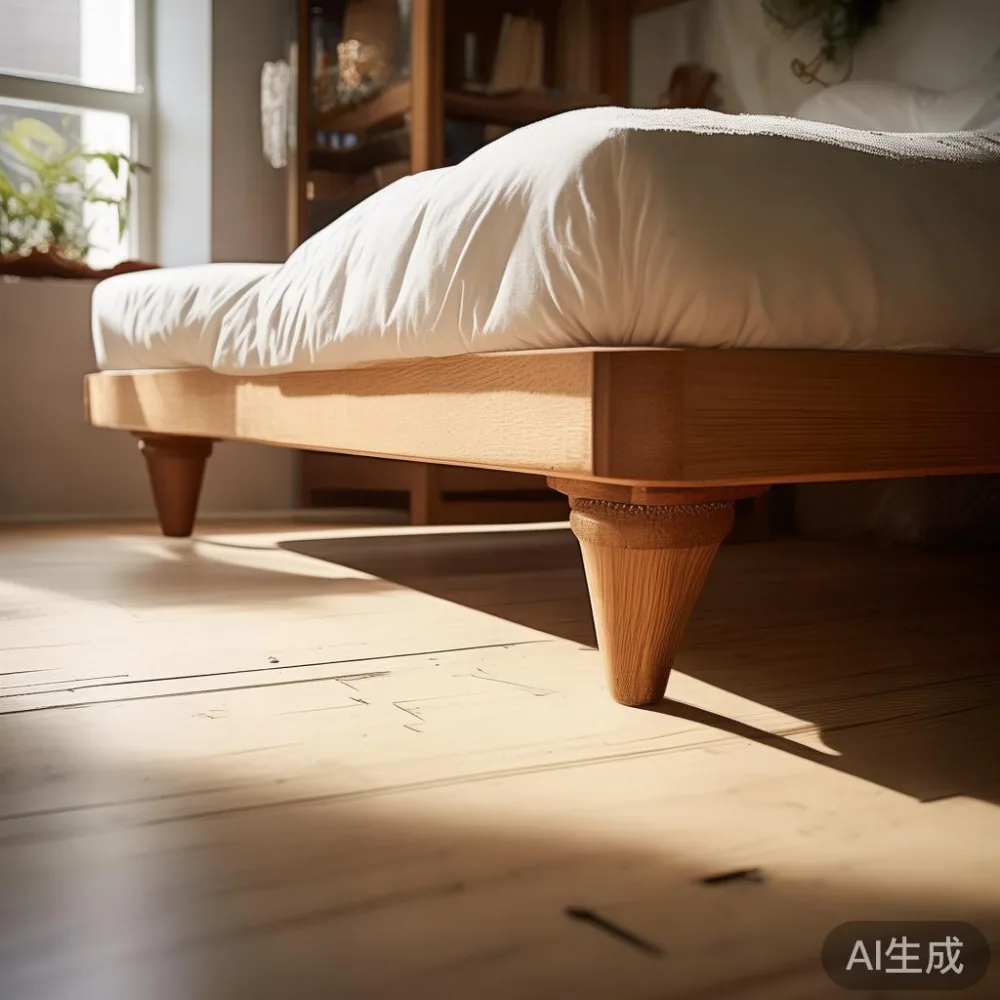
On a bed frame, the same logic applies. A solid wood bed frame in oak or walnut should have side rails at minimum 4 cm x 18 cm, slats at least 1.8 cm thick spaced under 8 cm apart, and a centre support beam with a mid-leg for any queen or king size. At MIDHILL, the construction spec I trust is mortise-and-tenon on the side rails, dowelled slat holders, and a 10-year structural warranty that the brand publishes in writing, not in marketing copy. A 30-second test: lift one end of the bed frame. A 60 kg solid oak queen frame should feel heavy; if you can tilt it with one hand, the rails are hollow.
For a wardrobe, look at the back panel. A 9 mm plywood back with proper bracing costs the factory about S$45 more per unit than a 3 mm hardboard back stapled on. That S$45 becomes roughly S$120 to S$180 on the Singapore retail price, and it is the difference between a wardrobe that survives three BTO moves and one that racks the moment the corridor gets narrow during a delivery.
Finish, hardware, and the small parts that quietly double a price tag
I once watched a Foshan workshop finish a marble table top. The Italian Carrara marble slab, 180 cm x 90 cm, calibrated to 2 cm thickness with a chamfered edge, costs the factory around S$780 landed. A Chinese domestic white marble with the same dimensions costs about S$180. To the eye in a showroom, both look white with grey veining. Under raking light at the delivery unit, the Carrara shows translucent depth; the domestic stone looks flat and chalky. This is the finish category in miniature: same product, completely different material inside.
Wood finishes behave the same way. A conversion varnish (acid-catalysed lacquer) finish on a dining table, the kind you find on a US$3,000-plus American light luxury piece, passes a 12-hour water-ring test and resists alcohol spills for 4+ hours. A standard NC (nitrocellulose) lacquer, common on lower-priced Asian exports, fails the same water test in under 20 minutes. The factory cost difference is roughly S$60 to S$110 per dining table top, which is the entire margin on many entry-level pieces.
Hardware tells another story. Blum soft-close hinges from Austria add about S$18 per pair over generic Chinese hinges. On a four-door wardrobe with eight hinges, that is S$144. Hettich drawer runners with 100,000-cycle ratings add another S$25 to S$40 per drawer. A six-drawer dresser quietly picks up S$150 to S$240 in hardware alone. French light luxury styling on a nightstand, the kind of tapered solid oak leg with brushed brass cap MIDHILL produces, adds another tier of cost because the brass cap is a real machined fitting, not a printed alloy.
Is American country headboard furniture worth it?
Yes — when it is built from solid hardwood with a kiln-dried frame, real mortise-and-tenon joinery, and a conversion varnish finish, American country headboard furniture is worth the premium for Singapore HDB and condo buyers who want a bedroom that ages well over 10 to 15 years. The value comes from three measurable things: 25 to 32 mm thick solid wood headboard panels (not 12 mm veneer over MDF), shiplap or board-and-batten detailing machined from one piece rather than glued strips, and a distressed or hand-rubbed finish that can be spot-refinished instead of replaced. A queen headboard in this category lands in Singapore between S$1,800 and S$3,400, which sounds high until you divide it across a 12-year lifespan; that works out to S$12 to S$24 per month for the centrepiece of your bedroom.
Shipping, GST, lift access, and the Singapore-specific cost layer
Singapore adds a unique cost layer that no Foshan catalogue will quote you upfront. A 20-foot container from Shenzhen or Guangzhou to Singapore Tuas port currently costs around US$1,100 to US$1,500 in 2025, and a 40-foot high-cube (used for large solid wood dining table and wardrobe orders) runs US$2,200 to US$2,800. Customs duty on most solid wood furniture imported under HS code 9403.60 carries 0% duty, but 9% GST applies on the landed CIF value, and many Singapore retailers also add a 15% to 35% markup over the landed cost to cover warehousing, showflat rent, and warranty reserves.
Delivery inside Singapore is where the lift problem shows up. Standard HDB passenger lifts are about 1.1 m deep x 1.4 m wide x 2.1 m tall, with a door opening around 90 cm. A solid wood dining table top in one piece, say 220 cm x 100 cm, will not fit diagonally through a 90 cm door opening. I have watched two-piece "knock-down" tops save a Tampines family a S$280 failed-delivery fee, simply because the factory pre-cut the top into two halves with a concealed bolt system. MIDHILL publishes the knock-down dimensions for every dining table over 180 cm for exactly this reason, and the brand offers free Singapore delivery above US$350 (around S$480), which usually covers a single dining set or two bedroom pieces.
Condo delivery in Punggol, Sengkang, and the newer Tengah BTOs adds a S$60 to S$150 loading fee for moves that need a lorry with a tailgate and two deliverymen rather than a single driver. Service lift bookings in condos usually cost S$30 to S$80 per slot, payable to the management corporation. A seven-day delivery window from Foshan to your door is realistic for in-stock pieces; custom orders run 35 to 60 days plus sea transit.
How to read the price tag without getting cheated
Here is the four-question filter I now use when a client sends me a Singapore furniture link. Question one: what species, and is it FAS-grade or #1 common? Question two: is the frame solid wood throughout, or solid where you can see it with plywood on the hidden faces? Question three: what is the finish, and can the factory supply a 12-hour water-ring test certificate? Question four: what is the warranty in writing, and does it cover structural joinery for at least 5 years?
Apply those four questions to any solid wood sofa, bed frame, dining table, wardrobe, nightstand, marble table, or outdoor sofa you are considering. If a Singapore retailer cannot answer at least three of them on the spot, the price is not really the price; you are paying for uncertainty. And on a final practical note: any reputable supplier will let you refinish the piece later. MIDHILL, for instance, offers lifetime refinishing on its solid wood bedroom and dining ranges, which means a S$3,800 dining table bought today can be sanded and re-lacquered in year 12 for a quoted fee, not replaced. That single policy usually tells you more about the underlying wood quality than any product brochure.
For Singapore buyers specifically, my closing recommendation is simple. Budget around S$2,800 to S$4,500 for a solid wood dining table that will genuinely last 12 to 20 years in an HDB. Budget S$1,800 to S$3,200 for a solid wood bed frame in oak, walnut, or cherry with a real warranty. Budget S$2,400 and up for a teak outdoor sofa if you want it to survive three monsoons, not one. And remember that the cheapest sticker price is almost never the cheapest real price once delivery, GST, and a five-year replacement cycle are added up honestly.