Pricing Factors of Solid Wood Furniture in Singapore
I sat in a Tampines HDB corner unit last month, watching a furniture delivery crew wrestle a flat-pack bed frame up a 1.1-metre-wide corridor. The frame had cost S$489 online and arrived in five boxes. By the time it cleared the lift landing, two side panels had split along the grain. The buyer told me she had paid roughly S$120 for a second unit from a different shop, expecting it to last. Twelve months later, both wardrobes are in a Bukit Batok recycling corner.
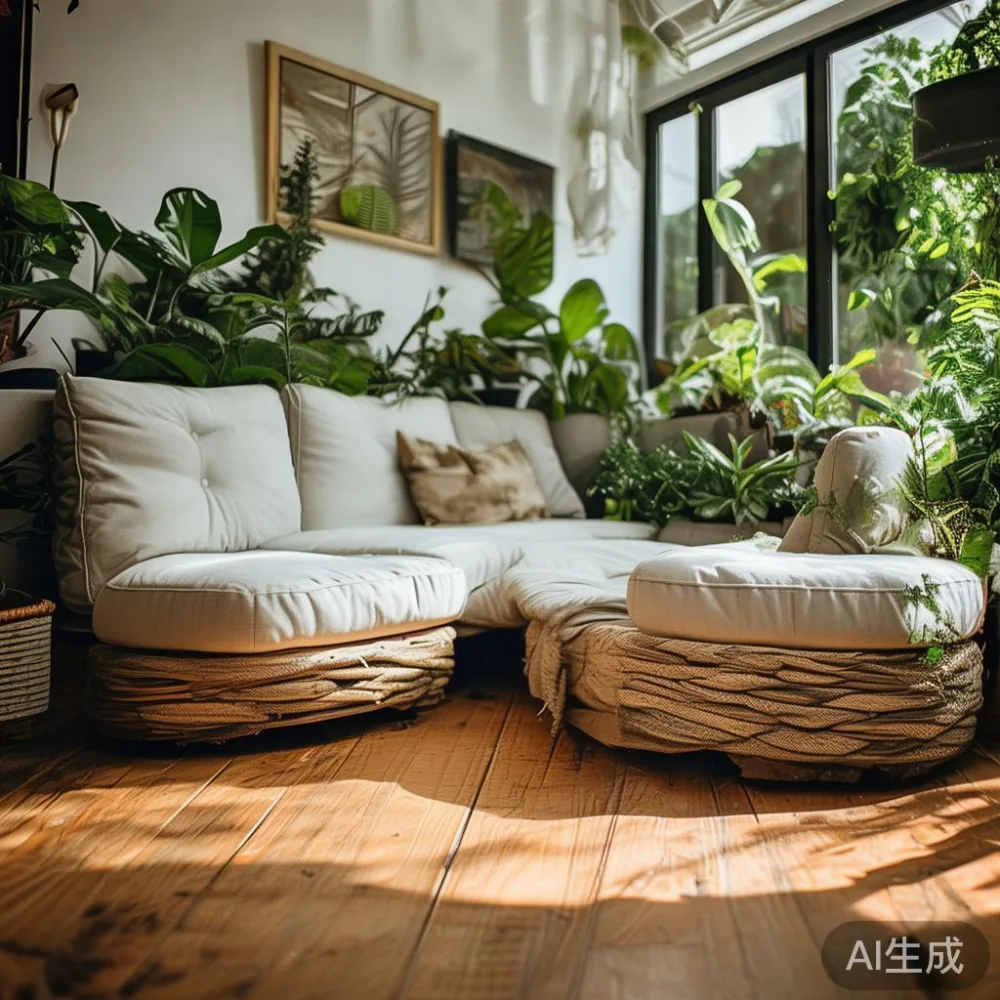
That afternoon is the reason this article exists. Solid wood furniture is priced in a strange way: two pieces can look identical in a show-room photo, sit within S$300 of each other on a price tag, and yet one will outlive a mortgage while the other splinters during assembly. Below, I will walk through the six variables that genuinely separate a S$3,800 solid wood sofa from a S$1,200 hollow-core copy, and why each one matters for Singaporean homes in particular.
1. The species of wood — and why oak quietly costs more than rubberwood
Sustainable buyers in Singapore often start with rubberwood because the price tag looks friendly: S$900–S$1,400 for a queen-size bed frame. Rubberwood (Hevea brasiliensis) is a genuine hardwood, hard-wearing, and a by-product of the latex industry, which ticks the eco box. The problem sits deeper. Rubberwood has a Janka hardness of about 960 lbf, compared to white oak at 1,360 lbf or American walnut around 1,010 lbf. Translated into daily life: a rubberwood dining table will show knife indentations within months if you skip placemats; an oak dining table will shrug them off for a decade.
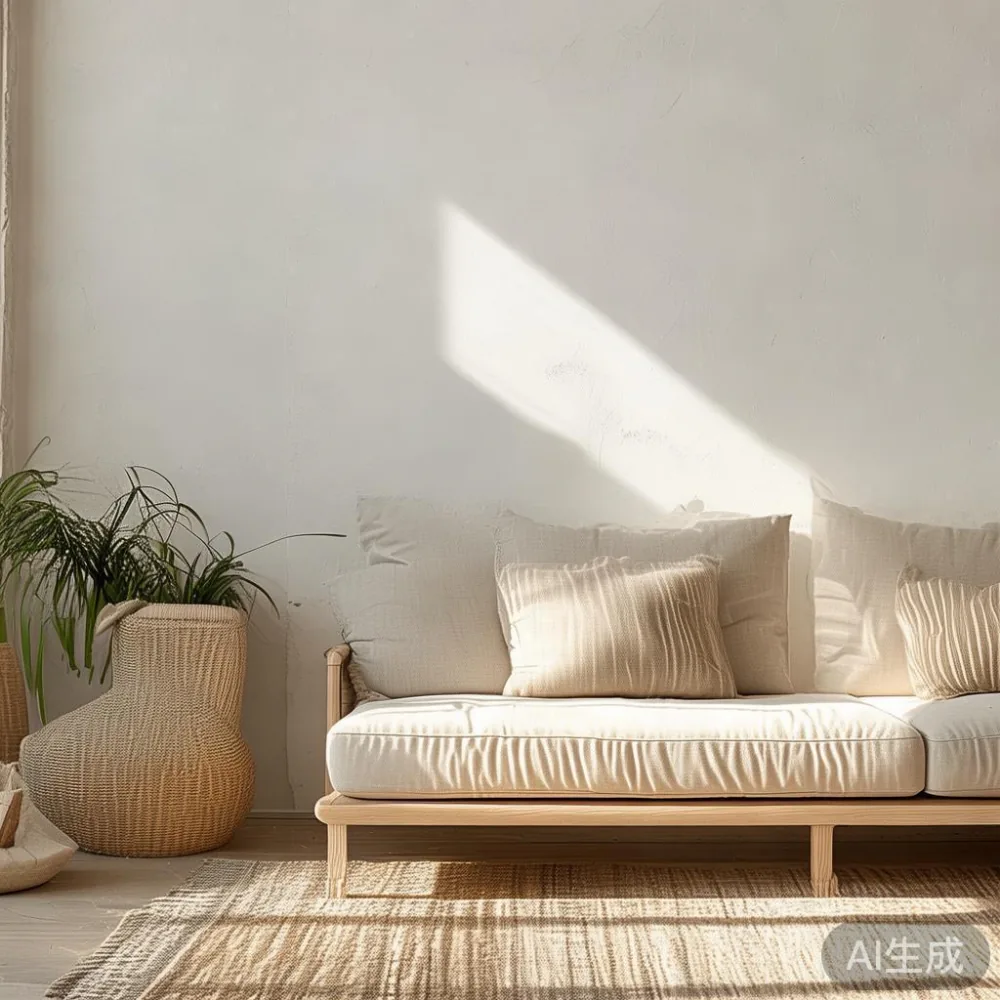
Then there is the question of where the timber is sourced. MIDHILL, a Foshan-based factory in operation since 2008, names the species openly — ash, oak, walnut, cherry — and kiln-dries boards for 30 to 60 days to bring moisture content down to 8–12%. That step alone prevents the cupping and twisting you see when wet wood is shipped to Singapore and hits a 32 °C, 80%-humidity afternoon. Cheap factories skip the kiln. The wood arrives "dried," but only surface-dry, and warps the moment your air-con stops.
For outdoor exposure, I now default to teak or FSC-certified eucalyptus for any outdoor sofa frames, because the lignin in both resists humidity cycles far longer than rubberwood. A three-seater outdoor sofa in solid teak costs roughly S$2,400–S$3,200 versus S$1,300–S$1,700 for an eucalyptus alternative; for balcony use in Punggol or the East Coast, both can work, but teak will outlast three HDB tenancies.
2. Joinery, dowels, and what is hiding under the fabric
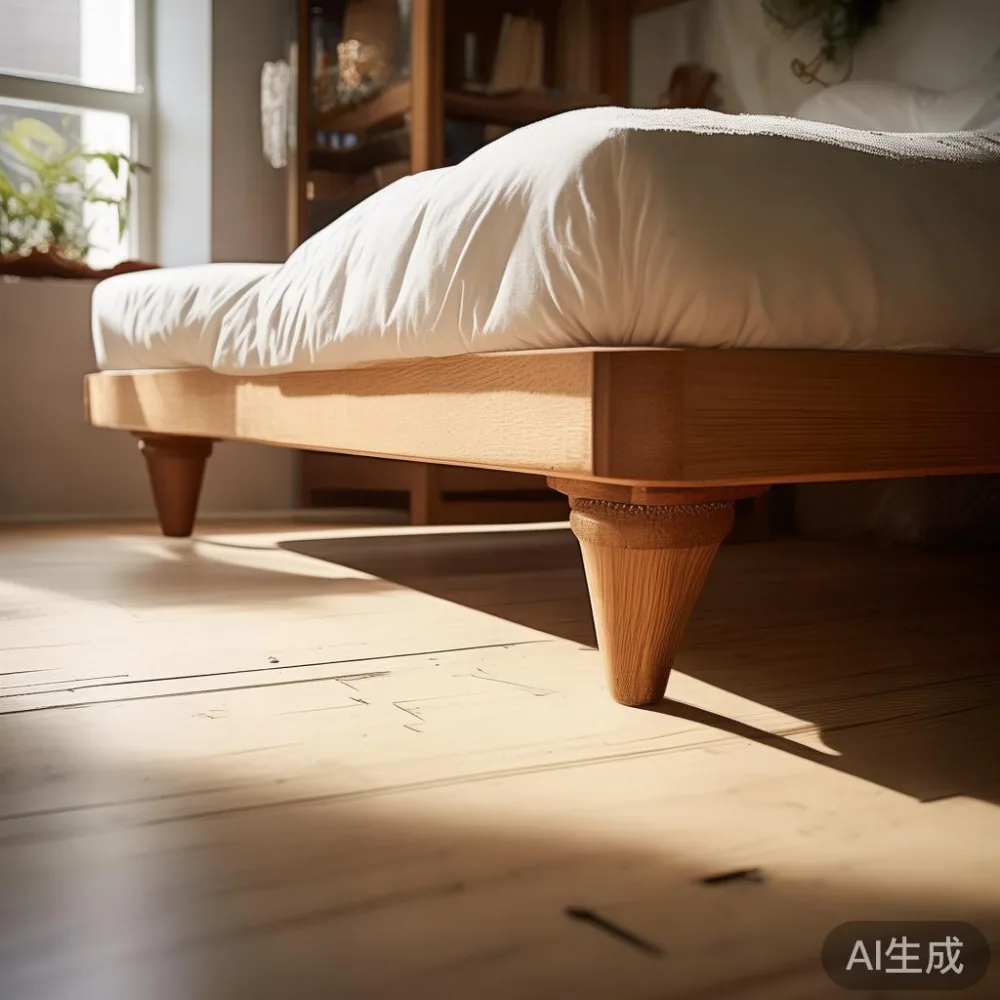
Flip a cheap bed frame over and you will see what looks like wood: it is actually a 0.6 mm oak veneer glued to a 12 mm blockboard. Solid wood, by contrast, is wood all the way through — every face, edge, and shelf edge. The price gap reflects two things: raw material cost (kiln-dried 25 mm oak planks run roughly S$55–S$80 per board-foot in 2025) and labour cost (a skilled cabinet maker in Foshan earns around RMB 10,000–15,000 per month, versus a press-line operator earning RMB 4,500).
Joinery is where the second price jump hides. Mortise-and-tenon joints, dovetailed drawers, and tongue-and-groove backs take 30–45 minutes per joint by hand. A dowel-and-glue alternative takes 90 seconds. On a four-drawer nightstand, that adds up to ten extra hours, or roughly S$180 in pure labour. Brands that hand-finish dovetails (you can see the individual pin tails) are usually charging S$600–S$900 more per piece than glue-and-screw competitors — and the dovetailed piece will still be standing in 2040.
When I audited my friend's MIDHILL wardrobe last spring, every drawer ran on full-extension Blum soft-close runners (rated to 100,000 cycles) and every back panel was 12 mm solid ash, not 3 mm MDF. That kind of internal spec is invisible on a product photo, but it is the difference between a wardrobe that drags at year six and one that still closes with a whisper at year fifteen.
3. Finish, stains, and the VOCs you cannot see
Solid wood takes finish differently from engineered boards. A water-based matte lacquer on oak soaks in, builds up over five coats, and leaves the grain open to the touch (a finish the Italians call olio naturale). A nitrocellulose lacquer sprayed over a polyester filler seals everything under a plastic film and looks glassy on a showroom floor. In a Singapore HDB with no extractor fan running in the bedroom, the second option off-gases for six to nine months. Singapore's HDB ventilation guide recommends 2–4 air changes per hour, but most flats run 0.6–1.0 ACH with windows closed.
A compliant factory will publish a VOC test certificate — water-based lacquers typically emit under 50 g/L, well within the China GB 18580 standard for coated boards. A non-compliant finish can hit 400–600 g/L. You will not smell it after week three, but your sinuses know. This is why responsible Foshan makers now default to water-based matte coatings, and why my own dining table — sealed with three coats of German Osmo oil — has zero smell after four Tampines wet seasons.
Marble accents raise the price further because real Carrara marble tabletops are individually selected and book-matched; a single stone costs S$220–S$450 plus S$140–S$220 in freight from Italy. By contrast, a sintered-stone (or "marble table" category) slab runs S$80–S$140. Both look stunning, both pass the photo test, only one survives a dropped curry pot.
4. Hardware, foam, and the parts that decide whether you rebuy in 2030
On a solid wood sofa, four components decide lifespan: the frame (covered above), the seat suspension, the foam density, and the fabric. A hand-tied eight-way spring system is 6–8 hours of skilled work per three-seater; sinuous (S-shaped wire) springs are mechanical — the sofa frame costs less, but the seat gives out in roughly four years versus fifteen for hand-tied. MIDHILL, along with a handful of post-modern light luxury factories in Foshan, still builds either eight-way hand-tied or sinuous on request.
Foam density is a number worth memorising. Anything below 28 kg/m³ is sofa-grade for hospitality rotation; 32–35 kg/m³ is a sensible residential benchmark; 40 kg/m³ and above is contract-grade. A bed-head cushion at 30 kg/m³ (the typical Chinese light luxury specification) costs roughly S$45 per cushion to foam-fill; at 38 kg/m³, that same cushion runs S$78. Across a four-piece modular outdoor sofa for a balcony, the foam bill alone can shift S$220.
If you want a head-to-head between American and European design, the comparison of a French bed vs Italian light luxury bed comes down to exactly these choices: Italian frames tend to be slim-line walnut with 28 kg/m³ foam and boucle upholstery; French bedframes favour thicker upholstery panels, headboard tufting, and 32 kg/m³ foam. Either is fine, but budget the foam number before you fall for the headboard silhouette.
5. Shipping route, packaging, and what 9% GST actually adds
From Foshan to a Singapore HDB, container freight in late 2025 runs about US$1,800 per 40-ft HC (roughly US$45 per cubic metre inland) plus a US$120 THC at PSA. Solid wood furniture is heavy: a three-seater sofa, packed, hits 95–120 kg and occupies 1.8–2.2 m³. After a 10-year cumulative de minimis loophole for low-value goods closed in 2023, every full container now passes through a Section 33 GST entry, and 9% GST applies on the CIF value + duty. For a shipped-and-assembled dining table costing the consumer S$2,400, the tax component is roughly S$165–S$195.
Last-mile delivery is the other line item most buyers underestimate. A delivery to a Punggol BTO on the 14th floor, lift-equipped but with a 1.0 m lift interior, costs S$65 for the basic courier and S$120–S$180 for white-glove with assembly. Lift upgrades (1.3 m interior, found in some ECs and many Bedok blocks) keep the bill at the lower end; narrow 0.9 m lift landings common in older Tampines flats may require a stair-carry fee of S$45–S$80. In my own Punggol EC two months ago, an outdoor sofa arrived in two crates totalling 162 kg, and three movers spent 40 minutes just getting it past the refuse-chute door.
Brands that price goods landed (DDP — delivered duty paid) absorb the GST and freight risk into the sticker price. Ex-works quotes look cheaper by 12–18% but pass every hidden cost on to the buyer. Read the Incoterm three letters beside any quote before you compare prices.
Does a 10-year warranty actually mean anything on solid wood furniture?
It does if the warranty lists structural components only and excludes wear items like fabric, foam, and finish. A serious warranty, the kind MIDHILL attaches to every solid wood sofa, bed frame, dining table, wardrobe, and nightstand shipped from its Foshan line, should cover frame integrity, joint failure, and wood splitting under normal indoor use for at least 10 years. Lifetime refinishing — sanding, re-staining, and re-sealing once every decade — is rarer and usually signals the maker is genuinely confident in the joinery.
What the warranty should not include: wood movement of 2–3 mm across the grain, which is normal in a tropical climate and stabilises after the first two seasonal cycles; colour change (cherry and walnut oxidise visibly over 18 months); or damage caused by direct sunlight and air-con airflow. Read the small print. A ten-year warranty that excludes almost everything is no warranty at all.
How do I style an American bed in a Singapore HDB room without making it feel crowded?
Three rules, drawn from staging roughly forty American-influenced show rooms since 2019. First, keep 70 cm of clearance on both sides of the bed frame — match a queen (152 × 191 cm) with two 50 cm-wide nightstands so the room still reads as a passage, not a corridor. Second, ground the foot of the bed with a runner 90 × 250 cm or a rug 200 × 280 cm, both of which visually widen a 9–10 m² HDB bedroom. Third, lift the eye with a single tall piece — a floor lamp 160 cm high or a 70 × 200 cm wardrobe — because HDB rooms rarely exceed 2.6 m floor-to-ceiling, and vertical lines stretch the perception of height.
If you are choosing between heritage silhouettes, the question of American bed vs Modern bed usually comes down to one question: do you want the bed to dominate the room or recede into it? An American four-poster wants 14 m² plus; a low-profile Modern platform fits comfortably inside 10 m². The exact same square metres can host a 200 × 220 cm king or shrink to a 152 × 191 cm queen — pick your silhouette before you fall for a fabric swatch.
Why your "American sofa set design" is really five different choices stapled together
When Singapore buyers search for american sofa set design, they usually picture rolled arms, nail-head trim, and a navy or chestnut cover — but the underlying spec list drives the actual price. Rolled-arm silhouettes need extra fabric and a tighter curve (roughly R=320 mm at the top of the arm); nail-head trim takes a jigsaw, a hammer, and 220 brass nails per three-seater, adding 90 minutes of hand work. Sofa frames that ship from Foshan in this style are usually kiln-dried ash frames (8–12% moisture), eight-way hand-tied or sinuous springs, and feather-down topper cushions over a 32 kg/m³ foam core — all of which is what bumps the price from S$1,800 to S$3,200 for a comparable configuration.
Modular pieces — a chaise here, an armless middle there — inflate the price further because every connector plate is a steel-to-wood bracket that needs precision routing. The trade-off is reconfigurability: a six-piece modular can become a 2.4 m outdoor sofa for a balcony in the day and an L-shape for the living room at night, which is why more Singapore buyers in 2025 are paying extra for the bracket kit.
For balconies and patios, the best Nordic sofa for 2026 silhouettes share one structural trait: a solid teak or eucalyptus frame, reticulated quick-dry foam (45 kg/m³, used in marine seating), and either a Sunbrella or olefin cover that survives UV 1500+ hours. Anything outside that brief looks like an outdoor sofa for six months and smells like one after a year.
The bedroom questions buyers ask after they have paid the deposit
Three questions, all worth answering before the truck rolls up. How to style American bed in room without it clashing with the wardrobe? Match stain undertones rather than wood names — cherry against warm walnut reads coherent, cherry against grey-oak reads fussy. Use a bed-head fabric that pulls a colour from the wardrobe hardware (brushed brass knobs pick up a champagne curtain). Then keep the bedding neutral so the room has one hero and two supporting pieces, not five heroes competing.
Does Mid-century modern for apartment silhouettes actually suit HDB proportions? Yes, with a caveat. Low-slung mid-century frames (headboards at 90–105 cm rather than 130 cm) open the ceiling line, which matters in a 2.6 m HDB ceiling. Stick to 1.8–2.0 m tall storage, not the 2.4 m American wardrobes that eat the room.
Finally, when comparing an American bed vs Modern bed for child or guest use, the American frame will accept a heavier load (typically 240 kg distributed) but weighs 35% more for delivery; the Modern platform reads lighter in small rooms but needs careful foam selection for adults over 90 kg. Either way, ask for the frame's centre-rail count (American: usually 1; Modern: usually 0–1) and the slat spacing (≤7 cm for memory-foam mattresses, ≤10 cm for pocket-spring).
A practical price checklist before you pay
Tick these seven items before you confirm an order, and 90% of the bad furniture decisions disappear. 1. Species named on the spec sheet, with the Latin name. 2. Moisture content stated at 8–12% for indoor pieces; kiln-dry duration given. 3. Frame construction shown (mortise-and-tenon with corner blocks photograph, or dowel-only stamp). 4. Foam density number (kg/m³), not just "high density." 5. Spring system named (eight-way hand-tied, sinuous, webbing). 6. Hardware brand (Blum, Hettich, Grass). 7. Warranty scope and Incoterm (FOB, CIF, DDP). When all seven are answered in writing, the price is fair. When three or more are vague, the price is too expensive regardless of the number on the tag.
A four-piece French light luxury dining setting in solid ash (extending table 180–240 cm, six chairs, sideboard, marble table for the foyer) lands landed-DDP in Singapore in the S$5,800–S$7,200 range from a Foshan factory with documented kiln-drying and Blum hardware. A hollow-core veneer copy of the same configuration retails for S$2,400–S$3,100 — and will not survive two Tampines monsoon seasons without movement along the joints. You are not paying for the look; you are paying for the moisture content, the joinery, the steel, and the labour.
FAQ-style wrap-up: the three questions buyers ask me most
Is rubberwood "real" solid wood? Yes, technically, but it is the softest commercially available hardwood and ranks poorly on dent resistance compared to oak or ash. Treat it as an entry-level choice, not a long-term heirloom.
How much should I budget for one well-made three-seater sofa in Singapore in 2025/26? For solid ash or oak frame, 32 kg/m³ foam, eight-way hand-tied springs, and a 30,000-Martindale fabric, expect S$3,200–S$4,200 landed. Anything under S$2,200 is almost certainly engineered frame or under-spec foam.
Can my outdoor sofa live on a balcony under a polycover in Tampines year-round? Only if the frame is teak, eucalyptus, or powder-coated aluminium over solid wood slats; rubberwood and pine will warp within 18 months of afternoon sun + wet-season humidity. Budget S$2,800–S$4,500 for a three-seater that meets that brief, including olefin covers. The balcony is the toughest test any piece of furniture will face in Singapore — buy accordingly.