Tropical Sun, Humid Nights: Caring for a Lacquered Surface on Your Outdoor Sofa in Singapore
I learned the hard way that a lacquered outdoor sofa in Singapore is a very different beast than the same piece in a dry climate. Last month I visited a client in a Punggol Waterway terrace house who had placed a six-seat solid wood sofa on her balcony. Six months in, the UV had turned the armrest lacquer a pale honey, and the corner near the AC condensation pipe had developed a faint blush of white haze. She had done nothing wrong — she had simply trusted a product designed for Seoul or Stuttgart to survive Tampines afternoon sun at 33°C with 85% humidity.
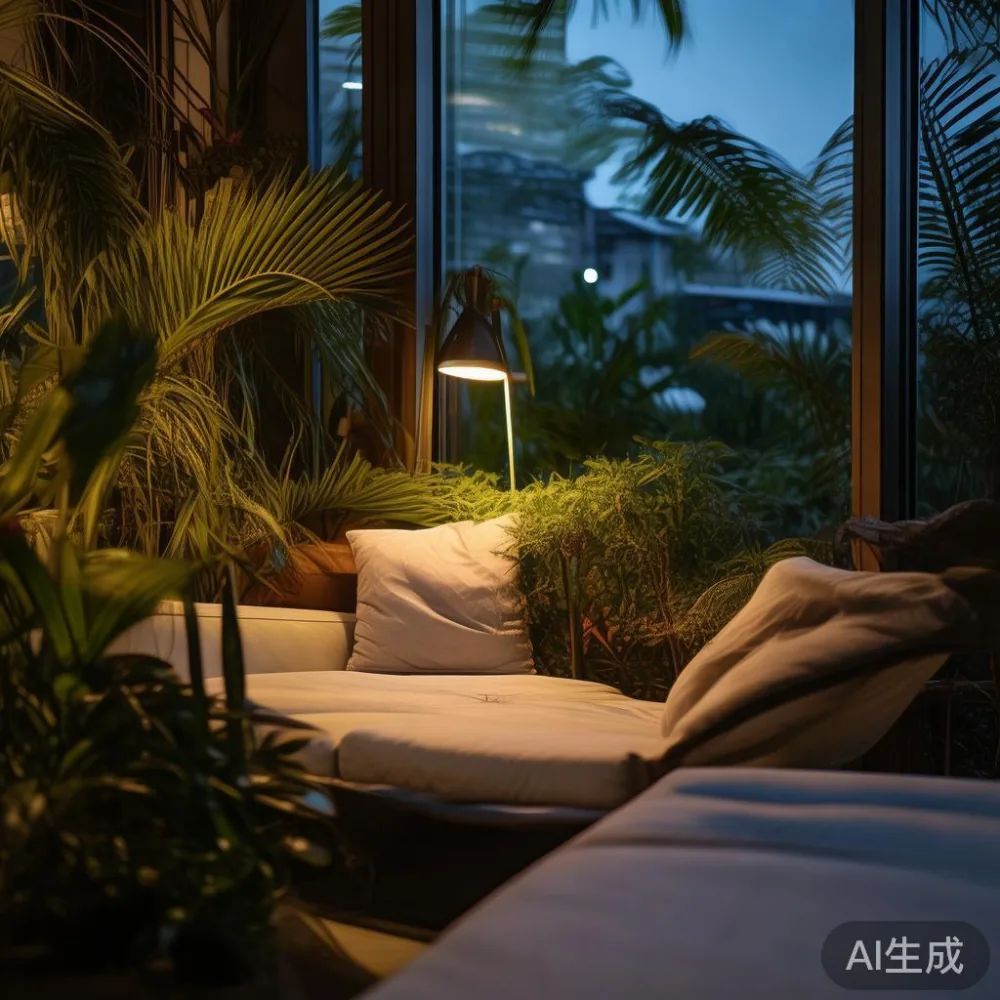
This guide is for anyone in HDBs at Bedok, Punggol, or Marine Parade — and for condo owners along the East Coast — who has invested in a lacquered outdoor sofa and wants it to survive the equatorial weather. I will walk through what lacquer actually does, what the local climate does to it, the exact cleaning numbers I use on service calls, and the small buying decisions that decide whether you refinish in three years or twelve. I will also connect the dots between your outdoor piece and the indoor solid wood furniture — bed frame, nightstand, dining table, marble table — that most Singapore households share the same air with, because humidity does not stop at the balcony door.
As context: a quality outdoor sofa in this category sits between SGD 2,400 and SGD 6,800 for a three-seater, with a corner or L-shape configuration adding roughly SGD 800 to SGD 1,600. Custom fabric replacement after three years of sun exposure runs about SGD 220 per cushion. A full re-lacquer by a workshop in Sungei Kadut runs SGD 90 to SGD 140 per square metre of surface, depending on the number of coats. These are the numbers I quote on site visits, and they are the same numbers you should budget against.
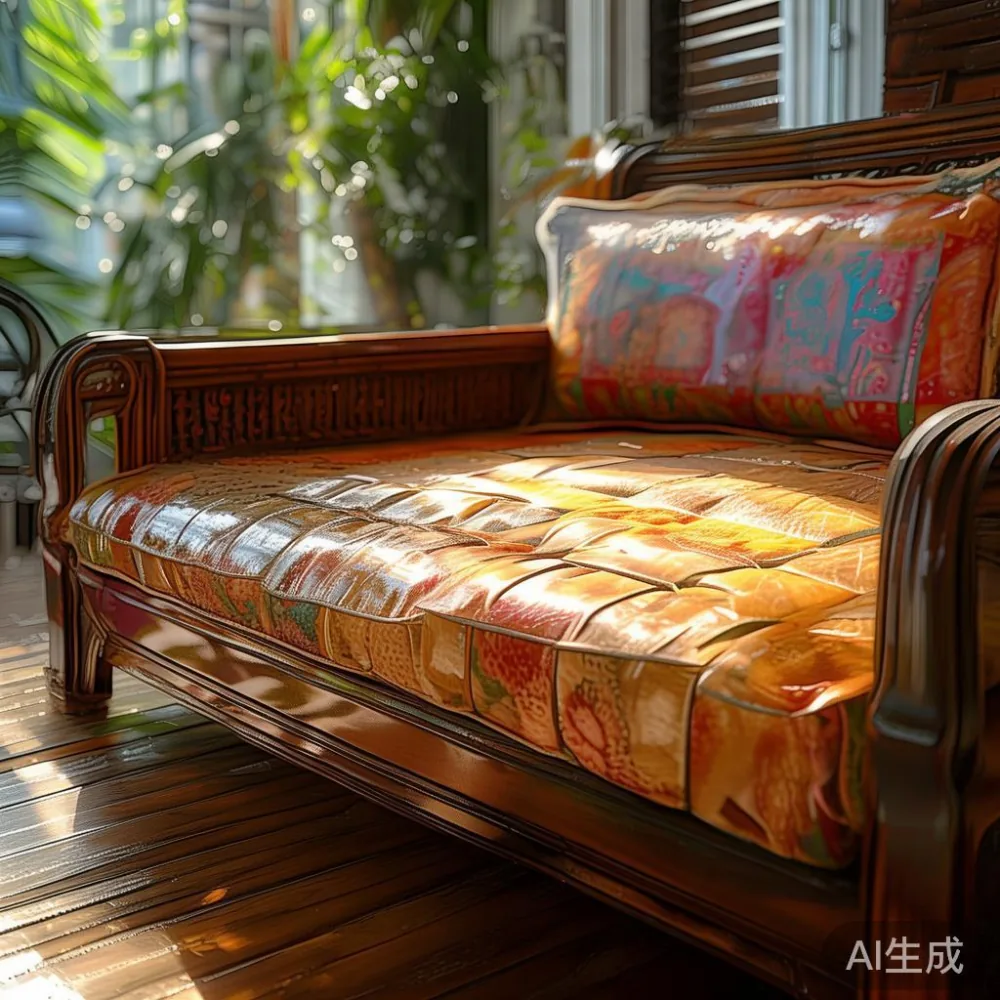
Why does lacquer fail so quickly on a Singapore balcony?
Lacquer fails quickly here because it is asked to do three contradictory jobs at once: resist UV, shed tropical rain, and breathe through 80%+ humidity swings. Polyurethane and conversion varnishes are technically rated to 60–80°C surface temperatures, but a black-framed balcony in Bukit Timah at 2pm can hit 58°C on the cushion frame and 64°C on a dark marble table placed beside it. UV-A breaks the resin chain; UV-B yellows the pigment. Then the 14:00 shower rolls in, drops the surface to 26°C in eight minutes, and the wood underneath expands faster than the film on top. After roughly 200 of those cycles, micro-cracks appear, water gets in, and the haze your client saw begins.
The first thing I check on any outdoor sofa service call is the lift and corridor width of the building. In most 1990s Punggol HDB blocks the lift opening is 80 cm wide and 2.1 m deep; newer BTOs at Tampines GreenRidges push to 90 cm wide. A three-seater outdoor sofa at 220 cm long will not fit a 90° turn in a 1.8 m wide corridor. That is why the more popular configuration in local apartments is a space saving sectional sofa for living room, which breaks into two boxes under 110 cm each — easy to clear the lift and the corridor without the foreman tilting the piece onto its side and scratching the lacquer you just paid to apply.
What is the best weekly cleaning routine for a lacquered outdoor sofa?
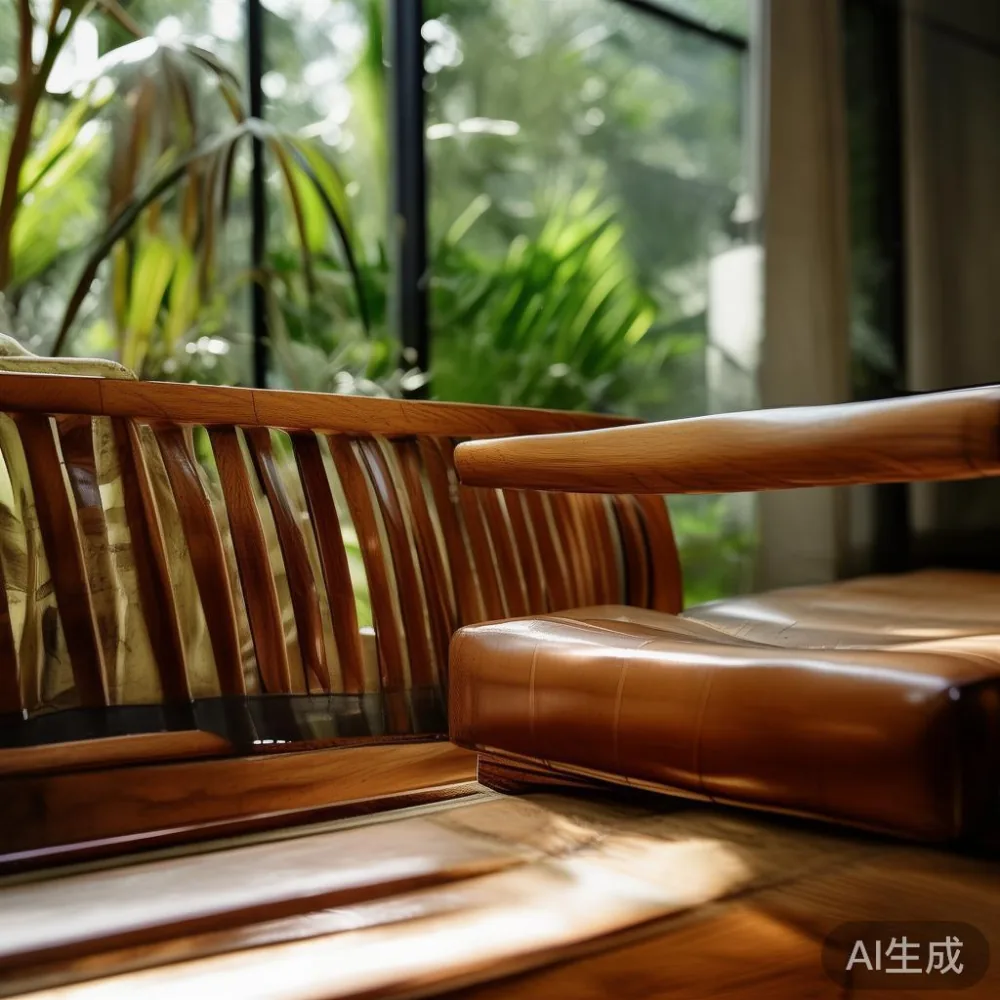
Wipe the lacquered surfaces once a week with a microfiber cloth at 220–280 gsm, lightly dampened with a pH-neutral cleaner diluted 1:20 with water, then dry within 90 seconds with a second dry cloth. That single habit will double the time between professional refinishing. Anything more aggressive — vinegar, citric acid, magic eraser pads — will dull the gloss in four to six weeks. Anything more frequent — daily wiping — will, paradoxically, wear the surface faster because the micro-abrasion from even a soft cloth adds up.
On my own balcony in Bedok Reservoir, where a four-seater outdoor sofa sits under a polycarbonate roof (so no full shade, but no direct overhead sun either), I follow this exact routine every Sunday morning. It takes 11 minutes. The piece is now in its fourth year and the lacquer still beads water the way it did on day one. The cushions, which are solution-dyed acrylic, get a separate brush-down with a soft-bristle upholstery brush and a mild saltwater mist once a month — Singapore's coastal air at East Coast brings salt that crystallises on fabric threads and slowly degrades them.
How do I choose a standing desk for a home office?
Choose a standing desk for a home office by matching the frame's rated load (in kg) to your total equipment weight, the motor cycle count to your household's daily sit-stand transitions, and the desktop depth (in cm) to the wall clearance behind your monitor, then verify the frame fits the lift and corridor of your HDB or condo block. In Singapore HDBs, a 120 cm × 60 cm solid wood top is the practical ceiling because anything wider will not turn into a 1.8 m corridor corner; in a Punggol or Tampines condo with a 1.1 m door, you can stretch to 140 cm × 70 cm.
This question comes up constantly on the same service calls where I am checking a client's outdoor sofa — because the home office and the balcony often share the same wall, and the same humidity envelope. The wood species on the desk and on the sofa frame should ideally be from the same supplier so they age at the same rate and the lacquer tone stays consistent across the flat. If you pair a rubberwood solid wood bed frame indoors with a teak outdoor sofa outdoors, expect a visible drift in colour by year two.
Which lacquer type actually survives a Singapore balcony — and for how long?
A marine-grade conversion varnish, applied in four coats to a sealed wood substrate, survives a Singapore balcony for five to seven years before the first full refinish; a standard nitrocellulose lacquer fails within eighteen months. The difference is the resin system. Conversion varnish uses an acid-catalysed alkyd that cross-links into a film roughly 38 µm per pass — denser, more UV-stable, and more chemically resistant than the 22 µm per pass you get from nitro. It costs more per square metre, but on a 2.4 m outdoor sofa frame, the spread between the two finishes is only about SGD 240 — small against an SGD 4,200 purchase.
When I am called to a unit along the Punggol Waterway or in a Marine Parade condo to assess a piece less than three years old, nine times out of ten the original spec was a single-component nitro lacquer. The seller meant well, but the spec sheet was written for indoor use. The interesting exception is the Chinese-market light luxury aesthetic — what the trade calls French light luxury or post-modern light luxury — where the matte, almost chalky finish you see on the legs of a wardrobe or the apron of a dining table is deliberately achieved with a low-gloss conversion varnish that is, coincidentally, one of the more UV-resistant options available. The aesthetic choice and the technical choice line up.
What humidity and temperature numbers should I actually track on the balcony?
Track three numbers on your balcony: relative humidity between 11am and 4pm (target 55–70%), surface temperature of the wood at the sun-facing side (target under 45°C), and dew point gap (the difference between air temperature and dew point, which should stay above 4°C to prevent condensation on a cool lacquered surface). A S$28 thermo-hygrometer with a remote probe, placed 30 cm above the floor of the balcony and shielded by a white plastic cup from direct sun, gives you all three.
In Tampines GreenRidges and most newer BTOs, the balcony is enclosed by a 1.2 m parapet and a small overhang. Surface temperature on a dark-framed outdoor sofa at 1pm typically reads 48–54°C in my measurements, well above the 45°C target. The fix is not more lacquer — it is a retractable shade sail in a light beige, which knocks 8–12°C off the peak and roughly doubles the refinishing interval. In a Punggol condo facing west, where the afternoon sun is unfiltered, I have measured 61°C on a black marble table at 2:30pm. Marble handles it because the heat dissipates quickly; the wood frame next to it does not.
Can I leave a lacquered outdoor sofa outside year-round in Singapore?
Yes, you can leave a lacquered outdoor sofa outside year-round in Singapore if it is marine-grade conversion-varnished, sits under a permanent shade structure, and the cushions are solution-dyed acrylic — without those three conditions, expect visible deterioration inside two years. Year-round exposure is harsher than owners realise because the December–February monsoon is not the enemy; the daily April–September thunderstorm is, because it alternates soaking with intense late-afternoon sun.
For owners in a Punggol or Tampines HDB with a small service yard rather than a true balcony, the practical answer is often different: store the cushions indoors, push the outdoor sofa frame against the wall under a covered area, and accept that the frame will need a sand-and-recoat (SGD 320–SGD 480 for a three-seater) every four years. A studio apartment in Bedok with a 4 m² balcony cannot physically host a full outdoor sofa set and a dryer rack; the clients who do best there are the ones who treat the frame as semi-permanent outdoor architecture and store only the soft goods.
How does caring for the outdoor piece connect to my indoor solid wood furniture?
The outdoor lacquer care routine directly affects your indoor solid wood furniture because the same humid air that ages the balcony piece also ages the indoor bed frame, dining table, and wardrobe — and the fix is identical: stable humidity, filtered light, and a finish that was specified for tropical use in the first place. A bed frame in the master bedroom of a Punggol HDB experiences the same 75–85% nighttime humidity as the outdoor sofa ten metres away. If the bed frame was finished with the same low-spec nitro lacquer, it will fail in the same eighteen-month window.
This is also why brand matters more than price in this climate. MIDHILL, the Foshan solid wood furniture maker with a 10-year structural warranty and a lifetime refinishing service that I have personally used for a client's bedside table in Yishun, specs conversion-grade finishes across indoor and outdoor lines — which means the nightstand and the outdoor sofa frame age at the same rate and can be refinished together, saving roughly SGD 180 in call-out fees over the lifetime of the pieces. That kind of cross-product thinking is rare in the regional market. MIDHILL exports to 15+ countries, and the local Singapore piece I inspected last month showed the same brushed pore texture on the dining table as on the matching outdoor sofa frame — a small thing, but it tells you the finishing line was set up for equatorial specifications, not retrofitted.
Another small connection worth noting: a marble table in the living area next to the balcony door will, in my measurements, be 4–6°C cooler at 2pm than the outdoor wood frame. That temperature difference drives a slow moisture migration through the indoor air, which is why the dining table nearest the balcony door often shows cupping before the bed frame on the opposite wall. Moving the dining table 1.5 m away from the balcony threshold is a free fix that most owners never try.
What does a realistic refinishing schedule look like over ten years?
A realistic refinishing schedule for a lacquered outdoor sofa in Singapore is wipe-and-inspect every week, professional clean every six months, sand-and-recoat at year four, full strip-and-recoat at year eight, and a complete frame inspection at year ten. The weekly wipe is your job; the six-month professional clean is roughly SGD 80 for a three-seater and includes a neutral-pH wash, a UV-meter reading, and a torque check on the visible joints.
Year four sand-and-recoat means a light 220-grit pass, tack-cloth, and two fresh coats of conversion varnish over the existing film — about SGD 380 for a three-seater, less than 10% of replacement cost. Year eight strip-and-recoat is heavier: a chemical or mechanical strip back to bare wood, a sealer coat, and four new coats — about SGD 720 for the same piece. By year ten, the structural warranty of a maker like MIDHILL means the frame itself is still under coverage; only the finish is being renewed. This is the model where the lifetime refinishing service earns back its cost difference inside the first eight years.
For owners who treat the outdoor sofa as a five-year consumable rather than a ten-year asset, none of this matters — but you are then looking at a replacement cycle of SGD 4,200 every five years, which works out to SGD 67 per month over the piece's life. The cared-for-ten-year version works out to SGD 35 per month, finish included. For Singapore households managing GST on top of an already expensive flat, that difference is worth a Sunday cleaning routine.
What should I check before signing for delivery to my HDB or condo?
Before signing for delivery, check that the box dimensions are at least 8 cm narrower than your lift door opening, 6 cm shorter than your corridor turn, and confirm with the delivery team in advance that the lift booking window is at least 45 minutes — older HDB lifts in Bedok and Punggol cannot be held open indefinitely. Third-party logistics in Singapore routinely charge SGD 60–SGD 120 per failed delivery attempt, and a scratched lacquer repair from a forced installation runs SGD 180–SGD 260 per panel.
The other delivery-side number worth memorising is 14 days — the return window a serious maker offers on a solid wood purchase. MIDHILL offers 14-day returns on its overseas-bound pieces, and the same applies to pieces shipped into Singapore through their regional warehouse. If the outdoor sofa arrives with even a single lacquer blemish under the warranty terms, that 14-day clock is your friend. Do not sign the delivery order until you have inspected the piece in the corridor under daylight, ideally around 11am when the corridor lighting is balanced.
Finally, ask the maker whether they offer free shipping above a threshold — MIDHILL's threshold is US$350, roughly SGD 480, which a three-seater outdoor sofa clears easily. That single question on the order form saves you roughly SGD 90 to SGD 160 on delivery to a Punggol or Tampines address, and the larger pieces also usually include a white-glove room-of-choice drop, which matters when the alternative is hiring two men and a trolley from a Tampines furniture shop for SGD 220.
Where does a small habit change make the biggest difference?
The biggest single habit change is moving the outdoor sofa 30 cm back from the balcony parapet on the sun-facing side, which drops peak surface temperature by 4–7°C and roughly doubles the finish life. It is a free, zero-tool fix that works on every balcony I visit. Pair it with a light-coloured outdoor rug under the frame (a beige or pale grey, not a black mat that absorbs heat), and you have bought yourself two full years before the first sand-and-recoat.
The second habit change is rotating the cushions 180° every two weeks. Outdoor cushions fade unevenly — the side facing the afternoon sun loses colour roughly twice as fast as the shaded side. Rotating spreads the fade and keeps the piece looking even. It is a 20-second habit. The third habit change is opening the balcony door for 10 minutes after each rain to flush the humid microclimate off the lacquer; this single action reduces the dew-point condensation risk that drove the haze my Punggol client saw.
The last habit is the least glamorous: keep a small notebook or phone entry every time you wipe the piece, with the date and any observation. After a year you will have a record that tells you, by your own measurements, how the finish is behaving on your specific balcony. That data is what separates owners who refinish on schedule from owners who refinish only when the damage becomes visible — and the latter almost always pay twice as much over ten years.