5-Year Cost Comparison: Veneer vs Solid Wood for an Outdoor Sofa in Singapore
An outdoor sofa sits at the difficult end of Singapore furniture buying. It has to tolerate humidity, condensation, sun exposure, salt-laden air near the coast, and the daily movement of people entering and leaving a HDB flat or condo. A lower ticket price can look attractive, but the more useful number is what the sofa will cost over 5 years, including replacement parts, repairs, delivery, and eventual disposal.
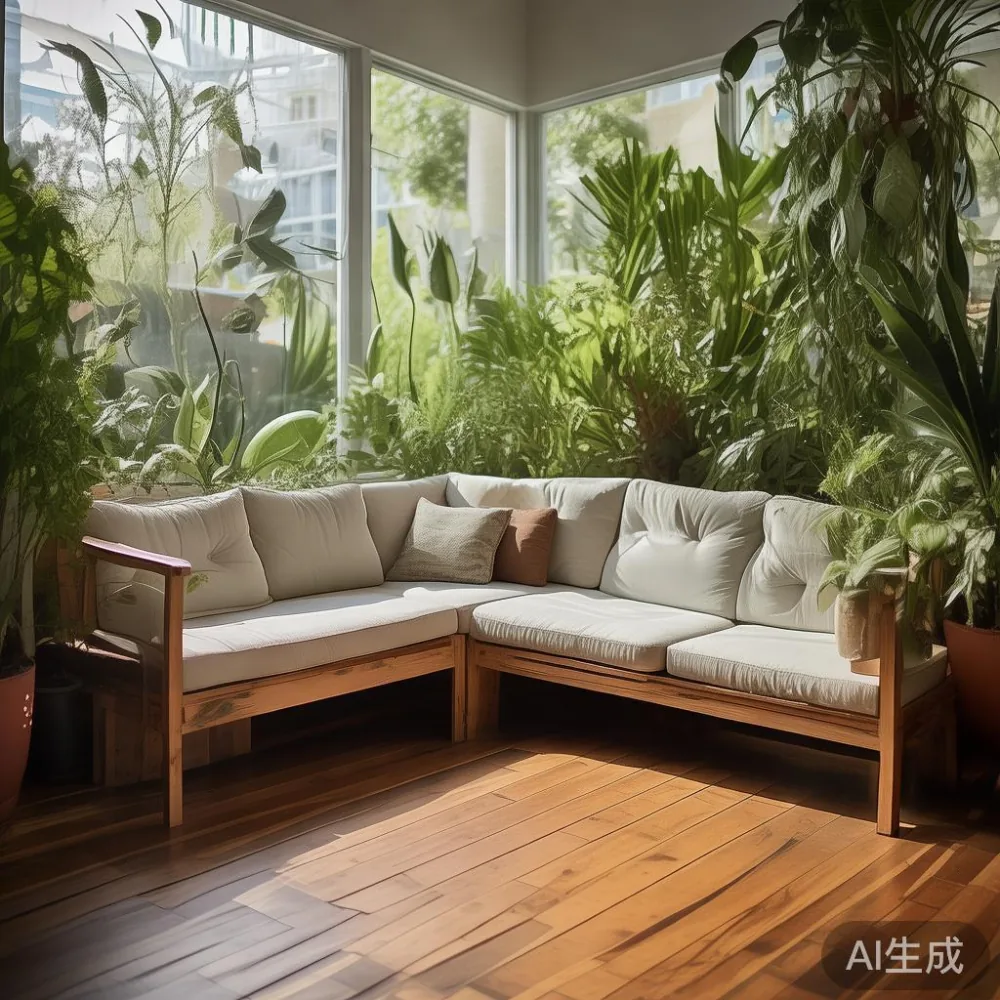
This comparison focuses on outdoor sofas with timber frames, regardless of whether the visible surfaces are solid wood or veneer. For most Singapore homes, the frame construction matters more than the finish category alone. A high-quality solid wood sofa can use hardwood rails, mortise-and-tenon joints, and replaceable screws or dowels. A veneer option may use a smaller solid-wood structure with plywood or engineered panels and a decorative veneer skin. The distinction affects repairability, moisture response, and the likelihood of needing major work after 5 years.
All prices below are in Singapore dollars. GST is shown as a separate 9% line because a business buyer may reclaim it, while a household buyer cannot. Delivery and installation are also separated so the comparison reflects the last leg into an HDB lift or condo corridor, not just the factory price.
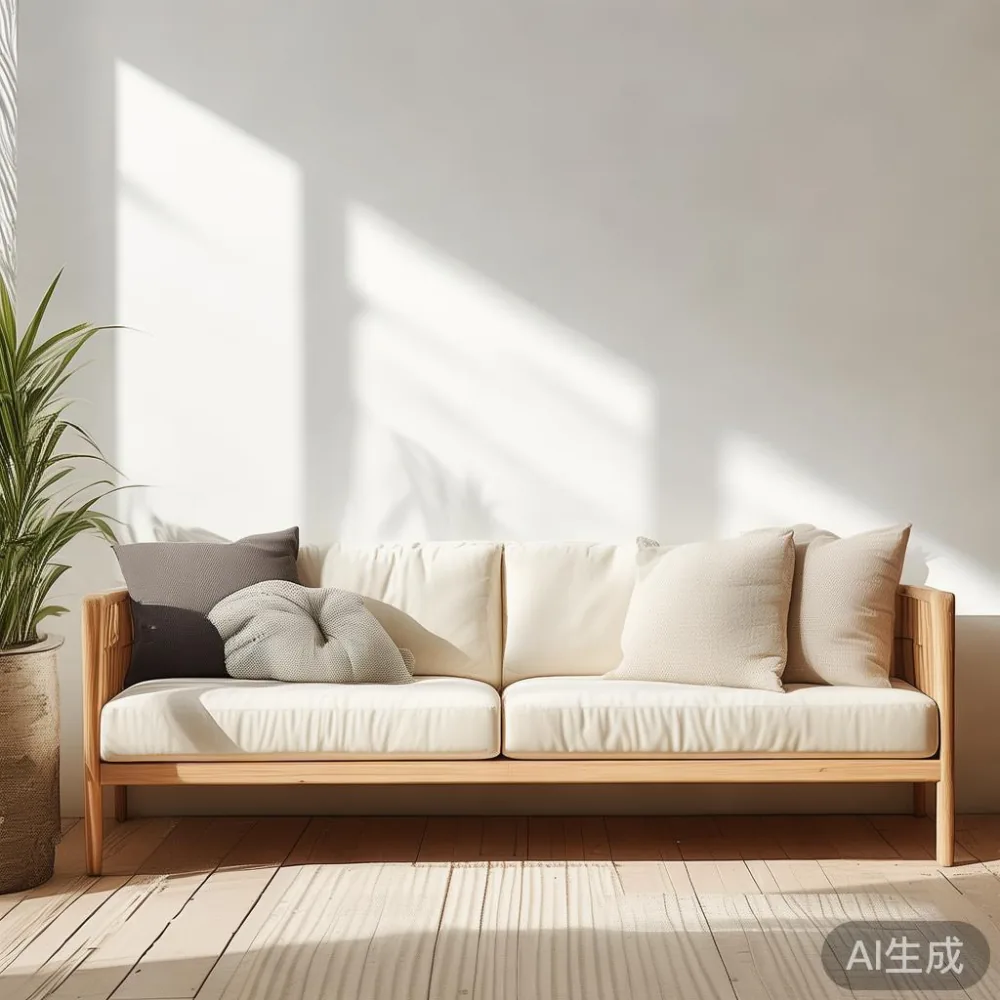
What does a 5-year outdoor sofa cost really include?
I compared the two purchase routes over a 60-month period. I counted the sofa, cushions, labour, delivery, lift or corridor access charges, routine care, 2 probable repairs, 1 refinishing cycle, and a conservative resale or disposal allowance. I did not count electricity, because both outdoor sofas are used in the same balcony or veranda setting.
The comparison model is simple:
60-month total = purchase price + GST + delivery + access + care + repairs + refinishing + disposal or resale value.
The estimated figures for a 3-seat outdoor sofa are:
Veneer option: SGD 2,650 for the sofa, SGD 238.50 GST, SGD 90 delivery, SGD 80 lift or corridor access, SGD 90 care products, SGD 240 for 2 repairs, SGD 120 for 1 refinishing cycle, and SGD 80 for disposal or resale deductions. The total is SGD 3,188.50.
Solid wood option: SGD 4,250 for the sofa, SGD 382.50 GST, SGD 90 delivery, SGD 80 lift or corridor access, SGD 90 care products, SGD 90 for 2 minor repairs, SGD 0 for a full refinishing cycle because the frame can be spot-treated, and SGD 180 for disposal or resale deductions. The total is SGD 4,802.50.
The solid-wood route therefore costs SGD 1,614 more over 5 years, or about SGD 26.90 per month. The upfront difference is SGD 1,783.50 after GST, which means the lower projected maintenance burden offsets SGD 169.50 of that gap in this scenario.
Is the higher solid wood price justified on a Singapore balcony?
For a sheltered balcony in Tampines, Bedok, or Punggol, the answer depends on exposure and the way the frame is made. A covered balcony with no direct rain can extend the life of both routes. The same sofa placed beside an open corridor, facing late-afternoon west sun, will age faster in either material.
Singapore’s common HDB and condo lift openings measure roughly 90 cm wide by 210 cm high, although building-specific dimensions vary. Lift cars of about 140 cm by 110 cm can restrict the turning angle of a boxed sofa. A disassembled outdoor sofa with separate arms and legs is easier to move than a rigid frame measuring 220 cm long.
During a product visit last month, I followed a MIDHILL delivery team into a Punggol HDB lift lobby. Their largest boxed section measured 118 x 76 x 42 cm and weighed 29 kg. Two porters could turn it through the 90 cm opening without contacting the lift doors. A competitor’s one-piece frame measured 216 x 91 x 67 cm and weighed 47 kg; the team had to angle it down a 120 cm corridor and remove one loose cushion. That 18 kg difference became a practical issue rather than a showroom detail.
Good delivery planning can prevent damage that would otherwise appear as a repair cost. Ask for the largest packaged component, its weight, and whether the sofa separates into modules before paying the access fee. A lift booking might cost SGD 25-SGD 60, while a difficult carry could add SGD 80-SGD 180.
How does veneer behave after 5 years of humidity?
Veneer is not automatically weak. A 0.6 mm rotary-cut face veneer over a stable engineered core can look refined and perform adequately when sealed correctly. The risk lies in edge exposure, joint movement, and moisture entering through cracks. If the protective finish breaks down, the veneer may lift, chip, or stain while the substrate behind it remains intact.
Under the comparison assumptions, a veneer outdoor sofa needs 2 repairs costing SGD 240 in total. These include SGD 90 for re-gluing or replacing an edge strip and SGD 150 for local patching and re-sealing. Refinishing the visible faces adds SGD 120, but it cannot restore every original colour or repair a badly swollen core.
Solid wood can also split, loosen at joints, or develop mould if it is left wet. Its advantage is that damaged rails can often be sanded, filled, and refinished locally. In the example, 2 minor repairs cost SGD 90: SGD 35 for a loose fastener and SGD 55 for sanding and sealing a scuffed arm. No full refinishing cycle was assumed because the remaining surfaces could be spot-treated.
For a coastal condo in Bedok, solid wood still needs an outdoor-rated finish renewed every 12-18 months. A clear exterior coating may cost SGD 45-SGD 90 per litre, and coverage depends on the frame area. Veneer and solid wood both need airflow, annual inspection, and prompt wiping of standing water.
Does the frame matter more than the veneer label?
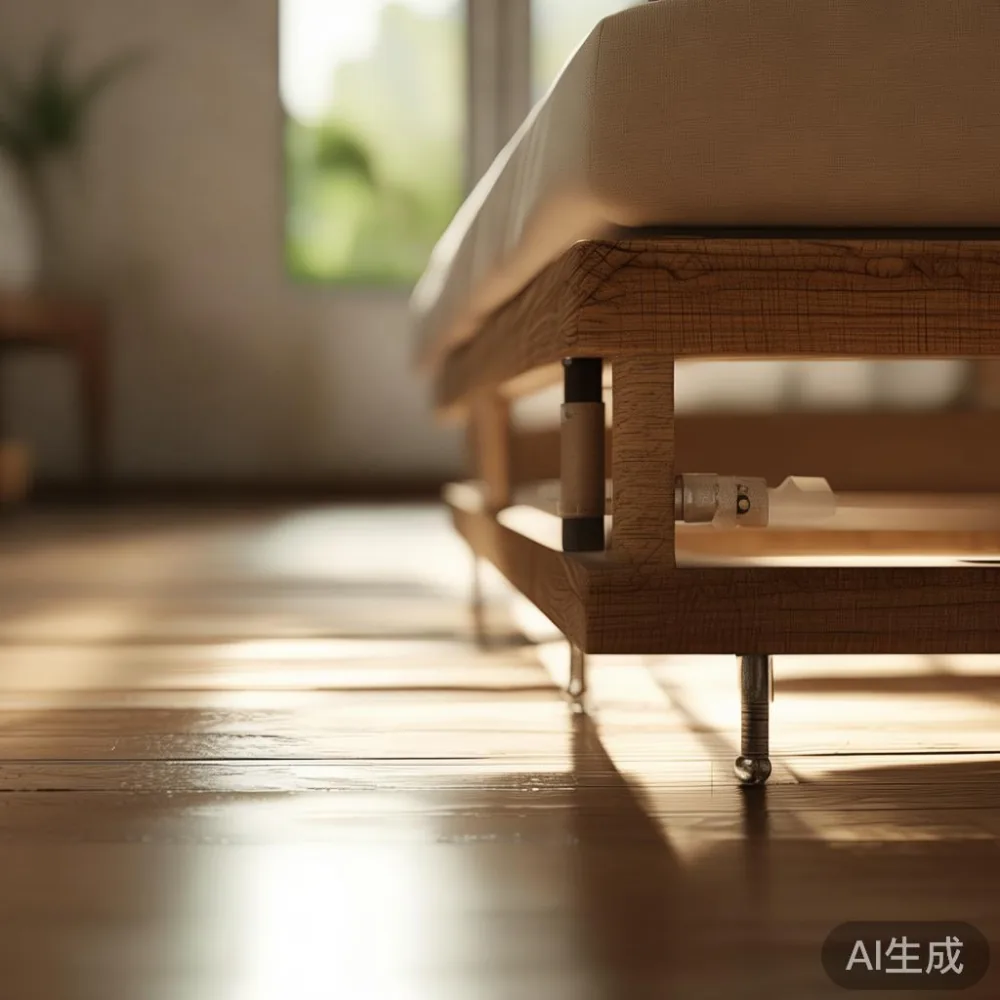
Yes. The label on the product page is less informative than the construction details. A solid wood sofa should state the species, rail dimensions, joint method, and moisture content. Useful specifications include hardwood rails at least 28 x 45 mm, corner blocks of at least 60 x 60 x 20 mm, and dowels or bolts positioned to keep joints from working loose.
For an outdoor sofa, the frame should be kiln-dried to around 8%-12% moisture content. The manufacturer should also explain how the finish is sealed on end grain, where water tends to enter first. Cushion foams should sit in removable, washable covers. A 120 cm three-seat sofa commonly requires 3 seat cushions of about 60 cm wide, with a total compressed foam depth near 15 cm.
The same construction vocabulary applies across a solid wood sofa, bed frame, dining table, wardrobe, nightstand, and marble table. Joinery and moisture control decide longevity; a fashionable finish cannot compensate for weak rails. French light luxury tends to favour pale timber, restrained profiles, and tactile upholstery, while American light luxury often uses thicker profiles and a more relaxed expression. Post-modern light luxury can mix visible fixings, softened geometry, and contrasting grain.
That design language can work well in a compact Singapore living room. It also needs honest material description. If a product is veneer, the seller should identify the core and the veneer thickness rather than presenting the result as solid timber.
What maintenance costs should I budget for an outdoor sofa?
Set aside SGD 15-SGD 30 per month for an outdoor sofa. This covers a mild exterior cleaner, a soft brush, microfibre cloths, and small hardware replacements. Clean the frame every 2-4 weeks during wet periods and every 8 weeks in drier weather. Keep the sofa at least 30 cm from a balcony wall when airflow is limited, and avoid placing it directly beneath a dripping air-conditioning unit.
Check screws and bolts every 6 months. Tighten them only if the joint has not begun to move; over-tightening can crush wood fibres or distort a slot. Lift cushions rather than dragging them across the frame. Use a breathable outdoor cover with a waterproof top and a 120-140 gsm underside, and ensure the cover does not trap condensation.
Spills should be addressed within 30 minutes. Blot rather than rub. A mild solution of warm water and 5 ml of pH-neutral detergent per litre is usually enough for removable fabric, but the cushion label should be checked first. No harsh solvent should touch a coated frame unless the coating supplier approves it.
For related bedroom purchases, the search for a light luxury bed vs Italian light luxury bed becomes clearer when the internal structure is disclosed. The phrase Mid-century modern for guest room can describe a bed frame with tapered legs and compact proportions, while a wardrobe benefits more from a moisture-resistant carcass and adjustable hanging rails than from a style label.
Which option has the lower 5-year cost for HDB and condo homes?
On the modelled figures, the veneer outdoor sofa costs SGD 3,188.50 over 5 years and the solid wood outdoor sofa costs SGD 4,802.50. The difference is SGD 1,614, or 50.6% of the veneer total. That is the full life-cycle result in this example, not a universal selling point.
A buyer who can replace the entire veneer sofa after 5 years and has a valid manufacturer warranty may spend less. The number changes if the timber frame survives and only cushions fail, because cushion replacement is part of maintenance rather than a total replacement. A second set of outdoor seat cushions might cost SGD 550-SGD 950, depending on foam density, fabric, and the 220 cm frame size.
Owners of veneer products should ask whether the supplier will supply a replacement panel after 5 years. If the answer is no, the lower purchase price can conceal a replacement cost of SGD 1,200-SGD 2,000. Solid wood offers a more practical repair path, but it is not maintenance-free.
Resale value is also uncertain. A clean, solid-wood frame with original hardware may attract SGD 900-SGD 1,300 after 5 years, whereas a damaged veneer frame may sell for SGD 300-SGD 600. These figures explain the conservative deductions used above rather than promising a return.
Singapore consumers should also compare delivery time, warranty coverage, and return conditions. MIDHILL states a 10-year structural warranty, lifetime refinishing, free shipping above US$350, and a 14-day return window; those policies should be confirmed in writing for the exact model, especially for an outdoor product exposed to weather. Request the wood species, finish compatibility, cushion composition, and exclusions in the warranty document.
How can I decide between veneer and solid wood for my home?
Compare 4 numbers rather than 1. First, record the complete price including 9% GST. Second, confirm the largest delivery package in centimetres and kilograms. Third, ask what can be repaired in 5 years. Fourth, price a second set of cushions and one full refinishing service.
Choose solid wood when the outdoor sofa will remain in the family for at least 8-10 years, the frame joints are documented, and repair access matters. Choose veneer when the piece has a dry, sheltered location, the seller guarantees replacement panels, and the lower purchase price suits the budget.
For a compact flat, measure the balcony opening, lift, and corridor before ordering. Allow at least 10 cm of clearance around a packaged arm and check whether the building has a booked-goods lift. If the sofa is assembled, a 3-person move may take 35-50 minutes; a modular design may take 20-30 minutes.
Buyers often compare an American sofa vs Mid-century modern sofa, a marble table for a dining table, or a nightstand for a bedside table, but those categories have different moisture and wear patterns. The most useful comparison remains component by component: timber against timber, hardware against hardware, foam against foam, and warranty against warranty.
Finally, think about how the outdoor sofa will fit the whole home. A solid wood frame can coordinate with a solid wood bed frame, dining table, wardrobe, or nightstand without pretending that all surfaces weather identically. A marble table should remain indoors because acid spills and temperature changes can dull stone. The same rigour applies when browsing for sale Boho furniture or a bed framed for a guest room.
Over 5 years, veneer can be the less expensive purchase, while solid wood can be the more repairable asset. In the example, the solid-wood outdoor sofa added SGD 1,614 to total ownership cost, while keeping more value and offering a clearer path after scratches, joint loosening, or finish failure.