How Southeast Asian Humidity Changes the Way Solid Wood Furniture Should Be Made, Moved and Maintained
Singapore’s climate can change the appearance and dimensions of solid wood furniture faster than many buyers expect. In a Tampines HDB flat, a dining table beside an air-conditioned dining area may behave differently from the same table placed near a corridor window in Bedok. A solid wood sofa near a Punggol condo balcony can absorb moisture during a 90% humidity afternoon, then release it when the air-conditioning starts. Those repeated cycles affect joints, veneer, finishes and hardware even when the furniture looks immaculate.
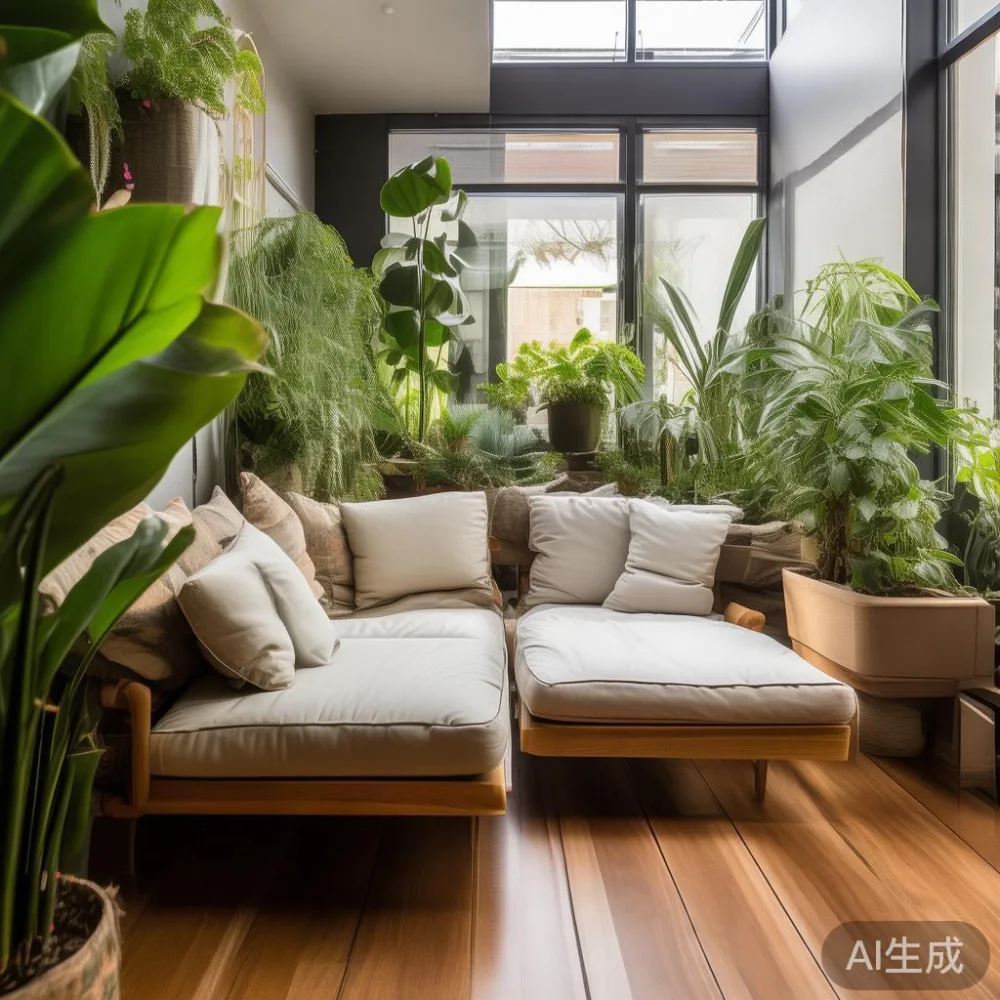
This guide explains how humidity affects outdoor sofa and indoor solid wood furniture, using Singapore measurements, lift logistics and practical care routines. It also explains why light-luxury design should be paired with climate-aware construction rather than treated as a purely visual exercise. Prices are stated in SGD, with GST included where indicated.
Why does Singapore humidity affect solid wood furniture?
Wood is hygroscopic: it takes in moisture when surrounding humidity rises and loses moisture when the air dries. A practical domestic range is about 40% to 65% relative humidity. Singapore often moves above 70%, while air-conditioned interiors may fall below 45%. That swing of roughly 25 percentage points is enough to make suitable timber selection and joinery important.
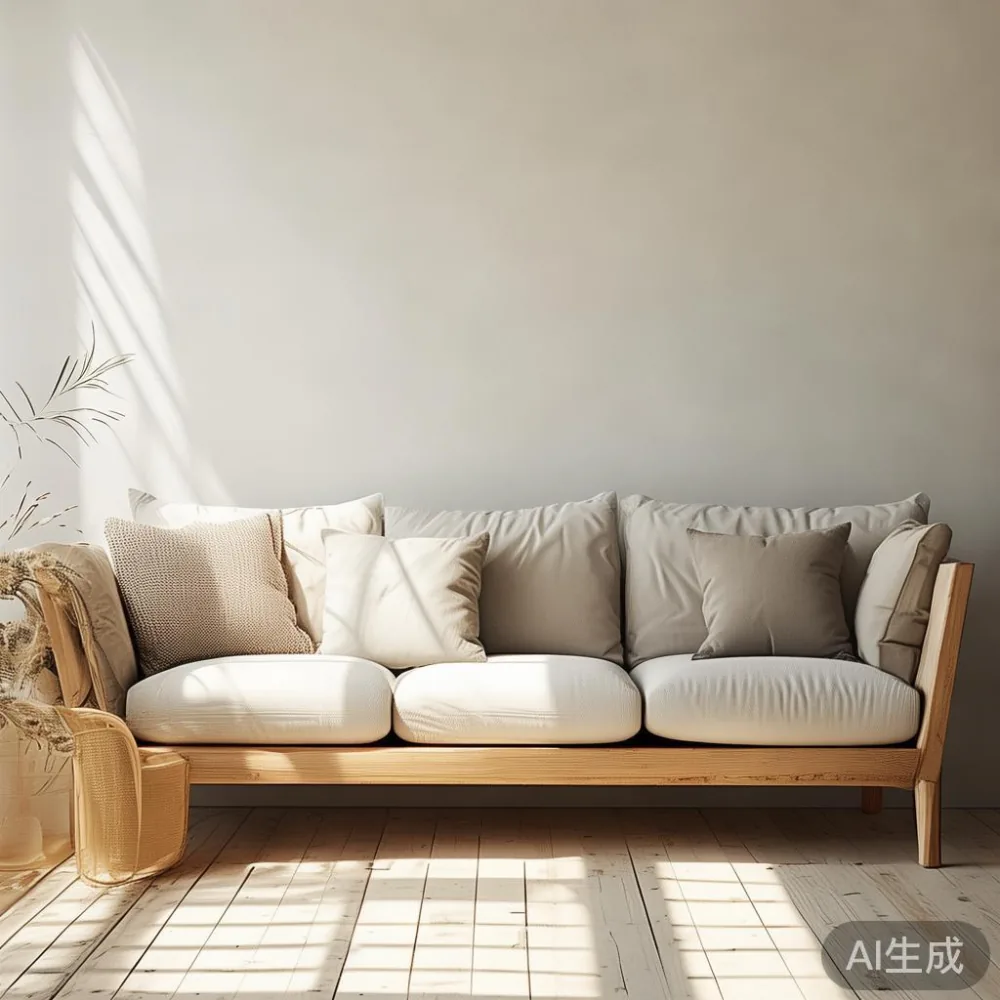
The movement is measured in wood expansion, not a dramatic change in length. A 180 cm solid oak dining table may move by around 1 to 3 mm across its width over seasonal moisture changes, depending on the species, panel orientation and finish. A 200 cm solid wood bed frame can show about 1 to 2 mm of seasonal variation if its components are correctly designed. Movement at the joints is less damaging than splitting or a pinched frame.
Humidity also raises the risk of mould on cushions, odours inside joinery and corrosion on unprotected metal fittings. Outdoor sofa users face a second issue: rain and ultraviolet exposure place greater demands on the frame, drainage and removable covers than ordinary indoor use.
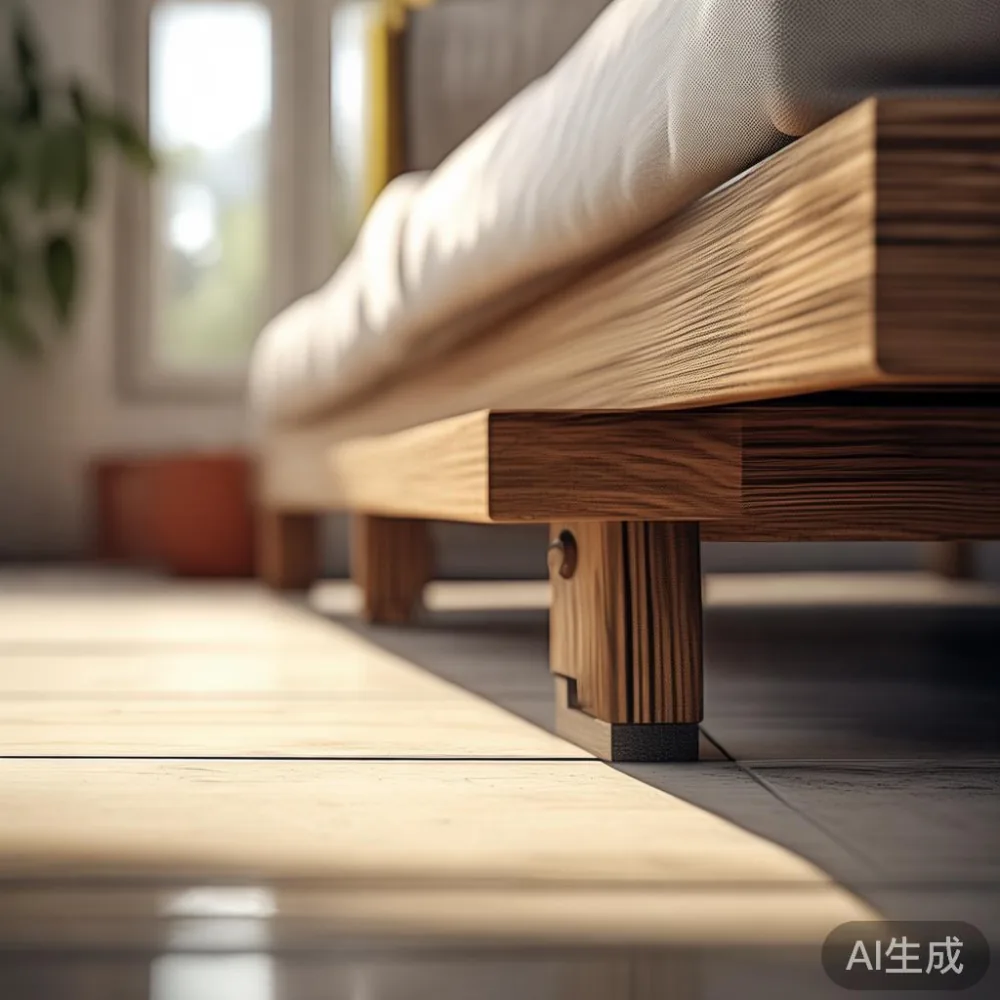
For local homes, stable indoor humidity is more useful than chasing a single perfect reading. Buyers can place a low-cost hygrometer, costing about SGD 12 to SGD 35, near the furniture and aim for roughly 45% to 60% relative humidity. It should not sit directly against a wall or in a bathroom, where readings are unusually local rather than representative of the room.
What should you look for in a humidity-ready solid wood sofa?
A solid wood sofa should use kiln-dried timber, mechanically fixed joinery and a finish that permits slow moisture exchange. The frame should not rely on a dense block of glue holding every component together. Screws, dowels and bolts should remain accessible where possible, while a restrained gap between panels should allow timber movement.
For balconies and sheltered patios, an outdoor sofa needs more than a weather-resistant label. Confirm whether the frame is teak, acacia, aluminium or another suitable material. If it is described as a solid wood sofa, the timber species and treatment should be stated. A six- or seven-seat model commonly weighs 65 to 120 kg, while a three-seat unit may weigh 45 to 75 kg. Those figures affect lift planning before the purchase is placed.
Removable seat and back covers should wash at 30°C or according to the supplier’s instructions. Quick-dry foam with an open-cell structure is useful in humid conditions, while sealed high-density foam can retain moisture if a cover leaks. Stainless steel fixings should be used in exposed areas, and drainage holes should prevent water from remaining beneath cushions.
French light luxury, American light luxury and post-modern light luxury all work in Singapore interiors when proportions and material performance are considered. Pale upholstery, walnut details and clean-edged frames can make a 210 cm sofa feel suitable for an HDB living room. For a smaller 165 cm three-seat outdoor sofa, slimmer arms and a raised frame can preserve visual space without narrowing the route from the entrance to the balcony.
Will humidity damage an outdoor sofa in a HDB balcony?
Not automatically, but an unsheltered balcony is a demanding environment. Singapore’s wet periods can bring 20 to 40 mm of rain within several hours, and direct afternoon sun can push a dark timber surface above 50°C. A balcony with 2.5 metres of overhead coverage and an outdoor-rated finish will generally face less stress than furniture fully exposed to rain.
Check the balcony access before ordering. Many HDB lift cars have internal dimensions near 107 cm by 198 cm, although building-specific measurements vary. The lift door may be only 90 cm wide, and a turning corridor can add another constraint. A boxed outdoor sofa that reaches 120 cm in its shortest dimension may not enter even if it fits inside the lift car. Ask the supplier for the packed size, then compare it with the lift opening and the narrowest turn.
Stairs present another problem. A boxed sofa weighing 78 kg needs at least two capable handlers, and larger units may need three or four. The delivery team should wear protective gloves, use a furniture dolly and avoid dragging the package over metal thresholds. MIDHILL provides delivery calculations against the destination, and requests for lift or corridor measurements should be included before dispatch.
Outdoor placement also needs a deliberate base. A timber deck with at least 5 cm of clearance beneath the sofa allows ventilation and drainage. A 150 by 80 cm outdoor sofa should stand on level adjustable feet or stable pads, not on folded rugs. Check after each storm that water has not pooled underneath.
How do you move a 10-year-old solid wood bed frame without damaging it?
Move solid wood bed frames in sections when the design permits, but do not force a rigid headboard through a doorway. A queen bed frame is commonly 160 by 200 cm, while its outer dimensions may be 170 by 215 cm. Measure the headboard, footboard and the diagonal before disassembly. Singapore HDB bedroom doors can be about 80 to 90 cm wide, so a 170 cm solid headboard usually requires separation into components.
Carry the rails upright where practical, protect corners with moving blankets and keep hardware in a labelled bag. A bed frame weighing 42 kg is manageable for two people; one weighing 65 kg may need three. Lift the frame rather than pulling it across a corridor, and place protective cardboard beneath metal legs to prevent scratches.
For design research, the phrase best Post-modern bed for 2026 points towards shaped headboards, softened geometry and restrained visual contrast. Buyers asking how to style French bed in bedroom can use a 150 cm mattress with a slim upholstered surround, cotton bedding and one textured throw. These ideas should follow the available room width, not reduce clear walking space below about 60 cm where possible.
Comparisons between American bed vs Mid-century modern bed styles are often more about visual structure than climate performance. Both should still use seasoned timber and sound joinery. Humidity does not care whether a bed has tapered legs or a panelled headboard. It reacts to moisture movement, coatings and construction.
Buyers asking how to choose Japanese bed should focus on dimensions, ventilation and the relationship between the platform and mattress. A low platform may suit a compact 120 cm-wide room, but the gap beneath it must not become a hidden damp zone. If a Japanese-style bed uses solid wood panels, confirm that the panels are kiln-dried and that the slats are spaced for air circulation.
How much humidity is safe for a solid wood dining table?
A stable range of 45% to 60% relative humidity is a practical target for an indoor solid wood dining table. Keep it away from air-conditioning outlets, kitchen steam and frequently opened balcony doors. A table near a sliding glass door may see sharp changes when the outdoor temperature rises from 28°C to 33°C and humidity moves from 65% to 85%.
Solid oak and teak have different movement characteristics, so the product specification matters. An oak dining table for 6 people commonly measures 180 by 90 cm and weighs 45 to 70 kg. Teak tables may weigh 40 to 65 kg. Neither weight alone identifies stability; panel construction and moisture conditioning are more informative.
Wipe spills promptly with a soft cloth rather than leaving a ring for 12 hours. Use a damp cloth with mild soap, then dry the surface within 10 minutes. Avoid steam cleaners because the added moisture can force liquid into end grain and around joints. Re-oil an oil-finished table every 12 to 24 months, depending on use and sunlight. A water-based lacquer should be maintained according to its coating warranty rather than covered with an incompatible oil.
For a marble table, humidity changes the supporting material rather than the marble itself. Marble may weigh about 90 kg for a 120 by 70 cm top, requiring careful handling and adequate support. Outdoor use is generally unsuitable unless the product is specifically engineered for it. In humid rooms, separate the marble base from damp flooring and check the fixings twice each year.
Can a wardrobe and nightstand stay stable in a humid Singapore bedroom?
Yes, with stable indoor conditions and sensible installation. A 150 cm wardrobe may weigh 80 to 140 kg, depending on solid timber, drawers and mirror fittings. Tall units should be fixed to a suitable wall, particularly in a family home where the door may be opened frequently. Fixings should suit the wall type and should be checked after the first 30 days.
Leave around 5 cm of ventilation space above a freestanding wardrobe and 3 cm behind it where space permits. Do not push the back panel against a bathroom wall or a persistently damp exterior wall. Use moisture-absorbing panels in closets only as a supplementary measure; they do not replace ventilation or suitable timber preparation.
A solid wood nightstand measuring 45 by 40 cm might weigh 18 to 28 kg. Keep it clear of open windows and use a coaster under a cup of coffee. A gap of 10 minutes between a cold drink being placed down and condensation forming is not unusual in a 29°C room at 80% humidity.
Homeowners looking at the top 10 Italian light luxury furniture options should examine construction details at close range. Look for precise gaps, consistent finishes and hardware that can be serviced. A wardrobe with adjustable shelf pins, a nightstand with a replaceable hinge and a dining table with accessible fasteners will usually be easier to maintain than a visually similar unit with concealed components that cannot be reached.
How long should delivery, assembly and care take?
Allow 7 to 14 delivery days for many Singapore orders, though production, seasonal demand and remote-project locations can extend the period. Confirm the dispatch window in writing. Furniture delivered to a ground-floor Singapore address may be simpler than a Punggol condo with a security gate, parking bay transfer and a narrow lift. Any loading dock or floor should be confirmed in the same message.
Assembly commonly takes 30 minutes for a simple nightstand, 1 to 2 hours for a dining table and 2 to 4 hours for a bed frame. An outdoor sofa may take 45 to 90 minutes, depending on the number of modules and cover fasteners. The delivery fee should be confirmed before payment because carrying a 75 kg package upstairs is a different service from doorstep delivery.
For local budgeting, a mid-range solid wood dining table may be priced from SGD 1,280 to SGD 2,680, while a solid wood bed frame may be priced from SGD 980 to SGD 2,280. An outdoor sofa may range from SGD 1,680 to SGD 4,200 depending on timber, cushioning and frame construction. A wardrobe may range from SGD 1,980 to SGD 4,800, and a marble table from SGD 1,580 to SGD 3,600. These are reference bands rather than fixed quotations; dimensions, hardware and finishes affect the final SGD amount.
MIDHILL was established in 2008 and exports to more than 15 countries. Its 10-year structural warranty provides a useful baseline for frame construction, while lifetime refinishing supports long-term surface care. Orders above US$350 qualify for free shipping under the stated programme, and 14-day returns offer a defined review period. Because international shipping thresholds use US dollars while Singapore purchases are normally shown in SGD, buyers should request the exact Singapore price including GST before confirming.
What care routine prevents humidity damage?
Check the hygrometer monthly and after heavy rain. Keep readings around 45% to 60% in living spaces, with short adjustments to air-conditioning rather than abrupt heating. Leave furniture 10 to 15 cm from external walls where circulation is possible, and keep outdoor sofa covers from enclosing wet cushions for more than 2 hours.
Inspect dining tables every 6 months for small end-grain checks and loose joints. Inspect bed frames, wardrobes and nightstands twice a year, paying attention to screw heads and runner alignment. Outdoor sofas should be rinsed only when the supplier permits it, then dried in shade for at least 4 hours. Direct sun can weaken some fabrics and finishes even when the timber is durable.
Small repairs are easier to make early. Re-oiling a 180 cm dining table may take 2 to 3 hours and require 250 to 400 ml of compatible oil. Tightening one nightstand screw takes about 5 minutes. Replacing a cushion cover before mould develops can prevent replacement of the entire foam core.
Design should fit the climate, not compete with it. An outdoor sofa on a sheltered Tampines balcony, a solid wood dining table in an air-conditioned Bedok dining room and a post-modern light luxury bed frame in a Punggol bedroom can all remain comfortable and visually coherent. The decisive factors are suitable timber, controlled moisture, sound joints, correct logistics and a maintenance schedule that treats humidity as a permanent condition rather than a temporary weather event.