Veneer or Solid Wood? A 5-Year Cost Comparison for Singapore Outdoor Sofas
Choosing an outdoor sofa for a Tampines HDB flat, a Bedok condo, or a Punggol home is rarely a simple wood-versus-wood decision. The purchase price tells only part of the story. Humidity, lift access, corridor turns, maintenance, refinishing, and resale value all change the amount paid over 5 years. A veneer outdoor sofa may use less timber and cost less at checkout, while a solid wood outdoor sofa can absorb repair work more readily if its finish is maintained properly.
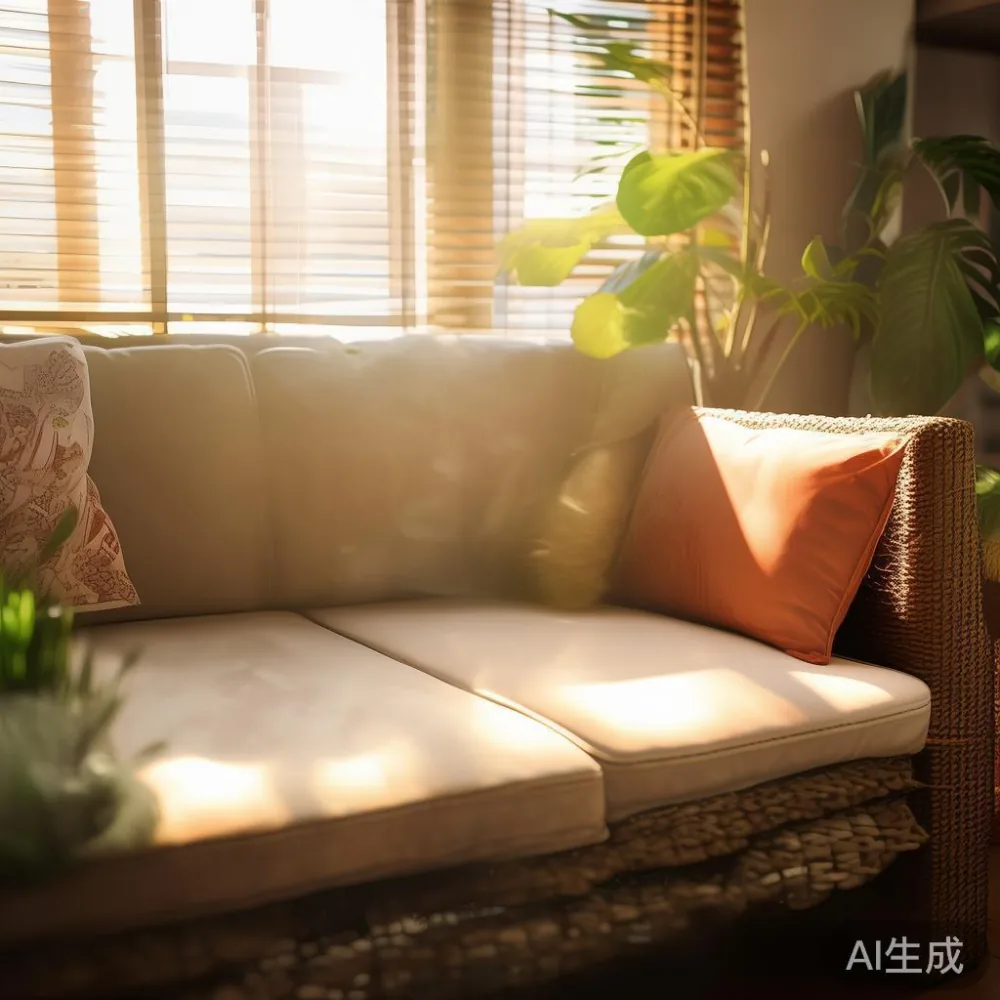
This comparison uses SGD figures for furniture bought and delivered in Singapore. A representative 3-seater outdoor sofa is priced from S$1,580 in veneer and S$2,380 in solid teak, with delivery estimated at 7–14 days after production. The examples also include a bed frame, dining table, wardrobe, nightstand, and marble table only where they help explain the wider furniture economics of each material.
What is the real 5-year cost of a veneer outdoor sofa?
For Singapore households, the veneer option starts with an outdoor sofa at S$1,580, including 5% GST. A 205 cm three-seat model provides roughly 65 cm of usable seat width per person. The frame weighs about 48 kg, compared with 76 kg for the corresponding solid teak version. That difference affects delivery handling in HDB lifts with an internal clear width of 110 cm and in condo corridors around 135 cm.
Across 5 years, assume one delivery charge of S$120, two protective treatment services at S$90 each, and one repair at S$160. The repair allowance includes fixing a swollen edge, replacing 2 loose joint components, and restoring the finish after 8 hours of outdoor exposure. A low-cost veneer outdoor sofa may need more veneer patching and edge work because its thin decorative layer can chip or bubble when moisture reaches the substrate.
Over 5 years, the estimated spending is:
Purchase: S$1,580
Delivery: S$120
Protection: S$180
Repair: S$160
Total: S$2,040
The effective cost is S$408 per year. If the sofa has to be discarded after 5 years, its estimated residual value is S$120, giving a net cost of S$1,920, or S$384 per year. The calculation treats the buyer as funding the full initial cost and recovering resale value at the end.
Humidity is the main pressure point in Singapore. Outdoor use near a Punggol balcony can expose furniture to rain, sea air, and ultraviolet light. A veneer face may be factory-sealed, but every cut edge, screw hole, and joint needs careful sealing. Solid wood does not make weather exposure harmless; it still requires annual cleaning and a fresh coating every 12–18 months.
What does a solid wood outdoor sofa cost over 5 years?
A comparable solid teak outdoor sofa starts at S$2,380 with GST included. The 205 cm frame weighs approximately 76 kg. Teak contains natural oils that slow moisture movement, but they do not replace a water-repellent finish, especially when the sofa sits on a condo balcony with frequent evening condensation.
Allow S$120 for delivery, S$150 for two professional maintenance visits, and S$110 for one minor repair involving a tightened bracket and 2 hours of finish work. A complete refinishing service may cost S$320–S$460, but the estimate reserves only S$230 for coating restoration across the 5-year period. This is a realistic maintenance allowance rather than a promise that all restoration is included.
The 5-year calculation is:
Purchase: S$2,380
Delivery: S$120
Maintenance: S$150
Repair: S$110
Reserved refinishing: S$230
Total: S$2,990
The effective cost is S$598 per year. If the frame remains structurally usable after 5 years and has a resale value of S$300, the net cost becomes S$2,690, or S$538 per year. The structural advantage is more important than the residual figure: a well-built joint can often be tightened, while a failed particle-board or veneer substrate may require panel replacement.
Last month I visited a 3-bedroom Bedok condo to examine an outdoor sofa exposed on a narrow balcony. The frame was solid teak with weathered joints, while the side table was veneer with a visibly lifting corner. The customer had spent S$90 on cleaning the sofa and S$260 on replacing the table veneer. That single visit made the material difference clear: the wood frame could be sanded and recoated, but the damaged veneer sheet needed a different repair method.
How do repair and replacement costs change the comparison?
The most useful figure is not the purchase discount; it is the cost of returning a tired sofa to usable condition. Assume the outdoor sofa needs a full refresh in year 3. A veneer refresh may cost S$280 for patching, edge sealing, and refinishing. A solid teak refresh may cost S$390 because sanding and applying 2 protective coats require more preparation time.
Now compare a repair with replacement. If a new veneer outdoor sofa costs S$1,580 in year 3 and the existing one can be restored for S$280, repair saves S$1,300. For solid teak, a comparable replacement costs S$2,380 against a S$390 refresh, saving S$1,990. In both cases, the deciding factor is whether the frame remains stable and square.
Replacement frequency matters. A family that replaces its outdoor sofa every 2 years spends approximately S$2,340 on 3 veneer units over 5 years, before service costs. Three solid teak units would cost about S$5,100. A household keeping the same sofa for 5 years sees the figures move in the opposite direction because the solid frame can usually be refinished instead of discarded.
This is where light-luxury positioning becomes practical rather than decorative. French light luxury often uses pale woods, restrained profiles, and tactile upholstery; American light luxury tends toward deeper timber tones and generous proportions. Both styles work best when the material is described honestly and maintained on schedule. Post-modern light luxury can combine a solid outdoor sofa with a slim metal side table and a marble table, but the wood choice should not be treated as scenery.
Which option fits Singapore homes and delivery conditions?
Space and access are decisive. A 205 cm outdoor sofa is easy to imagine on a Tampines balcony, but its packed width may be 218 cm and depth 92 cm. A standard HDB lift door measuring 90 cm wide cannot take the packed sofa upright. The furniture must be split, turned through the landing, and moved along a corridor of approximately 120 cm. Condo corridors may offer 135–150 cm of clearance, yet a 218 cm-long module still needs careful pivoting near the lobby door.
MIDHILL quotes lift measurements before dispatch and can arrange a safer delivery plan for large pieces. Production normally takes 25–35 days, followed by 7–14 days for delivery. If the carrier cannot reach the unit, a failed delivery attempt can add S$80–S$150, so accurate photographs and measurements save money.
Weight also affects stairs and service lifts. A 76 kg solid wood outdoor sofa with 2 adults carrying each end creates a high load on a staircase. A 48 kg veneer model is lighter, yet lighter does not automatically mean easier because veneer panels can be less tolerant of careless impacts. Protection blankets, corner guards, and a written handling plan matter for both versions.
The material should also match the actual location. A covered outdoor sofa in a Bedok condo balcony may use solid teak confidently. An uncovered sofa beside a pool needs a marine-grade coating and a drainage-friendly base. Veneer can work under cover if every edge is sealed, while solid wood offers more repair flexibility when the finish wears.
Is Mid-century modern sofa worth it for an outdoor area?
That is a real customer question, especially when searching for the best Rustic sofa for 2026. The answer depends on the frame and the climate exposure. A mid-century profile usually uses tapered legs, clean lines, and slim cushions. These details look attractive on a balcony, but slender legs and low ground clearance can collect rainwater. For an outdoor area, a solid wood outdoor sofa with a raised base and replaceable cushions is usually easier to maintain than a delicate decorative model.
Online searches for cheap Mid-century modern furniture often focus on the lowest selling price, not 5-year ownership. A S$690 indoor sofa may look economical beside a S$2,380 solid teak outdoor sofa, but it may not be engineered for humidity, wet feet, or direct sun. Comparing like with like requires identical dimensions, cushions, joints, coatings, and delivery terms.
The same discipline applies to broader shopping phrases. Buyers looking for under 2000 Nordic furniture will find plenty of dining tables, bed frames, wardrobes, and nightstands below S$2,000, but those pieces are not automatically outdoor products. A Nordic dining table may use solid oak yet require an indoor finish. An outdoor sofa needs stable joints, weather-appropriate treatment, and surfaces that can be renewed.
How do solid wood and veneer perform in related furniture?
The outdoor sofa remains the central comparison, but related indoor pieces show why material specifications matter. A solid oak bed frame at S$1,280 may need only S$120 for one repair over 5 years. A veneer bed frame at S$880 may require S$220 for edge and laminate repairs. The solid frame reaches a 5-year gross cost of S$1,400, while the veneer frame reaches S$1,100 before considering early replacement.
A dining table tells a similar story. Solid teak at S$1,680 plus S$180 in maintenance and refinishing totals S$1,860 over 5 years. Veneer at S$1,080 plus S$320 in repair totals S$1,400. However, neither should stand outdoors under a covered patio unless the supplier confirms the finish and adhesive are suitable.
For a wardrobe, veneer can make sense when the main requirement is a large storage surface at controlled cost. A 180 cm-wide veneer wardrobe priced at S$1,180 may cost S$1,420 after 2 hardware and surface repairs over 5 years. A solid wood wardrobe at S$2,080 may reach S$2,320 after maintenance but can retain more value if the panels remain sound.
A nightstand at S$320 in veneer may need S$80 in 5 years of repair, while a solid wood version at S$460 may need S$50. A marble table at S$980 has different maintenance needs: it may require stone polishing rather than wood refinishing. This demonstrates that the cost comparison is material-specific; solid wood is not a universal answer for every component in a home.
What should you pay for quality and long-term care?
For a covered Singapore balcony, a reasonable planning band is S$1,600–S$2,100 for a new veneer outdoor sofa with sealed edges, or S$2,400–S$3,200 for a solid teak model with serviceable joints. Spending above S$3,600 may be justified by custom dimensions, higher-grade timber, upgraded suspension, and a detailed warranty, but it should not be confused with routine 5-year upkeep.
Check whether the quoted price includes GST, delivery, assembly, and protection. Singapore GST is 5%, so a pre-GST price of S$2,266 becomes about S$2,380. Confirm the frame species, veneer thickness, joint construction, coating type, cushion density, and warranty scope. MIDHILL provides a 10-year structural warranty on qualifying products and lifetime refinishing under its stated service terms.
Buyers comparing best European light luxury furniture can use those checks to separate design language from vague marketing. A French-inspired solid wood sofa, for example, may pair a pale solid frame with loose linen-look cushions, while an American light luxury approach uses a deeper oak tone and broader seat. In either case, ask for photographs of the actual frame and written care intervals.
For those researching how to style French bed in bedroom questions, the material lesson remains simple: removable covers, restrained palettes, and repairable frames are more useful over 5 years than a fragile finish that cannot be renewed.
On the numbers used here, veneer wins on the day of purchase and may suit a covered balcony with a limited budget. Solid wood costs more initially but offers a better path when scratches, joint loosening, or finish wear are addressed rather than replaced. For an outdoor sofa expected to stay for 5 years in Singapore, the practical premium is roughly S$950 before resale value—about S$190 per year. That amount can be justified by lower repair exposure and a frame designed to be refinished. The correct choice is the one whose construction, access plan, and maintenance schedule suit the actual home, not merely the one with the smaller invoice.