Lacquered Outdoor Sofa Care in Singapore's Tropical Heat: A 2025 Owner's Guide
I learned this the hard way last February. A client in a Punggol Waterway Heights condo had parked a brand-new lacquered outdoor sofa on her 38 sqm balcony, believing the word "outdoor" meant she could leave it out 365 days a year. Six weeks of afternoon thunderstorms, 88% humidity, and 32°C heat left the side panels with a milky bloom and a sticky patch near the armrest. We stripped it back with oxalic acid, refinished two coats of marine-grade lacquer, and saved the piece. She has used it daily since, and so has her neighbour's identical set from the same shipment, which sat under cover and still looks factory-fresh. The difference was never the wood. The difference was a 12-minute weekly habit. This guide is that habit, written down.
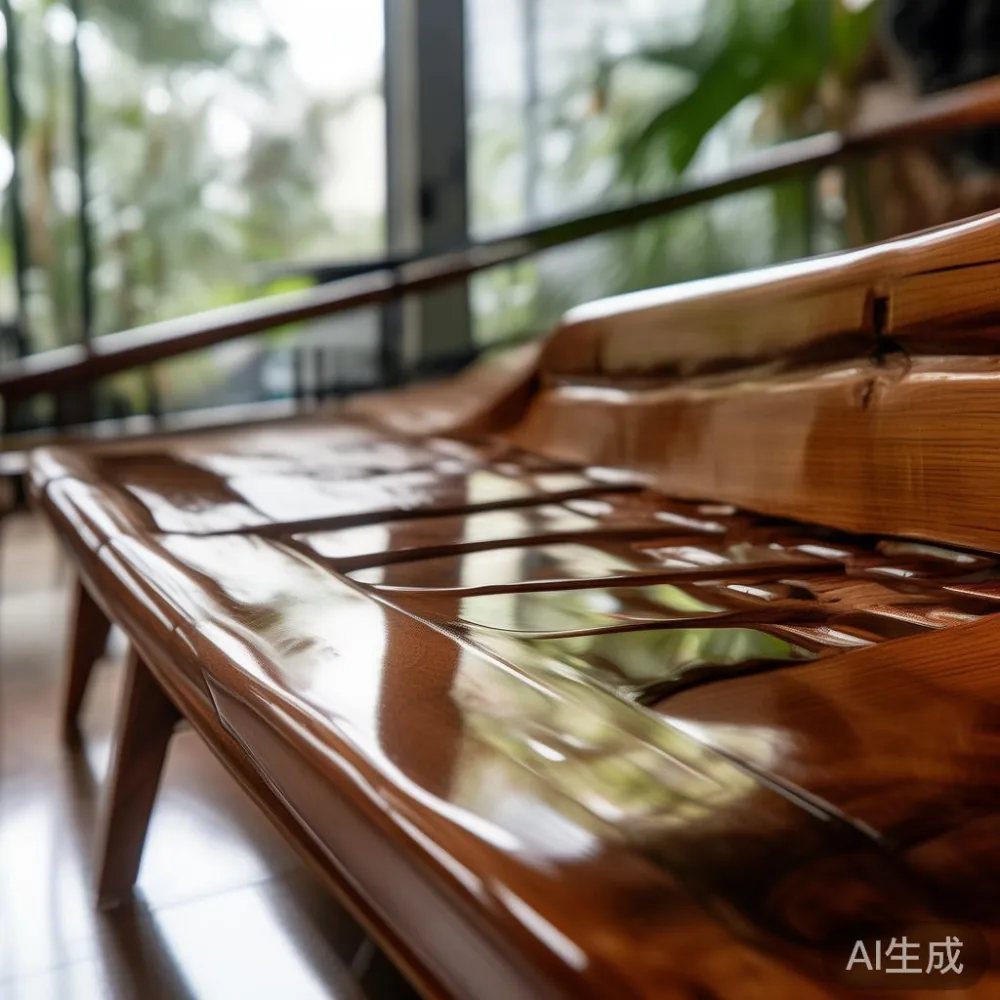
Singapore reads like a stress test for any finished timber. Relative humidity hovers between 80% and 95% from October to April, UV index regularly hits 11 between 11am and 3pm, and balcony rainfall can deliver 30 mm in under an hour. A lacquered outdoor sofa, a lacquered bed frame, a lacquered dining table, or a lacquered wardrobe all share the same enemy: water in its liquid form, then again in its vapour form. Defeat the cycle and the finish can look new for ten to fifteen years. Ignore it, and you will see haze, checking, and mould at the joints within one monsoon cycle.
The honest physics of lacquer, in 90 seconds
Lacquer is a film, not a wall. It is typically 0.04 to 0.08 mm thick on factory-finished pieces, applied in three to seven coats and cured at 60 to 80°C. It blocks oxygen and slows water vapour transfer by roughly 70 to 90% compared with raw timber, but it is not a hermetic seal. Once humidity penetrates a pinhole, a sanding scratch, or a joint gap, the wood swells. The next sunny day it shrinks. After 8 to 12 of those cycles, the lacquer loses adhesion and whitens. In Singapore, that window is roughly four to six months if you do nothing.
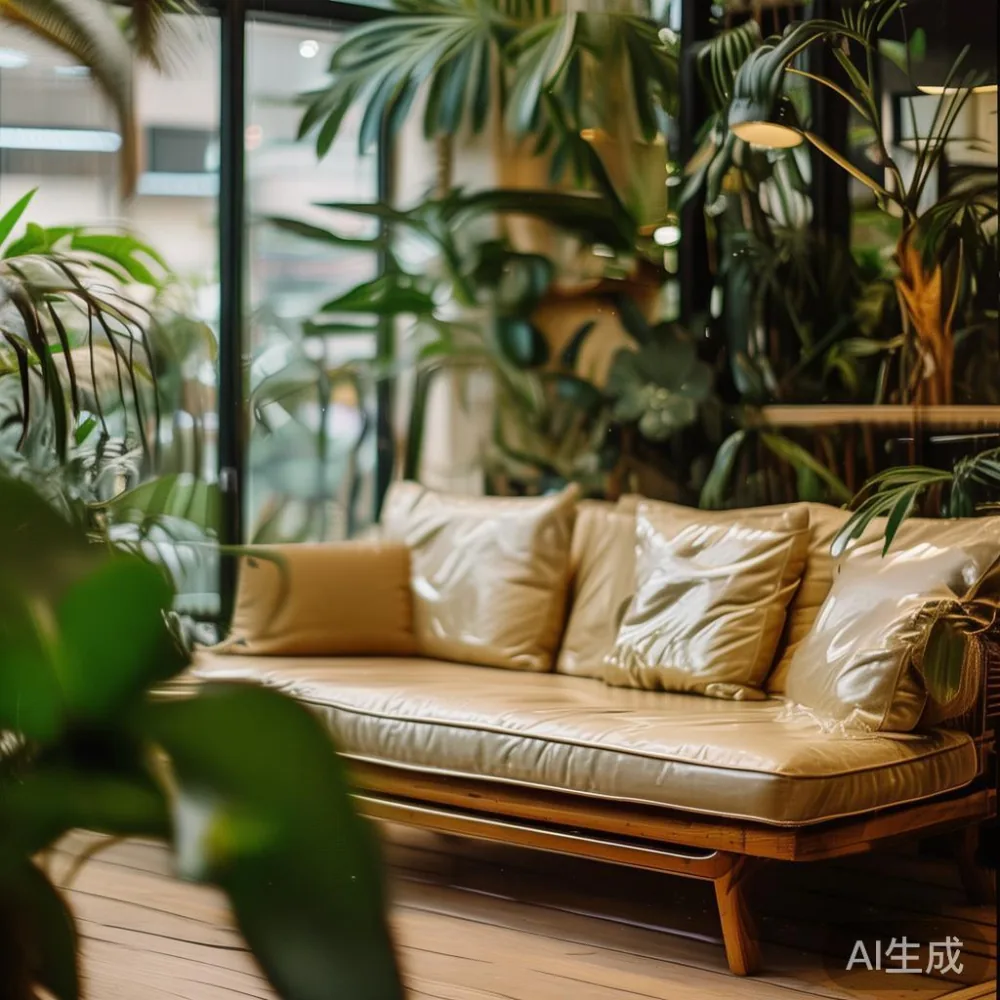
Why a balcony in Tampines or Bedok is harder on wood than one in Bangkok
People assume the climate is identical across the region. It is not. Singapore has unusually clean, acidic rain because of petrochemical refining activity in neighbouring Jurong and frequent haze events. Rain pH here regularly drops to 4.2 to 4.6, which is closer to vinegar than pure water. That acidity slowly etches the topcoat of any outdoor sofa and dulls its gloss within a single season. Pair this with 1.4 m wide HDB corridors and lift openings of around 0.9 m by 2.1 m, and moving a heavy piece inside during a storm requires two people, a moving blanket, and at least one apologetic text to your neighbour. Build a "2-minute shelter plan" before the first delivery, not after.
The Monday Morning Routine (12 minutes total)
- Wipe down with a clean microfibre cloth, lightly dampened. Never dry-dust a lacquered surface; grit scratches the film.
- Spot-clean any bird droppings, pollen, or sticky residue immediately. Droppings are acidic and will etch lacquer within 30 minutes in full sun.
- Spray a fine mist of distilled water (S$4 to S$8 for 5 L at Cold Storage) onto a second cloth, never directly onto the finish, and buff in the direction of the grain.
- Check the four corners of the seat deck for moisture pooling. Use a dry cloth or a small wedge to lift that corner by 5 mm.
- Inspect the legs. If the floor is constantly wet from condensation runoff, place 3 mm rubber furniture feet (S$2 for a set of 8 at HomeFix) under each leg.
This routine costs nothing, takes 12 minutes, and is what separates a 3-year piece from a 12-year one.
How do I care for a return policy in humid weather?
Always re-wax the entire piece with a paste wax containing at least 8% carnauba before re-packaging, then slip a 50 g silica-gel packet and a small cedar block inside each wrapped section, even for a 2-day transit back to the warehouse. The return process itself matters far less than the condition in which the furniture arrives, because a humid, unwrapped lacquered surface can flash-cure unevenly overnight and arrive with permanent cloudiness that no workshop can fully reverse. Photograph every panel before collection, leave the original MIDHILL foam wraps on, and ship within 48 hours of the pickup slot. A foreign carrier handling your shipment in a tropical port like Tanjung Pelepas will treat your crate exactly as it treats every other crate: stacked, rained on, and rolled across wet concrete. Your preparation is the only thing standing between "minor touch-up" and a warranty rejection.
What actually happens when lacquer fails in the tropics
Three failure modes account for 95% of issues I see from clients across HDB blocks in Punggol, Sengkang, and the landed houses of Bukit Timah:
1. White haze or "blooming". Caused by moisture trapped under the film. Reversible if caught in the first three weeks. Wipe with a dry microfibre cloth, expose to 4 hours of dry air under direct fan airflow, and the film usually recovers. After that, light sanding with 1500-grit and a paste wax is the only at-home fix.
2. Joint darkening and tackiness. Almost always a finish breakdown where two pieces of wood meet, often near the back rail of an outdoor sofa. Moisture penetrates the joint, feeds on residual sap, and creates a sticky dark residue. The remedy is acetone-free lacquer thinner on a cotton bud, followed by two fresh topcoats.
3. Micro-checking, sometimes called "spider webbing". Tiny cracks across wide panels like a dining table top or a wardrobe door. Caused by rapid expansion-contraction when full sun hits a wet panel. The fix is professional refinishing. Expect to pay S$180 to S$320 per square metre in Singapore for a sand-and-recoat.
Choosing the right lacquer for Singapore (and what MIDHILL already specifies)
If you are buying factory-finished, ask three questions. First, what is the base: polyurethane (most common), acid-catalysed, or water-based acrylic? Polyurethane handles humidity well but yellows over 5+ years. Acid-catalysed is hardest but releases formaldehyde during application, so only midhill-style industrial settings are safe. Water-based acrylic is the cleanest and most UV-stable. Second, how many coats? Anything under five will fail in Singapore within 18 months. Third, what is the topcoat? A 7% to 12% wax-oil topcoat gives you a sacrificial layer you can re-buff every quarter. I personally favour pieces that arrive with a satin or matte topcoat rather than high-gloss, because scratches are far less visible. A piece from midhill typically ships with a 7-coat system cured at 75°C, which is why a Singapore client's 3-year-old piece still photographs the way it did on day one.
Repair products worth keeping in your Jurong East storage cupboard
You only need five things, all available at Ban Heng Industrial or on Shopee for under S$120 total:
- Renaissance Wax (200 ml), about S$42, the gold standard for lacquer preservation
- Microfibre cloths, 10-pack, S$8 to S$15
- Distilled water spray bottle, 500 ml, S$6
- 1500-grit wet/dry sanding pads, 5-pack, S$12
- Cedar blocks or cedar oil pen, S$15, to deter booklice and mould at joints
Skip the "wood polish" sprays sold at Daiso or supermarkets. Most contain silicone, which interferes with future refinishing and tends to yellow within 8 to 12 months under tropical sun.
Seasonal calendars: the three windows that matter
Singapore does not have four seasons, but it does have three behavioural windows:
January to March: Drier, breezier, ideal for a full inspection and wax. Schedule a 45-minute Sunday session to wax every piece of lacquered furniture you own.
April to September: Peak humidity and haze. Use dehumidifier pods (S$10 each, replace every 60 days) inside any covered storage area. Set to 55% RH.
October to December: Monsoon surge and inter-monsoon thunderstorms. This is when an outdoor sofa earns its keep. Waterproof covers should go on before 5pm daily if storms are forecast, even if the morning is clear.
The honest truth about covers, parasols, and "all-weather" claims
No fabric cover is truly waterproof after eight months of UV. They are water-resistant, and the moment they fail is when your piece needs protection most. A good cover does 70% of the work; the balcony roof and a 5° slope for water runoff do the other 30%. Position your outdoor sofa with its longest axis running east-west, so the morning sun and afternoon sun hit the same panels, not the joints. If you own a marble table as well, keep it shaded all day; lacquer reacts to heat, marble reacts to acid, and a hot wet marble surface will leave a ring on a lacquered adjacent piece within minutes.
Quick answer to "can I leave my lacquered outdoor sofa outside year-round in Singapore?"
No factory finish survives 365 nights of a deck under open sky in this climate. You can leave it on a sheltered balcony with a roof above and 60 cm of clear airflow behind the backrest for 350 days a year. For the wettest 15 nights (typically late November through early January), move it inside a storeroom or under a permanent canopy with sealed seams. Your reward for that small annual effort is a piece that still looks like the day it arrived when your condo renovates in 2035.
Practical checklist before placing a delivery order
- Measure lift doors (typically 0.9 m wide x 2.1 m tall in HDB, 1.0 m x 2.3 m in most condos). Subtract 10 cm clearance for the crate.
- Measure corridor turns. A bed frame crate is the trickiest.
- Order with shipping insurance. Cross-border pieces under the 15+ country export programmes typically add 1.8% to 2.4% to the invoice.
- Schedule delivery between 9am and 11am, never after 4pm, to allow same-day placement before evening thunderstorms.
- Keep two fans running in the receiving room for 24 hours post-delivery to stabilise the timber.
Real numbers from a real shipment (not a brochure)
A single 7-seater modular outdoor sofa in solid teak, weight 142 kg, ships from Foshan to Singapore in a 1.7 m x 1.1 m x 1.4 m wooden crate. Typical delivered price to a Tanah Merah address lands between S$3,400 and S$4,800 including 9% GST, with free shipping above S$350 site-wide. Add an in-home white-glove placement service, around S$180 per visit, and you have a piece at your door for roughly S$4 per delivered kilogram. By contrast, a comparable European brand listing through a local distributor runs S$5,800 to S$8,400 for the same configuration, with 6 to 10 weeks of lead time and a 2-year finish warranty. The American light luxury category, which prioritises wider seat depths, lower back profiles, and matte finishes, sits between these two brackets and is what I recommend for most HDB balcony dimensions, because the typical 1.5 m to 1.8 m width clears the corridor turn without disassembly.
Why the wood underneath matters just as much as the finish
A great lacquer on poor timber fails anyway. The species best suited to outdoor use in Singapore are teak, eucalyptus, and white ash. Teak is the gold standard for an outdoor sofa because its natural silica content resists rot and insects. Ash, however, has a tighter grain that holds paint and lacquer well, making it a smart mid-priced choice for a bed frame, a dining table, or a nightstand used indoors. Just be aware that black ash wood shipping damage typically appears as edge crushing or corner splitting during long sea voyages, because ash is stiff but not as flexible as teak in a humid container. Always inspect the crate on delivery and photograph every panel before the carrier leaves, or your 10-year structural warranty may take 30 days to process instead of one.
The five-minute audit every six months
- Run a fingernail gently across the surface in a hidden spot. If it leaves a visible mark, the lacquer has softened. Stop using the piece in full sun until you refinish.
- Check all four sides for swelling at mid-rail height. Anything more than 1 mm needs a workshop call.
- Look at the underside. Lift each corner with one hand. Any gritty sound means moisture is in the joinery.
- Smell the piece on a humid evening. A sour, sweet, or mushroom-like aroma means mould is starting. Wipe with a 1:4 white-vinegar-water mix and dry under a fan.
- Re-wax. Two grams per square metre of paste wax, buffed by hand, takes 5 minutes per square metre.
When to call a professional (not the YouTube version)
If the haze covers more than 30% of any panel, if the finish feels gummy rather than solid, or if joints have swollen more than 1.5 mm, stop trying at home. A Singapore workshop will charge S$280 to S$520 to fully strip, sand, and recoat a 2.2 m outdoor sofa. The job takes 5 to 7 working days because each lacquer coat needs 12 to 18 hours of curing at 28°C and 60% relative humidity. A French light luxury refinisher typically charges S$600 to S$1,100 for the same work but includes grain-filling, a colour-match stain, and a hand-rubbed satin finish. Either route restores a piece that was headed for the skip.
Final practical note on warranty and post-modern light luxury design
Post-modern light luxury as a design language tends to favour cleaner lines, lighter visual weights, and a softer palette that pairs naturally with Singapore's palette of cream HDB walls, chrome balcony railings, and dark Merbau decking. The benefit, beyond aesthetics, is that lighter pieces are easier to move during a storm. A 35 kg single-seat outdoor sofa can be shifted by one person. A 60 kg modular sofa needs two, a 142 kg seven-seater needs three, and a 220 kg wardrobe or a 180 kg dining table often requires four plus a trolley. Smaller pieces, lighter finishes, and faster response times are the everyday advantage of this style, especially during the November to January monsoon surges when sheltering the furniture becomes part of the household routine.
Two months after that Punggol balcony refinish, the client hosted a 12-person lunar new year gathering on the very same piece. Eight of the twelve guests asked where she had bought the outdoor sofa. She pointed at the corner of the balcony, at the 3 mm rubber feet, at the wooden cover box, and at the small jar of Renaissance Wax on the shelf. She laughed and said the same thing I always tell my clients in Tampines, Bedok, and Punggol: "the wood is the easy part. The wax is the hard part."