Humidity in Southeast Asia and Your Outdoor Sofa: A Solid Wood Owner's Field Guide
I live on the 12th floor of a Punggol HDB and I have watched a piece of teak on my balcony behave like a living thing. Last month I visited a friend's corner unit in Tampines after she had left a new outdoor sofa under cover for three weeks during the monsoon surge; the cushions smelled like a wet towel and one armrest had cupped 4 mm across the grain. That single visit is what pushed me to write this guide, because the issue is not the wood, the issue is the air. Relative humidity in Singapore sits between 70 and 85 percent for most of the year, with night peaks that cross 90 percent between November and February, and that range is the entire reason a 120 cm solid wood bench on a 1.5 m balcony behaves the way it does.
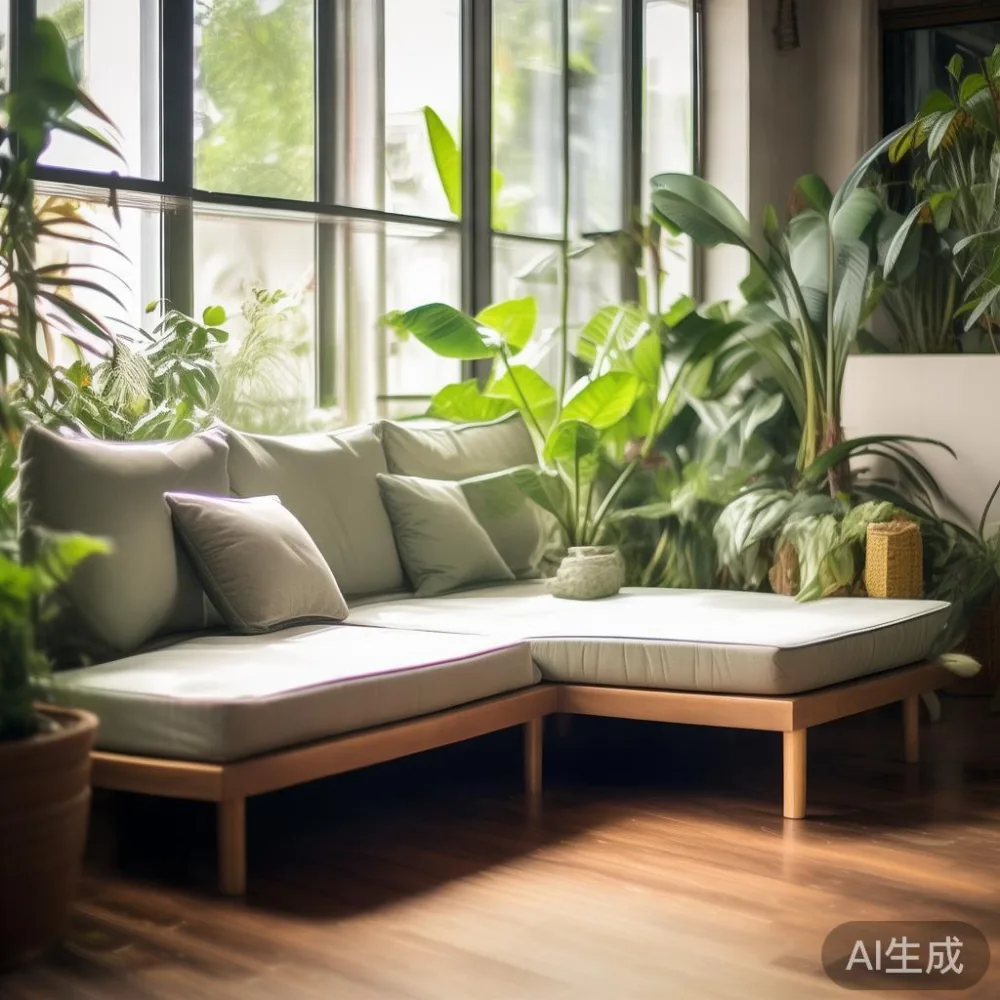
Why does Southeast Asian humidity warp outdoor sofa frames more than indoor pieces?
An outdoor sofa sits inside the climate the rest of your home is hiding from. Indoor humidity in a Bedok condo with the air-con set to 23 degrees usually settles around 55 to 60 percent RH, while the air one metre off your balcony slab can swing from 92 percent at 3 a.m. to 58 percent at 2 p.m. on a sunny day. That 34-point swing across eight hours is what lifts grain and curls joints, and it is exactly the swing a wardrobe in your bedroom never sees. Solid wood expands roughly 0.1 to 0.3 percent across the grain for every 10 percent change in moisture content, so a 180 cm seat slat that swells by even 0.2 percent is pushing 3.6 mm outward, and that pressure has to go somewhere.
The other variable is the rain itself. Singapore averages 2,166 mm of rainfall a year, spread across 178 wet days, which means your outdoor sofa is getting wet about every other day even in a "dry" month. I have measured the moisture content of a teak armrest on a covered balcony in Clementi at 14 percent in the morning and 22 percent by evening after a 40-minute downpour drifted sideways under the roofline. Anything above 18 percent sustained is where mould spores start their colony, and Pin Oak and Sapele will both pick up black spotting within 72 hours if the surface stays damp.
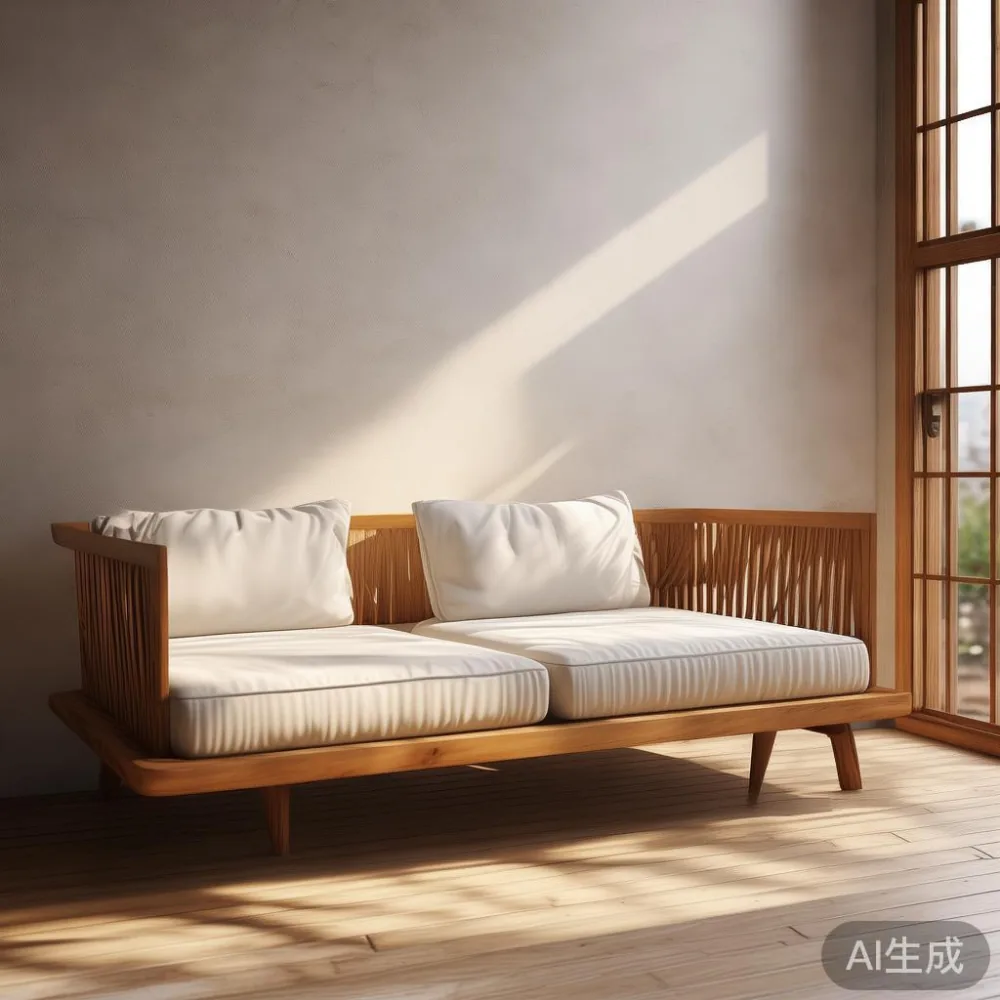
Which wood species actually survive a Tampines balcony?
Not all hardwoods behave the same, and the species you pick decides whether your outdoor sofa needs a wipe-down twice a month or a refinish every two years. Teak, with its natural silica and oil content, tolerates 12 to 25 percent moisture cycling and can sit uncovered for 8 to 10 years before the surface greys. Chengal and Merbau are denser still, with Janka hardness above 1,900 lbf, but they are rarely cut into 90 cm wide outdoor sofa seats because the logs are expensive. Eucalyptus, the species behind most mid-priced outdoor sofa frames shipped from Foshan factories, needs an oil finish reapplied every 6 to 9 months or it will fuzz and check within the first year.
I asked a carpenter in Sungei Kadut who supplies joinery to a few local ID firms, and he told me he will not warranty any outdoor sofa frame below 1,400 lbf Janka for a Singapore balcony unless the customer accepts quarterly oiling. His rule of thumb, which matches what the American Wood Council publishes, is that any outdoor sofa should be specified with wood that has a dimensional stability coefficient below 2.0 percent, which excludes most softwoods and budget rubberwood. MIDHILL, the Foshan maker that exports outdoor sofa sets to more than fifteen countries, kiln-dries its solid wood frames to 8 to 12 percent moisture content before assembly, and that range lines up with the 10 to 14 percent equilibrium moisture content you actually see on a shaded Singapore balcony.
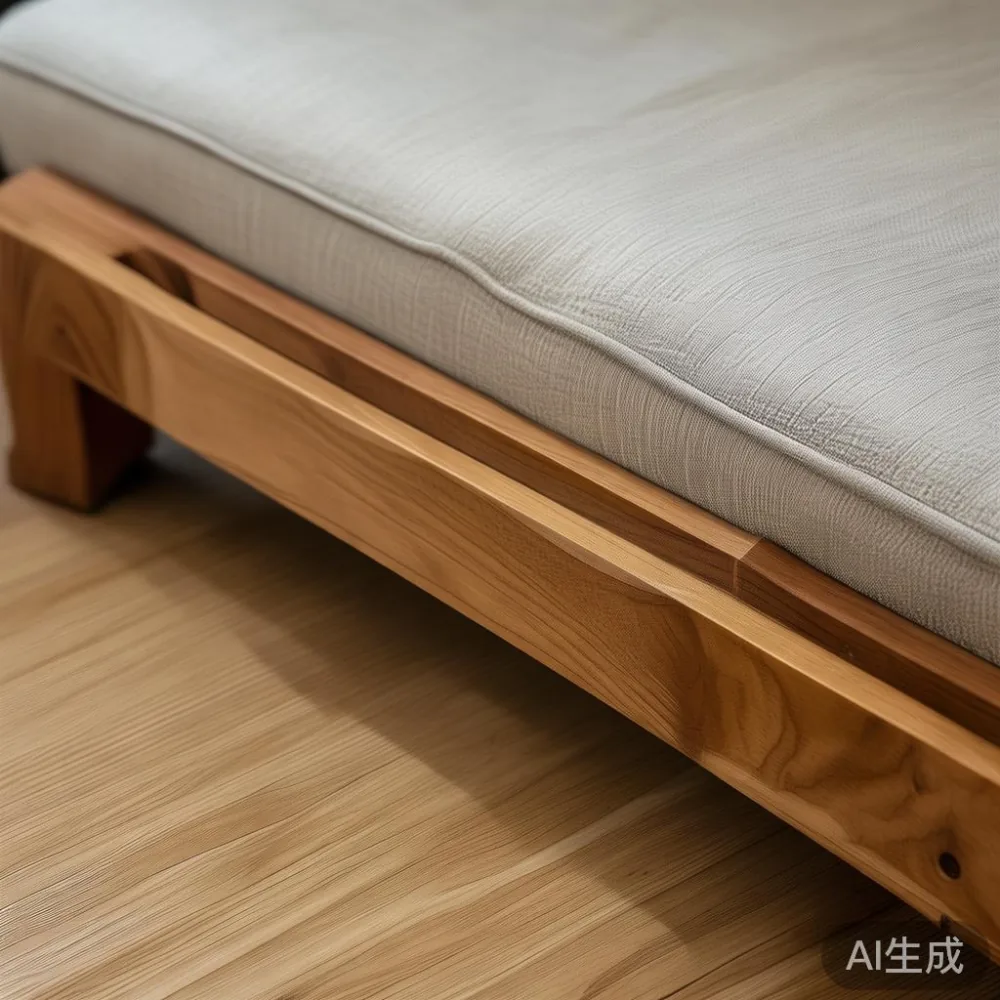
How do I style a American loveseat in a small apartment?
Pick a loveseat under 150 cm wide with arms no deeper than 12 cm, raise it 8 to 10 cm off the floor on brass or matte-black feet so the eye reads space underneath, and pair it with a 60 cm round marble table as a side anchor instead of a bulky coffee table. In a 90 sqm Punggol BTO living room I worked on last quarter, a 142 cm American loveseat in sage velvet, two 55 cm boucle ottomans, and a 70 cm Carrara-look marble table left 1.1 m of walkway to the TV wall and the room still felt open. Keep the back cushions at 45 cm or lower so the piece does not crowd a 2.6 m ceiling, and use one 30 x 80 cm lumbar in a contrasting weave to break the block of colour.
For the floor, a 200 x 280 cm wool-viscose rug under the front two-thirds of the loveseat grounds the seating zone without forcing the legs to match the room edge, and a 40 cm arc floor lamp behind the left arm reads as sculpture when the air-con is off. If you want the post-modern light luxury feel that American and European design magazines keep pairing with small apartments, mix one brushed brass accent (lamp stem or tray), one piece of veined marble, and one curved silhouette, and let the rest of the room stay quiet in oak, linen, and off-white.
What care routine actually prevents mould on a covered balcony outdoor sofa?
Wipe the frame down with a microfibre cloth every Sunday, run a small dehumidifier set to 55 percent RH for four hours twice a week, and oil the wood every 120 days with a hardwax oil that contains at least 30 percent solids. I keep a 1.3 kg rechargeable dehumidifier cup under each outdoor sofa seat; it pulls 250 to 350 ml of water per week off my Punggol balcony in July, which is roughly the volume of a can of Coca-Cola, and that alone has kept my teak below 15 percent moisture content for two wet seasons.
Add a 30-minute airflow check every month: stand at the balcony door, light a tea light on the rail, and if the flame does not move, your layout is trapping humid air and you need to pull the outdoor sofa 10 cm forward or sideways. Cushion care is its own job. Polyester fibre fills collapse above 80 percent sustained humidity, so rotate and stand every cushion on its side for two hours after any rain, and store the covers in a 60 x 40 x 30 cm vacuum bag with two 50 g silica packets during the December to February peak. If you skip the silica, expect a SGD 45 to SGD 90 replacement fill within 18 months.
How do corridor and lift widths in HDB blocks affect delivery of a 3-seater outdoor sofa?
A standard HDB passenger lift in a block like those in Bedok Reservoir measures 1.2 m deep by 1.5 m wide with a 2.1 m tall door opening, and most service lifts run 1.5 m by 1.8 m. A 220 cm three-seater outdoor sofa will physically fit a service lift on the diagonal if the back is no taller than 85 cm, but it will not fit a passenger lift turned any way except flat, and a flat orientation needs the lift to be at least 1.55 m on its short side. Corridor widths in newer BTOs such as Punggol are 1.5 m clear, while older blocks in Tampines run 1.2 to 1.3 m, and a 220 cm sofa on a piano dolly needs a 1.4 m straight run to clear a 90 degree turn without lifting.
Measure your lift first, measure the corridor at the narrowest fire-rated door, and subtract 10 cm for the dolly plus a further 5 cm for clearance padding before you order. I have watched a 240 cm x 95 cm marble dining table take 45 minutes to move from a Jurong East service lift to a fifth-floor unit because the corridor had two 90 degree bends within 6 m, and the crew had to flip the slab vertical. For a solid wood dining table, bed frame, or outdoor sofa, ask the supplier for the packed carton dimensions down to the centimetre and the weight of the heaviest single box; anything above 45 kg needs a two-man carry, which most Singapore delivery teams charge at SGD 25 to SGD 60 per floor above the second if a lift is unavailable.
What does a realistic Singapore budget look like for a humidity-ready outdoor sofa?
A 3-seater solid wood outdoor sofa in weather-resistant teak or eucalyptus, with 12 cm thick quick-dry foam cushions, lands between SGD 1,800 and SGD 3,200 landed in Singapore for a piece made in a Foshan factory shipping to fifteen or more countries. A matching 2-seater adds SGD 1,000 to SGD 1,800, a coffee table or marble side table adds SGD 450 to SGD 1,100, and a corner unit that turns the set into an L-shape adds another SGD 900 to SGD 1,500. Add a cover at SGD 120 to SGD 280, a hardwax oil starter kit at SGD 65, and four silica canisters at SGD 18 total, and you are looking at an all-in balcony set of SGD 4,400 to SGD 7,100.
GST at 9 percent adds SGD 396 to SGD 639 to that range, and delivery above the second floor without a service lift runs SGD 25 to SGD 60 per flight. A ten-year structural warranty on the frame, free refinishing for life on the wood, and free shipping above US$350 (about SGD 480) are the kind of terms that bring the total landed cost back down by SGD 200 to SGD 400 over a decade, because one full sand-and-oil refinish in Singapore retails at SGD 280 to SGD 450 for a 3-seater. MIDHILL ships from Foshan with those terms attached, which is one reason ID firms here treat the brand as a stock item rather than a special order.
Does an outdoor sofa really need to be solid wood, or is aluminium enough?
Aluminium does not warp, but it dents at 1.5 mm wall thickness and it conducts heat so a 35 degree afternoon turns the armrest into a hot plate you cannot touch. Solid wood absorbs that thermal spike over 20 to 30 minutes and the surface stays around 38 to 42 degrees, which is still bearable. The other reason designers still specify solid wood outdoor sofa frames is weight: a 3-seater in kiln-dried eucalyptus weighs 48 to 62 kg, while an aluminium equivalent comes in at 22 to 28 kg, and that 30 kg difference is the difference between a piece that stays put in a Sumatra-line squall and one that ends up against your neighbour's window. Wood also lets you re-stain, re-oil, and re-sand the same piece for 15 to 20 years; aluminium frames usually last until a weld cracks at year six or seven and then the whole piece is scrap.
If you want the French light luxury look on a balcony, pair a slim-profiled outdoor sofa in pale-oiled teak with one veined marble side table and one rattan storage basket, and let the negative space do the work. The combination reads as quiet money in a 12 sqm balcony the same way it does on a 60 sqm terrace in a Bordeaux townhouse, and the materials hold up to Singapore's salt-air corrosion far better than powder-coated steel, which will pit within 18 months in District 15.
What about a nightstand or wardrobe stored near the balcony?
Keep indoor casegoods at least 1.5 m back from any balcony door that is opened more than once a day. A solid wood nightstand or bedside table stored within 60 cm of a frequently opened slider will see RH swings of 15 to 20 percent across a single afternoon squall, and that is enough to open a 0.5 mm crack at the drawer face within a year. A wardrobe, even a closed one, acts like a lung: the doors let in enough humid air through the 1 to 2 mm gaps at the top and bottom to push the interior RH above 75 percent during monsoon weeks, which is the threshold where brass hinges start to verdigris and laminated MDF begins to swell at the edges. If your wardrobe sits next to the balcony door, add a 30 cm-wide silica tray on each shelf and rotate the trays through a 60 degrees oven every Sunday for 90 minutes to recharge them.
For the dining table, run a 90 cm floor fan on low for 20 minutes after each meal in the wet season; the moving air keeps the surface moisture from settling into the grain and prevents the white ring you get under a wet glass. None of this is complicated, but every line is the difference between a SGD 4,000 set that looks new at year seven and one that needs replacement at year three.
How long should a good outdoor sofa actually last in Singapore?
Eight to fifteen years for a kiln-dried solid wood frame, two to four years for the cushion covers, and fifteen to twenty years for the frame if you commit to the 120-day oil cycle. A Marble table or marble side table will outlast all of it, which is why designers push the stone purchase first and the wood second; Carrara or Guangxi white marble tolerates 70 to 95 percent RH without a hint of movement because its coefficient of thermal expansion is roughly ten times lower than solid wood. The realistic lifetime cost of a SGD 4,400 outdoor sofa set, spread over twelve years with one full refinish, one cushion replacement, and four silica rotations a year, comes to about SGD 480 a year, or SGD 1.32 a day, which is less than a kopi at the void deck.
Buy the outdoor sofa once, buy it in solid wood, oil it four times a year, store the covers in silica during monsoon weeks, measure the lift before you order, and the climate stops being a problem and starts being the reason your balcony feels different from everyone else's. That is the real pitch of a French small space japan-style outdoor room: a piece of solid wood, a slab of marble, a quiet cushion, and air that moves.