Humidity, HDB Lifts, and Heirloom Wood: A Singapore Buyer's Guide to Outdoor Sofa and Indoor Solid Wood Furniture
I still remember standing in a Punggol HDB lift last month, watching two movers tilt a 220 cm ash-wood sofa frame at a 35° angle just to clear the 80 cm door. The homeowner, an interior designer named Rachel, told me she had rejected three wardrobes before settling on a 60 cm deep unit because the corridor outside her unit on the 12th floor measured only 1.2 m wide. She also wanted the same warm wood tone to carry from her balcony outdoor sofa to her dining table indoors. That afternoon, between the lift alarm and the rain drumming against the lift shaft, I realised Singapore buyers wrestle with two forces at once: relentless tropical humidity between 70% and 90% RH, and the hard geometry of HDB corridors, service lift doors (typically 90 cm × 210 cm), and condo loading bays that quietly decide which pieces of furniture ever make it home.
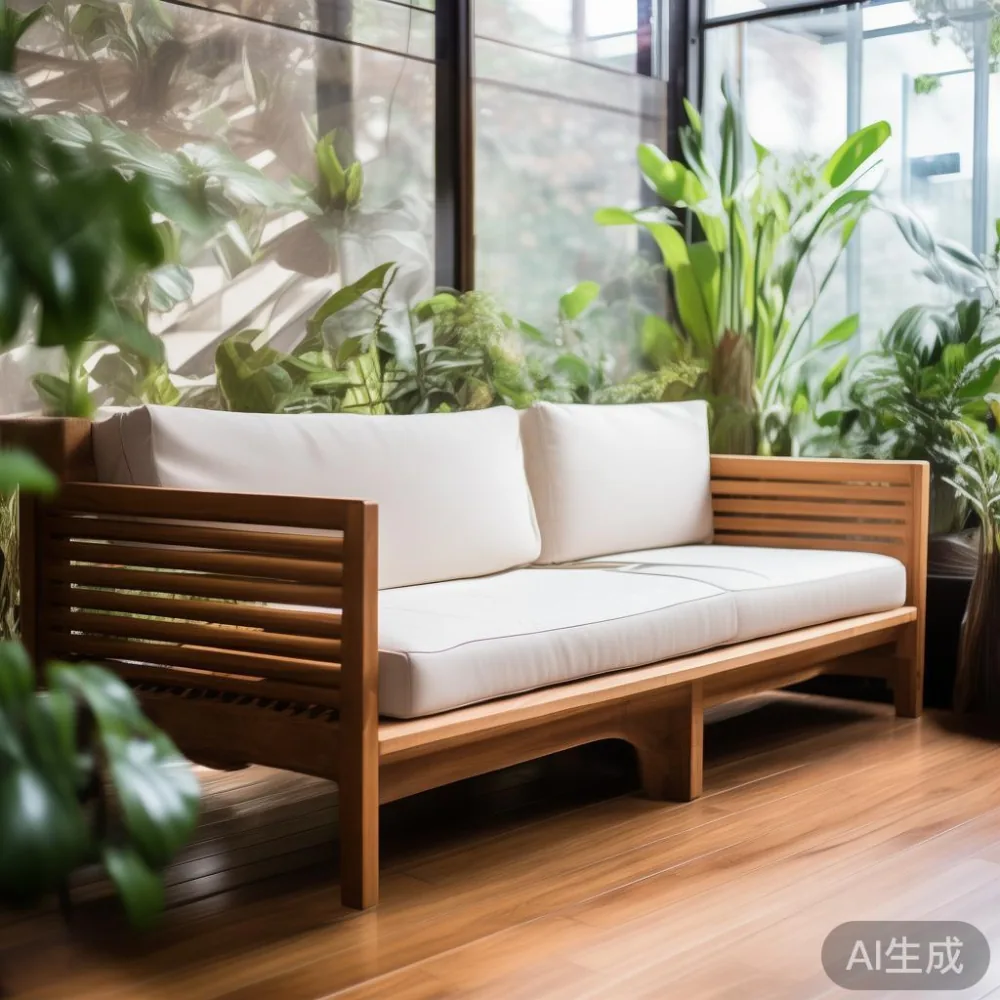
At MIDHILL, the workshop I keep coming back to in Foshan, every plank of solid wood — oak, ash, walnut, rubberwood — sits in a humidity-controlled room for 21 to 28 days before assembly. That detail matters more here than in a temperate climate. A solid wood bed frame, dining table, or wardrobe is not a flat-pack story; it is a living material that breathes with the air around it. When the workshop humidity and your Tampines flat's humidity match within a 10% band, the 0.2 to 0.5 mm of seasonal movement you see across a 200 cm dining tabletop stays quiet rather than catastrophic.
Why does Southeast Asian humidity punish ordinary wood furniture?
Wood is hygroscopic: it absorbs and releases moisture until it finds equilibrium with its surroundings. In Singapore, where outdoor RH averages 82% and indoor RH often sits between 65% and 80% even with air conditioning running, a flat-pack particleboard cabinet from a regional megamarket will swell at the edges within four to six months. A 100% solid wood dining table behaves differently because the grain runs continuously through each board, so it expands mostly across the width, not in thickness. Across a 90 cm wide oak tabletop you might see a 2 to 3 mm shift between February and August, which is why craftspeople leave 2 mm expansion gaps under the skirt and let the top "float" in its frame.
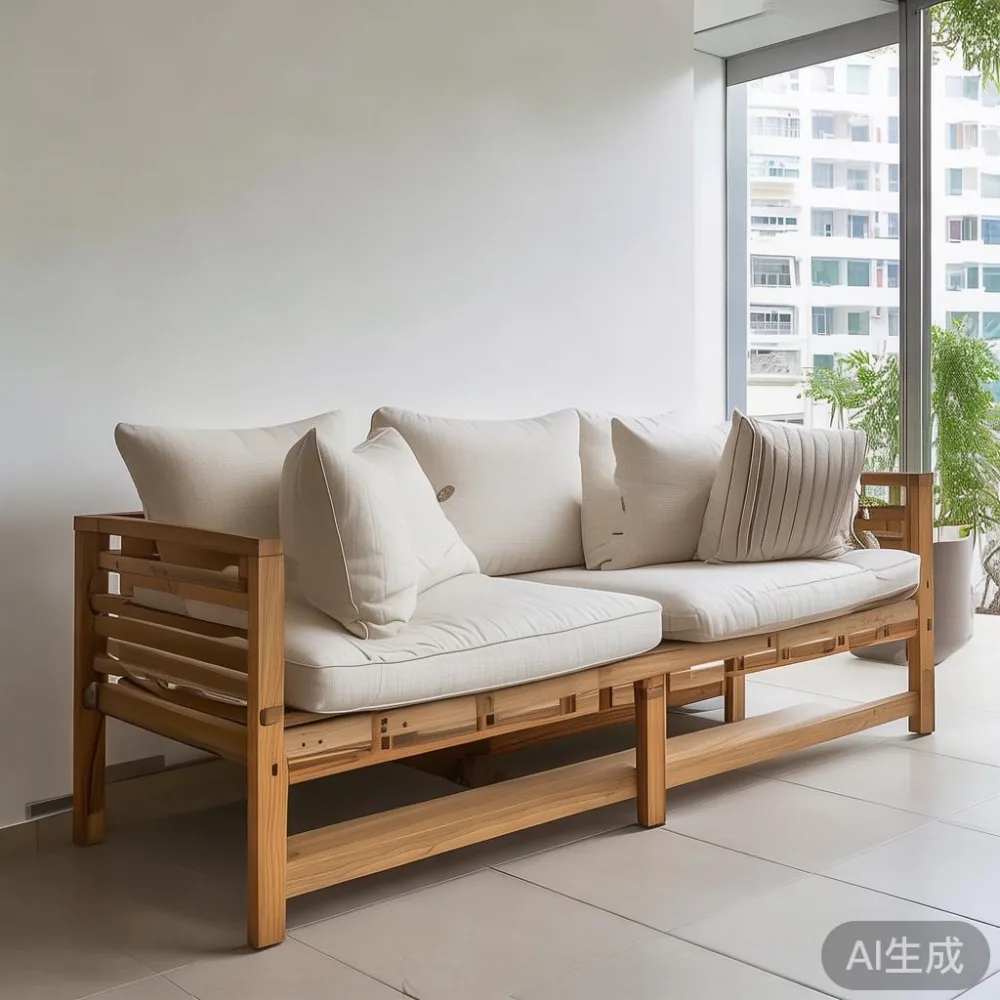
My colleague in the Foshan workshop once showed me a side-by-side test panel of the same 20 mm oak board: one sealed with a single coat of budget lacquer, one with a six-layer post-modern light luxury matte finish. After 30 days in a chamber held at 85% RH and 30 °C, the budget panel cupped 1.8 mm; the matte-finish panel cupped 0.4 mm. The difference is not marketing language — it is the number of polymer cross-links between wood and air. French light luxury palettes lean toward pale ash and travertine neutrals; these lighter tones also tend to show humidity-driven colour shift more visibly, so the sealer you choose becomes part of the design.
What should a Singapore buyer check before an outdoor sofa or indoor wood piece enters a Tampines or Bedok flat?
Three numbers matter before you swipe the credit card. First, the lift door: most HDB passenger lifts are 80 cm wide by 210 cm tall, while newer service lifts in Punggol and Bedok reach 90 cm wide. A 240 cm outdoor sofa frame will not fit standing upright, so the supplier should confirm a tilt-and-walk clearance of under 80 cm at the narrowest point. Second, the corridor turning radius: HDB corridors are 1.2 to 1.5 m wide, and the corner near your letterbox often tightens to 1.05 m. Anything deeper than 65 cm risks a stuck wardrobe or marble table. Third, the loading bay booking window: most condos allow 45-minute slots between 10 am and 4 pm, and a 180 kg solid wood dining table on a trolley takes at least 25 minutes to move from truck to lift.
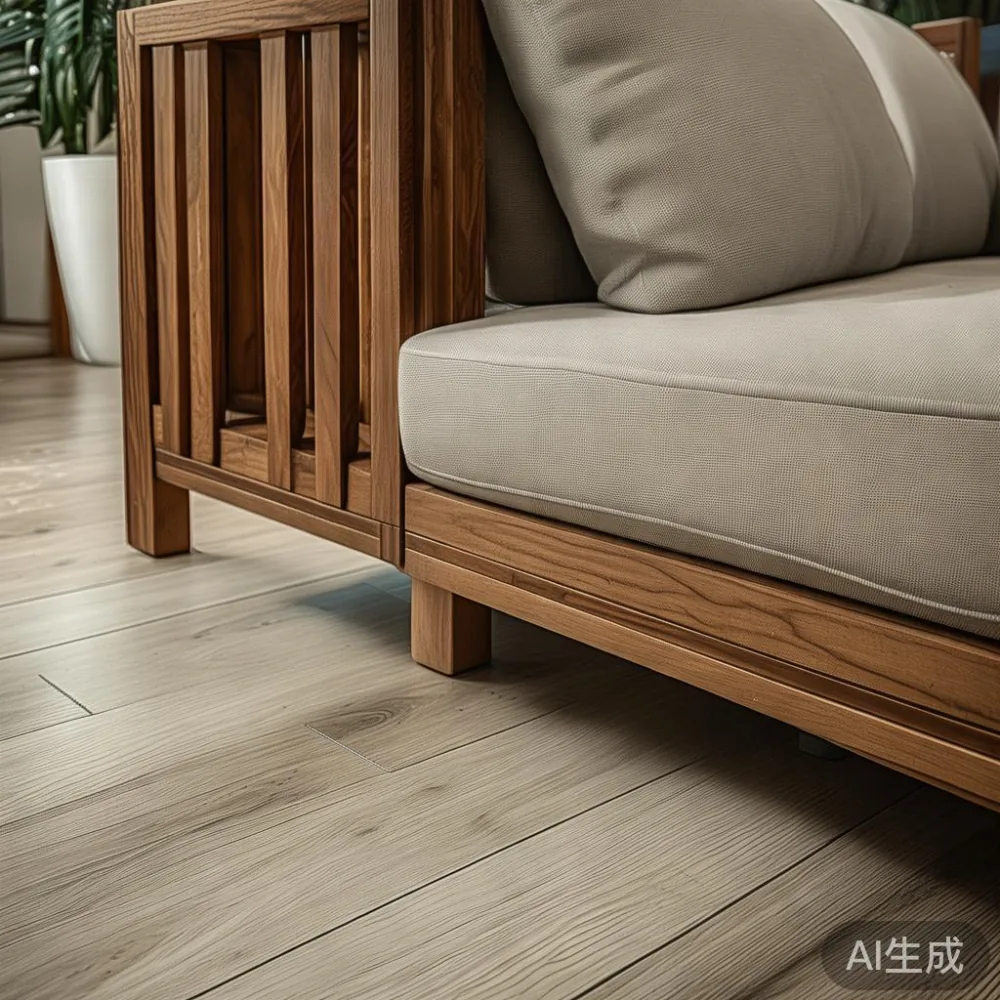
I visited a five-room flat in Bedok Reservoir last month where the owner had chosen a 2.4 m outdoor sofa in solid teak for her balcony, plus a matching indoor sofa frame in oak. The delivery team had measured the service lift at 1.2 m deep and 2.1 m tall the week before; on delivery day, they brought sectional arms separately so the main frame could rotate inside the lift car. That small planning step saved an 80 SGD re-delivery surcharge and kept the warranty valid.
Is Japandi sectional sofa furniture worth it in a 65% to 80% RH home?
Yes — a Japandi sectional sofa frame in solid white oak or ash, factory-finished with a low-sheen matte coat and joined with mortise-and-tenon rather than staples, is one of the better furniture investments a Singapore household can make for daily humidity exposure between 65% and 80% RH. The hybrid Japanese-Scandinavian proportion is also practical: a 280 cm L-shape sectional fits a standard HDB living room of 4 m × 5 m with 90 cm of walkway on every side, while the low 78 cm back keeps the silhouette light against the leafy view outside the balcony door.
What makes the style pay off here is the joinery and the finish, not the look. A solid oak frame with through-tenons and a single hardwood cross-rail at the base holds its shape across the wet season when particleboard frames begin to sag at the corners. Pair the sectional with a 120 cm round travertine or marble table — sealed on the underside, not just the top — and the room reads as quiet American light luxury without raising the indoor humidity load. Cushion cores should be high-resilience foam wrapped in a breathable cotton sleeve; the cover fabric can be a removable washed linen, which is the same fabric used in many outdoor sofa cushion kits, so the eye reads one continuous material from balcony to living room.
How should you care for an outdoor sofa set when the monsoon hits for 90 days straight?
Singapore's monsoon season runs roughly from November through February, and daily rainfall can exceed 250 mm in a single week. A covered balcony outdoor sofa set still copes with wind-driven spray and a steady 75% to 90% RH, while an uncovered garden set sees direct rain and UV. Either way, the rule is simple: oil, lift, and ventilate.
For teak outdoor sofa frames, a food-safe teak oil every 90 days keeps the grain saturated and stops the silver-grey patina from setting in unevenly. For powder-coated aluminium frames wrapped with quick-dry foam, lift the cushions off the frame after every rain and prop them at a 30° angle so air flows underneath; trapped moisture is what grows black mould on cushion seams within 14 days. If you own a marble table on the balcony, seal the top every six months with a penetrating stone sealer, otherwise the acid in kopi or rain can etch the polish. A wardrobe placed against an exterior wall should sit 5 cm off the wall on small felt pads; air movement behind the panel is the cheapest dehumidifier you can buy. Place a small 0.5 kg silica gel canister per wardrobe shelf — a 12-pack costs around 18 SGD at any Tampines FairPrice and lasts four to five months before reactivation in a 120 °C oven for two hours.
What does a fair warranty actually cover for humidity damage?
A 10-year structural warranty on a solid wood bed frame or dining table should mean the joints, rails, and load-bearing members will not fail under normal household humidity between 30% and 80% RH. It should not mean free replacement for a tabletop that cups 4 mm because the buyer placed the table next to a perpetually open balcony door during a 90-day monsoon. The honest middle ground: a workshop that kiln-dries its oak and ash to a 6% to 8% moisture content, finishes with at least three coats of sealer on every surface including the underside, and ships each piece in a sealed foam wrap plus corrugated carton, is protecting you against the Singapore climate before the box even arrives.
MIDHILL's refinishing promise — lifetime sanding and re-sealing for a small service fee of roughly 180 to 260 SGD per dining table — exists precisely because wood is a living material. A 200 cm oak dining table bought in 2020 for around 2,480 SGD can be brought back to factory colour in 2027 for the cost of a return trip, and the lifetime of the table easily crosses 25 years. The same approach applied to a nightstand, a wardrobe, or the inner frame of a green full-grain leather accent chair keeps the whole room reading as one continuous palette, even as the seasons move around it.
How do GST, delivery slots, and 14-day returns change the buying math for Singapore households?
Singapore adds 9% GST on every imported furniture invoice, and most Foshan workshops quote ex-works (EXW) terms, so the landed cost is the unit price plus sea freight, customs duty, GST, and a 90 SGD to 150 SGD HDB lift booking fee charged by the condo. A 2,400 SGD outdoor sofa set that ships free above US$350 ends up landing at roughly 2,890 to 3,050 SGD in your living room, which is worth confirming in writing before the deposit. Delivery lead time from Foshan to Singapore is 18 to 28 days by sea plus 3 to 5 days for last-mile, and a sensible supplier books the lift slot and WhatsApps you a one-hour ETA window.
Returns are the quiet safety net. A 14-day return window means the buyer can inspect every joint, drawer runner, and marble table edge in their actual Tampines flat before committing. Keep the original foam and carton for 14 days; the courier needs the same packaging to reverse the trip, and disposal of a broken-down flat-pack costs around 45 SGD in Singapore. If you are buying a sectional sofa frame, ask for the assembly hardware in a separate labelled pouch — losing 14 cam locks on moving day is the single most common reason a perfectly good sofa sits in the corridor overnight.
A short checklist before you sign the order form
Measure the lift door, the corridor turning radius, and the final placement spot in centimetres. Photograph all three and send them to the supplier. Confirm the wood species, moisture content, and number of finish coats in writing. Ask whether the marble table top is sealed on all six sides, not just the visible five. Book the condo loading bay 14 days ahead, and keep the 14-day return packaging unopened until you have lived with the piece for at least five days through your normal air-conditioning cycle. If a checklist like this feels excessive, remember Rachel in Punggol: the right outdoor sofa set or solid wood dining table, measured once and ordered once, will outlast three renovations and still hold its joinery tight through every monsoon the island throws at it.